
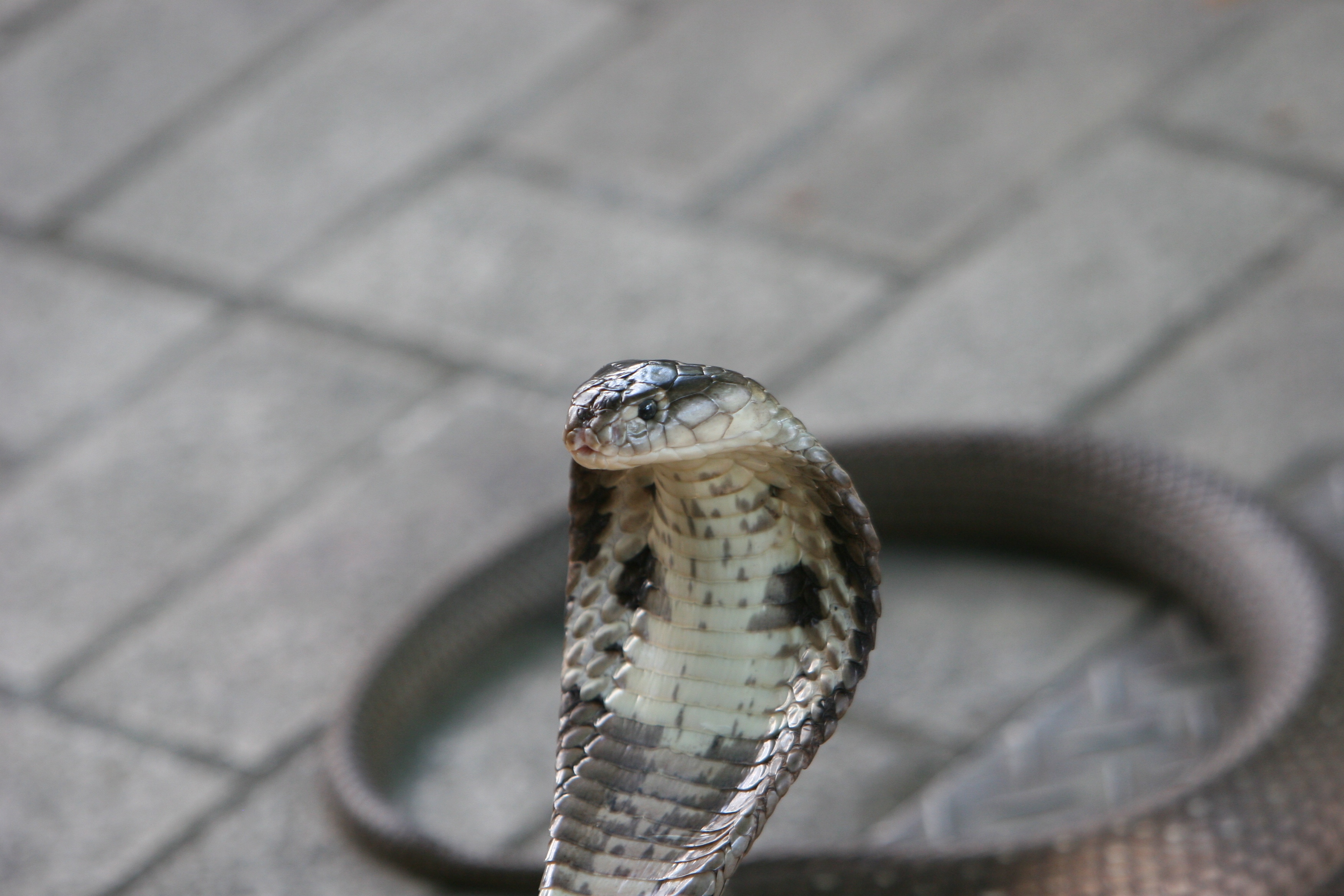
Ten young cobras were taken from a house in Mirsharai upazila of Chattogram on the afternoon of Friday, 31 October 2025, according to a member of a local snake rescue team, who said he had them in his care. The same evening, he said, another padma gokhra was pulled from a rat hole at a homestead in another union of the upazila. Jagonews24, which reported both finds on the morning of 1 November, called the snakes padma gokhra, a local name for a venomous cobra, and said the discoveries had caused panic among local people. The forest beat officer for Hinguli union told the paper that no one had informed him about the young snakes found there and that he was looking into it.
Two rescues in two unions on one day
The first find was in Middle Azamnagar village in Hinguli union. Tarek Aziz, the rescue team member who spoke to Jagonews24, said members of a family at the home of a resident named Dulal saw the young snakes inside their house. He said that on hearing of it he took 10 young padma gokhra from one room and brought them away, and that they were then in his custody.
The second find was in the Shukrubar Yarhat area of Dhum union, also in Mirsharai. Aziz said a padma gokhra was recovered there that evening from a rat hole at a homestead, and he put its length at about 11 feet. He said the snakes would be released in the hills on the morning of Saturday, 1 November. The report does not name the hills. It speaks of the release in the future tense and does not say whether it took place.
The official account is limited to one short statement. Zakir Hossain, the beat officer for Hinguli union in Mirsharai, said no one had told him about the rescue of the young cobras from the house and that he was finding out about it. The report carries no statement from the forest department about the Dhum snake, and nothing from a doctor or anyone else about injuries. It mentions no bite. It also does not say whether eggs or an adult snake were found at the Azamnagar house, or whether the two finds were connected.
Mirsharai, between the hills and the sea
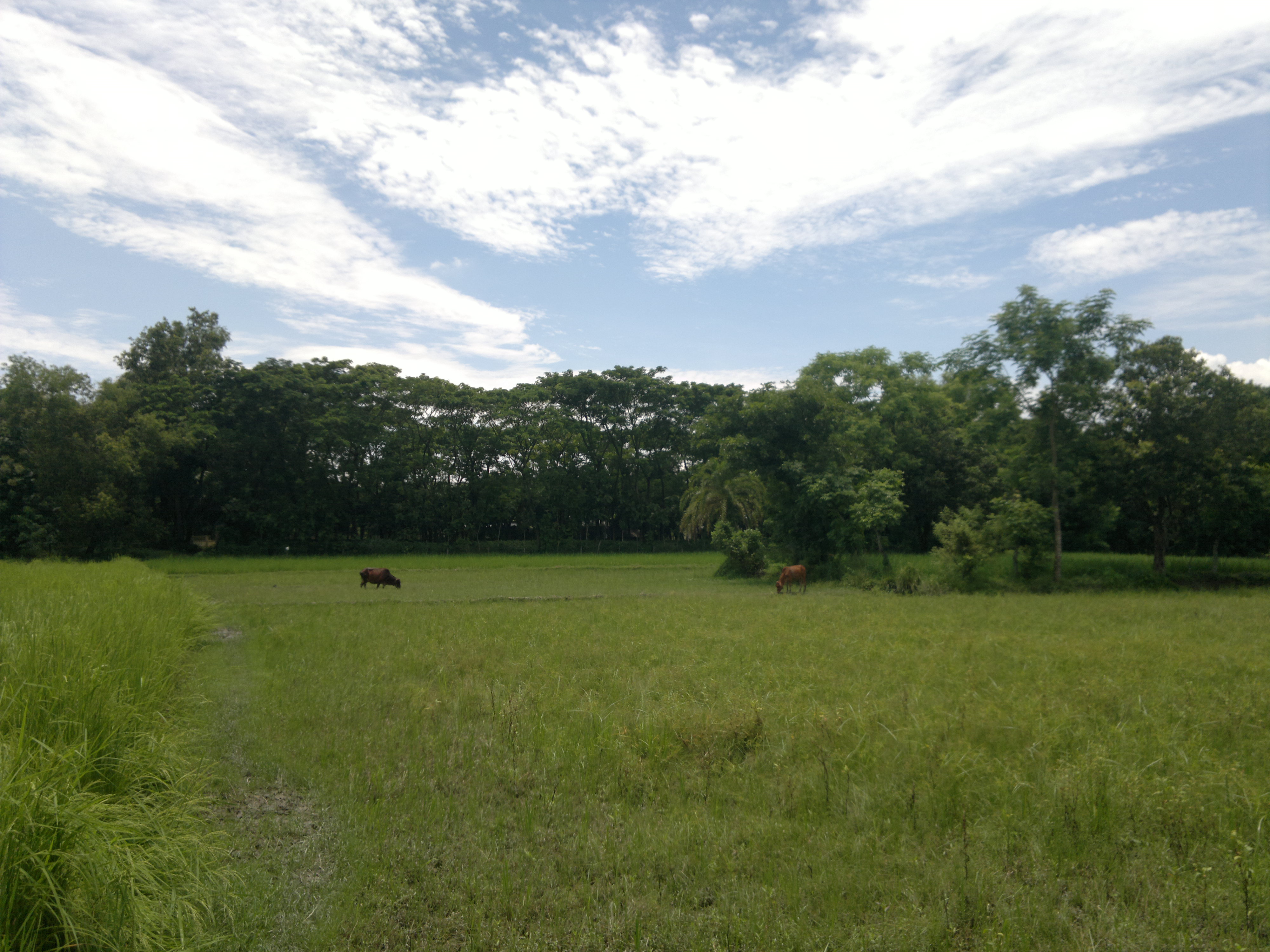
Mirsharai is an upazila of Chattogram district whose main river is the Feni. Banglapedia, the national encyclopedia, gives its area as 482.88 square kilometres and lists Tripura state of India and the Chhagalnaiya and Feni Sadar upazilas to the north, Sitakunda upazila and the Bay of Bengal to the south, Fatikchhari upazila to the east, and Sonagazi and Companiganj to the west. Its entry counts 16 unions, among them Hinguli and Dhum, along with two municipalities and 218 villages, and a population of 398,716.
Farming is the largest single source of income in the upazila, at 38.93 per cent in Banglapedia's figures. The main crops are paddy, pulses, potato, brinjal, other vegetables and bamboo, and the main fruits include mango, jackfruit, banana, papaya and litchi. The entry also lists the Sandwip Channel and several canals, one of them the Hinguli canal, which shares its name with the union where the young snakes were found. It records 226 fisheries, 576 poultry farms and 29 dairies, and it mentions the Karerhat Forest Range among the upazila's sites.
For Chattogram district as a whole, Banglapedia describes a landscape of hills, rivers, sea, forests and valleys, with annual rainfall of 3,194 mm and an average annual temperature range of 14.5 to 33.8 degrees Celsius.

The 11-foot figure and an uncertain name
The length of the Dhum snake is the rescuer's own account. The report gives no measurement by anyone else, no scientific name and no identification by a forest officer or a herpetologist, so this account does not state either the length or the species as established fact.
The figure stands far above what reference works give for ordinary cobras. Banglapedia says cobras of the genus Naja reach about 1.5 metres. A Southeast Asian wildlife reference, Ecology Asia, gives 2.3 metres as the maximum for the monocled cobra, and Animal Diversity Web, the University of Michigan's species database, describes the spectacled cobra as typically 1.8 to 2.2 metres long. An 11-foot snake would be longer than any of these. Other Bangladeshi reports of cobras give much shorter lengths: about five feet for a khoia gokhra rescued in Kamalganj, Moulvibazar, in July 2021, and about four feet for a padma gokhra rescued in Kuakata in August 2025.
The name itself does not settle the matter, because it is used for different snakes. Schedule 1 of the Wildlife (Conservation and Security) Act 2012 lists gokhra for the monocled cobra, Naja kaouthia; phul gokhra for the spectacled cobra, Naja naja; and padma gokhra or raj gokhra for the king cobra, Ophiophagus hannah. Banglapedia uses different names again: gokhra for the monocled cobra, khoia or khodom paia gokhra for the spectacled cobra, and raj gokhra for the king cobra. In the Kuakata report, published by Khobor Sangjog on 21 August 2025, the head of a local animal welfare group identified a padma gokhra as Naja kaouthia, the monocled cobra.
If the Act's usage were followed, the Mirsharai snakes would be king cobras, the only one of the three species known to reach that length. Banglapedia says the king cobra can reach about 5.5 metres, and The Daily Star's Bengali edition reported in December 2022 that a king cobra rescued from a snake charmer at Nazirhat, also in Chattogram, was roughly 13 feet long. But Banglapedia also calls the king cobra rare in the Chittagong forests, and in the Kuakata usage the same local name points to a much smaller animal. Without an expert's identification, neither reading can be confirmed.
How the three cobras of Bangladesh differ
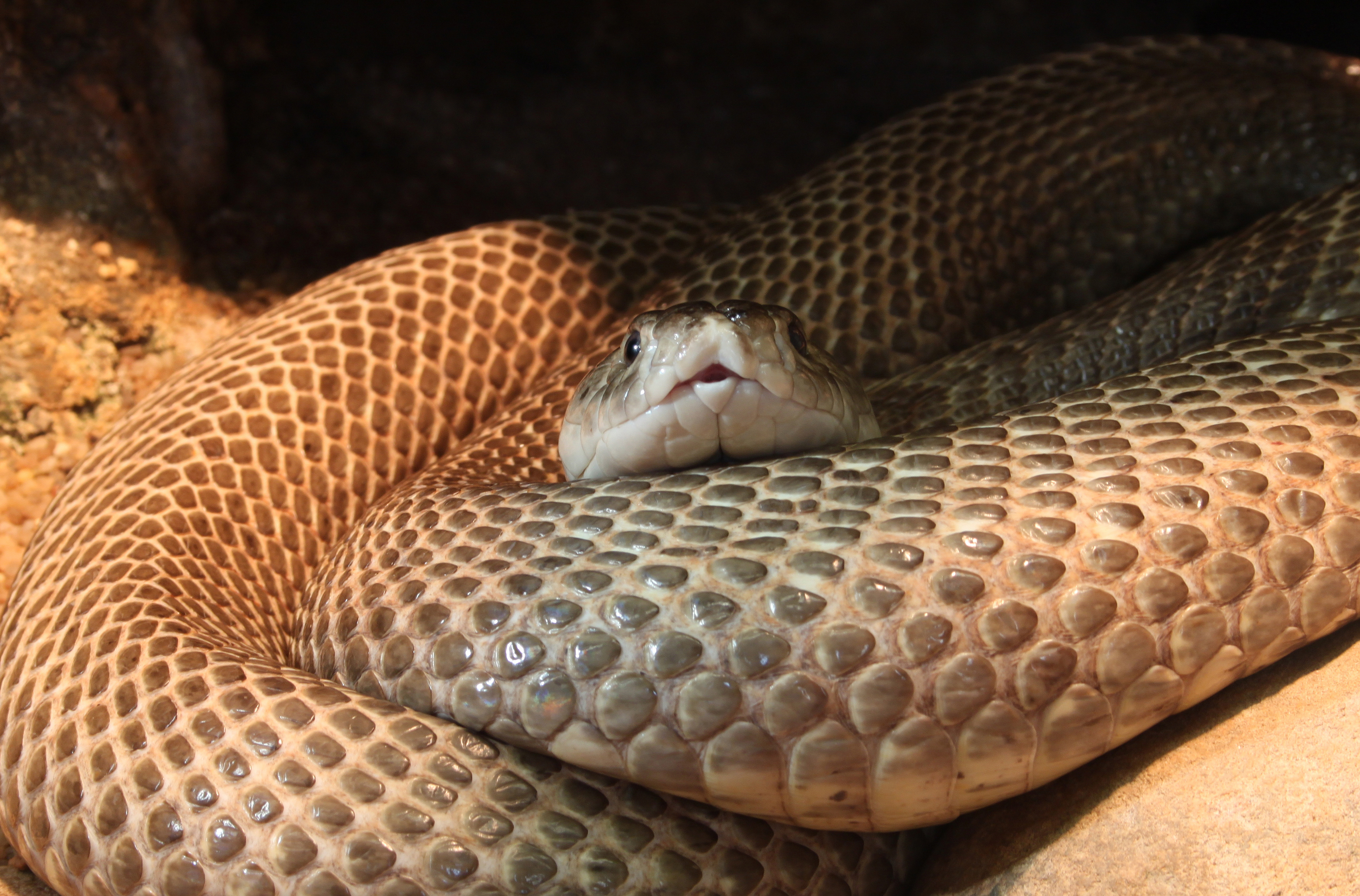
Banglapedia names three cobras in the country, and the clearest difference between the two Naja species is on the back of the hood. The spectacled cobra carries a black U-shaped mark with a light-brown border. The monocled cobra has a large black blotch or an O-shaped ring, encircled by a yellow or orange ring. Ecology Asia adds that the monocled cobra's colour varies widely, from yellowish and brownish to black, that a single pale eye marking on the hood gives the species its name, and that narrow bands may run across the back.
Animal Diversity Web describes how the hood works. A threatened cobra raises the front third of its body and spreads its neck ribs and loose skin outward. Banglapedia describes the king cobra as a different animal in several ways. Its hood is smaller than those of the other cobras, it is mostly active by day, it climbs and swims, and adults are dark to pale grey while the young have bright bands on the head and neck. Banglapedia says it is most numerous in the Sundarbans and occasionally seen in the forests of greater Sylhet and Chittagong.
These animals are themselves under pressure. Banglapedia describes cobras as threatened in Bangladesh, with the monocled cobra especially vulnerable and the spectacled cobra and king cobra endangered. Ecology Asia places the monocled cobra from northeastern India, Nepal and Bhutan through Bangladesh and southern China to Myanmar, Thailand, Cambodia, Laos, southern Vietnam and northern Peninsular Malaysia. It lives in lowland and hill forest up to about 800 metres and also in plantations, grassland and farmland such as rice paddies.
Why cobras turn up in houses, and what their young can do
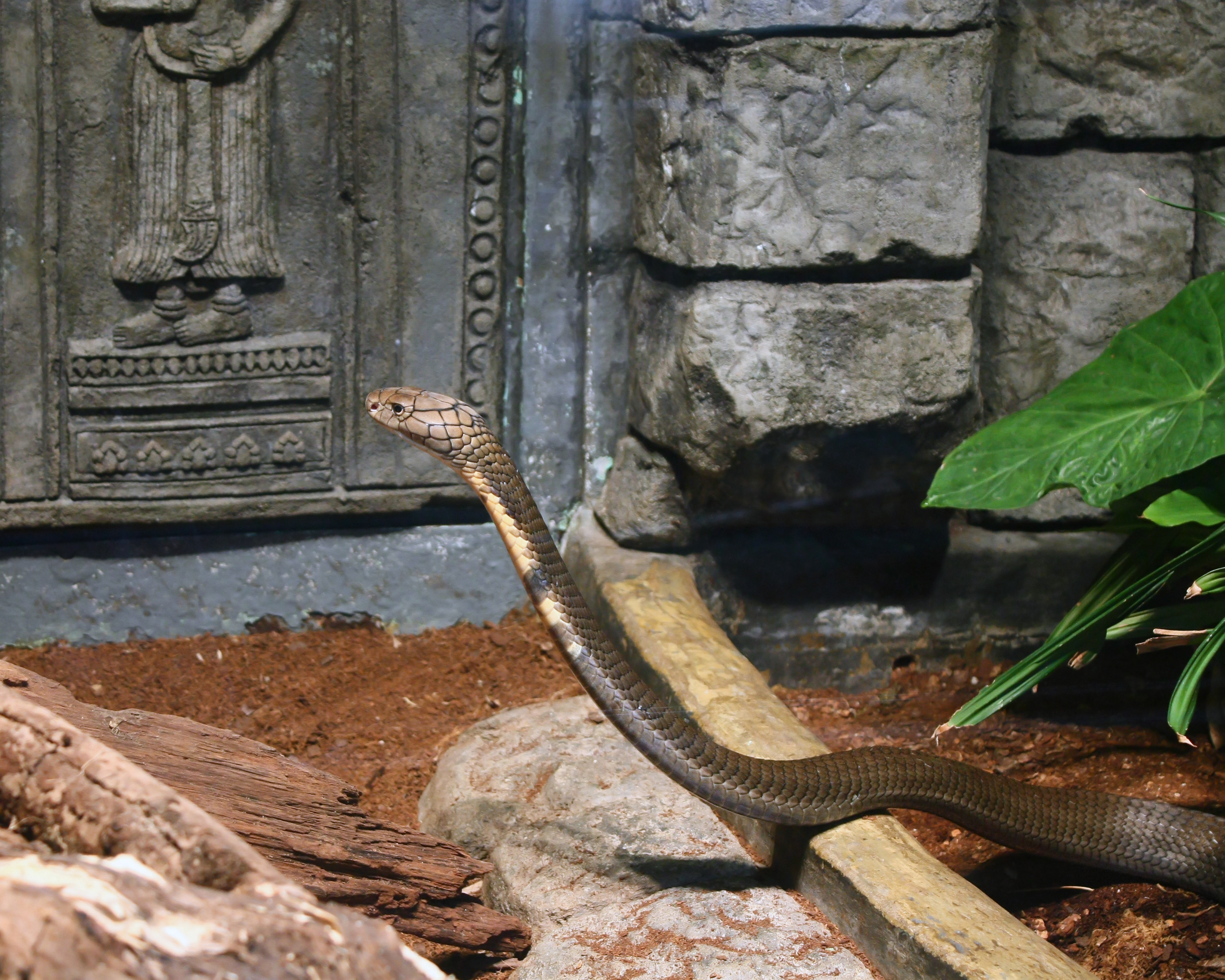
The rat hole in the Dhum account fits what authorities describe. Banglapedia says Bangladesh has about 90 snake species, of which more than three-fourths are non-venomous and fewer than half a dozen land snakes are highly venomous. It says gokhra and keutey live close to human homes, and that cobras are nocturnal and found near settlements, farmland and forests. Its Bengali entry lists the cobra's food as rodents, small birds, frogs and other amphibians and sometimes fish. Animal Diversity Web says the spectacled cobra sometimes enters buildings to hunt rodents.
Rodents are plentiful near people. Banglapedia counts about 25 rodent species in Bangladesh, notes that house mice and house rats live in human dwellings, and says the number of rats and mice is increasing at an alarming rate. It says farmers often dig out burrows, partly because they can recover stored rice from them, and that snakes are among the rats' natural predators, along with jungle cats, jackals, owls and monitor lizards.
House construction matters too. A national study of snakebite in rural Bangladesh, published in PLOS Neglected Tropical Diseases in October 2010, noted that many rural houses have mud floors where snakes can shelter, that bush around the homestead gives them habitat, and that grain stored in bedrooms attracts them. The director of a wildlife organisation, speaking to The Daily Star's Bengali edition in July 2021 about a cobra found in a home in Kamalganj, said that species was appearing more in settled areas because bushes and thickets were disappearing.
Banglapedia says a female cobra lays 10 to 25 eggs and guards them for about two months without incubating them, and that the eggs hatch in 60 to 70 days. Animal Diversity Web gives 12 to 20 eggs and about 50 days for the spectacled cobra, laid in a hollow tree or in the ground. The king cobra breeds differently: Banglapedia says the female builds a two-level nest of leaves and forest debris and lays up to about three dozen eggs, which hatch after about 70 days. The Mirsharai report describes none of this, only ten young snakes in one room.
Young cobras are small but not harmless. Animal Diversity Web says hatchlings are independent from birth and can rear up, spread the hood and strike right after leaving the egg. Wikipedia's account of the Indian cobra, citing the University of Adelaide's toxinology database, gives a hatchling length of 20 to 30 cm and says the young have fully functional venom glands. Banglapedia says cobra venom acts on the nervous system and can cause paralysis and death through respiratory failure or cardiac arrest.
Earlier finds of young snakes in Bangladeshi homes
Similar finds have been reported before, and in many of them the snakes did not survive. The Daily Star reported in July 2017 that about 125 snakes, each one to one and a half feet long, had come out of holes in a kitchen wall in Tanore, Rajshahi, and were beaten to death, with nearby eggs destroyed. In Satkhira, it said, local people killed 77 snakes found under the earthen floors of two houses, and 19 more at a house in Ashashuni. The paper noted that the identification as cobras came from local people. The Business Standard reported in November 2019 that eight venomous snakelets, called kali pans locally, had been dug from a hole under the floor of a house in Sonargaon, Narayanganj, along with about 300 egg shells, after the family had killed one.
Other reports describe a different outcome. In July 2021, The Daily Star's Bengali edition reported that a khoia gokhra found with 15 eggs at a home in Kamalganj had been released the same night in the Lawachara forest, with the eggs kept under forest department care. In the Kuakata case of August 2025, the forest department's Mohipur range worked with two local groups to free a snake caught in a net in a courtyard and release it. The range officer said the snake usually avoids people and that many people kill snakes out of ignorance, which harms the environment.
What snakebite costs Bangladesh
The fear reported in Mirsharai has a real basis. The 2010 national study surveyed 18,857 people and recorded 98 bites, which gave an incidence of 623.4 per 100,000 person-years, and it extrapolated this to about 589,919 people bitten a year in rural Bangladesh. Its estimate of 6,041 deaths a year rested on a single recorded death, which the authors acknowledged was not statistically stable. In the same study, October was the peak month with 22 per cent of bites, 23 per cent of victims were bitten at home or on the home premises, and cobras were described as a common source of daytime bites. The authors also said most bites in Bangladesh come from non-venomous snakes.
A newer figure appears in a paper on the national strategy published in the Journal of Bangladesh College of Physicians and Surgeons in July 2025. It cites a national survey of 2022, in an unpublished report to the government's Non-Communicable Disease Control programme, as estimating around 400,000 snakebite victims a year and about 7,500 deaths. Worldwide, the World Health Organization's 2019 strategy gave about 2.7 million cases of envenoming a year and 81,000 to 138,000 deaths.
Chattogram has its own record. A study in the American Journal of Tropical Medicine and Hygiene in 2017 examined 884 patients at Chittagong Medical College Hospital between May 1999 and October 2002 and identified 70 as bitten by the monocled cobra, from the dead snake or from venom antigen in the blood. Bites clustered in the early morning and evening during the monsoon months of May to July. Severe neurotoxicity developed in 58 patients, and local blistering and tissue death in 19, of whom 12 needed surgical removal of dead tissue. Indian polyvalent antivenom improved the neurotoxic signs but caused moderate to severe reactions in most patients.
The July 2025 paper also sets out the national response. It says the government issued snakebite guidelines in 2000 and updated them in 2008 and 2019, and later approved a National Snakebite Strategy and Costed Action Plan for 2023 to 2028, with the aim of cutting snakebite deaths and disability by half by 2030, in line with WHO's goal. Its four objectives are engaging communities, ensuring safe treatment including antivenom, strengthening the health system, and building partnerships. Snake conservation is listed among its community strategies. The paper names the round-the-clock snakebite clinic at Chittagong Medical College Hospital as an example of good management. It says that antivenom supply is still measured in vials bought rather than doses needed.
First aid, from the health authorities
Health authorities agree that a bite calls for a hospital without delay, and that the snake should be left alone. The advice below comes from MedlinePlus of the US National Library of Medicine and from Britain's National Health Service. The NHS says to get help whether or not symptoms appear, so anyone bitten should see a doctor even if they feel well.
- Keep the person calm and as still as possible, and carry them if they need to be moved.
- Keep the bitten limb still, with a loose splint or sling.
- Remove rings and tight clothing before swelling starts.
- Get medical help at once, and do not wait for symptoms to appear.
- Do not apply a tourniquet or tie anything tightly around the bite.
- Do not cut the wound or try to suck out the venom.
- Do not use ice, cold packs or water soaks.
- Do not chase, trap, pick up or try to kill the snake. If it is safe, photograph it from a distance or note its colour and shape.
- Treat a dead snake with caution, because its head can still bite by reflex for several hours.
Many of these points answer harmful habits that Bangladeshi researchers have documented. In the 2010 study, 86 per cent of victims went first to a snake charmer or ojha and only 3 per cent directly to a doctor or hospital, multiple cuts and wrongly tied tourniquets were common, and only 31 per cent kept the bitten part still. In the Chattogram study, ligatures were routinely applied before admission, and 37 patients first consulted traditional healers, most of whom cut around the bite. The MedlinePlus guidance also warns against picking up, playing with or provoking any snake without proper training, because many serious bites happen that way.
What the wildlife law says
On the date of this report, the law in force was the Wildlife (Conservation and Security) Act 2012. It defines wildlife to include animals of wild origin at every stage of their life cycle, so young snakes count as well as adults. Schedule 1, the list of protected animals, includes all three cobras. Section 6 says no one may hunt wildlife without a licence or a permit under the Act, and the Act's definition of hunting covers killing, catching, poisoning or harming wildlife, as well as collecting or destroying the nests or eggs of reptiles. Section 39 sets the penalty for breaching section 6 at up to one year in prison, a fine of up to Tk 50,000, or both, rising to two years, Tk 1 lakh or both for a repeat offence.
The Act also provides for animals that endanger people. Under section 8, when wildlife is a threat to human life or to property such as livestock and crops, the Chief Warden, an Additional Chief Warden or a Warden must give reasons and take effective steps to remove, kill or rehabilitate the animal, and report the matter to the advisory board and the scientific committee within 15 days. Section 9 says that when keeping a captured, rescued or seized wild animal in a cage or confinement endangers its life, the necessary steps must be taken to release it in a suitable natural environment. Section 30 allows the government to set up rescue centres for injured, seized, abandoned or donated wildlife.
The Jagonews24 report does not discuss how these provisions applied to the two Mirsharai rescues. Its only word from the forest department was the beat officer's statement that he had not been told about the young snakes and was looking into it.
Photo: Thomas Jaehnel / Wikimedia Commons (CC BY 2.0). The top picture shows a monocled cobra (Naja kaouthia), as background; it is not one of the Mirsharai snakes.
Sources: Jagonews24, Wildlife (Conservation and Security) Act 2012 and its schedules (bdlaws), Banglapedia, PLOS Neglected Tropical Diseases (2010), American Journal of Tropical Medicine and Hygiene (2017), Journal of Bangladesh College of Physicians and Surgeons (2025), World Health Organization, MedlinePlus, National Health Service, Animal Diversity Web, Ecology Asia, The Daily Star, The Business Standard, Khobor Sangjog, Wikipedia

Comments
(0)