
A python about 11 feet long that had left the forest and come into a village in Mirsharai upazila of Chattogram was rescued by the Forest Department and released in the Mohamaya hill forest on Wednesday, 29 October 2025, the news site Jagonews24 reported that day. Residents of the Mastannagar area of Zorarganj union saw the snake and called forest staff, who went to collect it at about 11pm on Tuesday. The report mentions no harm to any person or domestic animal, and it does not name the species.
What happened at Mastannagar
According to the Jagonews24 report, the episode began in Mastannagar, where residents noticed the python and informed Forest Department staff. The staff reached the spot at about 11pm on Tuesday, rescued the snake and took it away. The next day, Wednesday 29 October, it was released in the Mohamaya forest.
The report carries one official account, from Hasanuzzaman, the Forest Department's Zorarganj beat officer. “When residents informed us, we rescued the snake on the instructions of Chattogram divisional forest officer Md Shafiqul Islam,” he said. “The rescued python was released today (Wednesday) at Mohamaya Eco Park. The snake is 11 feet long.”
The report's opening gives the length as about 11 feet, and the beat officer gives 11 feet. It offers no weight, sex or health check, so none is added here. It says only that the snake left the forest and came into a populated area. Nobody in the report says which forest it came from or why it left.
Zorarganj and the Mirsharai landscape
Banglapedia describes Mirsharai as an upazila of Chattogram district covering 482.88 square kilometres. To the north lie the Indian state of Tripura and the Chhagalnaiya and Feni Sadar upazilas; to the south, Sitakunda upazila and the Bay of Bengal; to the east, Fatikchhari; and to the west, Sonagazi and Companiganj. It has 16 unions, Zorarganj among them, and the encyclopedia's entry gives a population of 398,716.
The same entry shows agriculture as the largest source of income, at 38.93 percent. Main crops include paddy, pulses, potato, brinjal, vegetables and bamboo, and main fruits include mango, jackfruit, banana, papaya, litchi and pineapple. Alongside the Feni River it lists the Isakhali, Mahamaya, Domkhali, Hinguli and Mayani canals. Homesteads, cropland, canals and forest land, in other words, all sit within one upazila.
Mirsharai's forest had been in the news before this rescue. Bonik Barta reported on 18 April 2025, citing the Forest Department, that an economic zone of about 33,805 acres in Mirsharai and Sonagazi included 22,335 acres of forest land handed to the Bangladesh Economic Zones Authority (BEZA), and that around 1.35 million trees had reportedly been cut. The department wanted 4,104 unused acres back, where dense gewa, keora and hargoja forest still supported deer, foxes, fishing cats, snakes and birds. A BEZA official said in that report that the land belonged to the government, that development had taken place there, and that returning it was the government's decision. In December 2022 The Daily Star had written that animals were displaced by an industrial city built on 23,500 acres of forest land in Mirsharai. Neither report mentions pythons, and no source links the Mastannagar snake to the zone.
The range that covers Zorarganj
Zorarganj has its own Forest Department beat, whose officer gave the account of this rescue. According to The New Nation on 21 July 2025, the Mirsarai Range under the Chattogram North Forest Division was running with just 11 personnel, and it included Gobania, Jorarganj, Hinguli and the Mohamaya Ecopark. On that description, the place where the snake was found and the park where it was released fell within one range. Jagonews24 describes the officer who gave the instruction as the “Chattogram divisional forest officer”, while earlier reports in The Daily Star and The New Nation name the division as Chattogram North.
Mohamaya lake and eco park
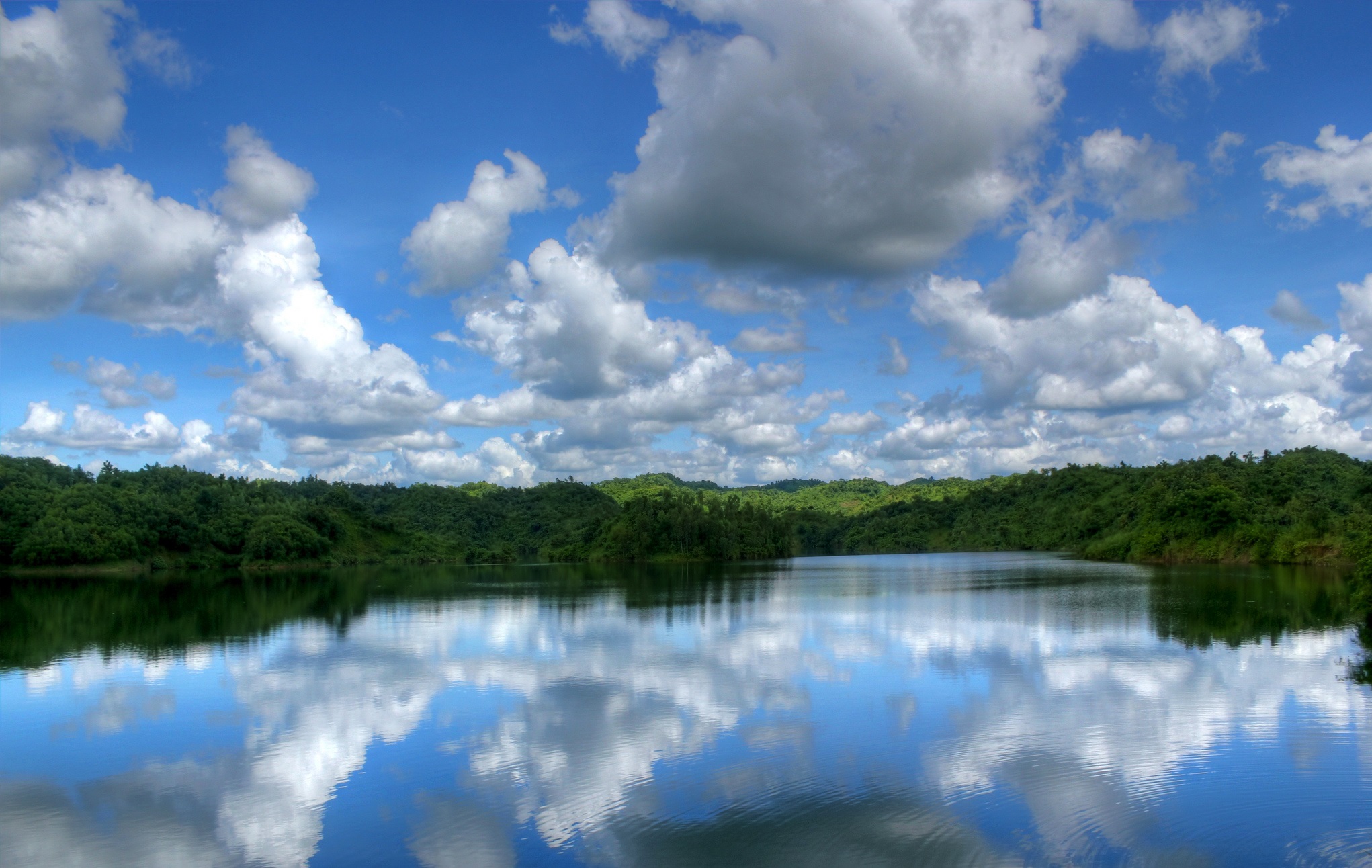
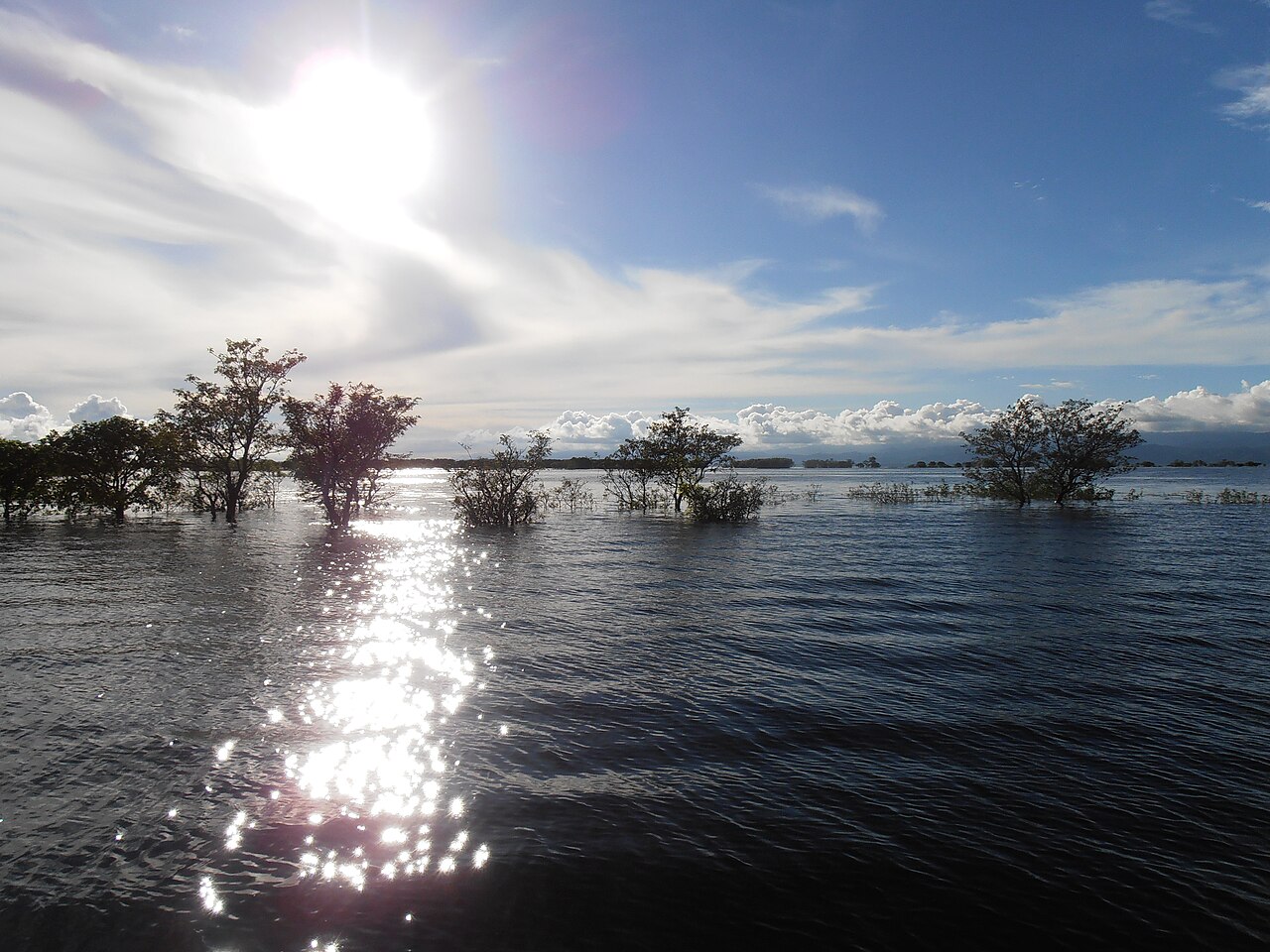
The snake was released at Mohamaya Eco Park, at Mirsharai's well-known lake. The Daily Star and the news agency UNB have both called it the country's second-largest artificial lake. UNB reported in September 2021 that it covers about 11 square kilometres in the hills, 2 kilometres east of Thakurdighi Bazar in Durgapur union, with springs, hill caves and rubber dams nearby, and that part of it is under the Bangladesh Water Development Board, whose water irrigates the surrounding land. According to Wikipedia, work on the Mahamaya irrigation project began in fiscal 2007-08 and construction finished in 2009, at a cost of about 230 million taka, and the project supplies water to about 3,360 hectares.
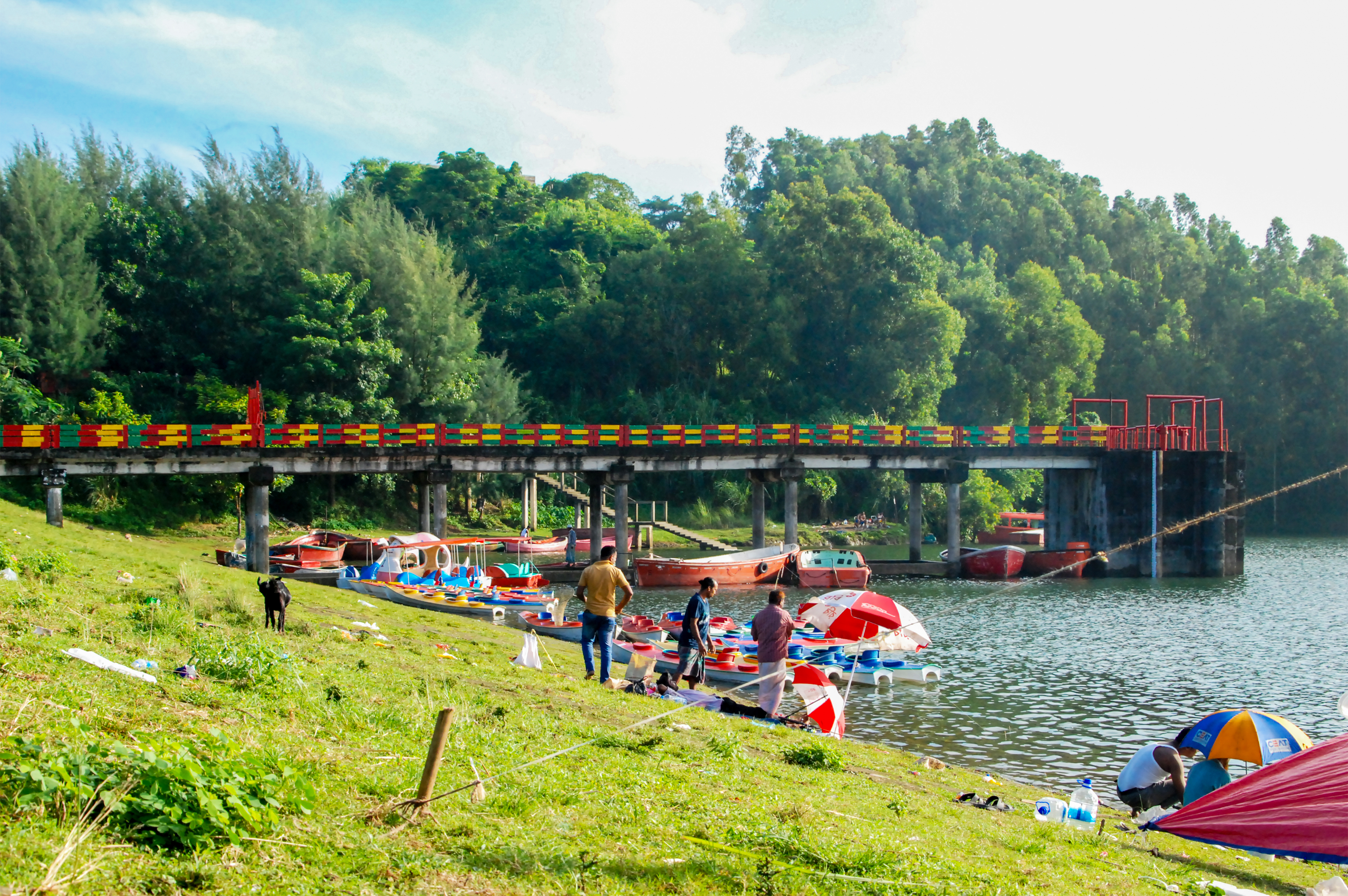
The park is both a visitor attraction and wildlife habitat. The Daily Star reported in October 2023 that the Chattogram North Forest Division had leased the eco park and lake for one year under a contract banning motorised boats, that more than 20 such boats were operating, and that the lessee admitted launching them and said the previous lessee had used boats too. Experts quoted in that report said such boats stir up lake sediment and leak oil that lowers dissolved oxygen. The forest division listed rohu, katla, mrigel and kalibaush in the lake, and migratory birds arrive from mid-December and leave between March and April.
In January 2024 the same paper reported that 150,000 native trees had been planted on 60 hectares of the lake's bank at a cost of Tk 60 lakh, among them dhaki-jaam, bhat, haritaki, bahera, amloki, dumur and kadam, mainly to give birds a habitat. A Chittagong University professor said then that birds would also need safety measures for the project to succeed. Section 2 of the 2012 wildlife law defines an eco park as an area of natural habitat for plants and animals and of scenic beauty, managed to create recreation for visitors, and declared by government notification.
Which python could it have been?
The report calls the snake only “ajagar”, the Bengali for python, and that word alone does not identify a species. The 2015 Red List of Bangladesh, published by IUCN Bangladesh in its reptiles and amphibians volume, gives “ajogor” as a local name for three species: the Burmese python (Python bivittatus), the Indian python (Python molurus) and the reticulated python (Malayopython reticulatus), also called golbahar. What follows is therefore general background on the country's pythons, and it does not establish what the Mastannagar snake was.
- Burmese python: the Red List places it in the forests of the northeast and southeast and in the Sundarbans mangrove. Assessed on 17 November 2014, it is Vulnerable, having been listed as Endangered in the 2000 list. Its numbers are decreasing. It is also Vulnerable on the global list.
- Indian python: recorded in northwest Bangladesh and possibly the Sundarbans. Little is known of its status in the country, so it is listed as Data Deficient.
- Reticulated python: restricted to the mixed evergreen forests of the southeast, very rare and Critically Endangered. The list cites habitat loss and hunting for meat and skin.
Older references read differently because the classification changed. The Red List explains that the Burmese python was once treated as a subspecies of Python molurus and that the two were separated as species in 2009. Banglapedia still follows the older scheme with two species: the rock python, the largest snake in the country at up to about 5.7 metres, and the reticulated python. A 2024 article in the journal Reptiles & Amphibians says Burmese pythons exist in all divisions of the country, whereas reticulated pythons have been recorded only in Sylhet and Chittagong divisions. Mirsharai lies in Chattogram division, but such general ranges cannot settle the species of one snake.
How a large python lives
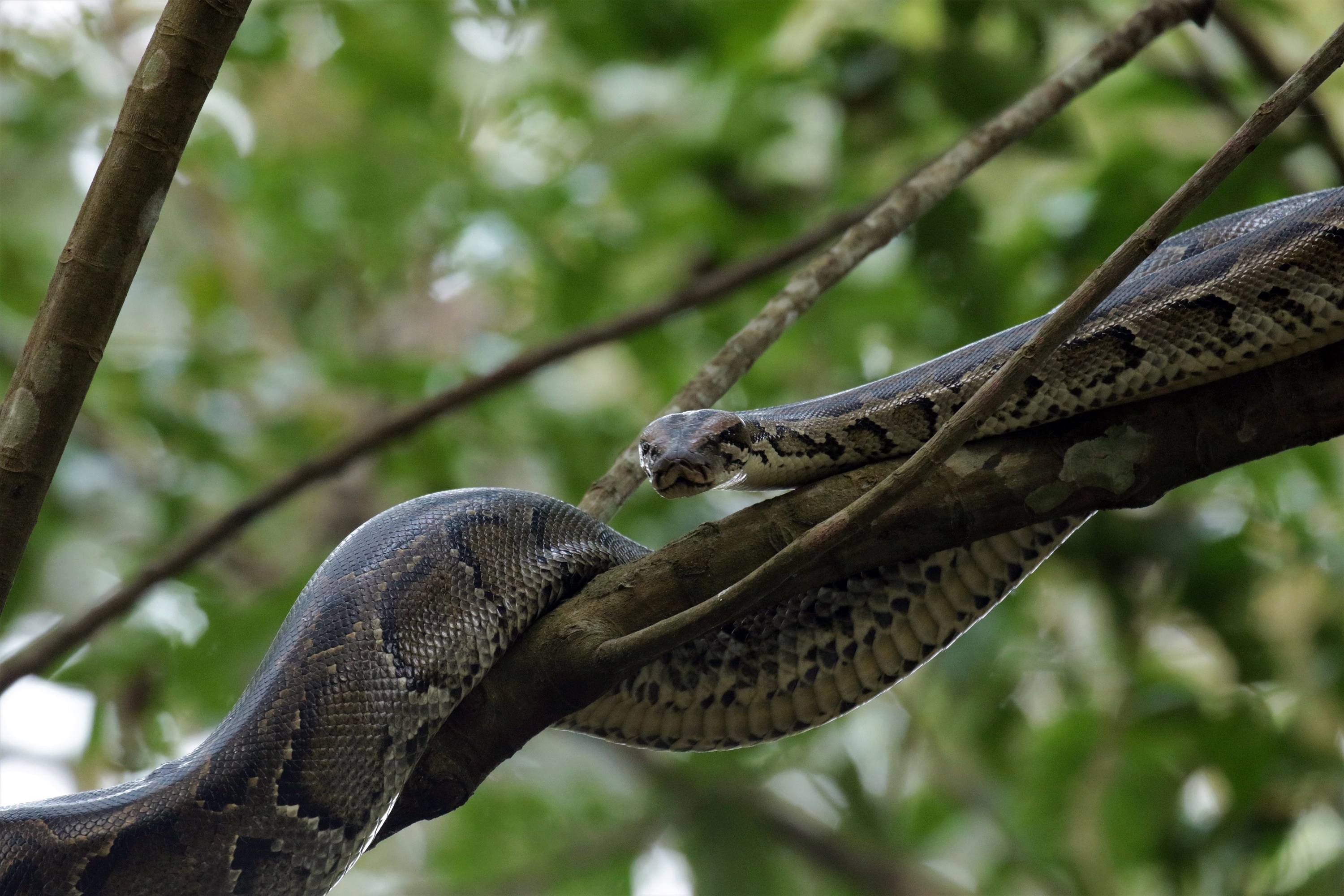
The Red List describes the Burmese python as living in humid forests, estuarine mangroves, rainforests, grasslands, marshes, streams, rivers and wetlands. It also turns up in wet rocky areas near streams and pools, large rotting logs, big burrows, caves, crevices and old ruined structures. It is more active at night than by day, is fond of water, swims well and climbs well. It hunts from ambush and kills by coiling around its prey. Its diet is mainly mammals and birds, with reptiles and amphibians as well. The Orianne Society's species profile puts adults at typically 3 to 5 metres.
According to the same Red List profile, a female lays up to 107 eggs in a clutch between March and June and stays coiled over them until they hatch, twitching her body to warm them; the eggs hatch in 60 to 80 days. Banglapedia says pythons take rats, hares, goats, sheep, jackals and deer, that the breeding season runs from December to February with eggs laid three to four months later, and that the mother does not care for the young after hatching.
A Forest Department wildlife officer told The Business Standard in December 2021 that the Burmese python is non-venomous, generally harmless to humans, nocturnal and solitary, and that it eats rodents, chickens, pigs, foxes and other animals. During a May 2025 rescue in Sherpur, a beat officer told bdnews24 that it is a protected species and important for the balance of nature. Banglapedia says Bangladesh has about 90 snake species, more than three-quarters of them non-venomous. None of this is advice to catch one. At Mastannagar, residents who saw the snake called the Forest Department, and forest staff did the capturing.
Why pythons reach villages: what research here has found
Why this snake came to Zorarganj is not known. The most detailed work on the country's pythons, however, comes from Lawachara in the northeast. The Bangladesh Python Project began in 2011 with support from the Orianne Society, in collaboration with the research group CARINAM and the Forest Department, and was later registered as the Creative Conservation Alliance. In July 2013 a radio transmitter was implanted for the first time in a female Burmese python in Lawachara National Park, a 1,250-hectare mixed evergreen forest surrounded by tea estates. By October 2018 the analysis of data from 10 pythons was complete. The Orianne Society, citing a 2014 study of Bangladesh pythons, gives a mean home range of 95.67 hectares.
A report the project filed with the Rufford Foundation in April 2016 has findings that bear directly on this kind of rescue. It said the pythons all showed homing behaviour: individuals found in villages had to be moved to the forest, and soon afterwards they travelled back to where they had been caught. The team recorded 19 incidents of human-python conflict during the study period. Pythons taking livestock, mainly domestic ducks, was becoming a pressing issue in villages around protected areas in the northeast, and four adult pythons were reported killed by villagers. The researchers also planned to recommend a compensation scheme for people affected.
The project's 2018 description is more explicit about the risks. It said long-distance moves increased the snakes' movement, could alter their natural history and might eventually lead to death. Because the human population is so dense, however, moving conflict animals may be the only realistic option, so it must be done cautiously. The team planned a best-practice manual for forest staff and villagers. The same year, a search of media reports from 2010 to 2017 found 93 independent reports of python captures and conflict, with pythons reported in 38 districts. In the Sangu-Matamuhuri forest, four observations of python hunting were logged after March 2018.
The search for food has come up more than once as an explanation. In February 2022 a Chittagong University zoology professor told The Daily Star that a python found on the campus and a fishing cat found in Hathazari might have come to the locality looking for food. A trainee researcher at the university's Venom Research Centre said much the same of a python found in a campus building in 2021. These were experts' guesses about those cases. The Jagonews24 report gives neither the distance from Mastannagar to Mohamaya nor any information on the snake after its release.
Earlier rescues in Chattogram
Pythons in populated parts of the Chattogram region were not new. In November 2019, The Business Standard reported, Forest Department staff acting on a tip from residents rescued a python about 10 feet long in the Hathazari area and released it in deep forest.
- December 2021: a 12-foot Burmese python tangled in a grille at Chittagong University's Social Science Research Institute was released into forest beside the biology faculty. The university's security officer said at least eight pythons had been rescued on campus in the previous 10 years.
- June 2024: villagers in Chunati, Lohagara, beat a five-foot python to death after mistaking it for a Russell's viper, at a time when misinformation about that snake had spread panic. A ranger from the Chunati wildlife office said killing such animals is a crime and that his office was working on public awareness.
- January 2025: a python about 7 feet long was found under a pile of scrapped gas cylinders in a warehouse at the Bangladesh Road Transport Authority's divisional office in Baluchara. It was released in the Hathazari-Charia forest.
- October 2025: only days before the Mirsharai rescue, a python about 7 feet long was found in a house in Purangor union, Satkania. The Forest Department collected it the next morning and released it in a reserve forest, the Chattogram South divisional forest officer said.
Similar reports came from elsewhere in 2025. In May a Burmese python found in a paddy field at Jhenaigati in Sherpur was released deep in the Rangtia Range forest, and in August a python about seven feet long, caught in a net around a vegetable field at Alikadam in Bandarban, was released in the Matamuhuri Reserved Forest. The pattern in these reports is the same: local people raise the alarm, and the Forest Department returns the snake to a nearby forest. Pythons have also gone to the forest by another route. Chattogram Zoo released 25 incubator-hatched young in 2019, and in July 2021 it released 28 hatched from 31 eggs at Sitakunda Eco Park. In July 2023, 16 more went to the 7,764-hectare Chunati Wildlife Sanctuary, and the zoo's deputy curator said 80 had been hatched in four years.
What the law said in October 2025
The law in force at the time was the Wildlife (Conservation and Security) Act, 2012. Section 6 says no person may hunt any wild animal without a licence or permit. Under section 2, “hunting” means more than killing: it includes catching, poisoning, injuring or harming a wild animal, driving it away for those purposes, and collecting or destroying the nests or eggs of reptiles. Section 39 sets the penalty for breaching section 6 at up to one year in prison, a fine of up to Tk 50,000, or both, rising for a repeat offence to up to two years, a fine of up to Tk 1 lakh, or both.
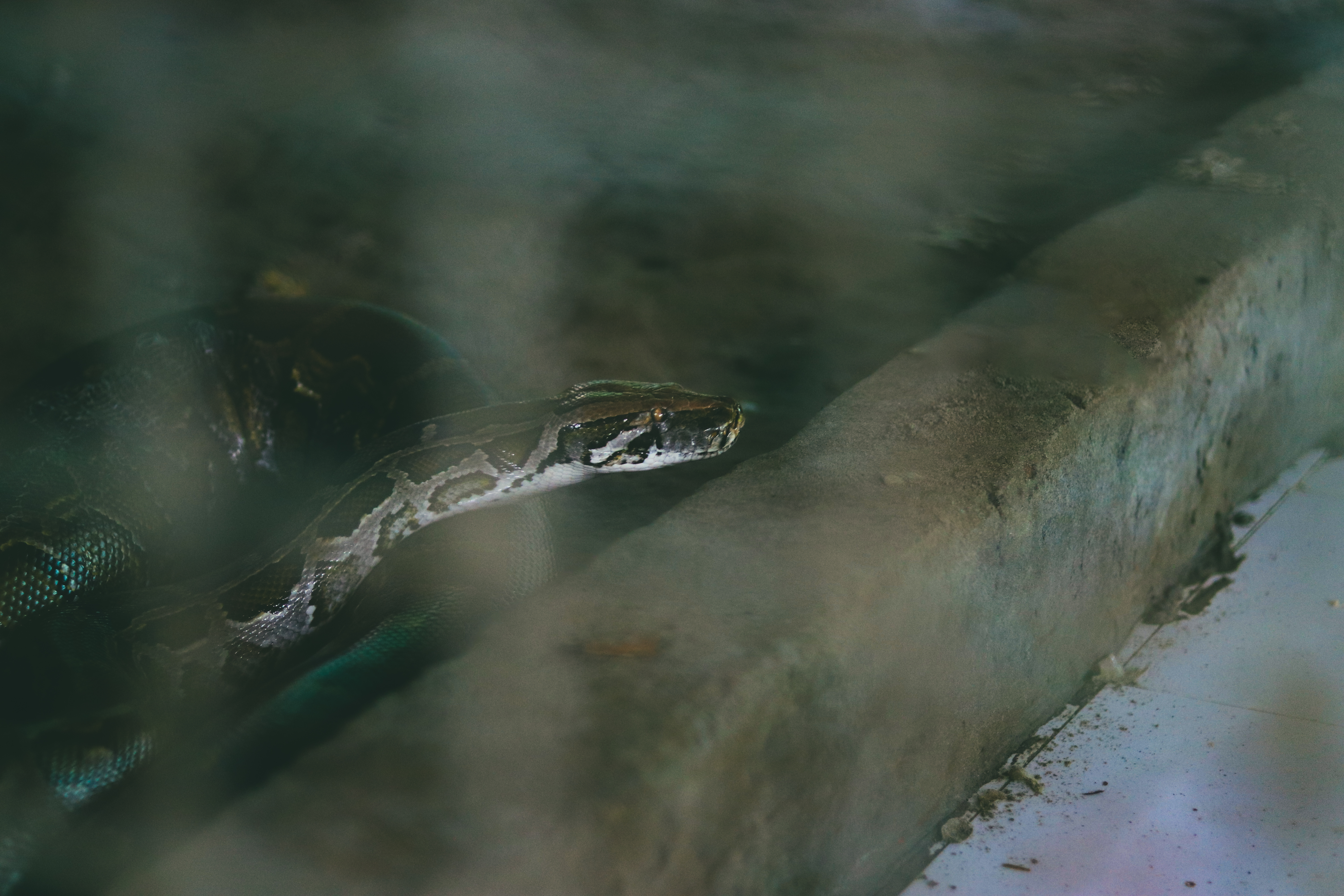
The Act also deals with rescue and release. Section 9 says that where keeping a caught, rescued or seized wild animal in a cage or in confinement endangers its life, the necessary steps must be taken to release it in a suitable natural environment. Under section 8, if a wild animal threatens human life or property, such as livestock and crops, the Chief Warden, Additional Chief Warden or Warden is to take effective steps to remove, kill or rehabilitate it, giving reasons, and report to the advisory board and scientific committee within 15 days. Section 30 empowers the government to set up rescue centres for the treatment and shelter of injured, seized or abandoned wildlife and to frame guidelines for releasing animals from them into nature. Forest Department officials have described the python as protected under the Act; one said in 2021 that harming or killing it is a punishable offence.
Photo: Hasib / Wikimedia Commons (CC BY-SA 4.0). The top picture shows Mohamaya Lake in Mirsharai in October 2014, as background; it was not taken at the python's release.
Sources: Jagonews24 (29 October 2025), IUCN Bangladesh (Red List of Bangladesh, Volume 4, 2015), Banglapedia, Wildlife (Conservation and Security) Act 2012 (bdlaws), Creative Conservation Alliance and Rufford Foundation project reports (2015, 2016, 2018), Experiment (2013), The Orianne Society, Reptiles & Amphibians (2024), The New Nation (21 July 2025), Bonik Barta (18 April 2025), The Daily Star (14 July 2021; 25 February and 20 December 2022; 16 October 2023; 23 January and 22 June 2024; 7 January 2025), The Business Standard (9 November 2019; 29 December 2021; 21 July 2023; 25 October 2025), bdnews24 (18 May and 17 August 2025), UNB (12 September 2021), Wikipedia (Mahamaya irrigation project)
Comments
(0)