
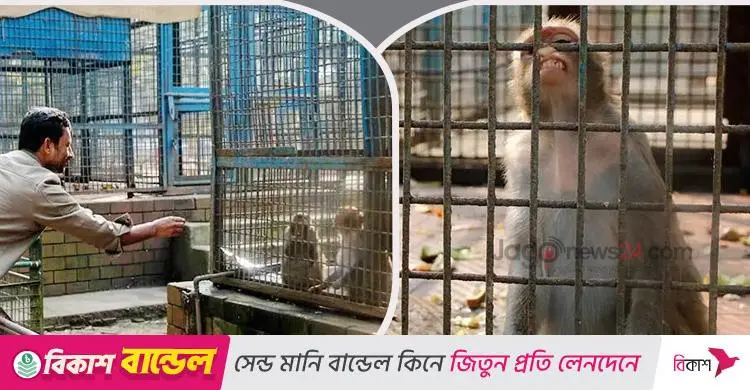
Little Rishan enters the zoo holding his father's hand, looking around with curious eyes. In a corner of a cage sits a monkey, quiet and completely still. Rishan stares in wonder. But a few young men standing nearby pick up stones and throw them at the monkey, and someone else throws a water bottle and laughs. Frightened, the monkey suddenly jumps into a corner of the cage. Confused, Rishan looks up at his father: "Why are they doing this?"
Many of us see scenes like this, but most of the time we stay silent, as if the feelings of the animals in the cages had no value at all. Yet these animals feel fear, pain and irritation too.
Stones, bottles and insults
Countless visitors come to the zoo at Mirpur in the capital every day, some with families, some in school groups, some with friends. In these moments of enjoyment, visitors are often seen throwing stones into cages, hurling fruit or food, shouting abuse, or banging sticks or bottles on the cages to scare the animals.
The animals become frightened and behave abnormally, and are sometimes injured. Some stop eating out of fear and even fall ill.
According to zoo sources, animals are often frightened or hurt by careless visitor behaviour. Stones are most often thrown at tigers, lions and monkeys. Then there is the harassment: waking animals from sleep and taunting them in public are common, causing the animals physical and mental harm.
We often forget that animals can feel. Caged animals are frightened by this human behaviour, and it makes them restless.
What research shows
A study centred on the zoo found that visitor behaviour directly affects the animals' mental state. The study, published in the Bangladesh Journal of Veterinary and Animal Sciences, said: "As the number of visitors and their noise increases, restlessness and fearful behaviour become more evident in many caged animals. Signs such as abnormal pacing, sitting huddled in one place or jumping up in panic at noise were seen especially among monkeys and deer, which indicate mental stress."
Under Bangladesh's Animal Welfare Act 2019, cruelty to animals is a punishable offence. Hitting, teasing or frightening animals in a zoo is legally banned. In practice, however, action is rarely taken against visitors for such behaviour. Some warning signs hang at the entrance, but most visitors ignore them.
A zoo is not just a place of entertainment; it is a place of education and conservation. The animals' natural environment is kept as far as possible so that people can learn about them up close, but irresponsible visitor behaviour undermines this purpose.
According to aware members of society, building awareness of how animals are treated in the zoo requires separate guidance for visitors and strict supervision. Children need to be taught empathy for animals from an early age.
A pledge for World Animal Day
Today, 4 October, is World Animal Day, with programmes on animal rights and welfare in many parts of the world. On this day we too should ask how responsible we are as visitors. The monkey in that cage cannot speak or protest, but we can. Not disturbing the animals, and speaking up when we see others do it, is our duty as visitors. This small step could be the start of a big change.
Cruelty to zoo animals not only increases their suffering but also calls our society's humanity into question. Loving animals does not mean only petting a dog or cat; it means being compassionate towards every animal. On this Animal Day, let us pledge that, looking into the eyes behind the bars, we will not throw another stone.
Source: Jagonews24. First published in Bengali on The Agro News.



Comments
(0)