
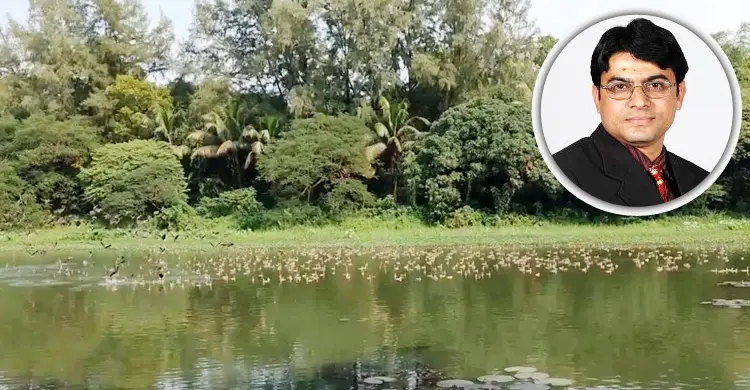
Winter and migratory, or "guest", birds seem to go together. Besides the haors and coastal areas, migratory birds have arrived in several places on the plains and will be seen for the next few months. Many know them as guest birds, but a renowned researcher at Jahangirnagar University (JU) believes it is more accurate to call them migratory birds.
According to experts, these birds start arriving in Bangladesh at the end of the monsoon and before winter. They can be seen in haor areas, on islands such as Sonadia in Cox's Bazar, on the JU lakes, at Durgasagar in Barishal, Nil Sagar in Nilphamari, Hura in Sirajganj, and at Nijhum Dwip, Dhalchar, Char Kukri Mukri and Dublar Char. By the end of March they return to their summer homes.
Because of its quiet surroundings, migratory birds come to the JU campus every winter. They frequent the lakes beside Jahanara Imam and Pritilata halls, the lake by the registrar building, and the lakes by the Wildlife Rescue Centre and the swimming pool.
According to the university's zoology department, migratory birds first came to the campus in 1986. Sixty-nine foreign species have been seen among them. Most are whistling ducks or other duck species, which like to spend part of the day on water and feed on aquatic plants and insects there. In recent years about 205 species, named and unnamed, have been seen on the lakes, including balihans, sorali, jolpipi, lenja, large and small sorali, patari, chakhachakhi, jiriya hans, northgiria, khanjana, Chinese duck, garganey, rainek, taiga, common chil, pantamukhi, pati hans, panimurgi, cotton chil, patibatan and nilshir.
Guest or migratory?
A guest, the argument runs, is someone whose coming has no fixed date and is optional. These foreign birds, however, come to countries with relatively warm weather out of necessity: to escape the cold, find food and breed. It is also a means of survival for them. That is the view of M Monirul H Khan, professor of zoology at JU and a wildlife expert.
He told Jago News that it is more accurate to call the birds that come to Bangladesh migratory birds. Migratory birds travel from one place to another and return. Calling them guests sends the wrong message that they come to visit and may or may not come as they please, which is not the case.
Professor M Monirul Khan said migratory birds have two homes, one for winter and one for summer. A problem in either threatens their survival.
There is an international convention on migratory birds and animals which says that the countries where they spend summer and winter, or over which they travel, are also their countries. Bangladesh is a signatory. By that measure, the birds that come here are not guests, the professor added.
Where Jahangirnagar's migrants come from
Many people assume migratory birds come from Siberia, Russia or Europe. But Professor M Monirul said the great majority of the birds that come to JU come from the Himalayas, where the cold is more severe. Some are thought to come from Central Asia, Siberia, North Asia and some from Europe.
How the migrants are faring at Jahangirnagar
Some of the birds that come to JU settle on waterbodies and some in trees and bushes. In the first week of November this year a good number were seen on the lake beside the campus transport area, filling the campus with their calls. But since mid-December they have not been seen on that lake.
Bird expert Kamrul Hasan, a professor of zoology, believes the birds left mainly because of disturbance and moved to the relatively quieter lake inside the Wildlife Rescue Centre.
Professor M Monirul H Khan voiced similar concern. Analysing the past few years, he said, migratory bird numbers are falling not only on the JU campus but across the country, alarmingly so in many places. The diversity of birds on waterbodies is shrinking day by day; several kinds of migratory duck that used to come no longer arrive as before.
Campus development, migratory birds and butterflies
JU's zoology department holds a fair every year to raise public awareness of the conservation of migratory birds and butterflies. But while the university pursues nature conservation, it is also cutting trees for infrastructure development. At the latest butterfly fair, entomologist Professor Monowar Hossain said: "Let there be development; we have no quarrel with development. But along with it, let a specific area of the campus be declared protected." The campus once had 120 species of butterfly, now down to 52. If this continues, there may come a time when no butterflies can be found on campus, he said.
Likewise, any infrastructure development damages wildlife's natural habitat, there is no doubt about that, said Professor M Monirul H Khan.
Those concerned also believe a tall building of the Public Administration Training Centre near the university's Wildlife Rescue Centre, and six 10-storey residential halls on campus, will obstruct the birds' "flying zone". They have therefore urged that the natural environment of Jahangirnagar University be protected.
Source: Jagonews24. First published in Bengali on The Agro News.
Comments
(0)