
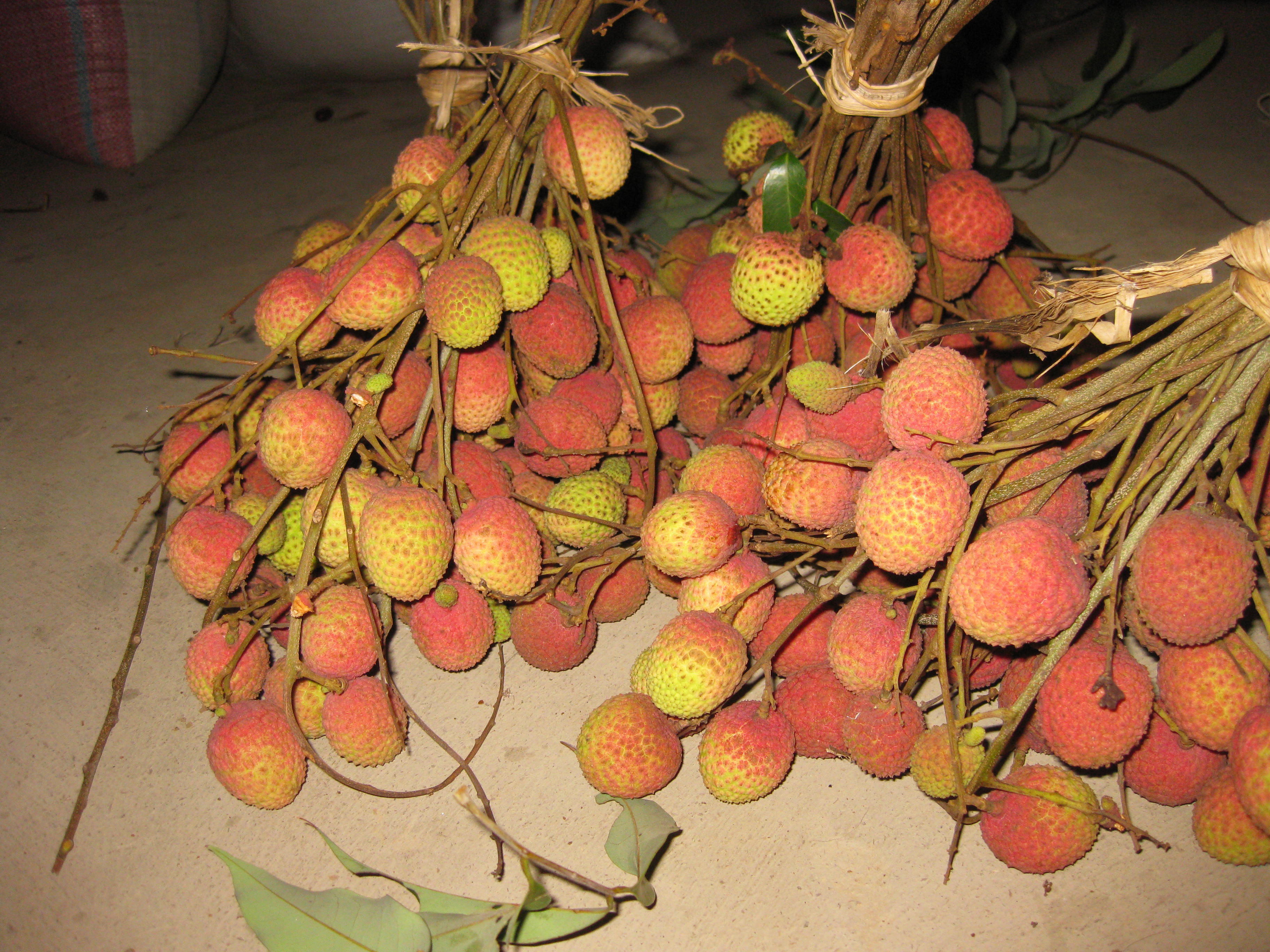
Orchard owners, farmers and fruit traders in Meherpur, a small district on Bangladesh's western border, were breathing more easily in May 2026. After heavy losses on lychee the year before, they told Jago News that favourable weather, plentiful blossom and comparatively little disease had raised hopes of a bumper crop. Early 'aanti' lychees had begun to ripen in orchards across the district, and sales had started in the week Jago News published its report on 22 May 2026. Strong demand for Meherpur's lychees in other parts of the country had put orchard owners and traders in good spirits.
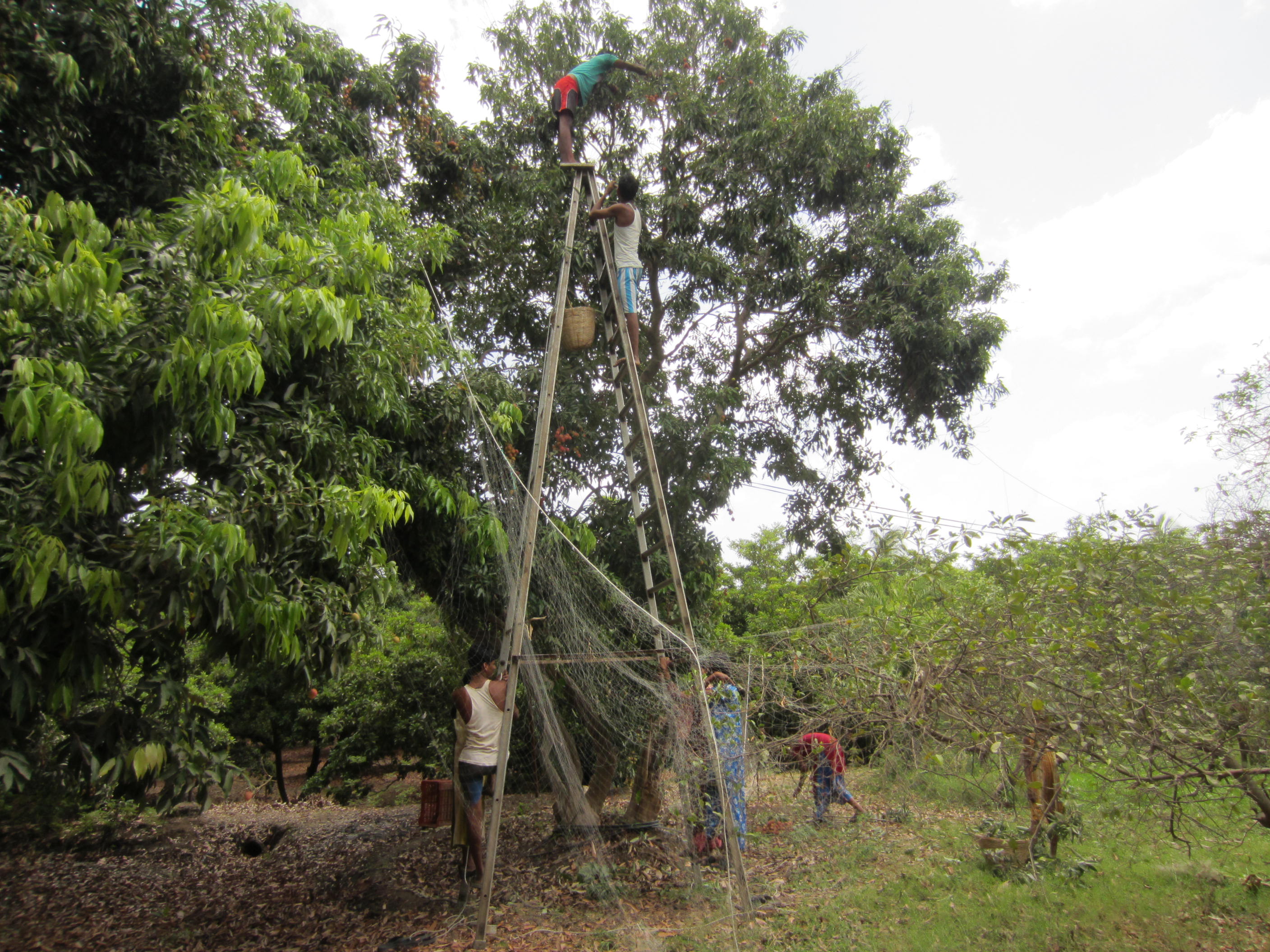
The report described orchards across the district coloured by ripe and half-ripe fruit hanging in clusters, and a festive mood in the gardens. Picking began at first light. Workers climbed into the high branches to cut the bunches and drop them, while others on the ground gathered and sorted the fruit. The lychees were then packed neatly into plastic crates and sent to different parts of Bangladesh.
Area, expected output and what growers said
According to the Department of Agricultural Extension (DAE), as quoted by Jago News, lychee was grown on about 730 hectares in Meherpur in the 2026 season, and the orchards were expected to produce about 6,800 tonnes. People involved in the trade said that if the weather stayed favourable, lychee would play an important part in the district's economy that year.
Other reports in the weeks before gave somewhat different district figures. On 3 May 2026 the state news agency BSS, citing the district's agriculture extension office, reported that Meherpur had grown lychee on 715 hectares in 2025 and produced 6,110 tonnes worth more than Tk 50 crore, and that the area had risen to about 800 hectares in 2026; growers expected trade worth about Tk 55 crore if the market held. On 14 May 2026 ITV quoted the DAE's deputy director in Meherpur, Sanjib Mridha, as saying the district had about 600 hectares of orchards of the Bombay, China-3 and Mozaffar varieties.
Orchard owners told Jago News the yield was much better than the year before. Favourable weather had left the trees heavy with fruit, and satisfactory prices had largely removed the fear of losses.
Orchard owner Zaker Ali said: "Last year we suffered a lot of damage because of the weather. Many trees did not give the yield we wanted. But this time the trees have borne plenty of fruit, and the yield may be almost double last year's. We are getting good prices too. I hope to make a good profit this time."
Traders and the markets beyond Meherpur
Fruit traders were pleased as well. They said the taste, sweetness and quality of Meherpur's aanti lychee had given it a name of its own in different parts of the country, and that demand in the market was strong as a result.
Fruit trader Abdul Kuddus said: "Meherpur's aanti lychee tastes very good. Traders are coming from different districts to take lychees. Every day lychees are being sent to Dhaka, Cumilla, Barishal, Bogura and other places."
Lychee trader Ahsanul Haque said: "Meherpur's lychee has a reputation of its own. Traders from different districts contact us every day, and demand in the market is very good."
Meherpur's fruit has travelled to distant markets for years. In May 2018 The Financial Express reported from Meherpur that the district grew Ati, Bombay, Mozaffar and China-3 lychees and that its fruit went to markets in Dhaka, Chattogram, Sylhet and Barishal. The BSS report of 3 May 2026 likewise said the district's lychees, especially the local Mozaffar and the newer Bombay variety, were in demand across the country, that Dhaka and other large cities wanted them, and that wholesale traders were buying straight from the orchards.
Prices elsewhere that month show the market Meherpur's growers were selling into. In Rajshahi, BSS reported on 3 May 2026 that lychees had begun to reach the city's markets in limited quantities and were selling at Tk 5 to 6 each, or Tk 500 to 600 per hundred, at Saheb Bazar, higher than the year before. Traders there blamed a long drought and intense heat, which had stopped many fruits from maturing and made some burst before ripening. In Magura, bdnews24.com reported on 18 May 2026 that local varieties were selling for Tk 1,700 to 2,100 per thousand and Bombay and China-3 for Tk 2,600 to 2,800 per thousand, with demand helped by the geographical indication (GI) granted to Magura's Hazrapuri lychee on 30 April 2025.
Farmers turning from field crops to orchards
The Jago News report found that repeated losses on field crops were leading many farmers in Meherpur to turn to fruit orchards. Interest was growing in improved and grafted lychee varieties alongside the aanti lychee, and many farmers were planting new orchards because of the chance of a larger profit from a smaller piece of land.
Lychee grower Azizul Haque said: "Paddy and other crops do not pay as they used to, so I am now planting a lychee orchard. If the care is done properly, it is possible to earn well. This year, lychees worth Tk 1 lakh to Tk 1.5 lakh are being sold from one bigha of land after spending Tk 30,000 to 40,000."
A study of lychee growers in Meherpur Sadar and Mujibnagar upazilas, published in the South Asian Journal of Agriculture in 2022 by Ibnat, Ahmed, Jaman and Amin, shows who grows the fruit there. The researchers interviewed 60 growers in May and June 2019. Most of them (58.3 per cent) had started growing lychee between 1996 and 2012, and 51.7 per cent had begun to collect fruit early, three to five years after planting. Eight in ten (80 per cent) had given only a small area, up to half a hectare, to lychee. Eighty per cent grew the Bombai variety, 73.3 per cent had between 86 and 135 trees in their orchard, and about a third (30 per cent) kept a spacing of 4.65 by 6.20 metres between trees.
The same study recorded the difficulties behind those figures. Two in five growers (40 per cent) harvested a moderate yield of 100,001 to 200,000 fruits a hectare, but 81.67 per cent said they received a low price, up to Tk 125,000 a hectare, from their orchards. Fruit and shoot borer had infested the orchards of 68.33 per cent of the growers, and fruit rot those of 45 per cent. Every respondent named the lack of training in lychee cultivation and the short shelf life of the fruit as the most severe problems, and the authors concluded that proper, adequate and timely extension work would reduce them.
The grafted plants the farmers spoke of are usually raised by air layering, which the FAO's 1999 country paper on lychee in Bangladesh, written by S. B. M. Abu Baker Siddiqui, describes as the standard method. A ring of bark 2.5 to 3 centimetres long is removed from a twig about a year old and 60 to 75 centimetres long, the exposed wood is wrapped in a rooting medium of clayey soil mixed with sand and organic manure, and roots form in about two months. The paper gives July, after the harvest, as the best time, when soil moisture and humidity are highest, and notes that government nurseries were producing about 90,000 such plants a year at the time.
Safe-fruit advice from the agriculture office
To make sure consumers got safe fruit, Jago News reported, the agriculture department was advising farmers regularly. It stressed growing lychee safely without harmful chemicals, and was making farmers aware of timely irrigation, control of pests and diseases, and proper orchard management.
Sanjib Mridha, deputy director of the DAE in Meherpur, said: "We are advising farmers regularly so that they care for their lychees in safe ways. We are making them aware of timely irrigation, disease control and staying away from harmful chemicals. This way consumers will get safe fruit and farmers will also profit."
Why the warning about chemicals matters is shown by research on an outbreak in a lychee-growing community in northern Bangladesh in 2012, published in The American Journal of Tropical Medicine and Hygiene in 2017 by Islam and colleagues. The outbreak affected 14 children, 13 of whom died, during the lychee harvesting season. The researchers found that multiple pesticides, including some banned in Bangladesh, were frequently used in the orchards. Illness was associated with visiting a lychee orchard in the days before falling ill, with family members working in an orchard and with visiting a garden while pesticides were being applied, but eating lychees was not associated with illness in their case-control study. They linked the outbreak to orchard exposures where agrochemicals were routinely used, not to eating the fruit.
Agriculture officials in Meherpur have also warned for years against picking the fruit before it is ripe. In May 2018 the DAE's deputy director in the district told The Financial Express that people who eat unripe lychee do not get the fruit's full nutrients and miss its taste. On 14 May 2026, about a week before the Jago News report, ITV found mostly green, unripe and half-ripe lychees on sale in Meherpur's market at Tk 200 to 220 for 80 fruits, although ripe fruit was still at least two weeks away. Orchard owners said they were picking early for fear of storms and because of damage by bats and birds; the agriculture department advised waiting at least 15 more days and putting the quality of the fruit before profit.
Doctors' advice is a separate matter from orchard practice. The BSS report from Rajshahi on 3 May 2026 said medical professionals advised against eating lychees on an empty stomach and urged guardians to take particular care over children. In Muzaffarpur in India, the US Centers for Disease Control and Prevention's weekly report (MMWR) described in January 2015 outbreaks of an unexplained neurological illness among children during the lychee seasons of 2013 and 2014. Low blood sugar was a defining feature, and investigators were examining a possible link to methylenecyclopropylglycine (MCPG), a compound in lychee seeds known to cause low blood sugar in animal studies. The report's recommendations centred on getting affected children to medical care quickly and on doctors checking for and correcting low blood sugar. Anyone with a question about eating lychee, especially for a child, should ask a doctor.
Storms, heat and early picking in the 2026 season
The good harvest came after a rough start to the season. At about 10.30pm on Saturday 18 April 2026 a nor'wester struck Meherpur for about half an hour, with winds of 70 to 80 kilometres an hour. bdnews24.com reported the next day that, according to Sanjib Mridha, crops on 609 hectares had been affected, among them maize, mango, lychee and various vegetables; the district had 2,800 hectares of mango orchards that season. The storm also uprooted 15 electricity poles, left 16 more leaning and cut power for about 12 hours, according to the rural electricity office.
Lychee is sensitive to such weather at every stage. The FAO paper notes that moisture stress while the fruit is developing causes fruit drop, that bats and birds cause serious damage at the ripening stage, and that poorly managed trees fall into alternate bearing, giving half the yield or even less in the following years. It also says lychee flowers when soil moisture and humidity are very low, and that the fruit matures about 55 to 60 days after it sets.
The previous season had been hard in other lychee districts too. The Business Standard reported on 28 April 2025 that in Ishwardi, in Pabna, heavy rain followed by an early rise in temperature had made trees put out leaves instead of flower buds, and that officials expected about 30 per cent less lychee there. In Dinajpur, bdnews24.com reported on 26 May 2025 that heavy rain and heatwaves before the harvest had damaged the crop and forced growers to pick early, selling ripe and unripe fruit together to limit their losses.
Meherpur and its lychee belt
Meherpur district covers 751.62 square kilometres and has three upazilas: Gangni, Meherpur Sadar and Mujibnagar, according to Banglapedia, the national encyclopaedia of Bangladesh. It borders India's West Bengal to the west, Kushtia to the north and east and Chuadanga to the south and east, and its rivers include the Bhairab, Ichamati, Mathabhanga and Kazla. The 2011 census counted 655,392 people in the district, and agriculture was the main source of income for 68.95 per cent of them. Mujibnagar is where the proclamation of independence was read and the first provisional government of Bangladesh took its oath on 17 April 1971.
Lychee is part of the fruit list of all three upazilas. Banglapedia names mango, jackfruit and litchi as the main fruits of Gangni, the largest upazila at 363.95 square kilometres; mango, jackfruit, litchi and banana as those of Meherpur Sadar, which also counts mango, litchi and jackfruit among its main exports; and litchi among the fruits of Mujibnagar, which was formed as an upazila on 24 February 2000.
Earlier reports trace the crop's rise. On 9 May 2019 Prothom Alo reported that lychee was grown on 577 hectares across the district's three upazilas, with an expected yield of 8 tonnes a hectare, and that the China-1, China-2, China-3 and Bombay varieties were grown there. That year lychees reached Meherpur's markets in late April, earlier than usual, after the heavy rain brought by Cyclone Fani, and sold for Tk 120 to 140 for 80 fruits. A grower in Kathuli union of Gangni told the paper he had 127 trees, of which 30 were then bearing fruit. The district's deputy director of agricultural extension at the time said Meherpur's mangoes and lychees tasted better than those of other regions.
The lychee and the varieties grown in Bangladesh
The lychee (Litchi chinensis) belongs to the family Sapindaceae. Banglapedia says it originated in China and reached Burma and India by the late 1600s. In Bangladesh it can grow almost anywhere but is cultivated mainly in Rajshahi, Rangpur, Dinajpur, Jessore, Kushtia, Mymensingh and Narayanganj, and among the country's tree fruits it is second only to mango in production. The tree is a medium to large evergreen, 12 to 15 metres tall, and the edible part, the aril, makes up 50 to 75 per cent of the fruit's weight and contains mainly sugars, with protein, fat, vitamins B and C, calcium and iron. Nutrition data from the US Department of Agriculture, as given in Wikipedia's entry on the fruit, put 81.8 grams of water, 66 kilocalories and 71.5 milligrams of vitamin C in every 100 grams of raw lychee.
The FAO paper says lychee came to Bangladesh from Burma in the early 19th century, and that Chinese and Indian cultivars arrived in the early 20th century through nurserymen in West Bengal. It describes Bombai as the most widely cultivated variety, an early one that matures in the second week of May, gives 7,000 to 8,000 fruits a tree in good orchards and has 17 to 18 per cent total soluble solids (TSS), a measure of sweetness. Muzaffarpuri also matures in the second week of May. Bedana, considered the best variety, matures in the second week of June but gives only 2,000 to 3,000 fruits a tree, and China-3 is a late variety ripening in the last week of June with 4,000 to 5,000 fruits a tree. The Bangladesh Agricultural Research Institute (BARI) had released BARI Lichu-1, -2 and -3. Trees start to bear at about five years and reach their peak at 20 to 30.
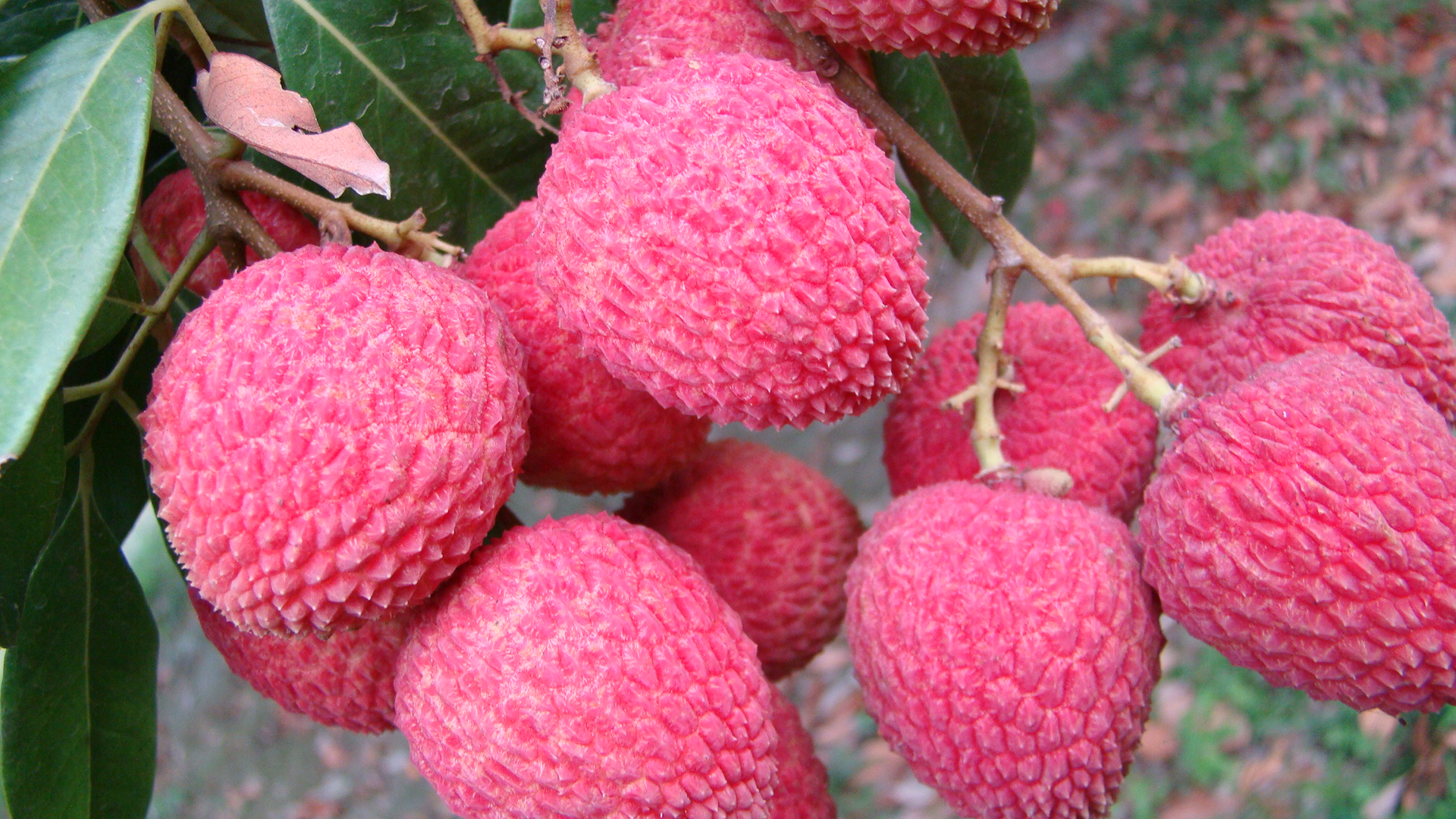
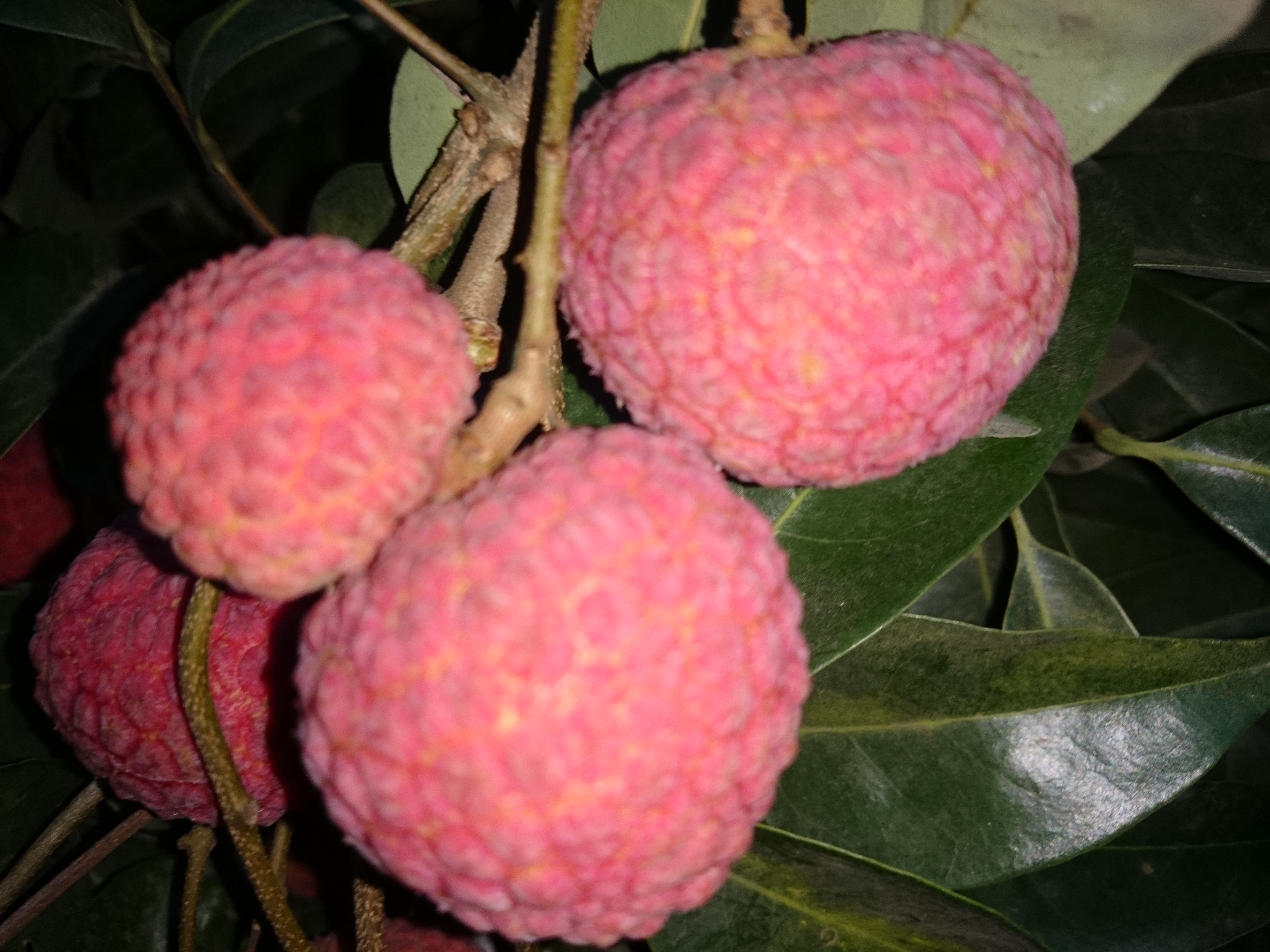
China-3, one of the varieties named in Meherpur, has round fruits weighing about 25 grams each, with red, orange and green patches, creamy white, soft and juicy pulp, a pulp-to-seed ratio of 15 to 1 and TSS of 18 per cent, according to the Wikipedia entry on the variety. The FAO paper adds that lychee is highly perishable: good fruit packed in bamboo baskets lined with lychee leaves stays fresh for about 48 hours, which is why speed matters so much in getting it from orchards like Meherpur's to markets in Dhaka and beyond.
Lychee across Bangladesh
Meherpur is a modest producer next to the country's main lychee districts. The Daily Star reported on 29 May 2023 that lychee was grown on about 26,000 hectares across Bangladesh, with an average of about 2 lakh tonnes produced a year. Dinajpur had about 5,500 hectares and some 4,000 commercial orchards, and Ishwardi upazila in Pabna had 3,100 hectares. That year prices rose as yields fell; Dinajpur's DAE attributed the drop to swings in temperature during flowering in February and high heat with too little rain in March.
In Dinajpur, BSS reported on 23 February 2026 that the district had grown lychee on 5,870 hectares in 2025 and that the Bombay, Bedana, Madhurasi and Kathali varieties were the main ones there; officials and growers then expected a bumper crop in 2026 as trees came into flower. A year earlier, in May 2025, the district's agriculture office counted more than 9,000 lychee orchards on over 5,500 hectares and hoped for 36,000 tonnes worth more than Tk 700 crore. In Pabna, The Business Standard reported in April 2024 that 4,721 hectares were under lychee with a target of 48,801 tonnes, and growers there said a hailstorm at the end of Chaitra had damaged 40 to 50 per cent of the buds while a heatwave was making young fruit fall.
These figures show how far the crop has come. The FAO paper put Bangladesh's lychee area at about 11,875 hectares in 1997-98, producing 12,846 tonnes, with an average national yield of about 2.5 tonnes a hectare. At that time, it noted, Bangladesh neither exported nor imported lychee, and the fruit was sold mostly fresh in local markets.
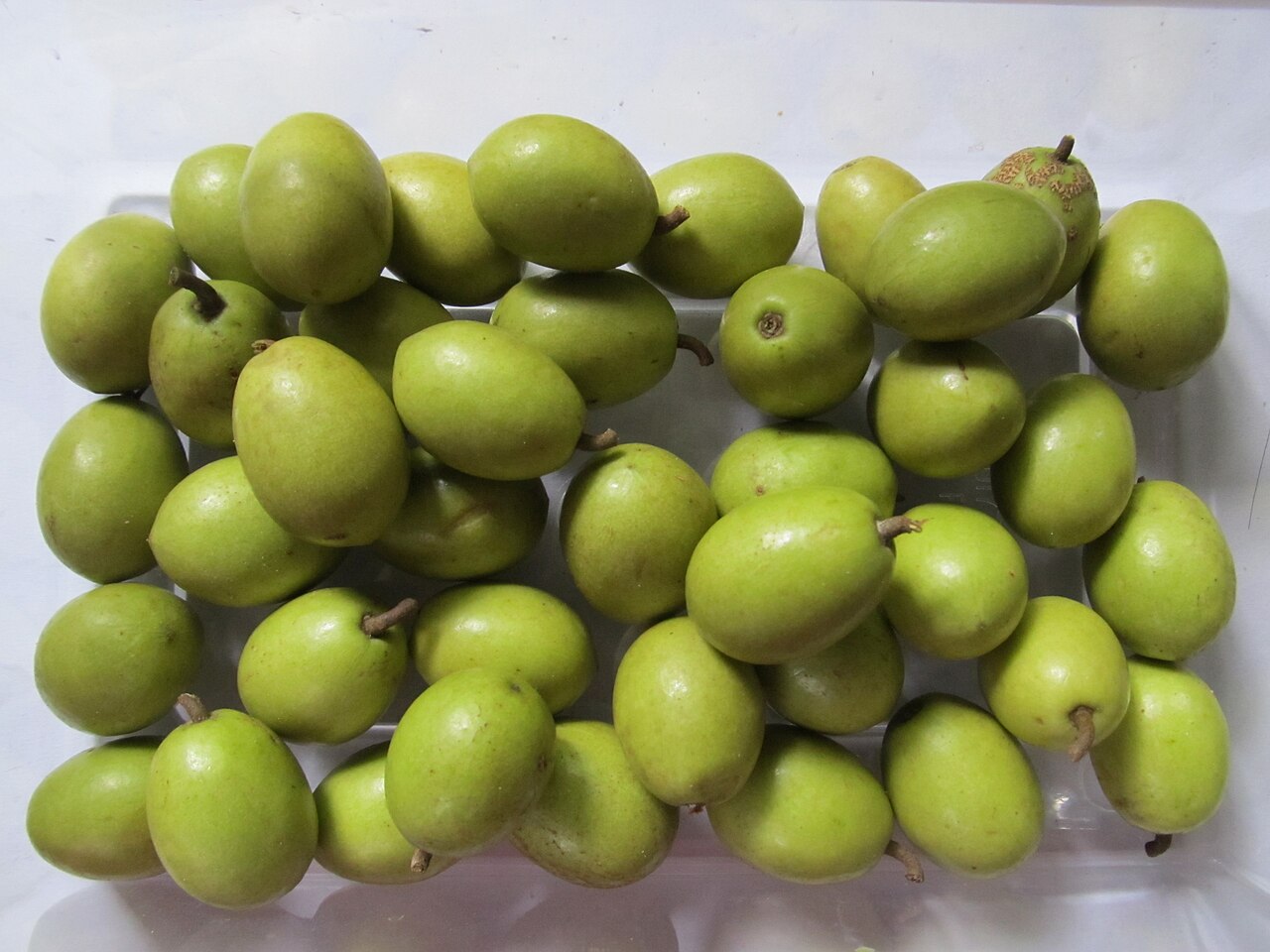
Photo: Mazhar Zarif / Wikimedia Commons (CC BY-SA 4.0)
Sources: Jagonews24, Bangladesh Sangbad Sangstha (BSS), Independent Television (ITV), bdnews24.com, The Business Standard, The Financial Express, Prothom Alo, The Daily Star, South Asian Journal of Agriculture, The American Journal of Tropical Medicine and Hygiene, US Centers for Disease Control and Prevention (MMWR), Food and Agriculture Organization of the United Nations (FAO), Banglapedia, Wikipedia
Comments
(0)