
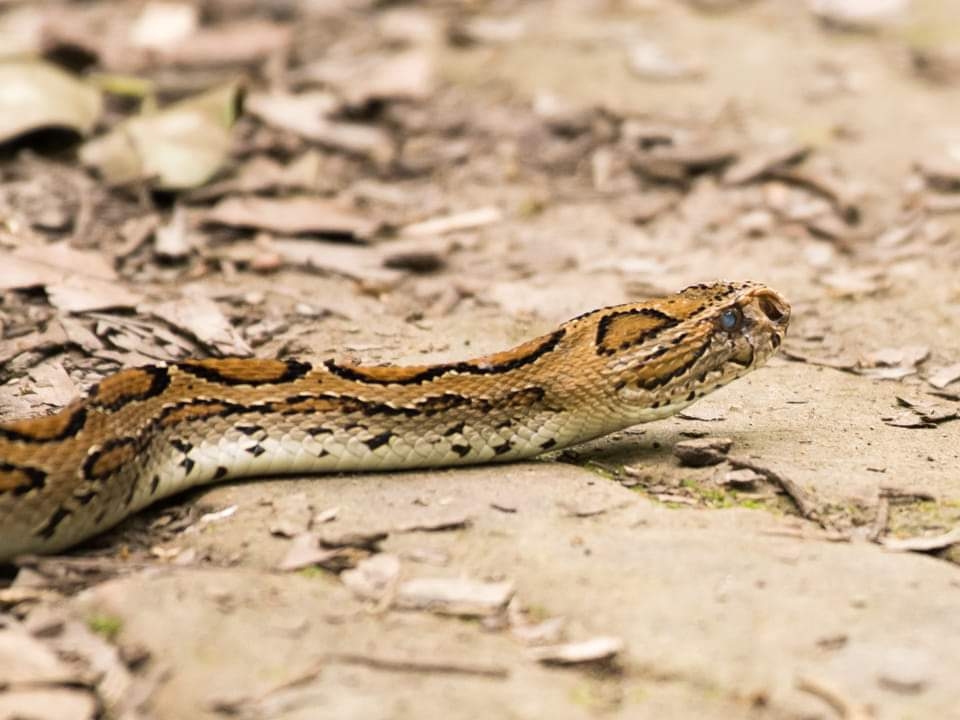
A young man was bitten by a Russell's viper on the bank of the Meghna in Matlab Uttar upazila of Chandpur on the morning of Monday 27 April 2026, as he tried to free the snake from a net in which it had become caught. Even after the bite he caught the snake, put it in a polythene bag and took it home, and only then went to Chandpur Sadar Hospital, where he was given antivenom, Jagonews24 reported that evening. He was reported to be well after treatment. Samakal reported the incident as well. It renewed fear of the highly venomous snake, known in Bengali as chandrabora, among people living on the Meghna's banks and chars.
Bitten while freeing the snake from a net
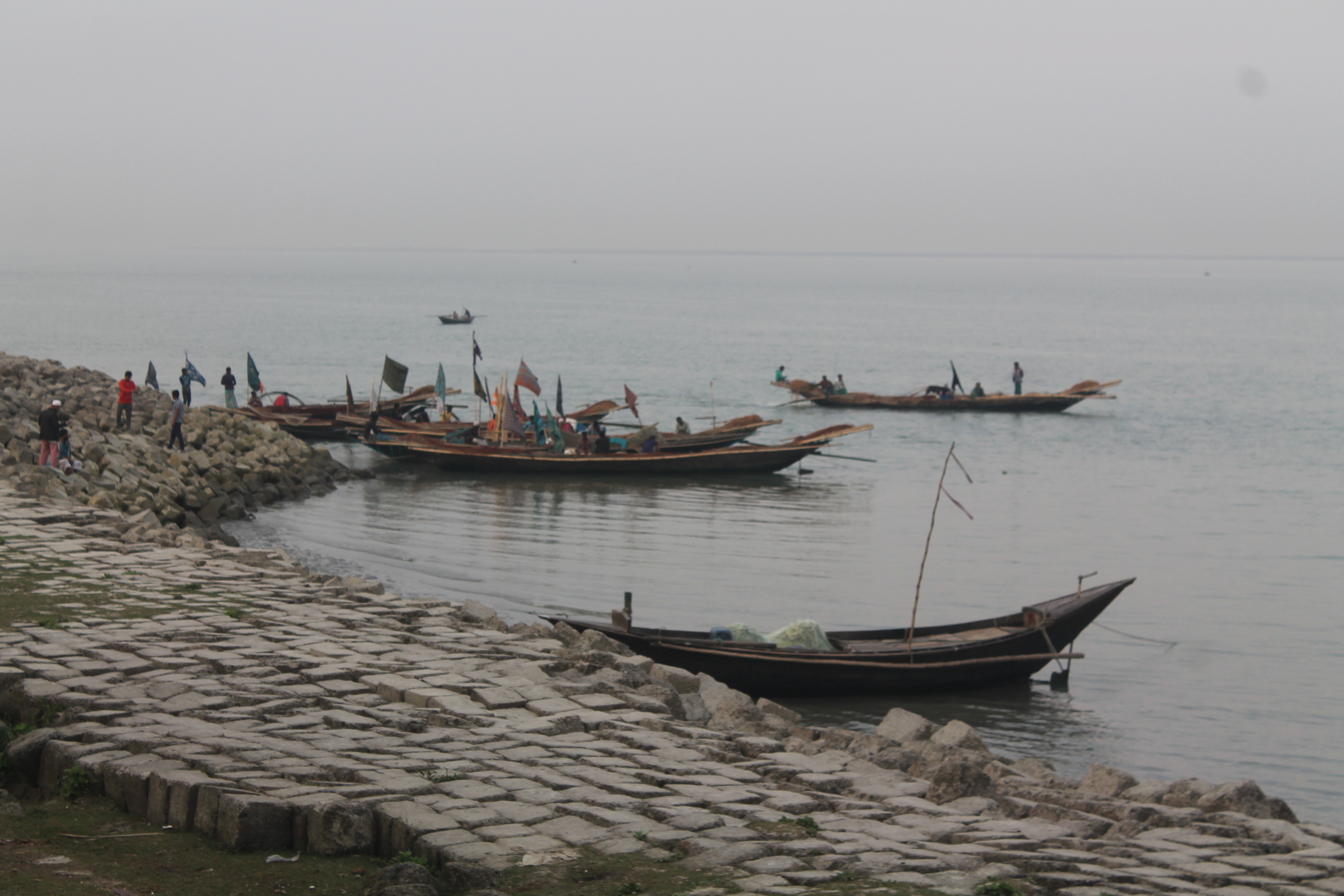
The incident took place on the Meghna bank in the Eklaspur abashan (government housing) area of Eklaspur union. The injured man, Md Sohel, 31, is the son of Selim Prodhan of the same area, according to Jagonews24.
Sohel told the newspaper that on his way to his new house that morning he saw a large Russell's viper caught in a net on the river bank. The snake was writhing. When he tried to free it from the net, it suddenly bit him on the hand.
Despite the bite, he caught the snake, put it in a polythene bag and brought it home, where he kept it in a plastic jar. He then hurried to Chandpur Sadar Hospital and received antivenom. He returned home after treatment, and at the time of the report he was said to be well. The report did not say how long after the bite he reached the hospital.
Residents' worries and the officials' response
Local residents told Jagonews24 that over the past few years venomous snakes had become alarmingly common on the Meghna bank and the chars, especially at Borchar, Char Umed and Eklaspur. Several Russell's vipers had been killed on the river bank at Eklaspur the previous year. Residents said patients often suffered because the upazila health complex at times had no snakebite medicine, which they called a vaccine, and they demanded a quick and adequate supply of antivenom.
Md Mafizul Islam Munna Dhali, chairman of the Eklaspur union parishad, said: "I have heard about the incident. The monsoon is coming, so farmers and fishermen must be even more careful. If anyone is bitten by a snake, there should be no charms or incantations: they must go to the health complex at once."
Dr AKM Mahbubur Rahman, superintendent of Chandpur Government General Hospital, said: "Our hospital has enough antivenom. A snakebite patient has to be given 10 vials in the first stage, and another 10 if necessary. Each vial costs Tk 1,400. We have currently procured 200 vials."
The upazila nirbahi officer (UNO), Mahmuda Kulsum Moni, said the upazila parishad had given the upazila health complex the allocation it needed to buy enough antivenom to treat snakebite patients, and that she hoped the stock would not run out even in the next two years. She added that the Forest Department was being contacted about the captured Russell's viper and that the necessary steps would be taken.
Matlab Uttar, an upazila on the Meghna
Matlab Uttar is one of the eight upazilas of Chandpur district. According to Banglapedia, the national encyclopedia of Bangladesh, it covers 260.29 square kilometres. Daudkandi and Gazaria lie to its north, Matlab Dakshin and Chandpur Sadar to the south, and Munshiganj Sadar and Bhedarganj to the west. It has 14 unions, Eklaspur and Mohanpur among them, and one municipality, Sengarchar. The Meghna, the Gumti and the Dhonagoda are its rivers. Matlab thana was set up in 1918, and in 2000 it was divided into Matlab Uttar and Matlab Dakshin. The 2011 census counted 292,057 people in the upazila.
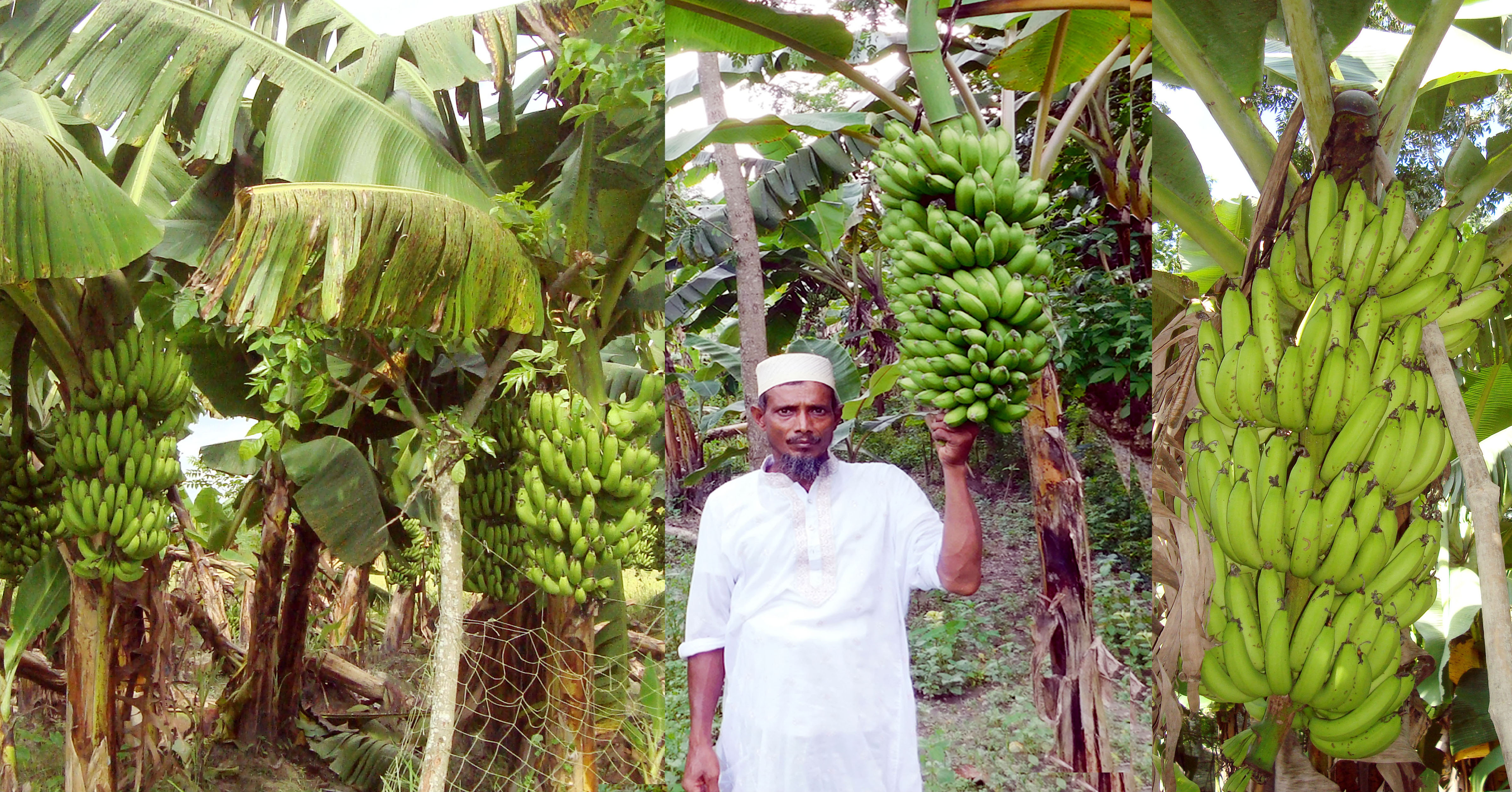
Farming is the backbone of the local economy. Banglapedia puts agriculture as the main source of income for about half of the people, and says about 67 per cent of residents own farmland while 33 per cent are landless. Paddy, wheat, potato, jute, sugarcane, mustard and linseed are its main crops, and mango, jackfruit, guava, coconut and papaya among its fruits. Fields and fishing grounds of this kind are where people and snakes most often meet.
Chandpur district covers 1,645.32 square kilometres in Chattogram division. It was a subdivision from 1878 and became a district in 1984. The Meghna, the Dakatia, the Gumti and the Dhanagada are its main rivers, and the Meghna forms part of its western edge. The 2011 census recorded 2,416,018 people, and agriculture is the main source of income for 44.42 per cent of them.
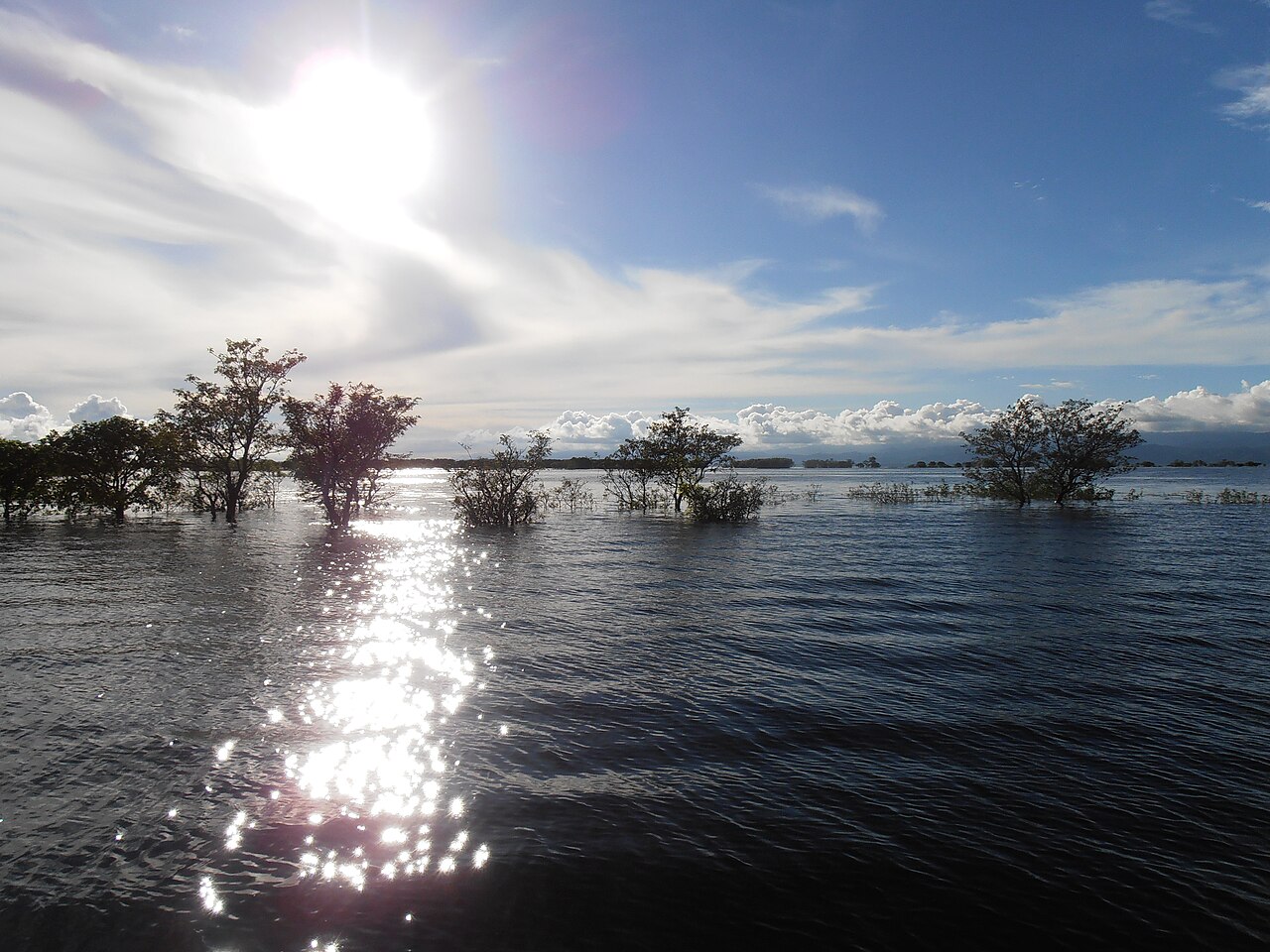
The Meghna is one of the country's great rivers. Banglapedia says the Padma meets it near Chandpur at a confluence about 11 kilometres wide in the rainy season, and from there the river is called the Lower Meghna. Several chars, sandbars that form islands, divide the Lower Meghna into channels. At Chandpur the river carries a mean discharge of about 2.5 million cusecs between June and October, and in winter the flow falls to about one-eighth of that.
Russell's vipers on the Meghna chars before this bite
Russell's vipers had been reported in Eklaspur before. The Daily Ittefaq reported on 30 May 2024 that a Russell's viper had been seen in the Noyanagar Bottola area of Eklaspur union and that local people had beaten it to death. On 16 May that year another snake of the same species had been caught in the Borchar char area of the same union. The paper said vipers had been appearing for several days in Matlab's char areas along the Meghna, and this was the first time one had been seen on the upazila's mainland. Union chairman Munna Dhali told the paper then that snakes had been found in several parts of the union and that the union parishad was raising public awareness.
Dr Md Hasibul Islam, resident medical officer at Matlab Uttar Upazila Health Complex, told The Daily Ittefaq at the time that the snake was Daboia russelii, a highly venomous member of the viper family, Viperidae. Its venom stops the blood from clotting, he said, which leads to severe bleeding.
The Daily Star Bangla reported on 3 June 2024 that the Russell's viper had by then been found in at least 25 districts, including the coastal districts of Barishal and Patuakhali and Chandpur, and that most of its victims were poor farmers and farm labourers. The paper noted that the IUCN had listed the snake as extinct in Bangladesh in 2002 and that it had once been found mainly in the dry Barind region. Data from Rajshahi Medical College Hospital showed that from 2018 to 2023, 202 people had been admitted with Russell's viper bites in the Rajshahi region alone, and 62 had died.
Professor Farid Ahsan, a former zoology professor at the University of Chittagong, told the paper that a small number of the snakes had always been in the country and had simply gone unrecorded. His 2018 study, published in the journal of the Asiatic Society of Bangladesh, examined 20 bites between 2013 and 2016 and found the snake in 17 districts. He gave several reasons for its spread: it gives birth to live young, so more of them survive; Barind farmland that once grew one crop a year now grows two or three, supporting more rats, its main food; and floods carry snakes downstream on floating water hyacinth. Mongabay, reporting in April 2023, likewise said the snake had long been considered very rare in Bangladesh until a run of bites, many of them fatal, began in 2013, mostly among farmers working in their fields.
In its guidance of 22 June 2024, the Ministry of Environment, Forest and Climate Change said the Russell's viper is a strong swimmer that had spread with river currents and floodwater, which helps explain its presence on river chars such as those of the Meghna.
What kind of snake the Russell's viper is
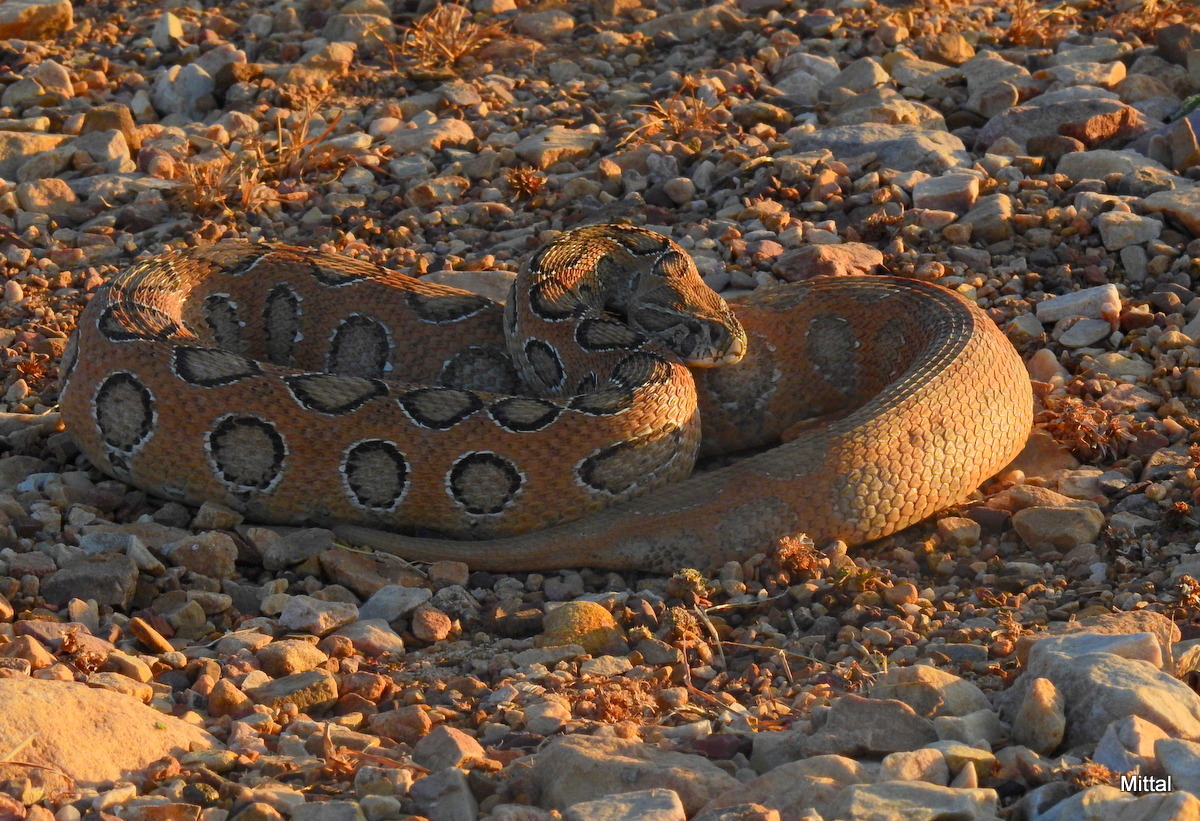
The Russell's viper (Daboia russelii) was described by Shaw and Nodder in 1797 and named after Patrick Russell, a Scottish surgeon who studied it in 1796. It is one of South Asia's "Big Four", the four snakes that cause most serious bites in the region. It has a stout body, a flat triangular head and a pattern of three rows of dark spots ringed in black on a tan, yellow or brown background. Adults on the Asian mainland average about 120 centimetres and can reach about 166 centimetres. The ministry noted that its brownish-grey colour lets it blend easily with the soil. In Bengali it is called chandrabora, bora or uluborha.
It lives in open grassy or scrubby land and on farmland, and avoids dense forest. Adults feed mainly on rodents, which is why the snake is often found where people farm and store crops. It is mostly active at night. When threatened it coils into S-shaped loops and hisses loudly; the World Health Organization (WHO) describes this blowing hiss as a warning sound that can identify the snake even in the dark. It does not lay eggs but bears live young, often 20 to 40 in a litter.
Zohra Mila, a wildlife and biodiversity conservation officer of the Forest Department, told the Dhaka Tribune in June 2024: "Russell's Viper does not attack people unless threatened." She said the snake avoids people and does not usually enter houses, and advised making noise or using a torch before entering paddy fields. Experts differ on how its venom compares with other snakes: the experts quoted by The Daily Star Bangla called it the most venomous snake in Bangladesh, while the Dhaka Tribune's report said the cobra's venom is more potent and that the common krait causes the most snakebite deaths in the country.
The ministry's 2024 guidance said mongooses, monitor lizards, civets, jungle cats, fishing cats, some eagles, storks, adjutant storks and some snakes eat Russell's vipers and keep their numbers down, and that killing these animals and destroying their habitat was helping the viper to multiply. Globally, the IUCN Red List rates the species as Least Concern.
Snakebite in Bangladesh: what the surveys found
Snakebite is a large public-health problem in Bangladesh. The National Centre for Disease Control (NCDC) of the Directorate General of Health Services carried out the "National Survey on Annual Incidence and Epidemiology of Snakebite in Bangladesh" in 2021 and 2022. Its findings, released on 18 June 2023 and reported by The Business Standard, put the number of snakebites at about 400,000 a year and the deaths at 7,511. About one bite in four was by a venomous snake, 95 per cent happened in rural areas, and men were four times more likely to be bitten than women. The survey also found that 10.6 per cent of victims were left with a mild to moderate physical disability, and that about 2,500 cattle die of snakebite every year.
An earlier national survey, by Rahman and colleagues and published in PLoS Neglected Tropical Diseases in 2010, questioned 18,857 people in rural households in 2009. It estimated an incidence of 623.4 bites per 100,000 people a year, about 589,919 people bitten and 6,041 deaths a year in rural Bangladesh. Most bites happened in water (27 per cent) or in fields (24 per cent), and 71 per cent were on the legs or feet. Bites peaked from June to October, the monsoon months, with October and July the highest.
The same study found that after a bite, 86 per cent of victims went first to a snake charmer, or ojha, and only 3 per cent went straight to a registered doctor or hospital. Mantras were recited for 60 per cent, cuts were made around the bite for 43 per cent, and many had one or more tight bands tied on the limb. The WHO's South-East Asia guidelines of 2016 list the Russell's viper among the medically important snakes of Bangladesh, along with kraits, the monocled and spectacled cobras and the green pit viper.
What the venom does and how hospitals treat it
The WHO's "Guidelines for the Management of Snakebites" (second edition, 2016), published by its South-East Asia regional office, describe the typical picture after a Russell's viper bite: swelling at the bite with bleeding and blood-clotting problems, shock or acute kidney injury. The Daily Star Bangla's experts listed severe pain and swelling, tissue damage, bleeding, clotting failure, drooping eyelids, paralysis and damage to the kidneys and lungs, and said severe cases need intensive care. Kidney failure develops in about 25 to 30 per cent of untreated bites, according to the medical literature summarised on Wikipedia.
Because a viper's venom stops blood from clotting, the WHO guidelines recommend a simple bedside test, the 20-minute whole blood clotting test. A doctor or nurse places two millilitres of fresh blood in a new, clean, dry glass vessel, leaves it for 20 minutes and then tips it once. If the blood is still liquid, the patient has incoagulable blood, and in South-East Asia this points to a viper bite rather than a cobra or krait bite.
Antivenom is the treatment. The WHO guidelines call it a life-saving essential medicine and the only effective antidote for envenoming, to be given to patients who show signs of serious poisoning, and the WHO says the response is best when it is given as soon as possible after the bite. Bangladesh does not make its own: The Business Standard reported in 2023 that no antivenom is produced in the country. The antivenom in use is imported from India and is made from the venom of four snakes, The Daily Star Bangla reported in 2024. The Dhaka Tribune reported that the government provides antivenom free at district (Sadar) hospitals and upazila health complexes, and that the pharmaceutical company Incepta sells antivenom covering the Russell's viper, the cobra, the common krait and the saw-scaled viper.
Work on a home-grown product has begun. Mongabay reported in April 2023 that the Venom Research Centre had been set up in 2018 with government funding, with Aniruddha Ghose, a medicine specialist at Chittagong Medical College, as principal investigator, and that its main aim was to develop antivenom for the country's venomous snakes. In 2024 Farid Ahsan told The Daily Star Bangla that a research centre in Chattogram was testing antibodies raised in chickens and goats, but that there was no plant to produce antivenom commercially.
Others bitten by Russell's vipers had also brought the snake to hospital. In July 2024 iTV reported that a farmer in Shibganj, Chapainawabganj, went to the upazila health complex with the live Russell's viper that had bitten him in a paddy field; he was reported out of danger. In November 2025 bdnews24.com reported that a farmer bitten in a paddy field on a Padma char in Pangsha, Rajbari, came to hospital with the snake, caught by neighbouring farmers, in a container; doctors identified it as a Russell's viper and said he was out of danger.
Advice after a bite and on meeting a snake
The WHO's 2016 guidelines say that most traditional and popular first-aid methods are useless or dangerous: cuts or pricks at the bite, sucking out the venom, "snake stones", tight bands (tourniquets), electric shocks, and chemicals, herbs or ice applied to the wound. Such remedies must not delay medical treatment. The first aid the guidelines recommend is:
- Reassure the bitten person, who may be very anxious.
- Keep the whole body still, lying in a comfortable and safe position, ideally on the left side, and keep the bitten limb still with a splint or sling; walking or any muscle movement spreads the venom faster.
- Do not interfere with the wound: no cuts, rubbing, vigorous cleaning, massage, herbs or chemicals.
- Never tie a tight tourniquet; if one has already been tied, leave it for hospital staff to remove once treatment has begun.
- Take the patient to a hospital or health centre without delay.
The guidelines also speak to what happened in Matlab Uttar. They advise against trying to kill the snake, because this may be dangerous, and say that a snake that has already been killed should not be handled with bare hands, since even a severed head can bite. Instead, several close-up mobile phone pictures of it should be taken so that experts can identify it.
The environment ministry's guidance of June 2024 likewise said that people should not try to catch or kill a snake, and should call the national helpline 333 or inform the local Forest Department office instead. After a bite, it said, the limb should be kept still, and a person bitten on the foot should sit rather than walk; the bite may be washed gently with soap or wiped with a wet cloth; watches, jewellery, amulets and threads should be removed; and the wound should not be cut, pricked or covered with any paste. It told people not to waste time with an ojha but to go to the nearest hospital, and said antivenom is free at government hospitals.
To avoid bites, the ministry advised care when walking through tall grass, bushes and farmland, never putting hands or feet into holes, wearing boots and long trousers where the snake has been seen, carrying a torch at night, keeping the area around homes clean and taking care when moving fallen trees, firewood or straw. Farid Ahsan advised farmers to probe a field with a long bamboo pole before working in it, and the WHO says that cheap, practical footwear would prevent many bites.
What the wildlife law said in April 2026
On the date of the bite, wild animals in Bangladesh were protected by the Wildlife (Conservation and Security) Act, 2026 (Act No. 86 of 2026). The Act is dated 10 April 2026 and is deemed to have taken effect on 7 January 2026. Section 54 repealed the Wildlife (Conservation and Security) Act, 2012, the law the ministry had cited in its June 2024 guidance.
The Act's schedules, published in the Bangladesh Gazette of 10 April 2026, list the Russell's viper (Daboia russelii) in Schedule 2, among the vipers, together with the white-lipped and spot-tailed pit vipers. The monocled and spectacled cobras and the common krait are in the same schedule, while the king cobra is listed in Schedule 1. The provisions that bear on a captured snake, as published on the government's Laws of Bangladesh website, are these:
- Section 2 defines hunting broadly: killing, catching or poisoning a wild animal, chasing it for any of these purposes, or injuring or harming it.
- Section 42(1) bars anyone from hunting an animal listed in Schedule 2 without a licence or permit. Under section 44 the penalty is up to one year in prison, a fine of up to Tk 1 lakh, or both, and for a repeat offence up to two years, a fine of up to Tk 2 lakh, or both.
- Section 10 bars anyone from keeping a wild animal in captivity, or possessing, buying, selling or transporting one, without a licence, possession certificate or permit. It treats all wild animals as government property and makes cruelty to them an offence.
- Section 14 says that a rescued, seized or captured wild animal must be released into a suitable natural environment, although it may be kept confined if it risks spreading disease or needs care.
In Matlab Uttar, the UNO said the Forest Department was being contacted about the captured viper and that the necessary steps would be taken. The report did not say what was then done with the snake.
Photo: Supratim Deb / Wikimedia Commons (CC BY 4.0)
Sources: Jagonews24, Samakal, The Daily Ittefaq, The Daily Star Bangla (Ministry of Environment, Forest and Climate Change guidance), Dhaka Tribune, iTV, bdnews24.com, The Business Standard, Mongabay, PLoS Neglected Tropical Diseases (Rahman et al., 2010), World Health Organization, Laws of Bangladesh (Wildlife (Conservation and Security) Act, 2026, and the Bangladesh Gazette), Banglapedia, Wikipedia
Comments
(0)