
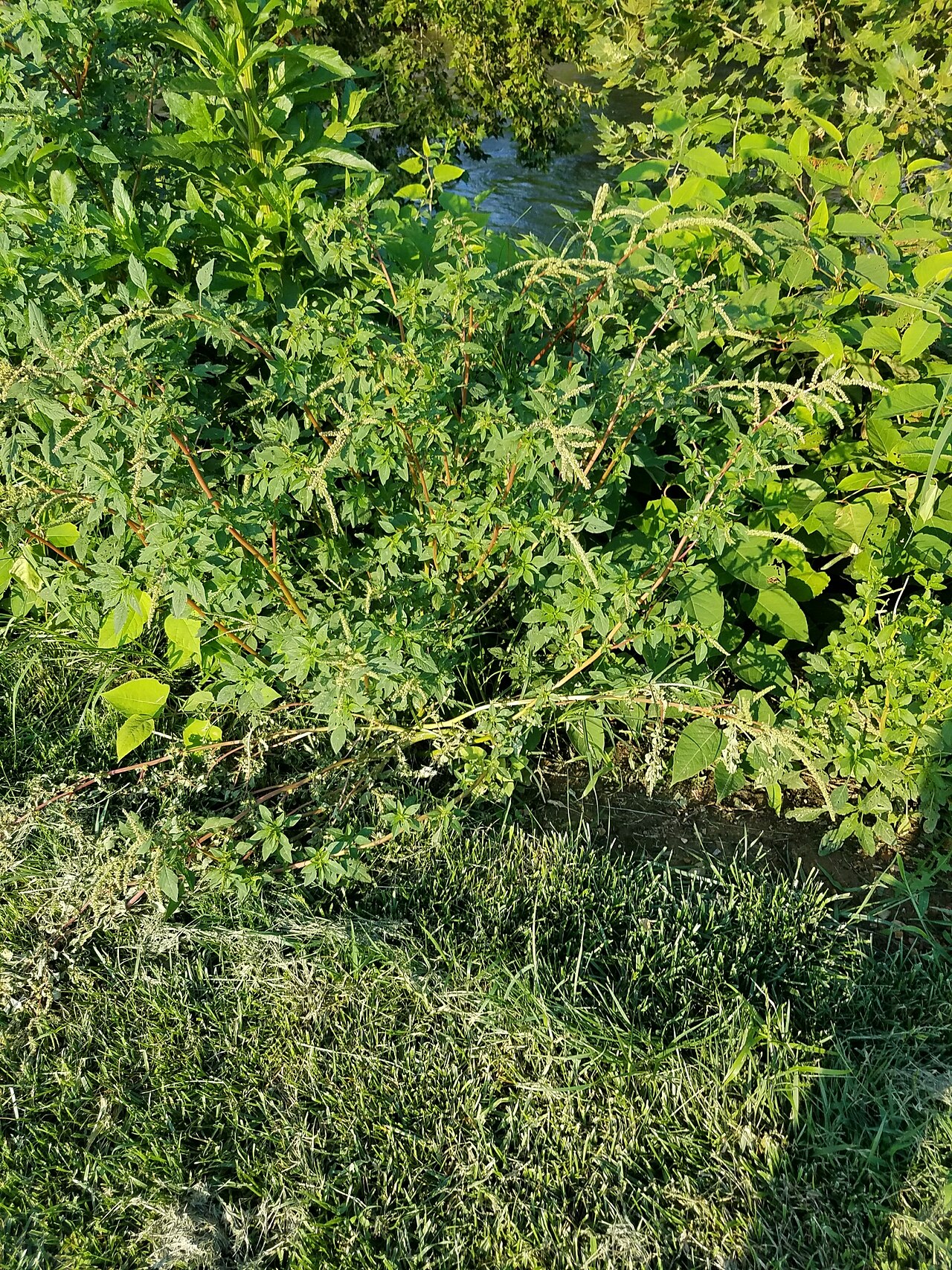
Farmers in Manitoba should check every field for waterhemp before harvesting it this fall, because combines are one of the main ways the weed's seed spreads, Manitoba Agriculture weed specialist Kim Brown says. "We're not going to stop the spread. We're far too late for that," she told a Crop Talk webinar, "but we can slow it down."
Waterhemp (Amaranthus tuberculatus), believed to have arrived from the United States on farm equipment and in bird droppings, was first found in the province in 2016. It is now in every rural municipality of eastern agro-Manitoba and has been confirmed in the northwest near the Saskatchewan border and in the Interlake. A single plant averages 250,000 seeds, can set seed seven days after pollination and grows 50 to 70 percent faster than most weeds.
Brown advises pulling single plants or clusters by hand, digging out large ones, bagging them until they rot and keeping garbage bags on swathers, combines and trucks. Field edges and drains should be mowed, and agronomists moving between fields should change boot covers at each stop. One farmer found waterhemp growing in his yard where he had washed a newly bought header. Seeds under the canopy will also germinate after harvest, so weed control must continue until freeze-up.
Manitoba waterhemp is already resistant to herbicide Groups 2, 9 and 14, and US populations resist several more, most recently Group 10 (glufosinate). Brown said glufosinate resistance would have "very serious consequences" for Manitoba's 3.5 million acres of canola, most of it Liberty-tolerant. In Ontario, uncontrolled infestations once cut corn and soybean yields by as much as 90 percent. The report was written by Laura Rance-Unger.
Photo: Lottery Discountz / Wikimedia Commons (CC0)
Source: Manitoba Co-operator

Comments
(0)