
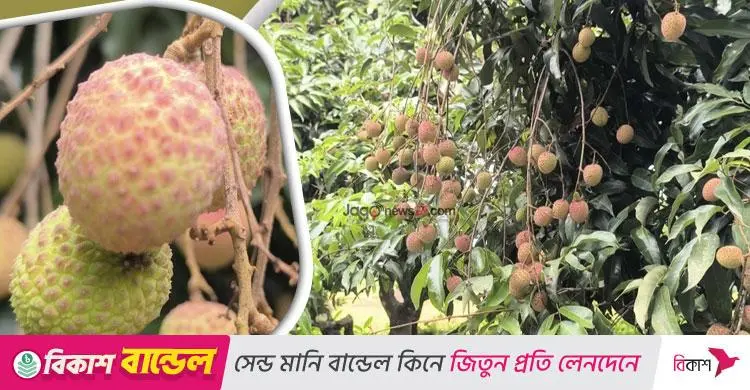
Manikpur in Chhatak upazila of Sunamganj is becoming known as a litchi village. Commercial litchi orchards have grown up on its large and small hillocks. With a good harvest of Bombai, China Three and local varieties this year, growers are happy, and litchi farming is changing the economy of this remote village.
The village lies 45 km from the district town. In every orchard, juicy litchis hang from the branches. Almost everyone in the village is involved in litchi farming. Traders come from far and wide every day to buy litchis from the orchards and sell them in markets, and hundreds of families have become self-reliant through the profitable crop.
From migrant to grower
Abdul Hamid of the village paid Tk 4 lakh through a broker to go to Saudi Arabia, but in three years there his luck did not change, and he returned home disappointed. After six months without work he thought of growing litchis and started with a little capital. Within a few years, litchis changed his fortune.
"I started with Tk 15,000," Abdul Hamid told Jagonews. "Now I earn Tk 1 lakh to 1.5 lakh a year from this orchard. I could not change my fortune abroad, but that hope has been fulfilled at home."
More than a hundred growers in Manikpur have similar success stories, and the area under commercial litchi grows every year. In the 1990s a few keen villagers began growing litchis in their courtyards. As they earned more than from other fruit, farmers turned to litchis and orchards took shape, spreading from courtyards and roadsides to fields. Litchis have changed the economic fortunes of the people here.
Poor roads hold back prices
Litchi grower Rahmat Ali said: "Because roads are poor, fewer wholesalers come to buy our village's litchis. If communications improve, we will sell at higher prices and earn more."
Another grower, Bakkar Mia, said: "There is a good litchi harvest this year, but if roads were better we could sell at higher prices."
Grower Siddique Mia told Jagonews he was selling litchis at Tk 2,000 per thousand. "The harvest in Manikpur is good this year and I have made a good profit."
Mohammad Omar Faruk, deputy director of the Department of Agricultural Extension (DAE), told Jagonews: "The 6,000 litchi trees in this Chhatak village produce nearly a crore taka worth of litchis every year. The agriculture department is working to make growers even more interested in litchi farming."
Source: Jagonews24. First published in Bengali on The Agro News.
Comments
(0)