
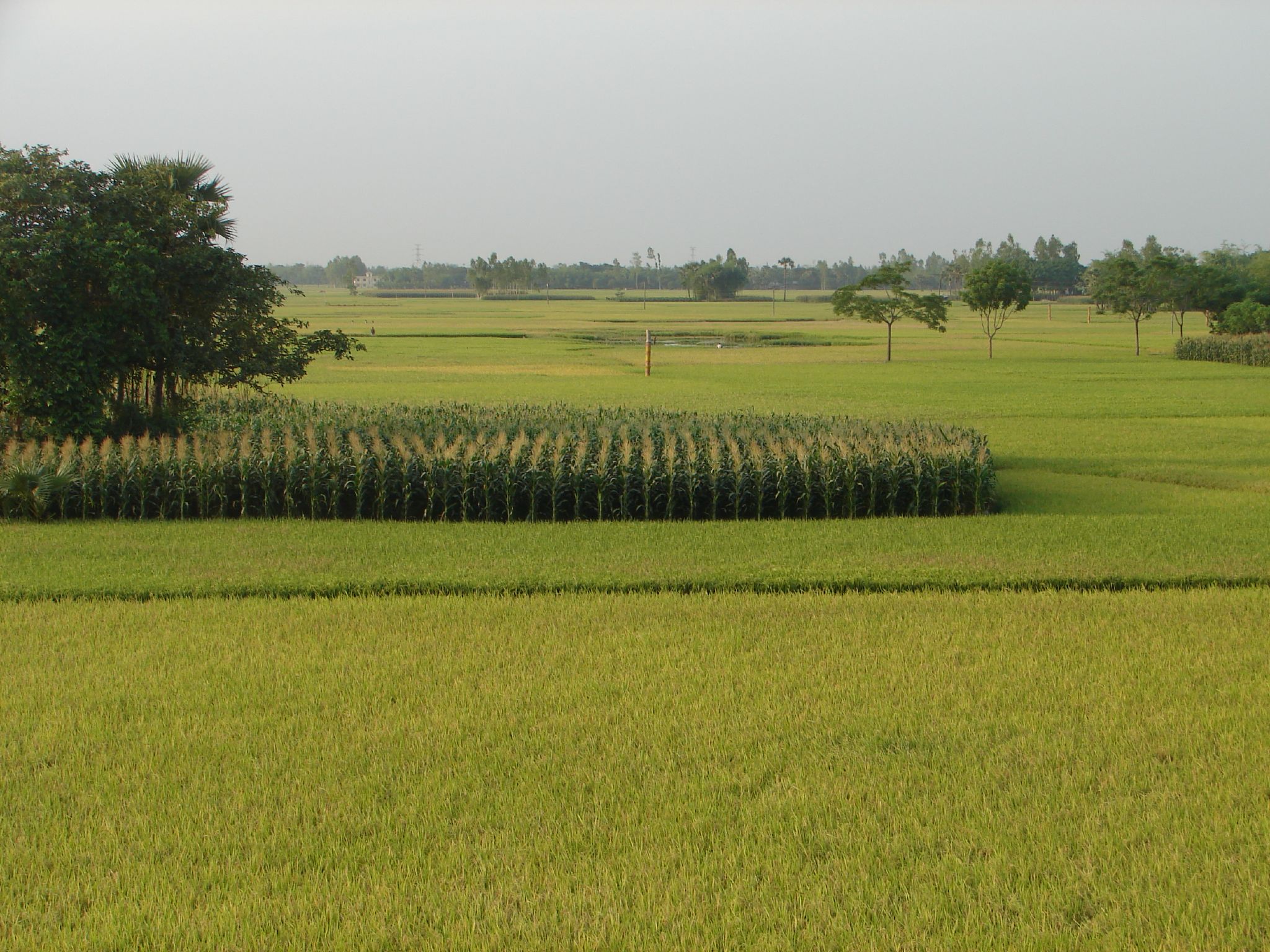
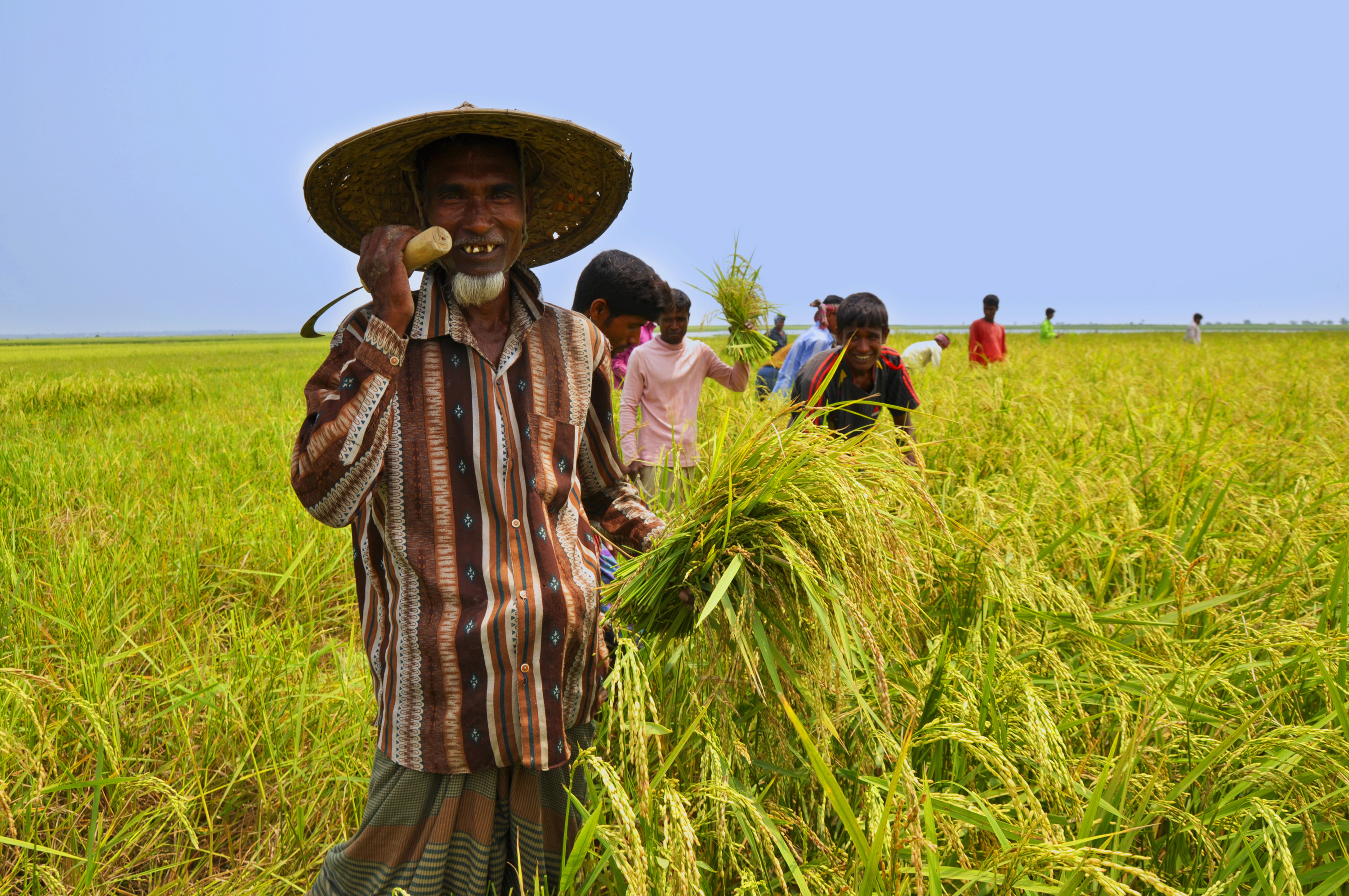
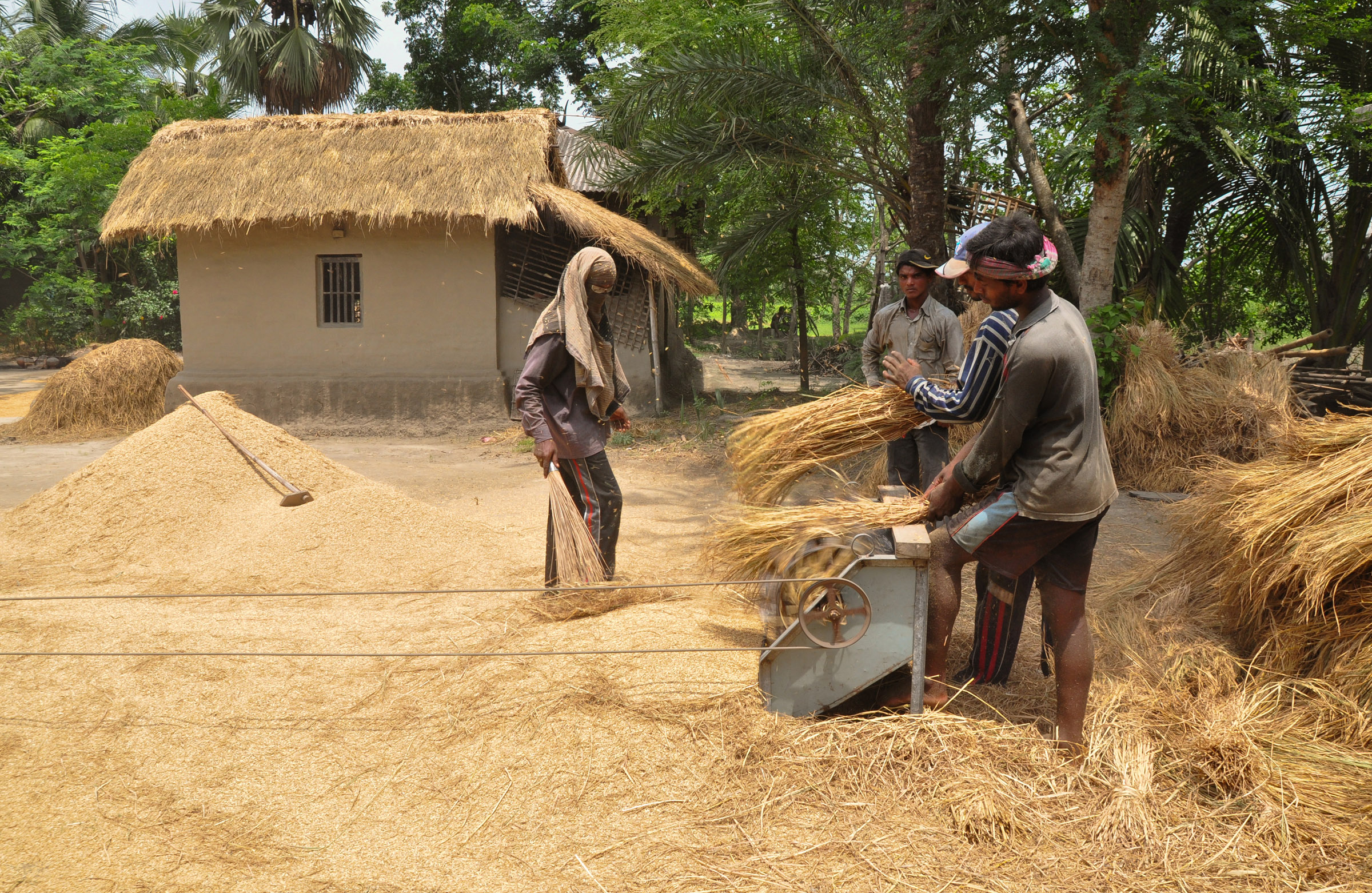
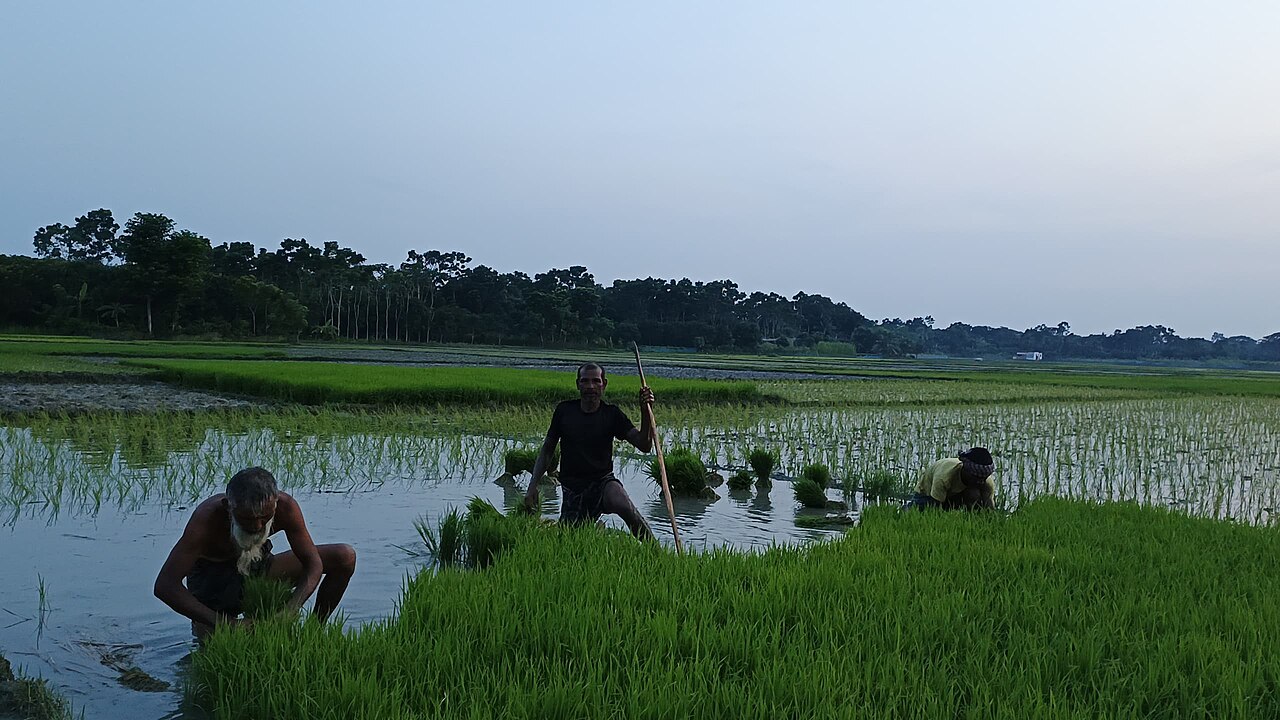
Farmers in Manikganj district were harvesting a bumper crop of aman paddy in the second week of November 2024. Golden paddy covered the fields, and with the grain ripening, farmers and hired labourers were busy cutting and threshing. Farmers told Jagonews24, which reported from the district on 10 November 2024, that they hoped the harvest would cover their costs and let them pay off their debts.
Aman is the monsoon-season rice crop of Bangladesh. In Manikganj, a river district west of Dhaka on the Padma and the Jamuna, the crop is grown in two ways: as transplanted aman on land that drains after the rains, and as broadcast aman, sown directly into fields that later stand under floodwater. The district's figures for 2024 show that broadcast aman made up the larger share that year.
What the district agriculture office reported
According to the Manikganj district office of the Department of Agricultural Extension (DAE), the target for the 2024 season was to grow aman on 35,550 hectares, but the crop was grown on 31,649 hectares. By 10 November, the paddy had been cut on 30 per cent of that land, and the office expected the harvest to be finished within the next 15 to 20 days. It also expected farmers to get good prices once the harvest was over.
Dr Robiah Nur Ahmed, deputy director of the DAE in Manikganj, gave the breakdown by method. "On the agriculture office's advice, transplanted aman was grown on 11,462 hectares last year. This year it has been grown on 12,038 hectares. Broadcast aman was grown on 12,510 hectares last year, and this year on 19,611 hectares," he said. "I hope farmers will get better prices this year than last year."
The transplanted figure he gave for 2023 matches the DAE's own report of that season. On 12 November 2023, the state news agency BSS quoted the DAE in Manikganj as saying it had set a target of 10,050 hectares of transplanted aman, with a production target of 33,789 tonnes of clean rice, and that farmers had planted 11,462 hectares, 1,412 hectares more than the target. At that time harvesting had just begun, and the DAE expected the crop to beat its target in five of the district's seven upazilas.
Farmers' account: low costs, dearer labour
The farmers who spoke to Jagonews24 put the good yield down to the weather and the absence of pests. Mithun Ahmed of Bathoimuri village said: "The flood water was not very high, and there was no pest attack on the paddy, so costs were low this time. There was heavy rain, but it did not cause any real problem for the crop, so the yield is bumper. In a few days I will be able to cut and thresh all the paddy and bring it home."
Roton Dewan of Uvajani village in Ghior upazila said he had grown five bighas of aman and expected close to 40 maunds of paddy. "Aman needs no fertiliser or pesticide of any kind, so costs are low. I hope to have something left in hand after repaying the loan," he said. His view reflects his own fields; the bigha itself has no single standard size and varies from region to region, and in the official programme of 2023 the DAE in Manikganj gave small farmers fertiliser along with seed for transplanted aman, as described below.
Robiul, from the same village, said the market looked good but the harvest was costing more in wages. "I hear paddy prices are good in the market this year. But harvest labour costs a bit more than last time. Each labourer must be paid Tk 600 to Tk 700 a day, plus three meals," he said.
Prices at the market and the government's purchase plan
New aman paddy had just started to reach the local markets. Paddy trader Almas Ali told Jagonews24: "Aman paddy has started coming to the market this year. We bought today at Tk 1,100 to Tk 1,200. It looks as if prices may rise further." The price refers to a maund of paddy. Traders and farmers in Bangladesh usually reckon a maund as 40 kilograms; a BSS report from Rangpur on 7 October 2024 used the same measure when it quoted a farmer selling early aman paddy at Tk 1,250 a maund.
Four days before the Manikganj report, on 6 November 2024, the government fixed its prices for buying the new aman crop. After a meeting of the food planning and monitoring committee at the Secretariat, Food Secretary Md Masudul Hasan said the government would buy paddy at Tk 33 a kilogram, parboiled rice at Tk 47 and sun-dried (atap) rice at Tk 46, each Tk 3 more than the previous season. bdnews24.com reported that the target was 350,000 tonnes of paddy, 550,000 tonnes of parboiled rice and 100,000 tonnes of atap rice, a million tonnes in all, and that buying would run from 17 November to 28 February, with atap rice bought until 10 March.
The food secretary said the prices had been raised because production costs had gone up by Tk 2 to Tk 2.50 a kilogram over the year. In the 2023-24 aman season, by comparison, the government had planned to buy 200,000 tonnes of paddy at Tk 30 a kilogram, 400,000 tonnes of parboiled rice at Tk 44 and 100,000 tonnes of atap rice at Tk 43.
Rice was dear in the shops before the harvest. In its Grain and Feed Update of 30 August 2024, the U.S. Department of Agriculture's office in Dhaka cited Trading Corporation of Bangladesh (TCB) data showing coarse rice at an average retail price of Tk 52 a kilogram in the second week of August, up 4 per cent on the previous month, and said its contacts expected rice prices to keep rising until the aman harvest began in October. The Daily Star's Bengali edition reported on 6 September 2024 that coarse rice was selling at Tk 52 to Tk 55 a kilogram in Dhaka, 2.88 per cent higher than a year earlier, according to TCB, and that no rice had been imported in the 2023-24 fiscal year.
Transplanted and broadcast aman
The two figures the deputy director gave describe two different crops grown in the same season. Transplanted aman (T. aman) is raised in seedbeds, and the seedlings are then transplanted into the fields during the monsoon. According to Banglapedia, the national encyclopedia of Bangladesh, transplanted aman was the most important of the rice crops, occupying about 46 per cent of the country's rice land in 2009-10, while sown or broadcast aman occupied about 4 per cent. Transplanted aman is grown throughout the country.
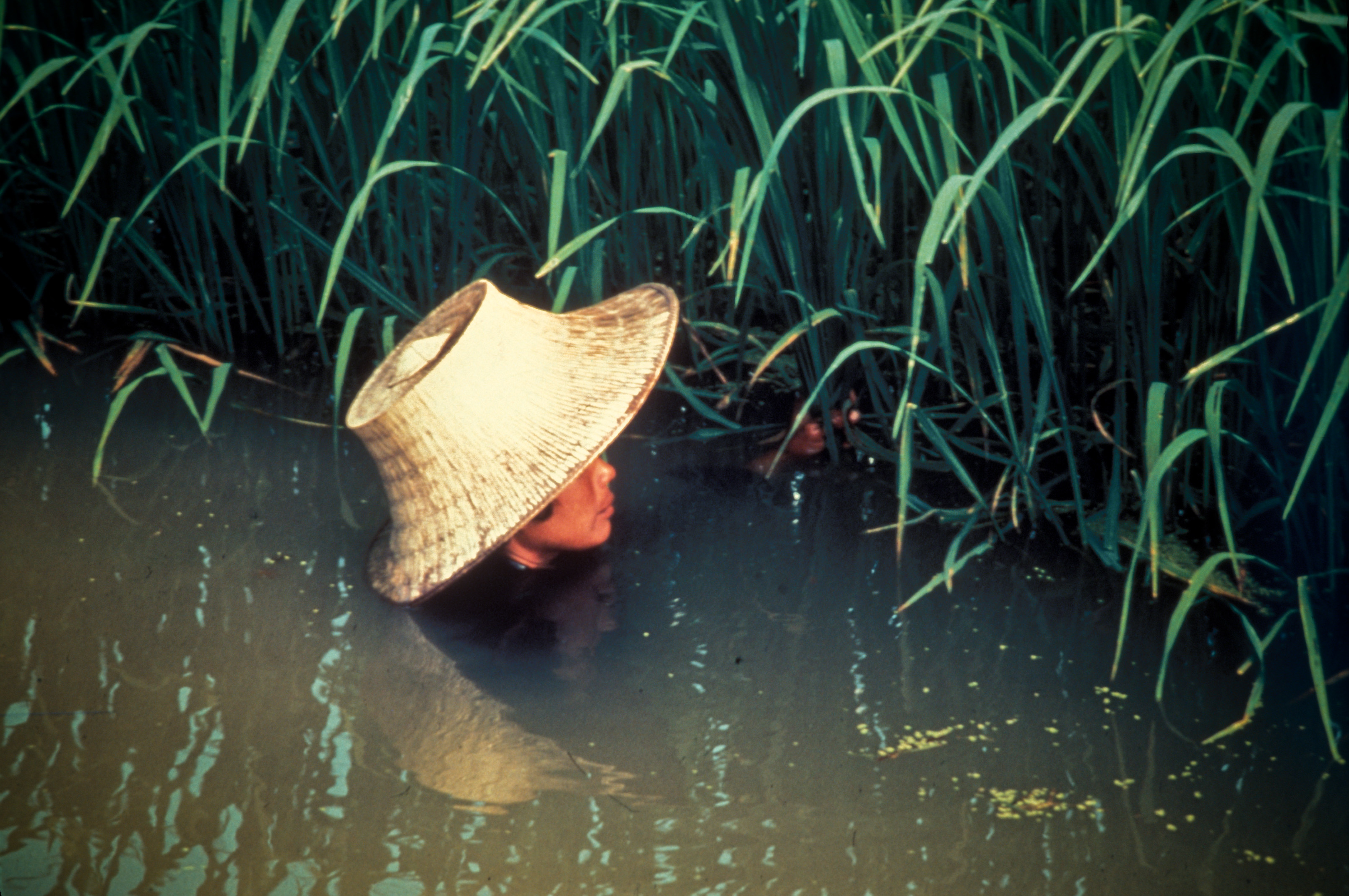
Broadcast aman is the country's deepwater rice. Banglapedia describes deepwater rice as rice grown in more than 50 centimetres of water for a month or longer; in Bangladesh most of the rice grown in low-lying land during the monsoon is of the floating type, known locally as broadcast aman, jolidhan or poushdhan. It is usually seeded dry in March and April after the first monsoon shower, depends on rain until flooding begins in June or July, and matures between mid-October and mid-December, depending on the variety.
Banglapedia counts more than 2,000 deepwater rice cultivars in Bangladesh and more than 6,000 in Asia. Almost all are strongly sensitive to day length, which fixes their flowering at a favourable point in the flood season and usually lets the crop mature as soon as the floods recede. Deepwater varieties have unusual adaptations. They can lengthen their stems as the water rises, grow roots and tillers from upper nodes under water, and bend upward at the tip so that the panicle stays above the water as the flood recedes. Banglapedia notes that very little fertiliser is used on this crop and weeds are controlled by harrowing and hand weeding, twice before the flood. Average grain yields are about 2.3 tonnes a hectare, and some varieties can yield more than 3 tonnes. The area under deepwater rice shrank from about 2.09 million hectares in the late 1960s to about 0.85 million hectares as irrigated high-yielding boro rice spread into these fields in the dry season. As a result, Banglapedia says, about 1.24 million hectares of such land now lie fallow during the monsoon.
Transplanted aman is different. In its 2023 report from Manikganj, the DAE said aman generally grows on alluvial soil, that farmers there plant it after harvesting boro paddy, and that transplanted aman growers depend mainly on rain, with some using shallow machines for water. That is the background to the farmer's remark that aman needs little spending: much of the district's broadcast crop grows on floodwater and rain with few bought inputs.
Manikganj: a river district of farmers
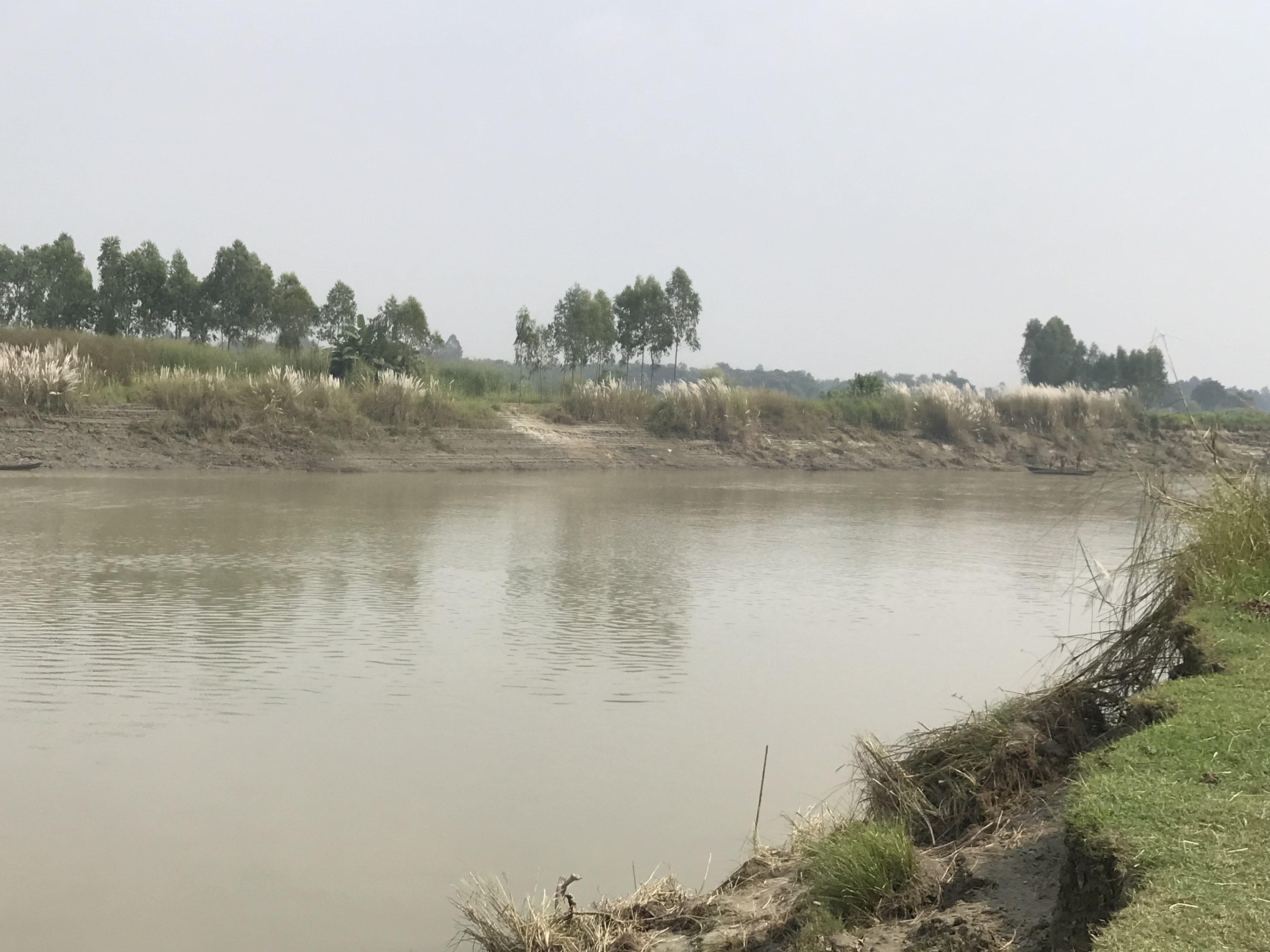
Manikganj lies in the Dhaka division. Banglapedia gives its area as 1,383.66 square kilometres and lists seven upazilas: Ghior, Daulatpur, Manikganj Sadar, Shibalaya, Saturia, Singair and Harirampur. It is bounded by Tangail to the north, Faridpur and Dhaka to the south, Dhaka to the east, and Pabna, Rajbari and Sirajganj to the west. Its main rivers are the Padma, Jamuna, Dhaleshwari, Ichamati, Kaliganga and Gazikhali. Manikganj became a subdivision in 1845 and a district in 1984.
Farming is the main living. In the 2011 census, as quoted by Banglapedia, agriculture was listed as the main source of income for 56.15 per cent of the district, and the district had a population of 1,392,867. Ghior, where two of the farmers quoted in the report live, covers 148.92 square kilometres and had 146,292 people in 2011. Its rivers are the Dhaleshwari, Kaliganga, Ichamati and Gangdubi, and Bairagir Beel is its best-known wetland. Banglapedia lists paddy, wheat, mustard, potato, onion, garlic, chilli and vegetables as Ghior's main crops, with onion, garlic, chilli and vegetables as its main exports. On ownership of farmland, it records 59.06 per cent of Ghior's people as landowners and 40.94 per cent as landless.
Rice shares the district's fields with other crops through the year. In May 2024, BSS reported that jute, which it called the biggest cash crop of the people of Manikganj, was being sown on 4,765 hectares across all seven upazilas, with a target of 64,580 bales, and that the soils of Singair, Manikganj Sadar and Saturia were especially suited to it.
Support for small farmers in the previous season
The DAE had backed the previous year's aman crop in Manikganj with free inputs. According to the BSS report of 12 November 2023, 4,000 small and marginal farmers in Manikganj Sadar, Saturia, Singair, Ghior and Daulatpur upazilas received government incentives for the 2023 aman season. Each listed farmer was given five kilograms of aman seed for one bigha of land, along with 10 kilograms of di-ammonium phosphate (DAP) and 10 kilograms of muriate of potash (MoP), free of cost.
The DAE said then that the season's monsoon water had been scarce and that rain had been very helpful for transplanted aman in the district. Abu Mohammad Enayet Ullah, then deputy director of the DAE in Manikganj, gave the 2023 target and the area planted quoted above.
A season of floods elsewhere
Manikganj's good crop came in a difficult year for aman in other parts of the country. In its update of 30 August 2024, the USDA office in Dhaka said heavy rain from 18 to 21 August had flooded Feni, Noakhali, Cumilla, Lakshmipur, Moulvibazar, Habiganj and Brahmanbaria districts, and that water flowing in from the Indian highlands through the Muhuri, Kahua, Silonia and Gumti rivers had caused devastating floods in Feni, Cumilla and neighbouring eastern districts. Its rapid assessment put the loss at an estimated 200,000 hectares of aman rice.
The same report said aman can usually be transplanted until 15 September, and that 10 to 15 per cent of the flooded fields could be replanted if the water receded and farmers had seed for seedbeds by 31 August. Its contacts at the Bangladesh Rice Research Institute (BRRI), the national rice research body founded in 1970 at Gazipur, 36 kilometres from Dhaka, which keeps about 5,000 rice germplasms in its gene bank according to Banglapedia, said they would advise farmers in flood-affected areas to sow BRRI dhan33, BRRI dhan57, BRRI dhan66, BRRI dhan71, BRRI dhan75, BINA dhan7 and BINA dhan17 by direct seeding, depending on seed supply.
The picture in central and northern Bangladesh was better. The USDA report said that by the second week of August 2024 most districts in the Rangpur, Rajshahi and Dhaka regions had completed aman transplanting, with better rainfall during seedbed preparation and planting than in the previous three years, although some farmers had needed partial irrigation. It cited the DAE's crop report as saying about 60 per cent of aman transplanting had been completed nationwide by 10 August. A later flash flood in October hit the north: BSS reported on 7 October 2024 that 1,417 hectares of aman in 17 upazilas of the Rangpur region had gone under water.
Aman in the national rice supply
By output, aman is the second-largest of Bangladesh's three rice crops after boro. Based on DAE data, the USDA office in Dhaka put the 2023-24 aman crop at 5.85 million hectares and 14.6 million tonnes of rice. In August 2024, because of the floods, it lowered its forecast for the 2024-25 aman crop to 5.7 million hectares and 14.2 million tonnes, 3.4 per cent below its previous projection, and its forecast for all rice that year to 36.8 million tonnes.
The previous seasons show how much the country depends on this crop. In late August 2023, during a season short of rain, the DAE's director general said the department expected 1.65 crore (16.5 million) tonnes of aman rice that year, against 1.63 crore tonnes produced the year before, according to a BSS report carried by The Business Standard. The Bangladesh Bureau of Statistics (BBS) reported in October 2023 that total rice production had reached a record 3.91 crore tonnes in the 2022-23 fiscal year, the sixth year of growth in a row, and that high-yielding varieties covered 81 per cent of the rice area that year, hybrids 10 per cent and local varieties 9 per cent, as The Daily Star reported.
The USDA report of August 2024 also described the usual calendar. Boro is planted in December and January and harvested in April and May; aus is planted in April and May and harvested in August and September; and aman is planted in August and September, with harvests concluding in November and December, though changing rainfall patterns have been shifting these seasons in parts of the country. Manikganj's farmers, cutting their crop in early November with most of it still in the field, were working within that harvest period.
Photo: Syed Touhid Hassan / Wikimedia Commons (CC BY 2.0)
Sources: Jagonews24, Bangladesh Sangbad Sangstha (BSS), bdnews24.com, U.S. Department of Agriculture Foreign Agricultural Service (Grain and Feed Update, 30 August 2024), The Daily Star, The Daily Star Bangla, The Business Standard, Banglapedia, Wikipedia
Comments
(0)