
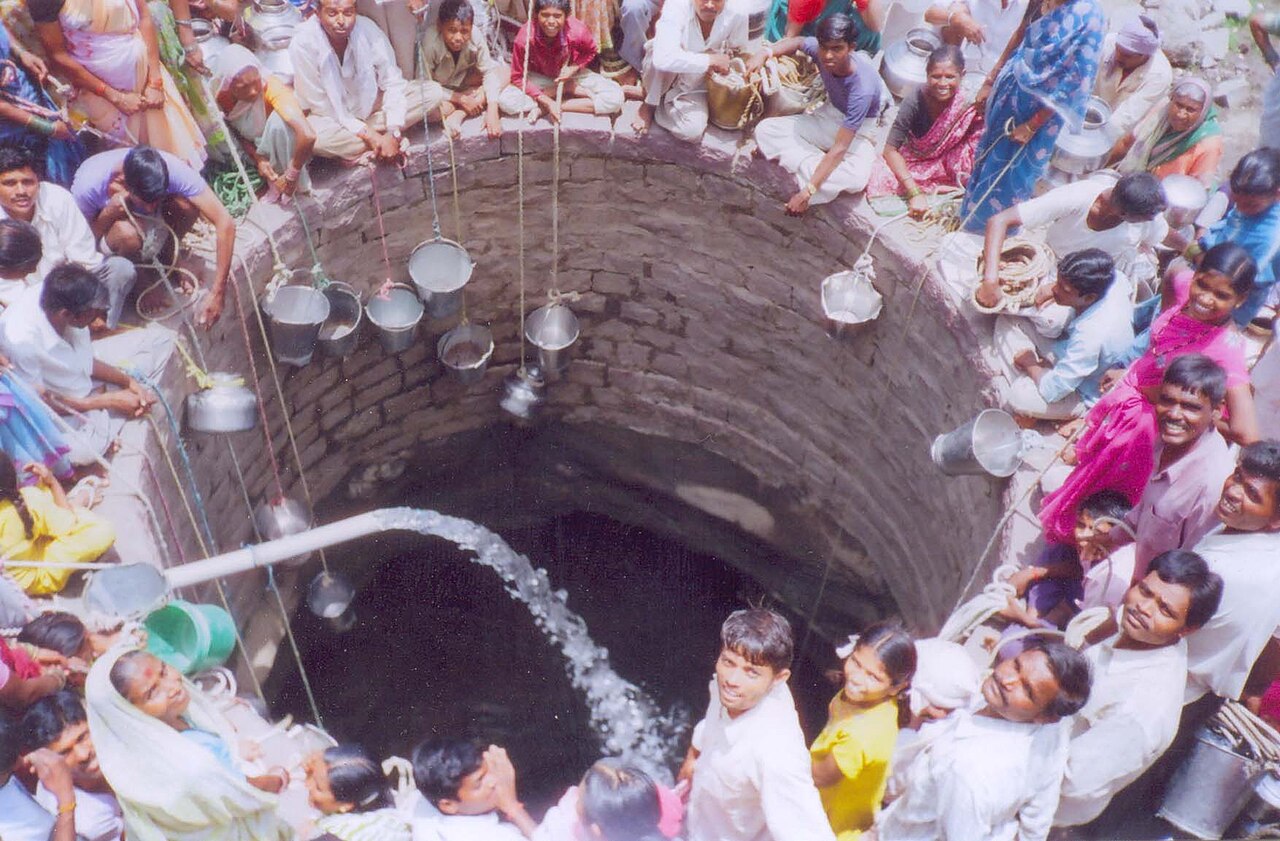
Maharashtra has earmarked Rs 6,728 crore for rural employment and livelihood support under the Viksit Bharat-Guarantee for Rozgar and Ajeevika Mission (Gramin), or VB-G RAM G, as drought affects 265 of the state's 358 tehsils. The decision was taken at the first meeting of the state cabinet sub-committee on drought mitigation on 29 September.
The state declared the tehsils drought-affected on 26 September after an 18 per cent rainfall deficit against the annual average. Demand for work under the employment guarantee scheme rose from 402,493 households in July to 461,596 in August and 493,169 in September, according to the rural development department.
The drought will hit farmers, agricultural labourers and rural working families hardest, said Employment Guarantee Scheme Minister Bharat Gogawale, adding that the aim is to provide work close to home so people need not migrate. The state has identified 375 kinds of work. For households these include cattle sheds, irrigation facilities, orchard plantations, tube well recharge, bamboo plantations, sericulture sheds and compost pits; public works include repairing ponds, recharge structures, gabion and earthen bunds and percolation ponds, farm roads and storage and market platforms for Agricultural Produce Market Committees.
The money is split among divisions, including Rs 1,944 crore for Chhatrapati Sambhajinagar, Rs 1,145 crore for Amravati, Rs 801 crore for Pune, Rs 489 crore for Konkan and Rs 119 crore for Nagpur. The central government pays 60 per cent and the state 40 per cent.
Revenue Minister Chandrashekhar Bawankule said the Water Resources Department is assessing a 10 per cent cut in urban water supplies and restrictions in rural areas, though no decision has been taken. A three-member committee of secretaries will prepare for possible fodder shortages. Farmers in Beed district in Marathwada told Down To Earth they are worried about drinking water and cattle feed, having not yet recovered from the 2025 floods.
The report is by Himanshu Nitnaware for Down To Earth.
Photo: Suhasajgaonkar / Wikimedia Commons (CC BY-SA 4.0)
Source: Down To Earth

Comments
(0)