
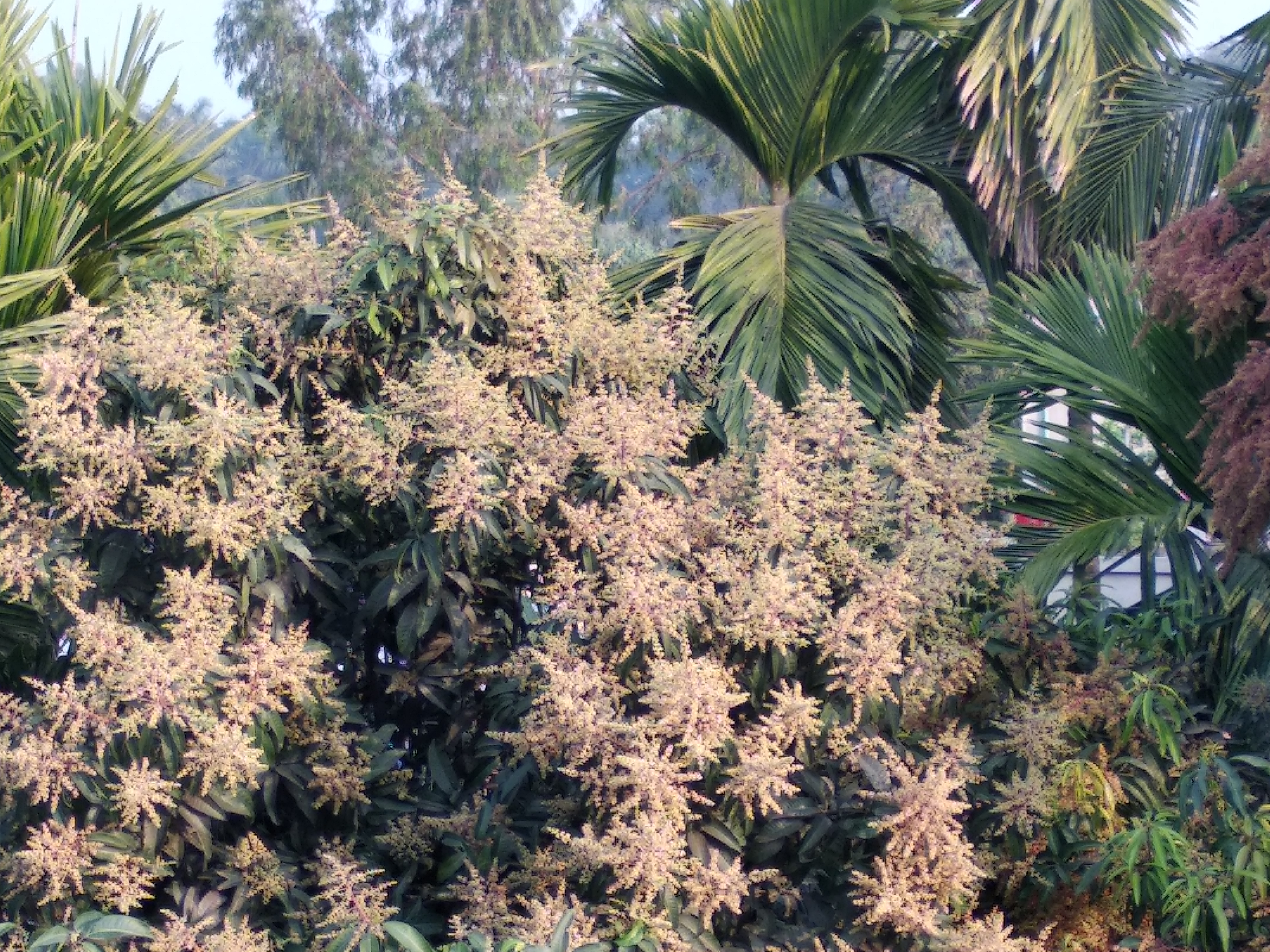
Mango orchards across Mohammadpur upazila in Magura district, in south-western Bangladesh, were in heavy blossom at the end of February 2026, and growers said they expected a good harvest that year if the weather stayed favourable. Jagonews24 reported on 28 February 2026, in the Bengali spring month of Falgun, that the flower clusters known in Bengali as mukul had appeared on branch after branch of the upazila's mango trees, bringing the orchards back to life after the winter.
Visits to orchards in different parts of the upazila suggested that a good yield was likely, the report said, although many farmers in the area had little experience of caring for their trees properly at this stage. They were nonetheless doing what they could to secure a good crop. A local agriculture officer used the moment to remind growers that the weeks between blossom and fruit set decide much of the season, and set out the four rounds of spraying that agriculture officials advise.
What growers in Mohammadpur saw
Orchard owners told the paper that wherever they looked they could see blossom, and that they hoped the harvest would be very good. With the weather still on their side, farmers were hopeful. They were also aware of what could go wrong: a storm, rain at the wrong moment or an attack by insect pests could still cause losses long before any fruit reached the market.
The report gave no figures for the area under mango in the upazila, the number of trees or a production target. What it described was the scene in the orchards and the growers' expectations at the start of the season, a stage at which nothing about the final crop is yet settled: the blossom has to open, be pollinated, set fruit and hold that fruit through the hot, stormy weeks of spring.
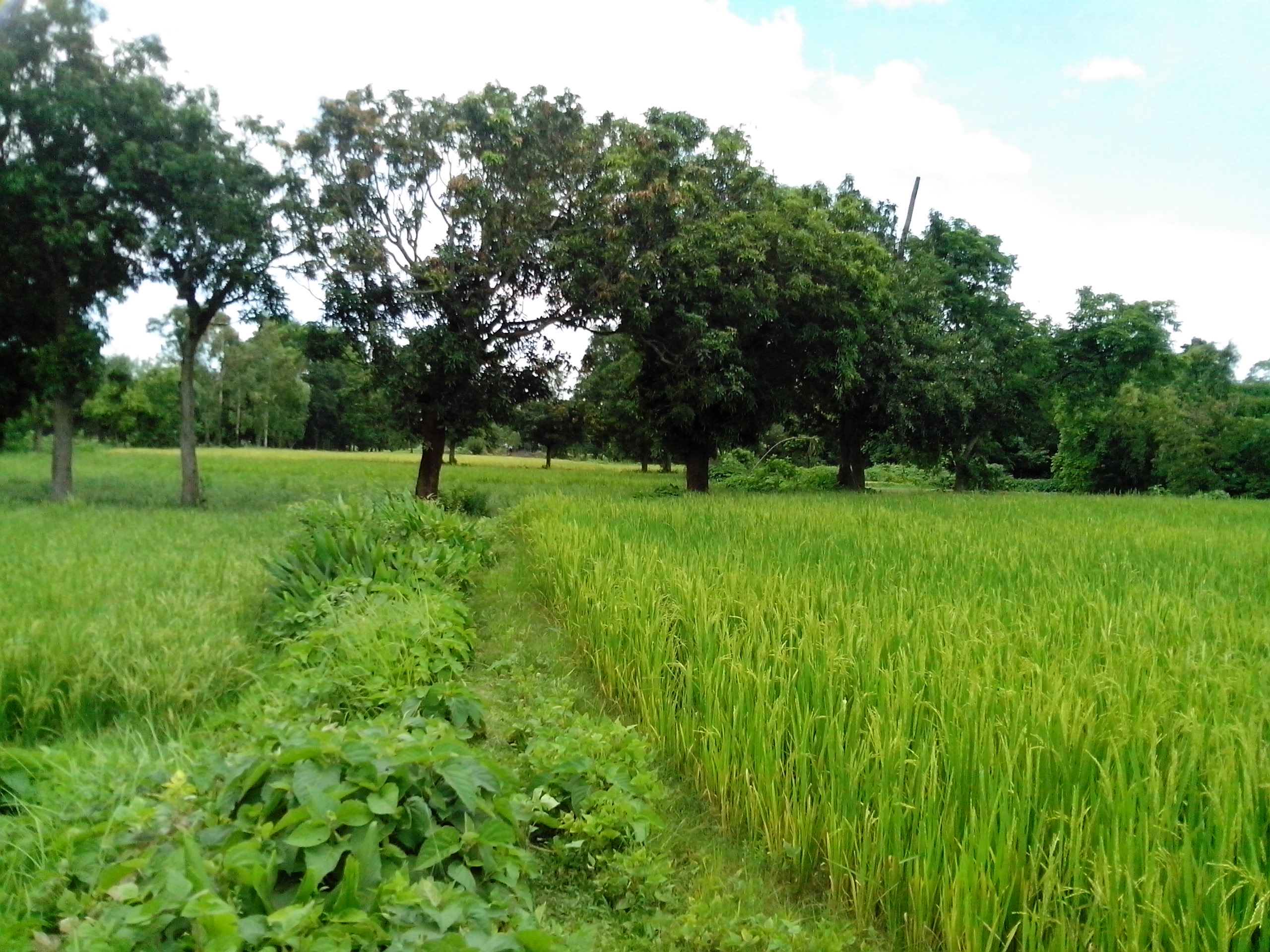
Mango is already one of the upazila's principal fruits. Banglapedia, the national encyclopedia of Bangladesh, lists mango first among Mohammadpur's main fruits, followed by jackfruit, banana, palm and coconut, while paddy, jute, wheat, onion and garlic are its main field crops.
Four rounds of spraying and feeding at fruit set
Pranab Kumar Roy, a sub-assistant agriculture officer, told Jagonews24 that proper care at this stage was essential to get a good yield from the blossom. Agriculture officials, he said, had advised spraying in four stages, and following them increased the chance of a good harvest:
- First spray: before the blossom appears.
- Second spray: after the blossom has appeared, just before the flowers open.
- Third spray: when the young fruit begins to take shape.
- Fourth spray: when the young mangoes have grown to about the size of a marble.
Those involved in the work also said that applying potash fertiliser at the base of the tree, together with humic acid, when the young fruit sets helps the fruit to grow and improves its quality. The report named no pesticide, fungicide or fertiliser product and gave no doses. Which insecticide or fungicide to use, how much of it, and whether a spray is needed at all in a particular orchard are questions for the upazila agriculture office; growers should take the dose from that office and from the product label rather than guess it.
The staged timing matched other advice published that season. On 27 January 2026 Prothom Alo carried guidance from a horticulturist at the Falbithi Horticulture Centre at Asad Gate in Dhaka. It placed a first round of insecticide and fungicide one to one and a half months before the blossom appears, to keep the tree free of disease before flowering; a second round when the flower stalks are 4 to 6 inches long but the flowers have not yet opened; a third when the young fruits are the size of a pea; and a fourth when they reach the size of a marble. The guidance stressed that only the approved dose should be used and that the instructions on the packet should be read before spraying, since rates differ between products.
The horticulturist's advice also explained why the officer's second spray comes before the flowers open. Once the flowers are open, no insecticide or fungicide should be used, because spraying then can damage the flowers and harm the beneficial insects that visit the orchard in large numbers at that time and help to pollinate the flowers. Spraying before the bloom matters as much as holding off once it has opened, the guidance said.
How a blossom becomes a mango
The mango, Mangifera indica, belongs to the family Anacardiaceae. According to Banglapedia, some authorities consider the cultivated forms to derive from a species indigenous to the eastern part of the Indian subcontinent, including Bangladesh, Assam in India and Myanmar. The tree is evergreen, with a thick, rough trunk and a dense crown, and when planted with wide spacing it can grow more than 20 metres tall and 30 metres across.
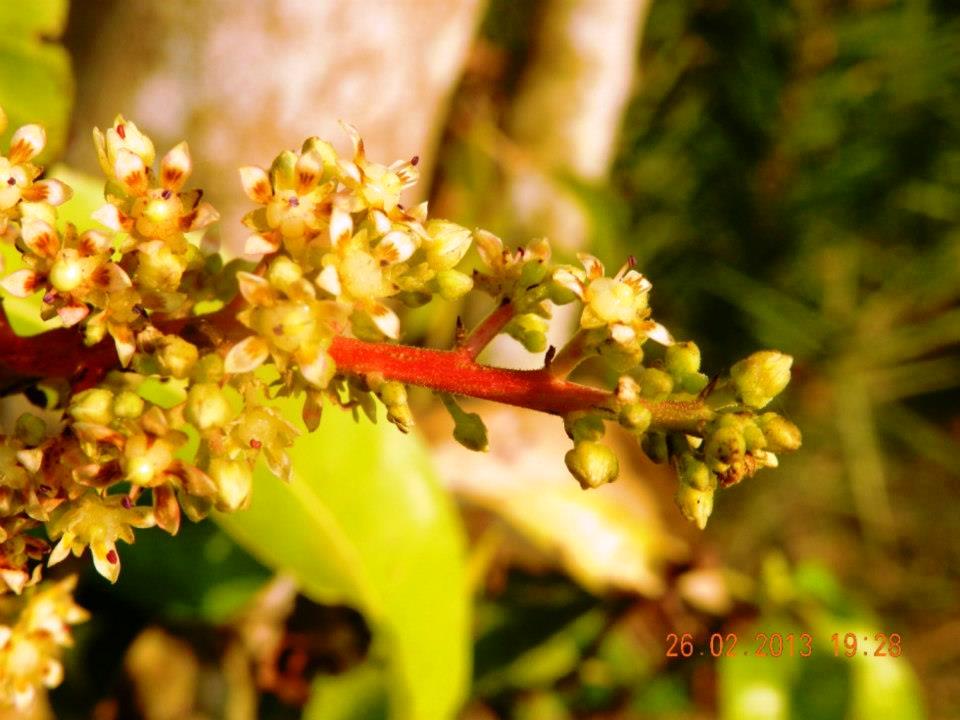
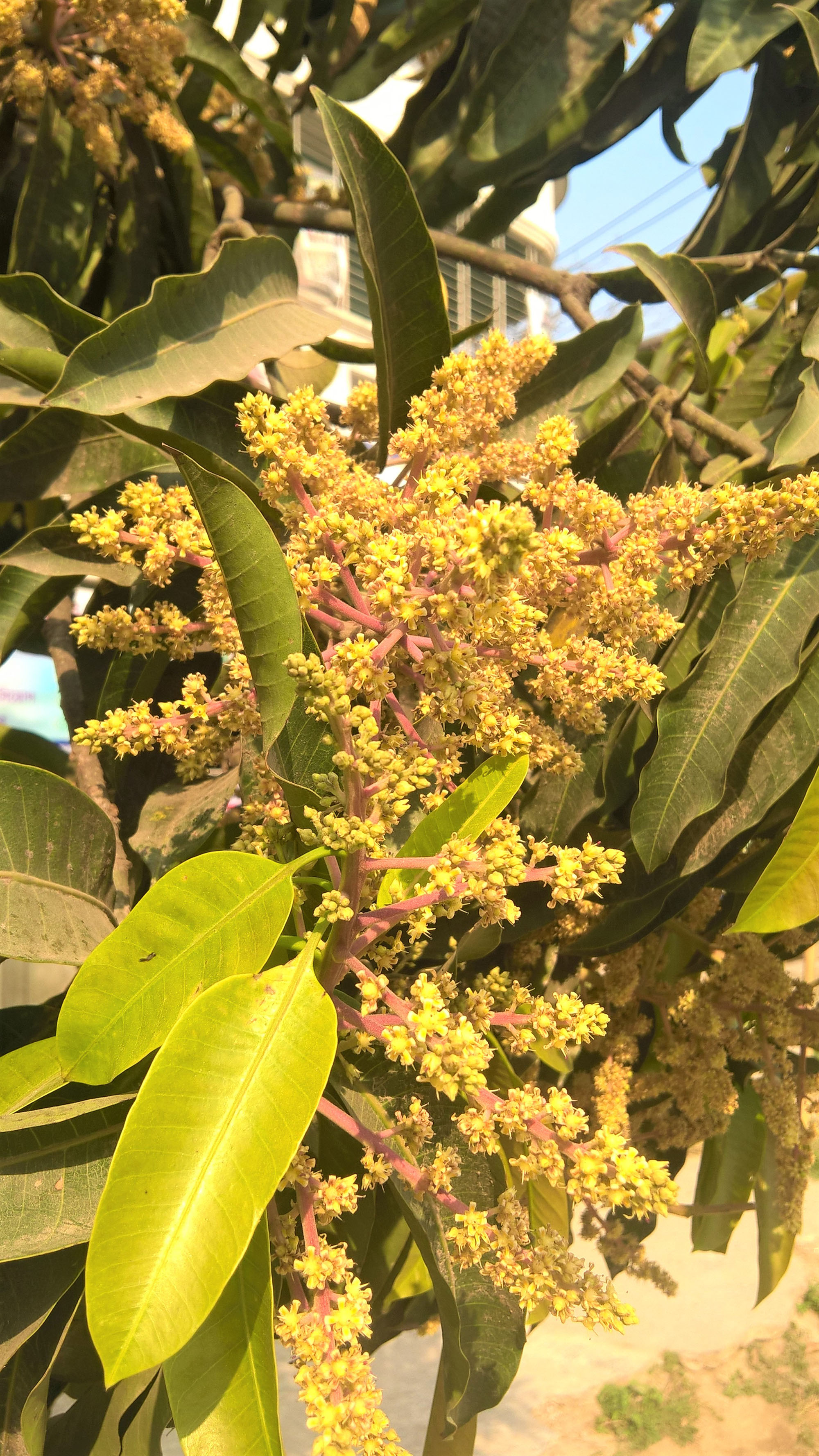
What growers call mukul is the tree's inflorescence. Banglapedia describes the flowers as small, white-yellowish or violet and fragrant, borne in large panicles at the ends of the branches, and says a single inflorescence may carry 100 to 250 flower buds, not all of which open. The University of Florida's extension service (UF/IFAS), in its guide to growing mangoes, puts the count per panicle at between 550 and more than 4,000 flowers and notes that most of them are male, with the remainder bisexual. The figures differ with variety and conditions, but the sources agree on the main point: a tree produces far more flowers than it can ever turn into fruit.
Banglapedia says only about one or two flowers in a thousand may lead to a mature fruit, and that two or three fruits on a panicle are often enough for a satisfactory crop. How many fruits set depends on the share of complete, bisexual flowers on the tree. UF/IFAS gives the period from flowering to a mature fruit as 100 to 150 days.
Weather at flowering is decisive, which is why the Mohammadpur growers were watching the sky. Banglapedia notes that fruit setting is adversely affected by fog, rain or cloudy weather in January to March, when the trees flower in Bangladesh. Mild showers later, while the fruits develop and enlarge, are beneficial, but storms, and hailstorms in particular, harm the crop and often cause immature fruit to drop. UF/IFAS likewise considers dry weather before and during flowering the best condition for a good crop.
Mango grows on almost any soil except very shallow ground or sticky clay subsoils, Banglapedia says, with an optimum soil pH of 5.5 to 7.5; some of the country's best orchards stand on the deep alluvial loams of the Gangetic floodplains. Grafted trees first bear fruit in the fourth year after planting and remain productive to about the 45th year, while trees raised from seed take several years longer to start bearing but may go on fruiting to the age of 60 or more.
Pests and diseases that threaten the blossom
Insects and disease are the other danger the growers named. Banglapedia records about three dozen insect pests that attack mango in Bangladesh from the nursery stage to maturity. An infested inflorescence bears few or no fruits, and infested fruits drop early or become unfit to eat. Among the major pests it lists the mango hoppers, three species of the genus Idioscopus (I. atkisoni, I. clypealis and I. niveosparsus), along with mango fruit weevils, the stem borer, the shoot borer and the fruit fly.
Hoppers are leafhoppers, sap-sucking insects of the family Cicadellidae. Banglapedia explains that leafhoppers pierce plant tissue with sucking mouthparts and draw off sap, and that under favourable conditions some species can build up enormous populations in a short time. Growers elsewhere were alert to the same threat that month: on 15 February 2026 a mango farmer in Charghat, Rajshahi, told BSS that if hoppers and other sucking insects were not controlled in time, the crop could fall.
Banglapedia also lists several fungal diseases that cause considerable damage to mango, among them anthracnose, sooty mould, leaf blight, die-back and powdery mildew, as well as a bacterial leaf spot. UF/IFAS describes the two that matter most at flowering. Both powdery mildew and anthracnose attack newly emerging panicles, flowers and young fruit. Anthracnose produces black, slightly sunken lesions of irregular shape that enlarge and cause blossom blight, leaf spots and fruit rot, and it is encouraged by rain or heavy dew. Powdery mildew attacks during dry spring weather and covers infected parts with a whitish, powdery fungal growth; a severe infection can destroy the flowering panicles and stop fruit from setting.
UF/IFAS adds a point that explains why sprays are tied to growth stages rather than to the first sign of damage: a fungicide works only if it coats the susceptible parts before infection, and a spray applied after infection has no effect on the disease. Protective sprays have to be renewed as new tissue appears. The guide's own spray recommendations are written for Florida; in Bangladesh, the products, doses and timing for a given orchard should come from the upazila agriculture office.
Care around flowering
The Falbithi horticulturist's advice, published by Prothom Alo a month before the Jagonews24 report, covered more than spraying. Watering and feeding should stop 30 to 45 days before the blossom is due, because a tree that receives fertiliser and water at that time tends to put out new leaves instead of flowers. Once the young fruit has set, however, the soil must not be allowed to run short of water, or the blossom may wilt and the blossom and young fruits drop.
Too much nitrogen fertiliser at flowering can also make the blossom drop, and it leads to more leaves and fewer flowers, the guidance said, so nitrogen should be used with care at this time. Weeds, dry leaves and fallen blossom should be cleared regularly from around the base of the tree to reduce the risk of pests and disease. Pruning, needed each year to let in light and air and to keep the tree in shape, is best done soon after the harvest and never just before or after the blossom.
On young grafted trees, the advice was to remove all the blossom in the first year; from the following year it can be left. Manure and fertiliser should be applied at the approved rate for the tree's age, normally twice a year, before the monsoon in March and April and after it in September and October. Dense fog, heavy rain or a long dry spell call for particular care, and props can keep a tree from leaning or breaking in a storm. Bagging the fruit as it grows protects it from insects and keeps the skin clean.
UF/IFAS makes a related point on watering: if water has to be given while flowers or fruit are on the tree, keeping the flowers and fruit dry helps to reduce fungal disease. In Florida, it notes, mango flowers are pollinated by insects such as thrips and flies, and to a small extent by honey bees.
Mohammadpur and Magura on the Madhumati
Mohammadpur is one of the four upazilas of Magura district, in Khulna division, alongside Magura Sadar, Shalikha and Sreepur. Banglapedia gives its area as 233.70 square kilometres. It is bounded by Madhukhali upazila to the north, Lohagara to the south, Boalmari and Alfadanga to the east, and Magura Sadar, Shalikha and Madhukhali to the west. At the 2011 census it had 207,905 people. The thana was formed in 1924 and became an upazila in 1983.
Its main rivers are the Gorai-Madhumati, the Nabaganga and the Nirbishkhali, and Woapara Beel and Titadaha Beel are its notable wetlands. The Gorai, a principal distributary of the Ganges, flows south-east to Mohammadpur upazila and from there takes the name Madhumati; Banglapedia notes that agriculture and irrigation in the areas it crosses depend heavily on the river. The upazila's name goes back to Raja Sitaram Roy, a zamindar of the region in Aurangzeb's reign, who renamed his capital, previously called Bagjan, Mohammadpur.
Farming is the backbone of the local economy. According to Banglapedia, agriculture accounts for 68.46 percent of the upazila's main sources of income. Its main crops are paddy, jute, wheat, onion and garlic, which are also its main exports. It has 40 hats and bazars, the best known including Mohammadpur Hat, Binodepur Hat, Shirgram Hat, Babukhali Hat, Balidia Hat, Nahata Hat and Palashbaria Hat. The cyclones of 1909, 1961 and 1963 and the flood of 1971 caused heavy damage to its settlements and crops.
Magura district covers 1,039.10 square kilometres and is bounded by Rajbari to the north, Jessore and Narail to the south, Faridpur to the east and Jhenaidah to the west. Its population at the 2011 census was 918,419. Its main rivers are the Gorai-Madhumati, the Nabaganga and the Kumar. Magura became a sub-division in 1945 and a district on 1 March 1984, and agriculture accounts for 66.3 percent of its main sources of income, according to Banglapedia.
The district is better known for litchi than for mango. Prothom Alo reported in May 2025 that the DAE in Magura counted 669 hectares of litchi in the district that year, 531 of them in Sadar upazila, 43 in Shalikha, 37 in Sreepur and 58 in Mohammadpur. Magura's Hazrapuri litchi had just received a geographical indication (GI) certificate, handed to the district's deputy commissioner on 30 April 2025 at a World Intellectual Property Day event of the Department of Patents, Designs and Trademarks.
The season in the main mango districts
The blossom in Mohammadpur was part of a wider picture that February. On 15 February 2026 BSS reported that thousands of mango trees in the Rajshahi region were coming into blossom as winter ended. According to the DAE's Rajshahi region, mango was grown on 19,603 hectares in Rajshahi district in the 2024-25 fiscal year, producing 249,952 tonnes; the same area was targeted for 2025-26, with a production target of 246,000 tonnes. Dr Shafiqul Islam, chief scientific officer of the Fruit Research Centre in Rajshahi, said the blossom had come quite early that year, that more was expected than the year before and that farmers were being told to spray to protect their orchards. He added that the production target was expected to be met if fog did no great damage.
The same report said new orchards, especially of Amrapali and the BARI Aam-3 and BARI Aam-4 varieties, were increasing every year. Naogaon, long known for rice, had overtaken Chapainawabganj the previous year as the largest mango-producing district. Chapainawabganj still had the largest orchard area, but according to DAE data the area under mango in Naogaon had grown one and a half times in ten years, an increase of 14,925 hectares against 9,520 hectares in Chapainawabganj. Farmers were also changing how they plant, setting up orchards meant to last about ten years rather than a hundred.
In Chapainawabganj, BSS reported on 20 February 2026, the district DAE counted about 9,244,765 mango trees on 37,487 hectares in the season, with a production target of about 458,912 tonnes. Dr Md Yasin Ali, deputy director of the district agriculture department, said blossom had appeared on about 70 percent of the trees and that farmers were being advised to spray insecticide and fungicide and to irrigate. Guti, Lakshmanbhog, Amrapali, Gopalbhog, Langra, Fazli, Khirsapat and Ashwina trees were all coming into blossom.
Two days before the Magura report, on 26 February 2026, BSS gave the figures for the whole DAE Rajshahi region of Rajshahi, Naogaon, Natore and Chapainawabganj: 92,552 hectares of orchards with 34,960,554 trees, about 63 percent of which had blossomed. Rajshahi district's orchard area had fallen to 19,062 hectares, 541 hectares less than the previous year's 19,603, while Naogaon's had risen to 30,500 hectares from 30,300, with 71 percent of its trees in blossom. Natore had 5,069 hectares, with blossom on 53 percent of its trees. Dr Shafiqul Islam said winter had ended without fog or rain and that temperatures had risen gradually, which let the trees keep up the flowering process. The report also recalled that although output had been good the year before, heavy rain had spoiled a large quantity of mangoes, prices had fallen and farmers had lost money.
Kazi Zulfiqar Ali, an associate professor of economics at Rajshahi University, told BSS that some Rajshahi farmers were cutting down mango trees because profits had fallen, and that mango cultivation had grown in Satkhira and parts of Bandarban. He said Rajshahi, Naogaon and Rangpur mostly grow late varieties that reach the market when prices fall, while Satkhira's mangoes arrive earlier and fetch better prices, and that mango, being perishable, cannot be stored like potatoes.
Mango in Bangladesh: output, varieties and exports
Mango trees grow throughout Bangladesh and are raised mostly as homestead plantations, Banglapedia notes. The country's mangoes fall into two groups: superior varieties propagated by grafting and other vegetative methods, and local seedling trees popularly called deshi or guti mango, which have no recognised variety names and whose taste is not assured. Prominent superior varieties include Fazli, Langra, Gopalbhog, Himsagar, Khirsapat, Ashwina, Kishanbhog, Kuapahadi, Lata Bombai, Mohanbhog and Misribhog, and there are nearly 100 cultivars in the country.
Production has grown many times over. Banglapedia records about 639,820 tonnes of mango from about 641,525 acres in 2005-06. The Daily Star, reporting on 24 September 2025, put annual production at 2.4 to 2.5 million tonnes, for a domestic market worth Tk 13,000 to 14,000 crore, with commercial cultivation in 23 districts and 72 varieties grown nationwide.
Exports remain small. According to the DAE, Bangladesh exported 3,100 tonnes of mangoes in 2023 and 1,321 tonnes in 2024; by September 2025 that season's shipments had reached 2,194 tonnes, up 66 percent, to 26 countries, with the United Kingdom taking the most at 686 tonnes. Amrapali alone accounted for about 80 percent of shipments, with Himsagar, Langra, BARI-4 and Fazli among the other exported varieties. Exports began in 2015 and run from late May to late September each year.
Research on the crop is led by the Bangladesh Agricultural Research Institute (BARI). Its Mango Research Station, set up at Nawabganj in 1985 under BARI's Horticulture Division, works on all aspects of mango cultivation, variety improvement and production; Banglapedia describes an orchard there of over 300 trees of about 65 cultivars. The DAE, for its part, produces and distributes grafts of elite mango cultivars from its orchards, horticulture centres and nurseries across the country.
Photo: Sd Raihan / Wikimedia Commons (CC BY-SA 4.0)
Sources: Jagonews24, Bangladesh Sangbad Sangstha (BSS), Prothom Alo, The Daily Star, Banglapedia, University of Florida IFAS Extension
Comments
(0)