
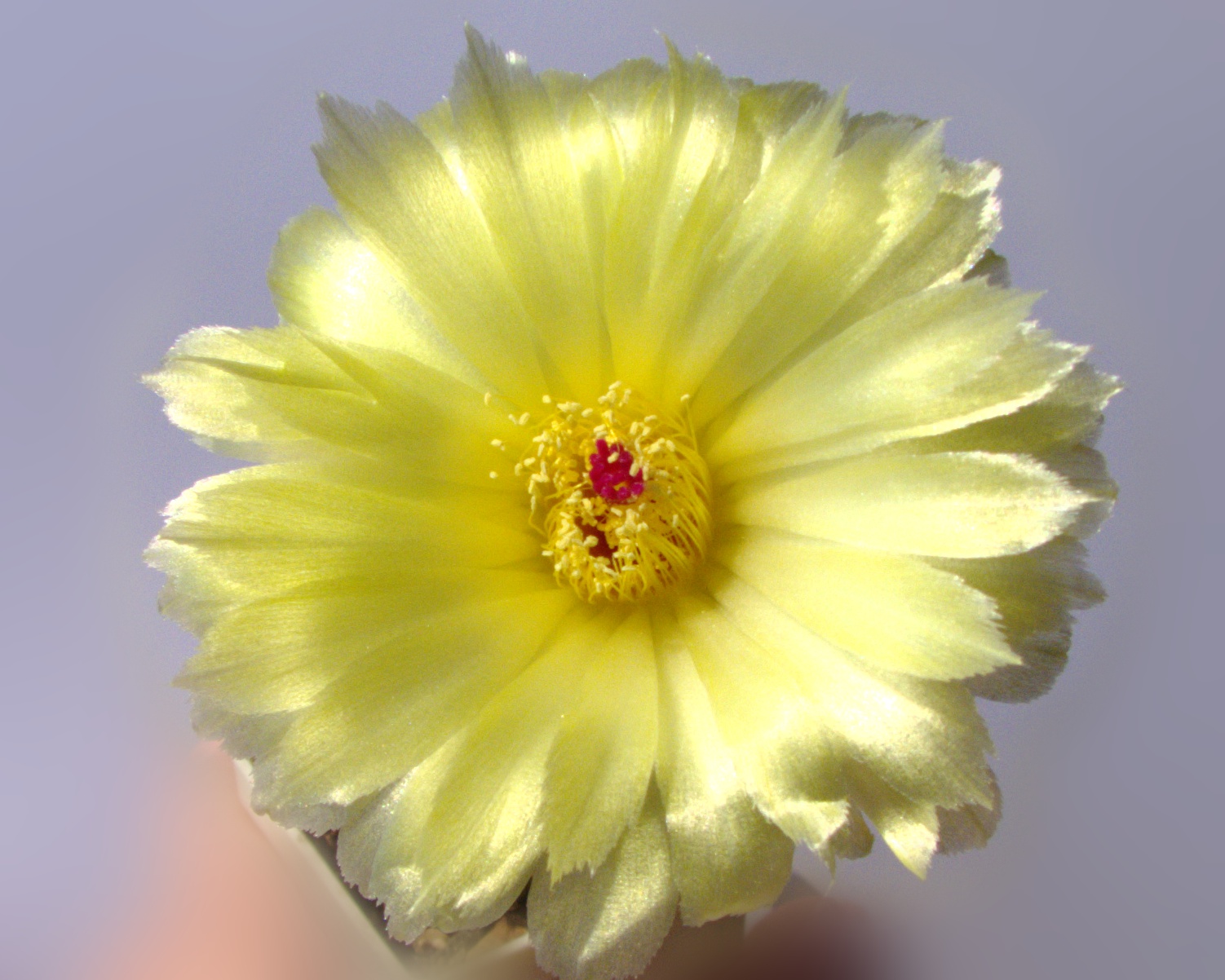
In April 2026 a cactus known among Bangladeshi growers as the "noto cactus" opened yellow flowers at the Madaripur Horticulture Centre, a seedling and nursery centre run by the government's Department of Agricultural Extension (DAE) at Mostafapur in Madaripur Sadar upazila. The plant had been brought from Thailand about three years earlier. The centre's deputy director, agriculturist Ashutosh Kumar Biswas, said it was probably the first time a noto cactus had flowered in Bangladesh, and Jagonews24 reported on 25 April 2026 that plant lovers were coming every day to see it. The claim is his: The Agro News found no independent record that either confirms or contradicts it.
"Noto cactus" is a growers' short form of Notocactus, a name that botanists no longer use as a separate genus. The plants once placed in Notocactus are now classified in the South American genus Parodia, and the yellow-flowered, spiny, round to elongated plant described at Madaripur fits that group. The centre did not say which species its plant is, so this report does not name one.
A cactus corner of 225 kinds
The horticulture centre stands near the large bridge at Mostafapur (Mostafapur Boro Bridge) in Mostafapur union of Madaripur Sadar upazila. Visitors who walk in now meet a dedicated cactus corner: plants of many colours and shapes, each covered in its own pattern of spines. According to the centre, the corner held 225 kinds of cactus when the noto cactus flowered.
The collection began as a personal interest. Ashutosh Kumar Biswas first started gathering cacti on his own initiative and, by his account, soon became devoted to them. He bought plants he found online and collected others from nurseries and from people's homes. In about two and a half years, he said, the collection reached 225 species. Jagonews24 had already reported on the centre's cacti in early December 2025, under a headline saying the Madaripur horticulture centre held 200 species of cactus; by April 2026 the count given was 225.
Among them, the noto cactus drew the most attention that spring. The original report describes it as usually elongated and rounded, with attractive spines, and its yellow flowers sitting among the spines on top of the plant were what caught visitors' eyes.
Visitors, the price and the "first" claim
Word that the plant had flowered brought people to the centre. One visitor, who came with her mother, told Jagonews24 that she likes cacti very much, that the flower was very beautiful, and that she would collect a plant once seedlings were available.
Another plant lover, Ohiduzzaman Kajol, said he had always liked plants, and unusual ones even more, so he came as soon as he heard. "The flower is very beautiful," he said. "A yellow flower blooming among the thorns is, in a word, extraordinary."
Ashutosh Kumar Biswas said the seedling had been collected from Thailand three years earlier and that, after three years of care, it had produced yellow flowers a few days before the report. "Probably this is the first time a noto cactus has flowered in Bangladesh," he said. Many visitors were asking for seedlings, he added. The plant had been bought for Tk 500 and was now worth Tk 1,500, by his estimate. The centre was working to produce seedlings of it, and once it could, it wanted to put them in people's hands at a very low price.
The published record does not settle whether this was truly the first such bloom in the country. NC State Extension describes Parodia as a popular, easy-to-grow house plant, and Bangladeshi collectors had been importing cacti from several countries for years (see below). This report therefore gives the statement as the deputy director made it, with his own word "probably".
What a "noto cactus" is: Notocactus, now Parodia
The genus Parodia was described by the botanist Carlos Luis Spegazzini, who published it in 1923. It is named after Domingo Parodi, an early investigator of the flora of Paraguay. Notocactus was published as a genus by Alberto Vojtěch Frič in 1928, on the basis of an earlier name by K. Schumann, and for decades many popular pot cacti were sold under that name.
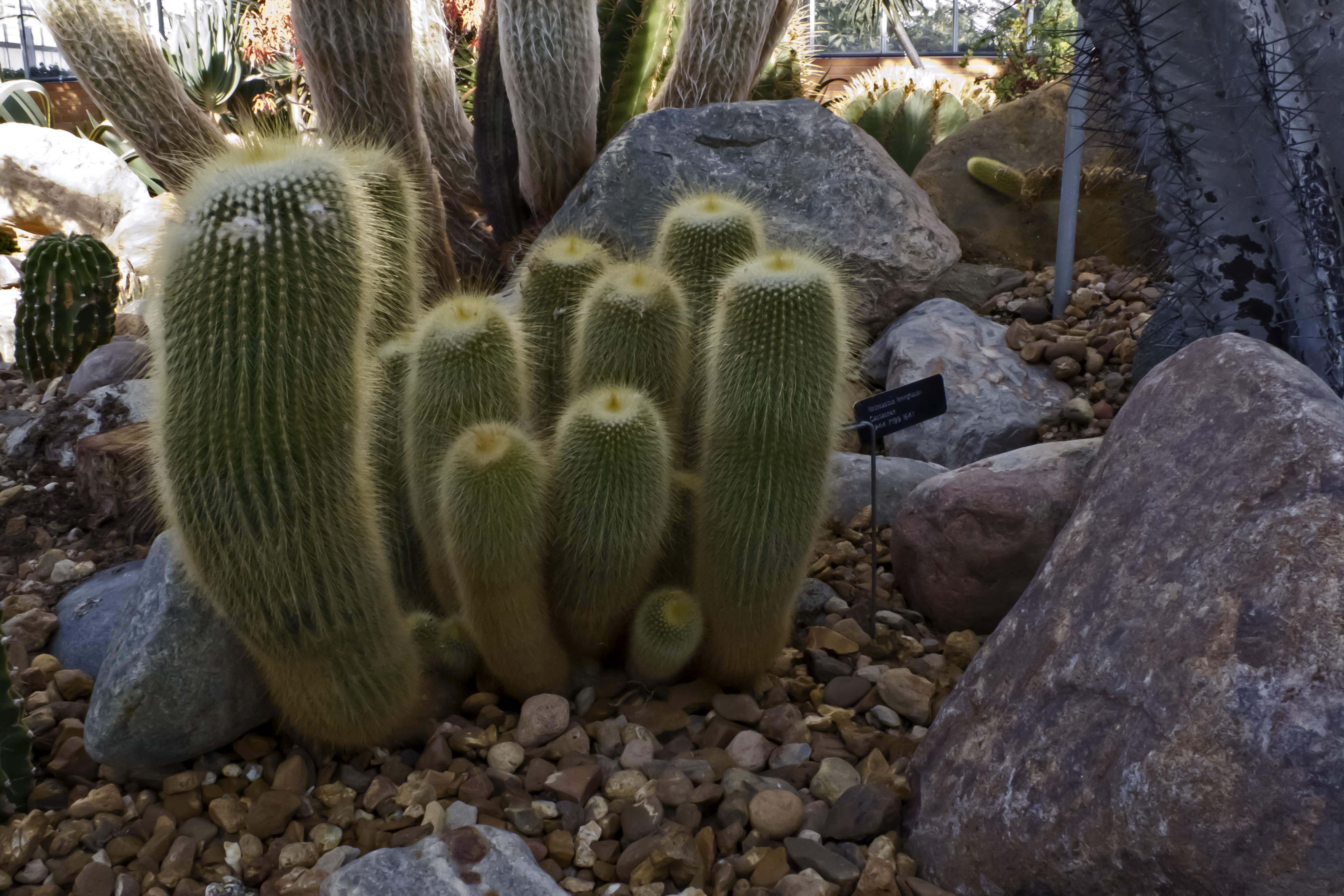
Anatomical and morphological studies by the botanist David Hunt and colleagues, and by Reto Nyffeler, led to Notocactus and the related genera Brasilicactus, Brasiliparodia, Eriocactus and Wigginsia being merged into Parodia. In Nyffeler's arrangement, the former Notocactus plants form a "Notocactus" group inside Parodia subgenus Parodia. The Royal Horticultural Society (RHS) of the United Kingdom lists Notocactus in its plant database as a synonym rather than an accepted name, and North Carolina State University's Extension Gardener Plant Toolbox notes that Parodia was "previously known as" Brasilicactus, Eriocactus and Notocactus. Old labels survive: a Commons photograph from the Matthaei Botanical Gardens in Michigan shows Parodia leninghausii still labelled Notocactus leninghausii.
Sources count the genus differently. The Wikipedia entry on Parodia gives about 65 species; the NC State Extension toolbox gives about 71 accepted species. Either way it is a mid-sized genus within the cactus family, Cactaceae.
One correction to the original report concerns where the plants come from. The report said the noto cactus is popular in Argentina, Paraguay, Uruguay, southern Brazil, Mexico and several other countries. According to the botanical references, Parodia is native to South America only: the eastern slopes of the Andes in northwestern Argentina and southwestern Bolivia, and the lowland pampas of northeastern Argentina, southern Brazil, eastern Paraguay and Uruguay, with NC State also listing Colombia. The former Notocactus species are concentrated in southern Brazil, especially the state of Rio Grande do Sul, extending into Uruguay and northeastern Argentina. Mexico, the heartland of many other cacti, is not part of the genus's native range, and this report leaves it out.
What Parodia looks like and how it flowers
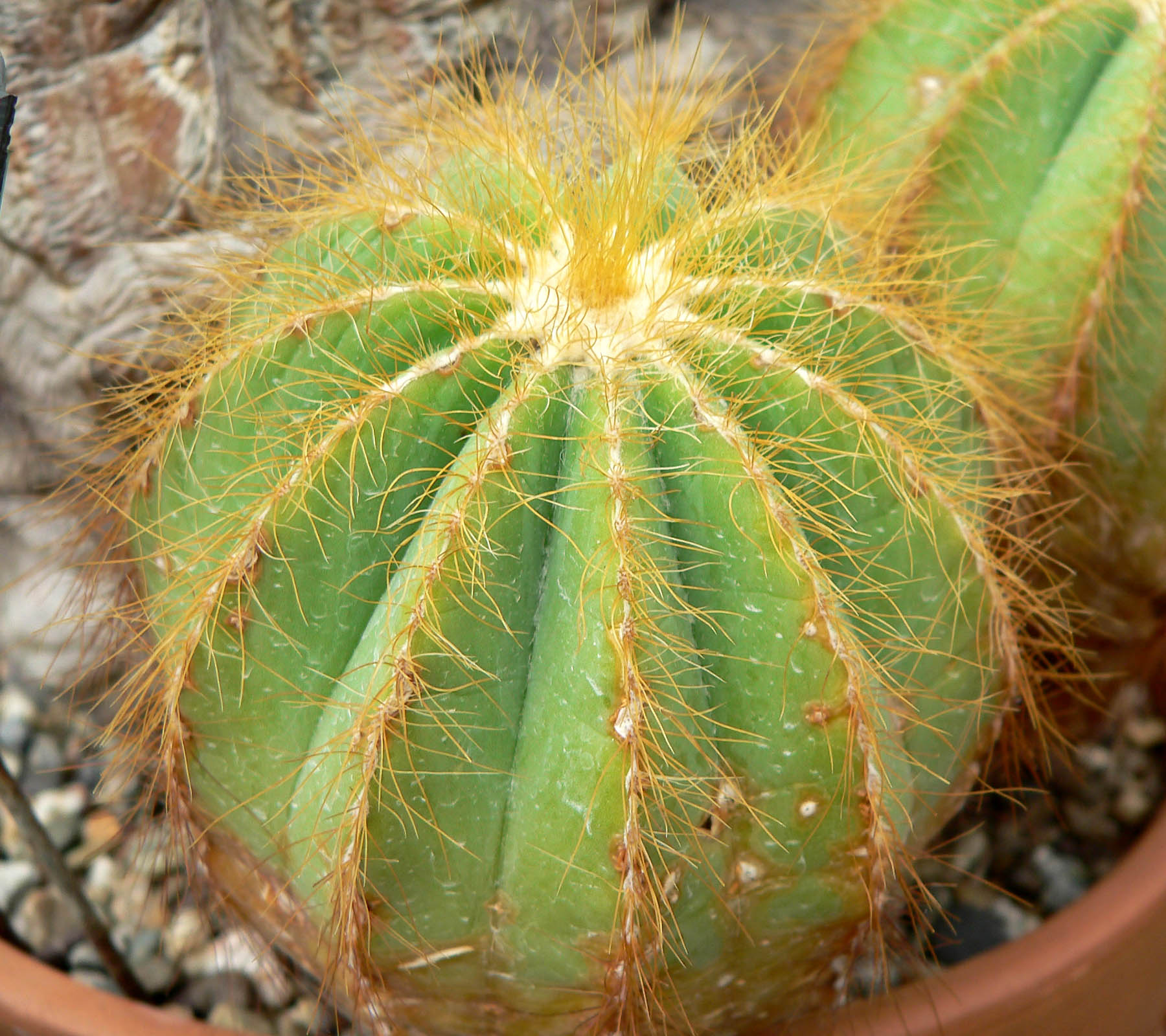
Parodia plants range from small globes to columns up to about one metre tall. All are deeply ribbed and spiny, and the flowers come singly at or near the crown, the top of the stem; some species also produce offsets at the base. In the description used by Nyffeler for the Notocactus group, the stems are flattened-globular, globular or columnar, the tissue contains mucilage, the skin is often hard, and the flowers are broadly funnel- to bell-shaped, with a style and stigma that are usually a different colour from the petals.
NC State Extension describes the flowers as funnel-shaped and upright on top of the stem, usually 1 to 3 inches across with 7 to 20 petals, in yellow, orange, red or pink depending on the species, with a prominent stigma of a contrasting colour. In cultivation in the United States they bloom from summer into early fall. The fruit is small, berry-like, fuzzy and spiny, greenish-yellow tinged with pink, and holds small black seeds.
Yellow is common in the group. Among the species NC State lists, Parodia ottonis has a globular stem, red curving spines and yellow flowers; Parodia magnifica, the balloon cactus, is bluish-green, globular and clustering, up to 12 inches tall, with yellow blooms; Parodia scopa, the silver ball cactus, has white spines, 30 to 40 ribs and yellow flowers; and Parodia leninghausii, the golden ball cactus from Brazil, grows over 12 inches tall with large yellow flowers. The RHS describes Parodia leninghausii, also called the lemon ball or yellow tower cactus, as having single or clustering, rounded to cylindrical stems up to 60 centimetres tall, bristly golden-brown spines and bowl-shaped lemon-yellow flowers 4 to 5 centimetres across. The elongated-and-rounded shape and yellow flower described in Madaripur are consistent with several of these, which is why the species cannot be guessed from the report alone.
How Parodia is grown, according to horticulture authorities
Parodia is described by NC State Extension as small to medium, with interesting stems and spines and large, showy flowers, and as a popular, easy-to-grow house plant. Its guidance, together with the RHS entry for Parodia leninghausii, sets out the main points of care:
- Light: full sun to partial shade, from about 2 to more than 6 hours of direct sun a day (NC State); the RHS advises full sun or bright filtered light for Parodia leninghausii.
- Soil: a well-drained, acidic mix of sand and loam, or a cactus or succulent potting mix (NC State); the RHS recommends standard cactus compost, with a loam or sand base that is acid to neutral.
- Water: moderately during the growing season, letting the soil dry out completely between waterings, never leaving water standing, and keeping the plant body itself dry; keep the plant dry in winter (NC State). The RHS advises moderate watering from mid-spring to late summer.
- Feeding: the RHS advises a low-nitrogen liquid fertiliser every 6 to 8 weeks during the growing period for Parodia leninghausii.
- Temperature: hardy outdoors only in USDA zones 9 to 11 and brought indoors in cooler climates (NC State); the Wikipedia entry on Parodia notes the plants must be grown indoors where temperatures fall below 10 °C.
- Propagation: by seed (NC State); the RHS gives sowing at 19 to 24 °C in spring or summer. Cacti in general can also be propagated by cuttings, which are left to dry and callus before rooting, and by grafting.
- Problems: mealybugs, spider mites, whiteflies and aphids; root rot and fungal infections from overwatering or soggy soil; and sunburn of the stem in very hot climates (NC State). The RHS lists mealybugs and aphids and calls Parodia leninghausii generally disease-free.
NC State also advises wearing protective gloves when handling the plants because of their sharp spines. For a home grower in Bangladesh, the warnings about standing water and sunburn are the ones that matter most in the monsoon and the hot season. Advice on pest control products and doses for a particular plant should come from the local upazila agriculture office.
Cacti: plants of the Americas
All cacti belong to the family Cactaceae, in the order Caryophyllales. Estimates vary between sources; the Wikipedia article on cacti gives figures from about 125 to 131 genera and from about 1,400 to 1,866 species. They are native to the Americas, from Patagonia in the south to parts of western Canada in the north. The only cactus that also occurs naturally in the Old World is Rhipsalis baccifera, found in tropical Africa, Madagascar and Sri Lanka. Every cactus grown in Bangladesh, including the plants in the Madaripur collection, therefore came originally from the Americas.
What sets cacti apart is the areole, a highly reduced shoot unique to the family, often woolly or hairy, from which the spines, the flowers and sometimes new shoots grow. That is why a Parodia flower appears to rise straight out of the spines. The spines themselves are modified leaves. They deter grazing animals, trap a layer of moist air that reduces water loss, give shade, and in some species condense moisture from fog.
In most cacti the leafless green stem does the work of photosynthesis. Many use crassulacean acid metabolism (CAM): they open their pores at night, when less water is lost, store carbon dioxide as malic acid, and use it for photosynthesis during the day with the pores closed. Water can make up as much as 90 per cent of a cactus's mass, stored mainly in the stem, and ribbed stems shrink in drought and swell after rain. Flowers grow from the areoles and are usually tubular, with many petal-like tepals, and colours range from white through yellow and red to magenta. Bees are the most common pollinators.
Because wild cacti are collected for the plant trade, all cacti are listed in Appendix II of CITES, the Convention on International Trade in Endangered Species of Wild Fauna and Flora, under which exports generally need permits, with exceptions such as some artificially propagated plants. Appendix I, the strictest list, includes all species of Ariocarpus and Discocactus.
Madaripur and its horticulture centre
Madaripur is a district of Dhaka division covering 1,049.59 square kilometres, according to Banglapedia, the national encyclopedia of Bangladesh. It has four upazilas: Kalkini, Madaripur Sadar, Rajoir and Shibchar. It borders Faridpur and Munshiganj to the north, Barisal and Gopalganj to the south, Shariatpur to the east and Faridpur to the west. Its rivers include the Padma, Arial Khan, Kumar and Ghagor, and the Madaripur Beel Route canal is a notable waterway. Madaripur was formed as a subdivision in 1854 under Bakerganj district, moved to Faridpur district in 1873 and became a district in 1984. Banglapedia records a population of 1,094,458 in the 2011 census, and gives agriculture as the main source of income, at 61.33 per cent.

The Department of Agricultural Extension, formed in 1982 under the Ministry of Agriculture, runs horticulture centres such as the one at Mostafapur, where seedlings and grafts of fruit and other garden plants are raised. The centre and its deputy director had been in the news before the cactus bloom. In June 2023 The Daily Ittefaq reported from the centre that a single mango tree there was bearing eight varieties at once: Miyazaki, Palmer, Thai Jambu, Katimon, BARI Aam-11, Kiujai, Himsagar and Banana mango. According to that report, an improved mango sapling had been planted in 2022; when its main branch died within six months, ten new branches grew from the base, ten grafts of different varieties were attached, eight survived, and the tree, about ten feet tall, began bearing within a year. Ashutosh Kumar Biswas, then also named as the centre's deputy director, told the paper that the tree had been made by an unusual grafting method and that, because different varieties were combined on one tree, it would give mangoes all year round; the paper added that the centre was working on more saplings of this kind.
The cactus corner added an ornamental collection to a centre known for fruit work, and Biswas's stated plan in April 2026, to raise seedlings of the noto cactus and sell them cheaply, followed the same model of propagating plants for the public.
Cactus collecting in Bangladesh
Interest in cacti had been growing in Bangladesh for several years before the Madaripur bloom, as newspaper reports show. In June 2022 The Daily Ittefaq reported from Bheramara upazila in Kushtia that a police sergeant had built a collection of about 400 species, with roughly 40,000 cacti under six sheds on the roof and in the yard of his home. His first plant came from India, and he later imported cacti from Thailand, Malaysia, China and the United States; his family said the garden was begun in 2019.
In November 2023 Prothom Alo described a forestry student at the University of Chittagong who sold cacti from a folding table at the campus shuttle-train station, with 20 species in his stock, gathered in part from border districts such as Lalmonirhat, Chuadanga, Naogaon and Bogura. In August 2025 the same paper reported that the annual tree fair at the Laldighi ground in Chattogram, organised by the Chattogram North Forest Division, displayed about 2,065 species of saplings, including 210 species of local and foreign cacti. One stall alone offered about 120 kinds of cactus, among them the golden barrel and Mammillaria hahniana, priced from Tk 200 to Tk 2,000.
Public collections exist too. The National Botanical Garden at Mirpur in Dhaka, founded in 1961 and managed by the Forest Department, covers about 84 hectares in 57 sections and includes a cactus house.
Photo: Sergei / Wikimedia Commons (public domain)
Sources: Jagonews24 (25 April 2026; 1 December 2025 headline), Royal Horticultural Society plant database (Parodia leninghausii; Notocactus), NC State Extension Gardener Plant Toolbox (Parodia), Wikipedia (Parodia; Cactus; National Botanical Garden of Bangladesh; Department of Agricultural Extension), Banglapedia (Madaripur District), The Daily Ittefaq (3 June 2023; 22 June 2022), Prothom Alo (26 November 2023; 1 August 2025)

Comments
(0)