
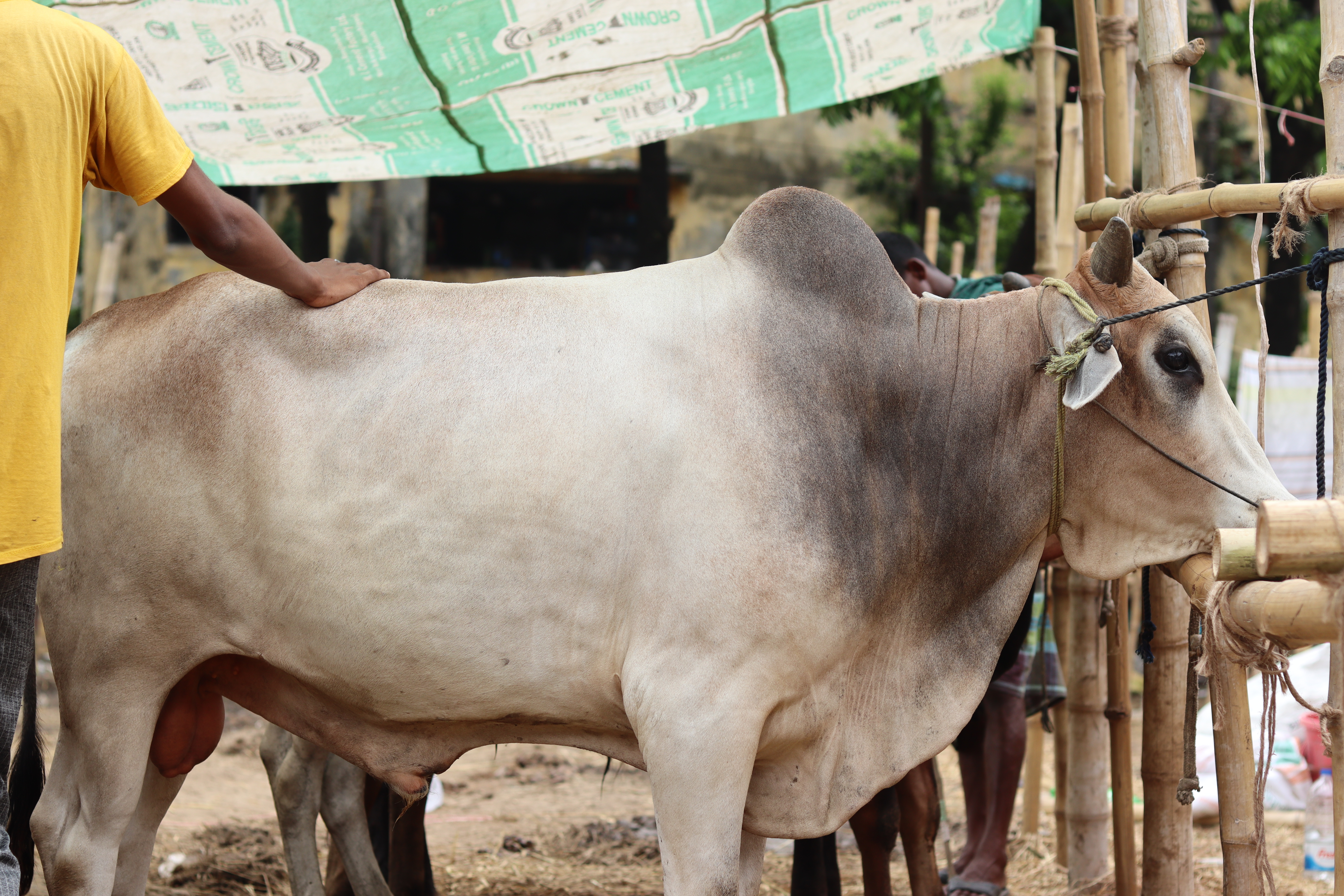
Two days before Eid-ul-Azha, on 26 May 2026, last-minute trading picked up at the sacrificial animal markets of Madaripur. With a plentiful supply of animals, markets across the district and its upazilas were crowded with buyers and sellers, and bargaining went on from morning till night. According to Jagonews24's report from Madaripur, law enforcers were also working in plain clothes to stop counterfeit notes and the "molom party" gangs who drug and rob people at the markets.
A report by Desh Rupantor's Madaripur correspondent, published the day before, on 25 May, said the district livestock office put Madaripur's demand for sacrificial animals at 66,880 this year, against 72,495 animals ready for sale. The Department of Livestock Services had formed 18 medical teams to cover about fifty permanent and temporary markets, and market authorities had arranged lodging, food and other facilities for buyers and sellers.
Eid on 28 May, and the final rush
Bangladesh's National Moon Sighting Committee met on the evening of 18 May 2026 in the Islamic Foundation's meeting room at Baitul Mukarram and announced that the crescent of Dhul Hijjah 1447 AH had been sighted. The month began on 19 May, and Eid-ul-Azha, on the 10th of Dhul Hijjah, was set for Thursday 28 May across the country. The committee confirmed the sighting after reviewing reports from every district administration, the Islamic Foundation's offices, the Bangladesh Meteorological Department and the space research agency SPARRSO.
Eid-ul-Azha is the second of Islam's two main festivals. It falls on the 10th of Dhul Hijjah, the last month of the Islamic calendar. After the Eid prayer, Muslims sacrifice livestock in remembrance of Prophet Ibrahim's (Abraham's) obedience to God's command. The Arabic words adha and qurban both mean sacrifice or offering. The sacrifice makes this the largest seasonal market of the year for Bangladesh's farmers, traders and buyers.
That was the scene in Madaripur two days before Eid. Desh Rupantor described small pickup vans unloading cattle from farms at the markets, and animals with fancy names such as Rajababu, Rajkumar, Mohabbat, Nawab and Shahjada filling the district's large markets. Buyers from different areas crowded in from morning until midnight.
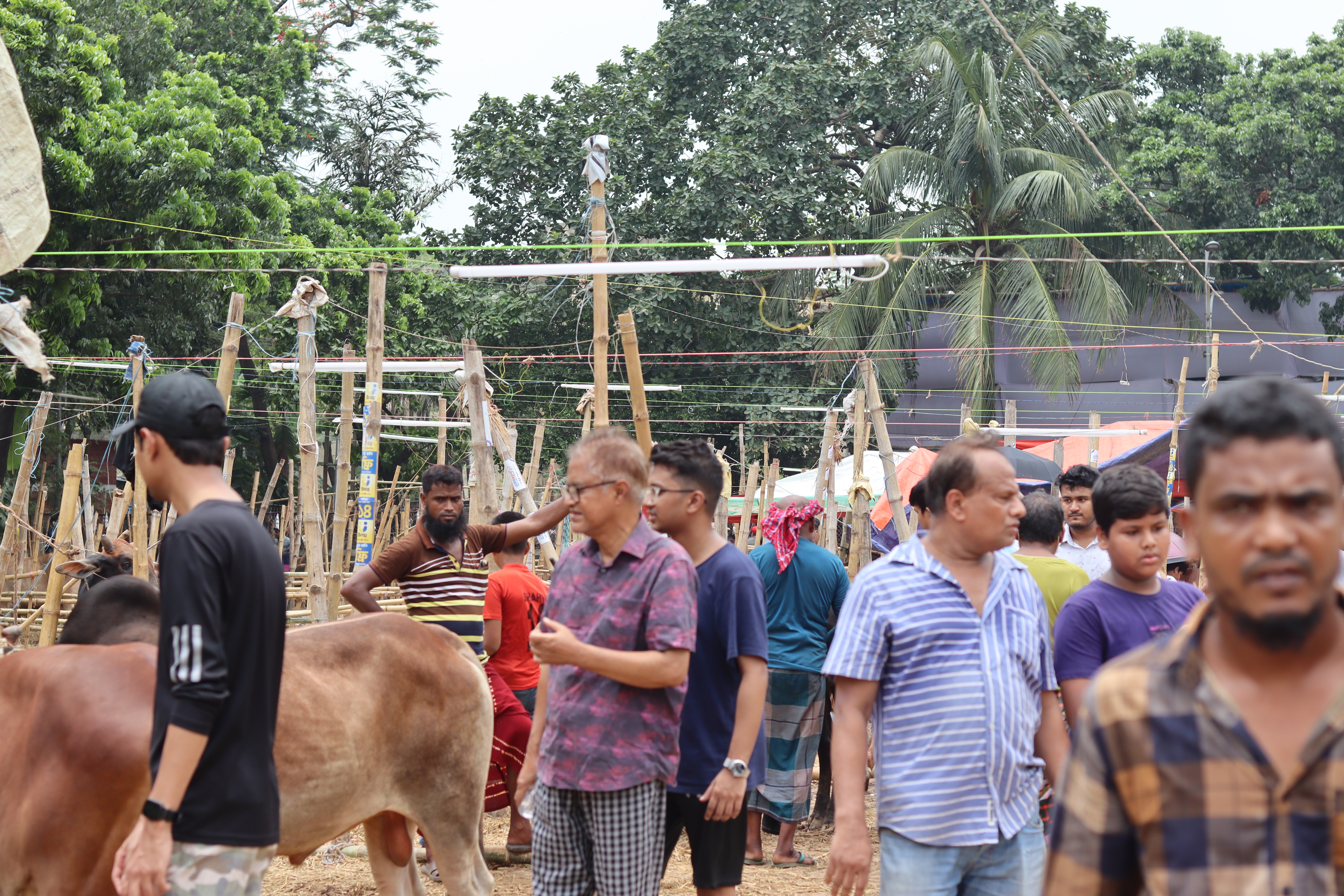
An 18-maund Holstein Friesian bull at Habiganj market
The cattle market in the Habiganj area of Madaripur Sadar upazila is one of the district's large markets; Banglapedia also lists Habiganj Hat among the upazila's notable markets. Jagonews24's reporter found that Miraj Khan, a farmer from Banshgram in Kumarkhali upazila of Kushtia, had brought 27 animals there. The biggest attraction among them was an 18-maund Holstein Friesian bull.
Miraj Khan had raised the bull for four years and was asking Tk 8 lakh for it. Buyers kept crowding round to see it and ask the price. By the time of the report, the highest offer had reached Tk 5.5 lakh, but Miraj hoped to get more.
"The Habiganj market is very big. My 18-maund bull is the big attraction here. I hope to sell it within a day or two. Although I am asking Tk 8 lakh, I will sell if I get Tk 6 lakh or a little more," Miraj Khan told Jagonews24. Speaking to Desh Rupantor, he also said several thousand animals had come to the Habiganj market, and that he would let the bull go for Tk 6 lakh or a little more although he was asking Tk 8 lakh.
Miraj Khan's home upazila, Kumarkhali, lies in Kushtia district on the Padma and Gorai rivers. Banglapedia lists Banshgram among its notable markets, and names milk and yoghurt, alongside textiles, among the upazila's main exports. The tomb of Lalon Shah and Rabindranath Tagore's Kuthibari at Shilaidaha are also in Kumarkhali. That a farmer brought his herd from there across the Padma to a Madaripur market shows how far farmers travel in the sacrifice season in search of a big market and a good price.
What buyers said, and the pull of remittances
Azizul Haque, a resident of the Habiganj area, told Jagonews24: "Many people from this area live in Italy, so cattle sell well here. Price is not a problem. Everyone buys a sacrificial animal according to their means."
Tuhin Khan, who came from the Shrinadi area, said he had bought a cow for Tk 1.6 lakh. "The atmosphere at Madaripur's markets is quite good this year," he said. Desh Rupantor's report also said buyers were happy that prices were within their reach, and were taking home the animals they wanted.
Earlier reporting explains Azizul Haque's remark. On 30 March 2024, The Business Standard published an investigation into Madaripur's migrants to Italy. In it, the then district superintendent of police, Masud Alam, said there was a huge Madaripur population in Italy and that an exact number was hard to give; there were perhaps more than 5,000 people from Madaripur in Milan alone. The report said many had reached Italy through irregular routes, including the Mediterranean crossing, that more than a hundred people had reportedly died on the way, and that money sent home by migrants had built large houses in the villages.
Tekerhat, a market nearly a century old
The cattle market at the Tekerhat Bandar area in Rajoir upazila of Madaripur is nearly a hundred years old. Jagonews24 reported that it too was drawing crowds of buyers and sellers. Because it sits beside the Dhaka-Barishal highway and is easy to reach, sellers bring animals there from different parts of the country.
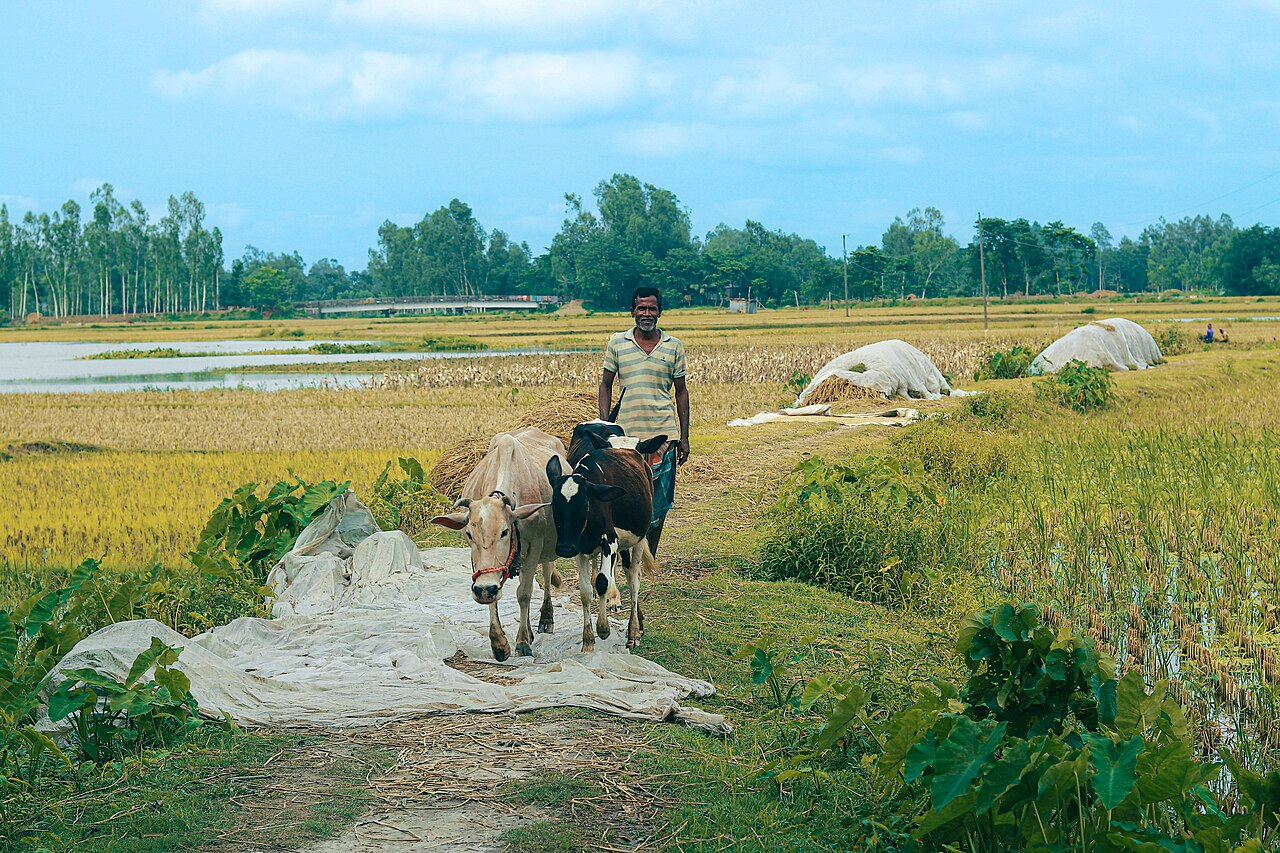
Anwar Hossain, a farmer from the Dudhkhali area, told Jagonews24: "I wait all year for the Eid sacrifice season. That is why I fatten the animals on my farm entirely by traditional local methods." He had brought his animals to sell at Tekerhat.
According to Banglapedia, Rajoir upazila covers about 229 square kilometres and its main river is the Kumar. Rajoir thana was formed in 1914. Among the upazila's 22 hats and bazaars, Banglapedia names Rajoir Hat, Amgram Hat, Kadambari Hat, Khalia Hat and Tekerhat as the most noted, and lists Tekerhat Port among the upazila's special attractions. Its main crops are paddy, wheat, jute, sweet potato, sugarcane, pulses, mustard and sesame, and its main exports jute, date molasses, sesame and mustard oil.
The road past Tekerhat is part of the N8 national highway, which runs from the Jatrabari interchange in Dhaka to Patuakhali. Since the Padma Bridge opened on 25 June 2022, this route has given the south a direct road link to Dhaka. The two-level road and rail bridge connects Louhajang in Munshiganj with Zajira in Shariatpur and a small part of Shibchar upazila in Madaripur.
Madaripur district and its markets
Madaripur is a district of Dhaka Division. Banglapedia gives its area as 1,049.59 square kilometres. It is bounded by Faridpur and Munshiganj to the north, Barishal and Gopalganj to the south, Shariatpur to the east and Faridpur to the west. Its main rivers are the Padma, Arial Khan, Kumar and Ghagor, and the Madaripur Beel Route canal is also notable. Madaripur subdivision was formed in 1854 under Bakerganj district, moved to Faridpur district in 1873 and became a district in 1984. The district is said to be named after the Sufi saint Syed Badiuddin Ahmed Zinda Shah Madar.
The 2022 census counted 1,293,027 people in 313,273 households in Madaripur. The district has five upazilas: Madaripur Sadar, Kalkini, Rajoir, Shibchar and Dasar. Figures from the 2011 census quoted by Banglapedia show agriculture as the main source of income for 61.33 percent of households, with commerce at 15.46 percent.
Madaripur Sadar upazila covers 283.14 square kilometres, according to Banglapedia. The Arial Khan, Kumar and Ghagor rivers flow through it. Its main crops are paddy, jute, mustard, pulses, wheat, onion and sweet potato. Its notable markets include Madaripur Hat, Charmuguria Hat, Habiganj Hat, Kulpadmi Hat, Kendua Hat, Madra Hat, Khoajpur Hat and Ghatmajhi Hat. Shakuni Lake in the town and Charmuguria port are among the district's well-known places.

More animals than demand, and 18 livestock teams in the field
The district livestock office figures quoted by Desh Rupantor put Madaripur's demand for sacrificial animals at 66,880, against 72,495 animals ready. In other words, local supply was enough to meet the district's need. The Department of Livestock Services formed 18 medical teams to cover about fifty permanent and temporary markets.
Sachindra Nath Biswas, acting district livestock officer of Madaripur, told Jagonews24 that the district and upazila livestock offices were keeping track of every market. Besides, 18 teams were moving around the district. If any animal fell ill, treatment was arranged at once, and officials were also watching to make sure buyers and sellers were not harassed, he said.
The Department of Livestock Services is a government department under the Ministry of Fisheries and Livestock. According to Banglapedia, it provides veterinary, development and extension services for livestock and poultry, to meet the country's protein needs and to create jobs through rearing animals and marketing and processing their products. Its work began in 1893 with the British government's Civil Veterinary Department, and it took the name Directorate of Livestock Services in 1960. Its head office is at Prani Sampad Bhaban on Krishi Khamar Sarak, Farmgate, Dhaka. Its district and upazila offices send the veterinary teams to the markets in the sacrifice season.
The national picture: demand above 10 million, a surplus of 2.2 million
At a briefing at the Secretariat on 3 May 2026, Fisheries and Livestock Minister Mohammad Amin Ur Rashid set out the national figures. According to The Business Standard Bangla and BSS, the expected demand for sacrificial animals was 10,106,334, while 12,333,840 animals were available, leaving a surplus of about 2,227,506.
- Cattle and buffalo: 5,695,878
- Goats and sheep: 6,632,307
- Other species: 5,655
The minister said more than 3,600 cattle markets would be held across the country, including 27 in Dhaka (16 in the North City Corporation and 11 in the South), where 20 veterinary medical teams would be on duty round the clock. To protect local farmers, as in the previous year, no cattle would be allowed in from abroad, and the leasing of markets near the border had been stopped in advance.
The briefing also said that no market toll (hasil) would be charged on animals bought online; only those buying at a market would pay it. Law enforcers had been instructed to stop extortion from vehicles carrying sacrificial animals by road and river, and security personnel would work in plain clothes where needed. The minister also said professional and non-professional butchers were being trained so that hides would not be spoiled.
Madaripur's figures were part of this national picture, and other districts reported surpluses at the same time. BSS reported on 16 May that neighbouring Barishal division had 468,445 sacrificial animals ready against an expected demand of 400,783.
The Holstein Friesian, the maund, and fattening the local way
The Holstein Friesian that drew the crowds is an international breed of dairy cattle, based largely on stock from the Netherlands. It has one of the largest gene pools of any breed, which is why it is the breed of choice for most dairy farmers worldwide. An average Holstein cow in the United States produces about 10,000 kg of milk a year; in Europe the average is 7,000 to 8,000 litres.
Banglapedia notes that Bangladesh tried several times to raise the output of local cattle by crossing them with exotic breeds, and that Holstein-Friesian was among the breeds introduced. Exotic pure breeds and their crosses are found on government and commercial dairy farms, in milk-pocket areas and in urban and peri-urban areas. But, Banglapedia adds, pure and crossbred cattle need more feed, adapt less well and are more prone to parasites and disease than local cattle, which are relatively disease-resistant and heat-tolerant.
The maund (mon) used at the markets to describe a bull's weight is a traditional South Asian unit of mass equal to 40 seers. It was standardised in the Bengal Presidency in 1833 under British rule; in Bangladesh a maund is generally reckoned as 40 kg.
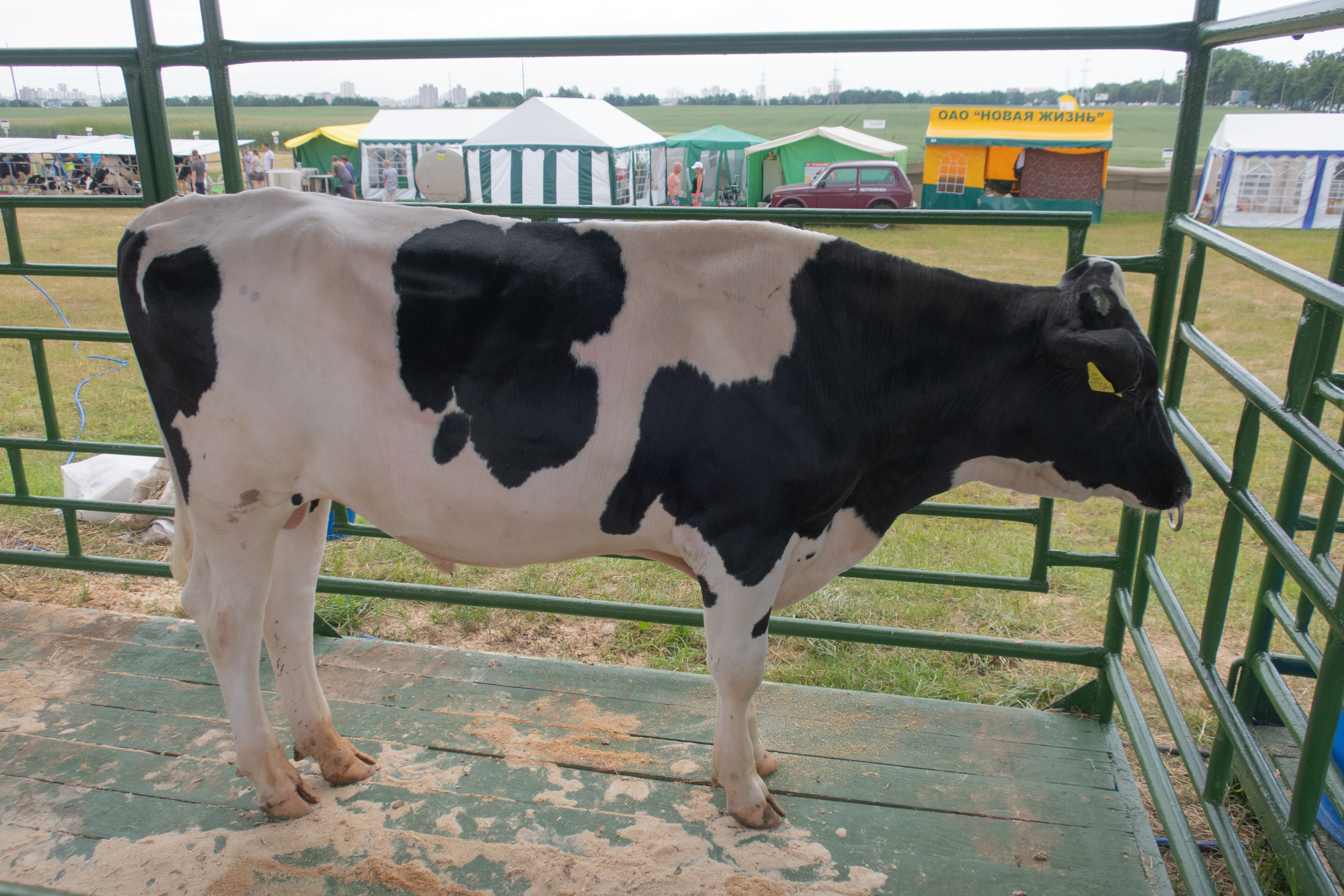
Banglapedia also describes the kind of traditional fattening Anwar Hossain spoke of. It says some farmers fatten yearling bull calves on conventional and non-conventional feeds, adding green grass, wheat bran, rice bran, rice gruel, urea-molasses blocks and urea-molasses straw. The Bangladesh Livestock Research Institute (BLRI) developed a straw-based urea-molasses feeding technology. Because people generally prefer to sacrifice healthy animals at Eid, demand for fattening rises before the festival. For feed amounts and mixtures, farmers can consult their upazila livestock officer.
At the 3 May briefing, Minister Amin Ur Rashid said the government had never allowed the import of injections for fattening cattle and was not allowing it this year either. Specialist veterinary teams under the Department of Livestock Services would be present at every sacrificial animal market so that any animal falling ill could be treated quickly.
Security at the markets: plain-clothes police, RAB-8 and note-checking booths
Madaripur Additional Superintendent of Police Fariha Rafiq Bhabna told Jagonews24 that police were working in plain clothes at the markets to catch counterfeit-note dealers and stop molom party gangs. Patrols had also been stepped up on regional roads and highways, so that sellers could go home safely with their money and buyers with their animals. "Molom party" and "ogyan party" are the names given to gangs who make people unconscious and rob them of cash and belongings.
Mir Monir Hossain, commander of RAB-8 in Madaripur, said drives were continuing at the markets to catch counterfeit-note traders, thieves, muggers and members of molom and ogyan party gangs. RAB-8 members were deployed round the clock to prevent disorder at the markets and on the roads, and were working to make sure traders could return home safely with the money from their sales, he said. The Rapid Action Battalion (RAB) is a composite force under the Ministry of Home Affairs, made up of personnel from the police, army, navy, air force and other agencies.
Desh Rupantor's report added that, alongside the police, the Habiganj market committee was on duty round the clock.
The central bank's instructions against counterfeit notes were also in force. On 10 May 2026, Bangladesh Bank's Currency Management Department wrote to the chief executives of all scheduled banks with ten directives, including setting up counterfeit-note detection booths at sacrificial animal markets. The main points:
- At approved markets of Dhaka's two city corporations, free note-checking with detection machines from the day each market opens until the night before Eid.
- In districts without a Bangladesh Bank office, Sonali Bank's chest branches assign banks to the approved markets of city corporations, municipalities and thanas or upazilas.
- Cash-counting with note-counting machines at the booths, and a banner naming the bank and the "counterfeit note detection booth".
- Contact with the police, BGB, RAB and Ansar for security where needed, and action under the set circular if a fake note is found.
- Showing a video on banknote security features in bank branches until Eid.
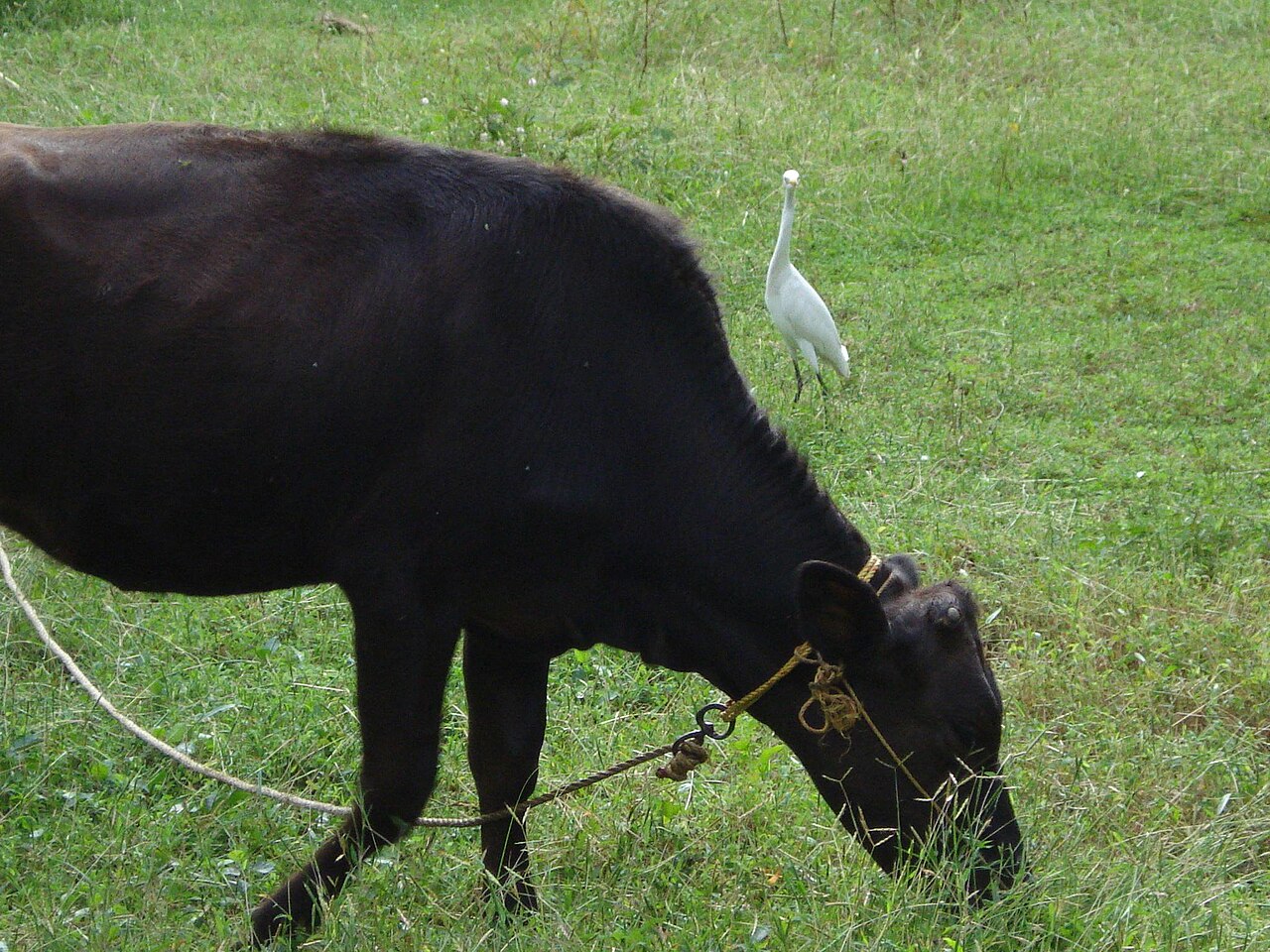
Photo: Wasiul Bahar / Wikimedia Commons (CC BY-SA 4.0)
Sources: Jagonews24, Desh Rupantor, The Business Standard Bangla, Bangladesh Sangbad Sangstha (BSS), bdnews24.com, The Business Standard, Banglapedia, Wikipedia
Comments
(0)