
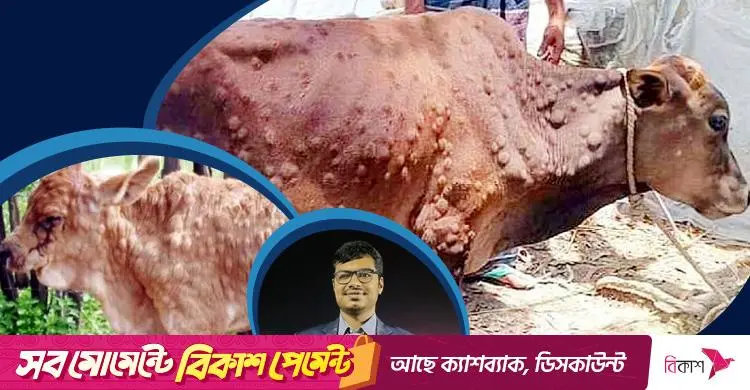
Lumpy skin disease, or simply lumpy disease, is spreading among cattle in various parts of the country, and it has become a source of fear for farmers. The viral disease, which mainly affects cattle, spreads very easily from one animal to another. It starts with a mild fever and lumps on the skin, but neglect can kill the animal. Many farmers and ordinary people still have confusion, misconceptions and a lack of awareness about it, and the death rate is rising across the country.
Intern veterinarian Md Rajibul Islam spoke to Jago News about the symptoms, spread, prevention and treatment of lumpy disease. Written by Mohammad Sohel Rana.
What is lumpy skin disease?
Lumpy skin disease (LSD) is an infectious viral disease of cattle. It is caused by a DNA virus called capripoxvirus, which belongs to the poxvirus family Poxviridae. It is seen mostly in cattle but can also spread to buffaloes, passing from one animal to another. The virus can replicate in goats and sheep, but they usually do not fall ill with the disease.
When it is most common
- The disease is most common in summer and the rainy season.
- It is more likely to spread in hot, humid weather when mosquitoes, flies and other vectors are active.
- Outbreaks increase in flooded and waterlogged areas.
Symptoms
- Fever of 104–105 degrees Fahrenheit.
- Blister-like lumps spread over the whole body, sometimes discharging pus.
- Loss of appetite and a fall in milk yield in cows.
- Watery discharge from the eyes and nose.
- Swollen legs and limping.
How it spreads
- Through vectors such as mosquitoes and flies.
- Through fluids from the eyes, nose or mouth of infected cattle.
- By keeping healthy and infected cattle together.
- By using the same syringe or treatment equipment.
Prevention
- Vaccination (LSD vaccine) is the most effective measure.
- Separate infected cattle immediately and quarantine them for at least 14 days.
- Cover them with a mosquito net so that other cattle are protected from infection.
- Feed 500 millilitres of neem leaf juice mixed with molasses daily for a week.
- Keep wounds clean with a tincture of iodine solution.
- Control mosquitoes, flies and insects around the farm and infected animals.
- Do not feed the milk of an infected cow to calves; it should be buried in the ground.
- Keep the cowshed clean at all times.
- The person caring for infected cattle should not come into contact with healthy cattle.
- Vaccinate all healthy cattle quickly.
Mistakes that make it worse
- Not separating infected cattle.
- Not vaccinating on time.
- Unnecessary use of antibiotics.
- Applying dirty or unsuitable medicine to wounds.
- Mixing cattle bought at a market with other cattle straight away.
- Taking the advice of quack doctors.
Experience in the field
"As an intern vet at campaigns in various areas, I have seen the epidemic form of this disease. About 90 per cent of its spread is due to the ignorance of farmers and ordinary people and wrong treatment by quack doctors. Village people rush to quacks at the slightest problem, where unnecessary antihistamines and antibiotics are used, which do not work against a viral disease."
As soon as symptoms of lumpy skin disease appear, the advice of the upazila livestock officer or a registered veterinarian must be sought quickly. The government must also act against quack doctors, and awareness among farmers must be raised. Only then can the death rate be brought down.
Source: Jagonews24. First published in Bengali on The Agro News.
Comments
(0)