
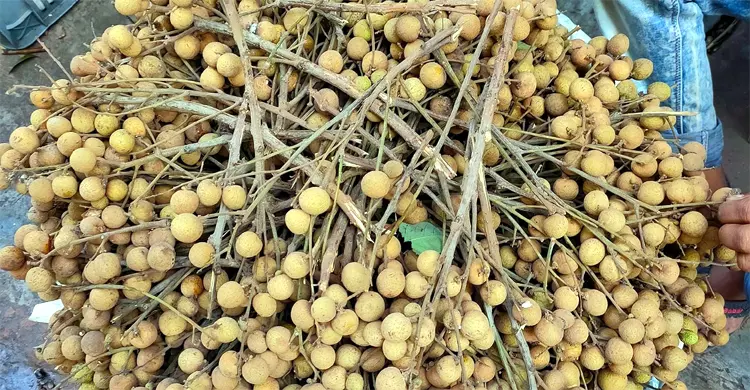
Longan, known in Bengali as ashfol or kathlichu, is a tropical tree. It is a very tasty fruit of the lychee family, native to South and South-East Asia. The longan is a medium-sized evergreen tree; without fruit it looks like a lychee tree.
Origin and names
Although the fruit originated in south-western India, the tree is found in many parts of southern Bangladesh. It grows 6 to 8 metres tall but can also be kept short.
Depending on the area, ashfol is also known as kathlichu, small lychee or longan, though its dictionary name is ashfol. It bears fruit at the same time as the lychee. The fruit also looks much like a lychee, round with a round seed, but it is smaller and has very little juicy flesh. It contains more protein than the lychee.
Where to find it and how to grow it
Although it is not grown commercially, ashfol is sold in village markets. The protein-rich fruit is valued but little known. Ashfol trees are also seen in towns, but many town dwellers do not know the fruit is edible.
The tree can tolerate both heat and cold and needs no special soil. Seed is usually collected in April and May. The tree is best known as a shade tree. It fruits in August and September.
Nutrition
The fruit is rich in carbohydrate, vitamin C and minerals. Every 100 grams contains:
- 72 g water
- 109 kilocalories of energy
- 8.0 mg vitamin C
- 280 IU vitamin A
- 2.0 mg calcium
- 6.0 mg phosphorus
- 1.0 g protein
- 0.5 g fat
Medicinal uses
The dried flesh of the fruit is used for inflammation of the stomach, to relieve insomnia and as an antidote to poison. The leaves are used to treat allergies, cancer, diabetes and cardiovascular disease.
Source: Jagonews24. First published in Bengali on The Agro News.
Comments
(0)