
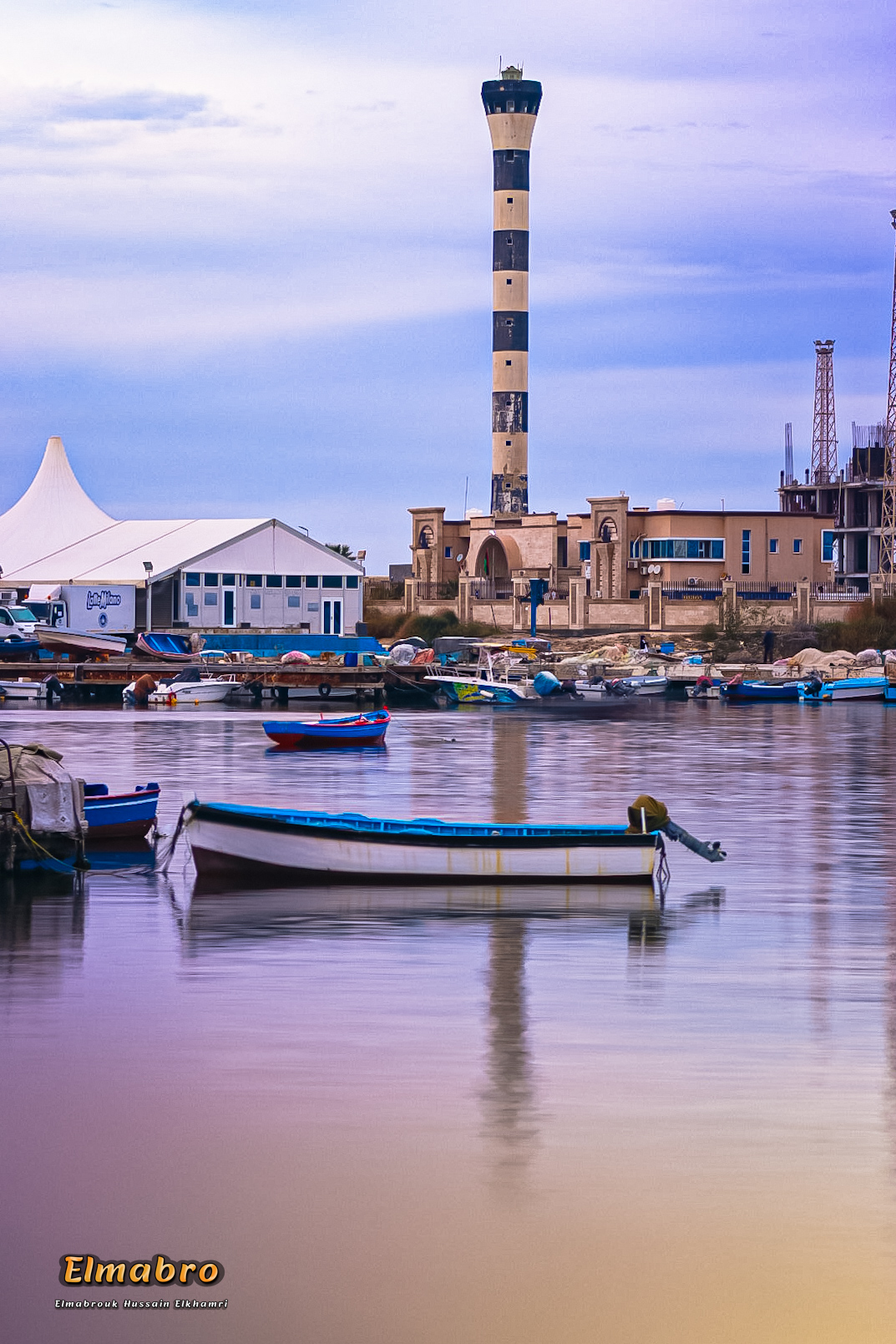
Faraj Abdelsadiq has fished out of Al Khoms for more than 20 years and says he has never seen it this bad. A trip that once earned him 1,000 to 2,000 Libyan dinars (USD 156 to 312) sometimes now brings in less than 300. "Fish stocks have declined, while trawlers operate in deeper waters and leave very little for us," the 46-year-old told Dialogue Earth reporter Islam Alatrash.
Libya has a coastline of nearly 2,000 km and a fleet of more than 3,500 vessels, over 90% of them small boats of 5 to 12 metres. Their owners fish daily within 12 nautical miles of shore, with nets, lines and traps, for red mullet, sea bream and grouper, mostly in water shallower than 50 metres. They cannot reach the deep grounds, but they say industrial bottom trawling far offshore is still emptying their sea.
Between southern Sicily and northern Libya, seabeds roughly 400 to 800 metres deep hold rich grounds for giant red shrimp, long fished by distant-water trawlers from the Italian port of Mazara del Vallo. In 2011, amid political turmoil and weak control, about 40 such trawlers worked off Libya, some landing 300-350 kg of red shrimp a day, and a 2024 study found that seven months of unrestricted access depleted stocks that had taken years to build. Vessel-tracking data and registries reviewed by the Med Mosaic grant and Dialogue Earth for 2023-2025 show activity by 12 Italian-flagged vessels in Libyan waters with no public evidence of the authorisation Libyan law requires.
Trawl nets break cold-water corals and sponges and stir up sediment, damaging habitats that serve as feeding, spawning and nursery grounds for fish later caught in shallow water. Some trawlers also take red mullet directly. Ismail Al-Shaqman, head of the Libyan Association of Friends of Artisanal Fishing, wants the Ministry of Marine Resources, inspectors and the coast guard to enforce the rules on unlicensed fishing and banned gear.
Mediterranean countries banned bottom trawls deeper than 1,000 metres in 2005, the year Libya declared a fisheries protection zone out to 74 nautical miles. Oceana and MedReAct now want the ban extended to all waters below 800 metres, which they say would cost little and protect corals and sponge grounds. Egypt has begun prohibiting bottom trawling in its Mediterranean waters beyond 800 metres after a pilot found deeper fishing made up less than 2% of landed value; Tunisia is studying it. Libya's deputy minister of marine resources, Saber Al-Azabi, said violations by foreign vessels continue though they have declined, and that "Libya has no objection to extending the ban to waters deeper than 800 metres".
Monitoring remains the weak point. A 2025 African Union assessment found Libya's vessel-monitoring system limited and landing sites without systematic inspection. "We cannot protect what we do not measure," said Abdelmajid Militan, an environmental scientist at Misrata University, who wants maps of damaged areas, regular stock surveys and catch tracing. The story was supported by a Med Mosaic Ocean Literacy Grant.
Photo: Elmabro / Wikimedia Commons (CC BY-SA 4.0)
Source: Dialogue Earth

Comments
(0)