
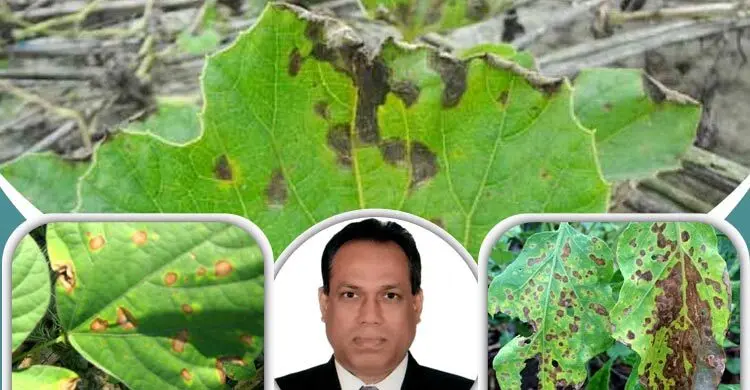
This disease is known as leaf blight or scorch. The bacteria that cause it (bacterial blight) can survive in infected plants and their leftover stubble, straw and seed, and in weeds. It spreads through dew, irrigation water, rain, floods and stormy winds.
Leaf blight moves from one field to another through insects, wind and irrigation water, and the pathogen enters the plant through wounds. In the coming Boro, or winter, season it becomes a serious worry for farmers in rice and vegetable fields. We hope this piece helps farmers manage the disease.
It occurs in many crops, such as gourds, beans and rice. Leaf blight is also seen in chilli, tomato, aubergine, cabbage and cauliflower.
Symptoms
- Small round to angular brown spots appear on infected leaves.
- The centre of the spot is grey, with a reddish to brown margin.
- The spots merge to form larger patches (1 cm).
- Spots appear even on branches and bean pods.
- Brown spots later appear on leaves and fruit.
Prevention
- Use resistant varieties or seed.
- Use disease-free seed.
- Remove infected fruit, leaves and shoots.
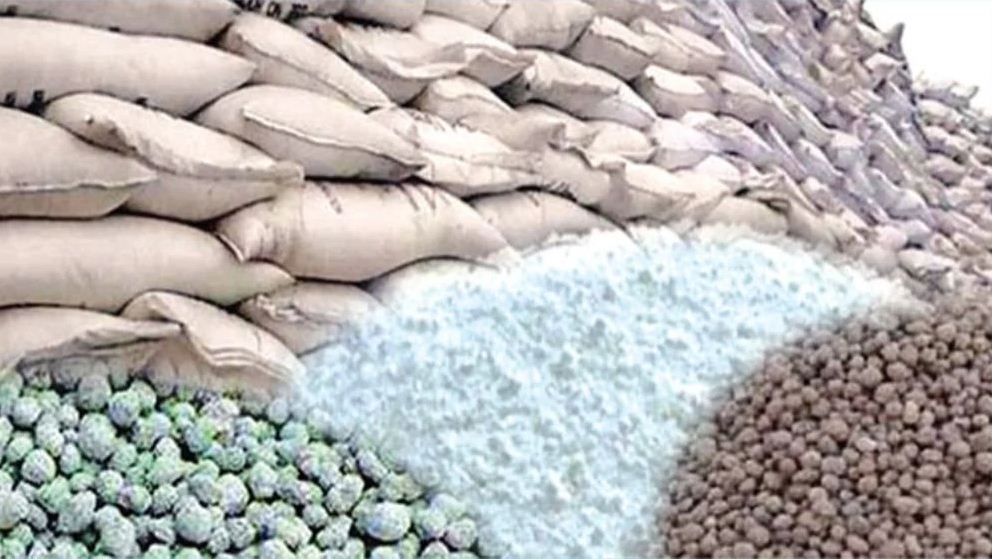
- Stop using excess urea.
- Use potash and zinc fertiliser in balanced doses.
- Ensure good drainage in the field.
- Collect and burn infected leaves as soon as the disease appears.
- Follow crop rotation.
Control
- Mix a sulphur-group fungicide (Hadiavit) 60 g, potash 60 g and zinc 20 g in 10 litres of water and spray over 6 to 10 decimals of land.
- Management of the disease may differ from crop to crop. If needed, take advice from the local agriculture office.
Source: Jagonews24. First published in Bengali on The Agro News.

Comments
(0)