
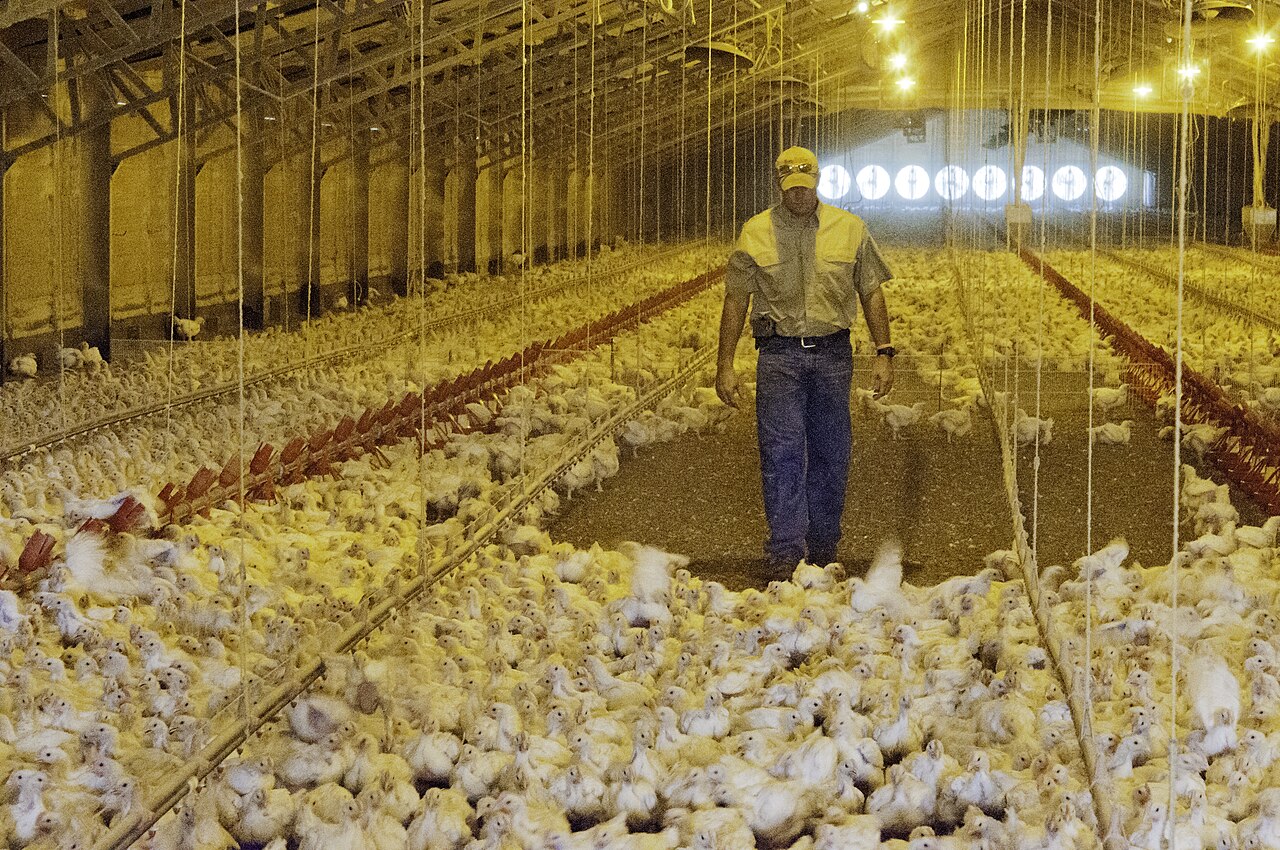
Choosing between broilers and laying hens should start with the customer, not the chicken, says Dr Neil Duncan, poultry specialist at the livestock solutions company C4 Africa, in a Farmers Weekly South Africa report by Lindi Botha.
"Everyone wants to jump into broilers because they think it is quick money," Duncan said. A would-be producer has to know where the market is, who is in it, what the competition is and why customers would buy from them; without those answers, he said, the operation is doomed. The Agricultural Research Council (ARC) gives the same advice: find a reliable market before production starts.
Broilers leave little room for delay. After about 35 days, Duncan said, unsold birds start eating into the profit. Farmers must decide early whether they sell live birds, whole slaughtered birds or portions, and the last two need refrigeration, a cold chain and an abattoir with free capacity. He warned that talk of an informal chicken market worth R30 billion says nothing about demand for one farmer's birds. Egg producers, for their part, must know whether buyers want graded eggs and in packs of six, 12, 18 or trays of 30.
The cash cycle differs too. According to the ARC, pullets are reared to about 18 weeks before entering the laying house and the first small eggs appear at around 21 weeks, so a layer farmer carries the cost of the birds for months before earning. Feed can make up to 75% of poultry production costs; a Western Cape Department of Agriculture budget for 9,490 caged layers, at 2023 prices, set aside about R3.81 million for feed against R1.38 million for 10,000 point-of-lay pullets.
Cutting feed quality is no saving, Duncan said, because modern genetics need proper nutrition to perform. Some costly mistakes are made before the first chick arrives: in naturally ventilated houses an east-west orientation keeps more of the interior shaded, while a north-south house can overheat, and birds that are too hot eat less and grow more slowly.
Biosecurity has to be part of the system from day one, he said, because a disease such as avian influenza can wipe out an entire operation. The ARC lists restricted visitors, disinfected vehicles and equipment, footbaths, isolation of sick birds and thorough cleaning between batches.
There is no flock size at which either system automatically pays. "The numbers can look good on paper," Duncan said, "but there is much more that has to go into making the business work in practice."
Photo: USDA / Wikimedia Commons (public domain)
Source: Farmers Weekly South Africa
Comments
(0)