
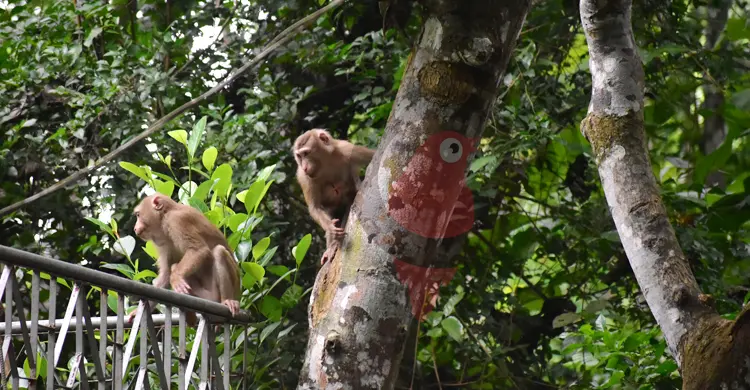
Visits to Lawachara National Park have been suspended because of the coronavirus, so there are no tourists coming and going. As a result, as soon as the morning sun peeps out, the area around Lawachara comes alive with birds and other wildlife.
Lawachara, in Kamalganj, Moulvibazar, is one of the country's national parks. The evergreen forest is home to 165 plant species. With plenty of food and safe habitat, wildlife such as monkeys, deer, langurs and gibbons have lived here for generations. Their numbers were once much higher. In every season, winter, summer and monsoon, they roamed openly, leaving their nests at sunrise to look for food. This evergreen forest, known as a rainforest, was their range.
Why numbers had fallen
Researchers say that after the Magurchhara gas explosion of 14 June 1997, and the felling of trees in the name of unplanned social forestry, tree density in the national park fell and, with various other harmful effects, wildlife numbers began to decline. Now that sufficient food and a healthy natural environment have returned, gibbons and other animals are breeding more, and the long absence of tourists during Covid has also helped them multiply.
A visit found that with no tourists during Covid, Lawachara's true character and diversity have returned, and wildlife has increased several times over.
What locals and officials see
Imranuzzaman, imam of the Lawachara mosque, said: "I have led prayers here for four years, and I have never seen so many animals and birds in Lawachara before. Morning and afternoon you see lots of gibbons, monkeys, deer and langurs."
Hatem Ali of Magurchhara Khasia Punji said: "With no tourists because of Covid, Lawachara's wildlife is in heaven. It is breeding twice as fast. In my 57 years I have never seen so many deer, crested maturas, jungle fowl, pigs, monkeys, spectacled langurs and gibbons."
Beat officer Mamunur Rashid said many kinds of wildlife live in Lawachara. Go out onto the road in the morning or afternoon and you see gibbons, deer and monkeys. Natural food for the animals and birds has also increased, and they do well in a quiet environment.
Moulvibazar assistant conservator of forests Shyamal Kumar Mitra said animals and birds had increased greatly because tourism in Lawachara was halted by Covid. Deer are often seen at a place in Lawachara called Bagh Mara, coming to the open field to eat young grass. Animals that used not to be seen are now being seen too.
Professor Dr Mohammad Mostafa Feeroz of the Department of Zoology at Jahangirnagar University said there are 102 tree species in Lawachara. With the necessary steps, wildlife can live here comfortably, but the authorities must come forward to preserve them.
Md Rezaul Karim Chowdhury, an official of the Wildlife Management and Nature Conservation Division, said tourists have stopped coming to Lawachara National Park during Covid. Most of the park's trees have also borne plenty of fruit, and with enough food the wildlife is thriving. There are 102 species of fruit-bearing trees, and gibbons, monkeys, deer and langurs are eating the fruit and moving about undisturbed, so their breeding is increasing. If tourism stays closed, wildlife will increase widely. In the three months from June to August in particular, the trees flourish and the wildlife breeds.
Source: Jagonews24. First published in Bengali on The Agro News.
Comments
(0)