
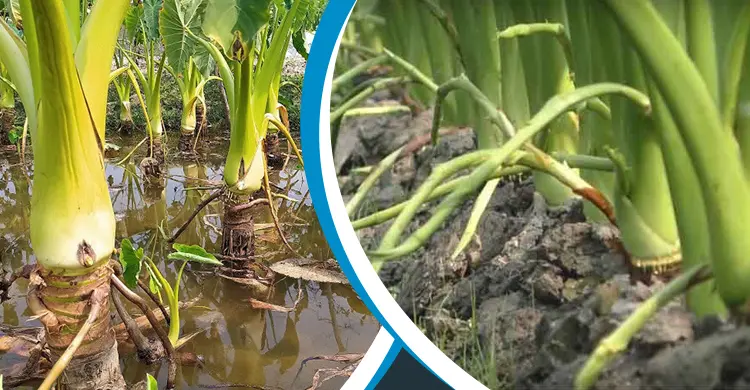
Latiraj kachu is a very popular vegetable in Bangladesh. After meeting domestic demand, lati, the taro's stolons, are now also exported. Kochur lati comes mainly from pani kachu, or water taro. Latiraj kachu is highly nutritious, and in production it ranks second only to mukhi kachu.
A kg of lati sells for Tk 70-80 in the market, and growing latiraj kachu is an easy way to make a profit. Here is how to grow it.
Land and varieties
Kochur lati grows well in a warm climate. The land should be medium-low, where rainwater collects. The plant can grow well in low light or shade, and yields well in strong sun. It can be grown in almost any soil, but silty loam and sandy loam are best.
There are several varieties of lati in the country. These plants are small, with small leaves, and produce thin, long stolons. Improved varieties produce long, thick, jointed stolons, or short and thick, fleshy ones that cook quickly.
BARI Pani Kachu-1 and BARI Pani Kachu-2 are two improved water taro varieties developed in the country, and both are good for lati production.
Planting
To grow lati, collect the plantlets that form at the tips of the stolons in September, before the lati harvest in the field is over. Plant the saved plantlets somewhere separate. If they are planted in the field again before winter, the plants will produce lati from February to March.
First prepare the land by ploughing it 3 to 4 times and levelling the soil. Plant the seedlings in rows; planted in rows, about 38,000 plants are needed per hectare.
Suckers are used as planting material. October is the right time to plant; plants set then give lati from February to March.
Fertiliser and irrigation
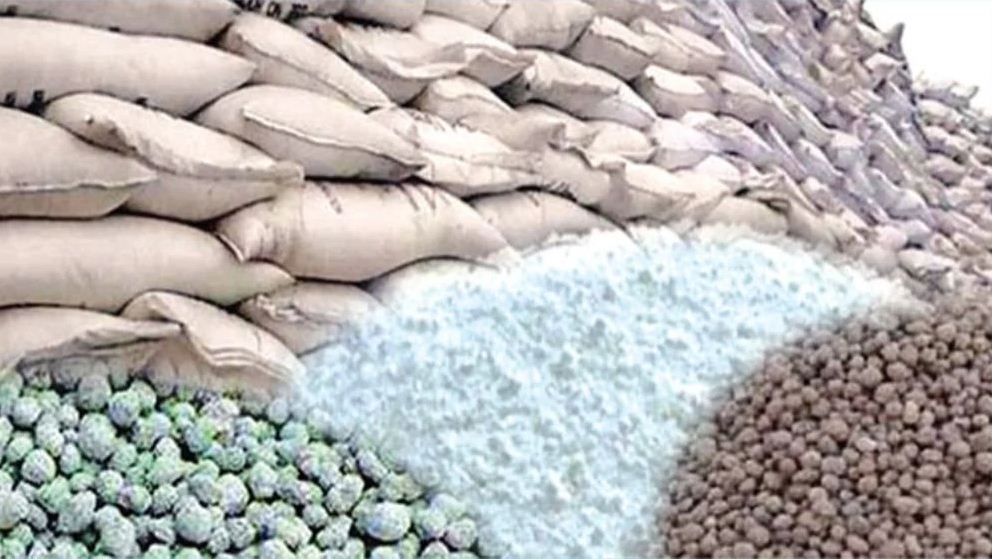
Fertiliser is essential for a good and large yield. Apply 500 kg of cow dung, 25 kg of urea, 18 kg of TSP and 25 kg of MoP per bigha. Do not apply all the fertiliser at once: at first, broadcast all of it except the urea.
Apply the urea 20 to 25 days after planting. There must be supplementary irrigation. If there is no standing water at planting time, flood-irrigate to puddle the soil. The water taro is harmed if the land dries out, so if there is no rain and no flowing water in the field, irrigate.
There must always be water at the base of the plants, and the standing water should be stirred from time to time. Constant water keeps weeds down. Snails shelter in weeds and climb the plants to eat the leaves, so pull out the weeds by hand.
Pests and harvest
If lati is grown early, red spider mites can damage the leaves. When mites attack, the green colour of the leaves is lost and they fill with small dry spots. To control mites, mix powdered soap and Omite or Vertimec miticide in water and spray the undersides of the leaves.
Armyworm (leda poka) attacks are also sometimes seen in lati fields, and can be controlled by spraying Malathion 57 EC.
Lati can be picked and eaten at any age, but picking small lati reduces the yield, so pick the biggest and thickest ones in the field.
Source: Jagonews24. First published in Bengali on The Agro News.


Comments
(0)