
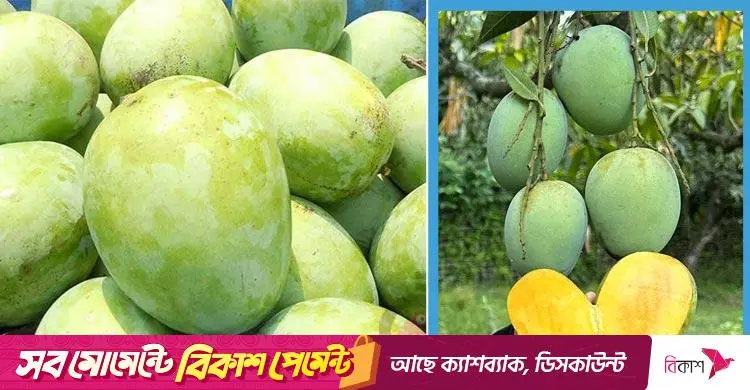
It is hard to find anyone who does not like mangoes. When the fierce summer heat leaves body and mind worn out, a piece of ripe mango brings relief. For children mangoes mean joy; for adults, sweet memories of childhood. The sour taste of a green mango surprises the tongue, while the sweetness of a ripe one stays in the mind for a long time.
But while eating mangoes, a question occurs to many: why is such a tasty, juicy and attractive fruit called "Langra" (lame)? A mango has no legs, so where did the name come from? Is there a story or history behind it? This article comes from that curiosity.
Although the mango is not Bangladesh's national fruit, it sits on a throne in people's hearts, which is why it is called the king of fruits. Because of its popularity, mango cultivation is growing in the country and new varieties are being developed. The varieties carry all kinds of names: some like flowers, some a little unusual, some with an English touch. They differ in taste, aroma and qualities too.
One of the finest varieties
Langra is without doubt one of the finest mango varieties in Bangladesh. A favourite of many, it is unique not only in taste but also in aroma and juiciness. Yet the name makes almost everyone smile: why Langra? A mango doesn't walk about, and it has no legs. So how did it get this name?
The question made the writer wonder too: why does such a delicious fruit have such a strange name? Here is the story behind it.
The fakir with a limp
It is believed that about 200 years ago, the Langra mango began from a seedling collected from the home of a fakir in the Indian state of Bihar. The fakir had many mango trees at his home. Because of a problem with his leg, the owner walked with a limp, and perhaps out of respect for him, or in his memory, the mango was named Langra. The Langra mango originated in Varanasi in Uttar Pradesh.
Some questions remain, however. By fakir, do we mean a mystic dervish, or a poor person who lived on alms? If he lived only on alms, how did so many mango trees grow around his home? Did he plant the orchard himself? The right answers to these questions have still not been found.
Taste, season and where it grows
When ripe, the Langra mango turns a light yellow. Even when green its aroma is intoxicating. The stalk is thin and the stone is thin. It is ideal for cutting into small pieces. Once mature it keeps comparatively well, for 8 to 10 days.
Because of its thin stone, the Langra has more edible flesh. It is a mid-season variety, available in markets from June to August.
Although it originated in the Indian city of Varanasi, it is also grown in Bangladesh and Pakistan. In Bangladesh Langra grows in almost every district, but it is grown most in Rajshahi, Chapainawabganj, Naogaon, Natore and Satkhira, and is known across the country for its taste and quality.
The Langra mango is a mysterious name not only in taste but also in history. The story hidden behind its strange name still sparks our curiosity today.
Source: Jagonews24. First published in Bengali on The Agro News.


Comments
(0)