
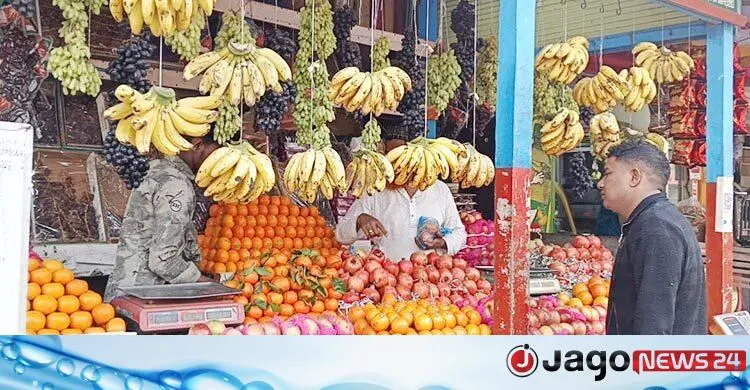
Since the holy month of Ramadan began, fruit prices in Lalmonirhat's markets have risen abnormally. Although supply is normal, imported fruits such as apples, grapes and malta have moved out of ordinary buyers' reach, with syndicate manipulation and high duty rates cited as the reasons.
There are allegations that, in the absence of market monitoring, dishonest traders have raised prices at will and overheated the fruit market.
From the start of the fasting month, traders have set out colourful displays of fruit in alleys, on footpaths and in fruit shops across the town, but the prices leave ordinary buyers aghast.
Prices by fruit
Apples have risen from Tk 200 to Tk 280 to Tk 400. Malta has gone from Tk 200 to Tk 300 to Tk 350. Grapes have leapt from Tk 250 to Tk 450 to Tk 500, and oranges from Tk 200 to Tk 320 to Tk 350. Prices of local fruits such as guava, jujube (boroi) and bananas have remained relatively normal.
Fruit traders say that because fruit has been placed on the list of "luxury" goods, they have to pay a duty of up to about Tk 130 a kg.
Ramjan Ali, a fruit trader at Mission Mor in Lalmonirhat, said: "In neighbouring India, a duty of only Tk 6 a kg is charged on fruit, but we have to pay Tk 130. That is why fruit prices have risen abnormally. Buyers have fallen because of the high prices, which is hurting our business too."
Many sellers also blame a syndicate of wholesalers (aratdars). They allege that a ring has created an artificial shortage around Ramadan, forcing them to buy fruit at high prices and sell at higher prices.
Buyers frustrated
Ordinary people are at a loss over the rising prices. A buyer identified as Islam Saheb said angrily: "Apples I used to buy for Tk 240 now cost Tk 450. If the government reconsidered the tax or duty, ordinary people would get some relief."
Another buyer, Ayesha Siddika, said: "Rickshaw pullers and day labourers cannot even dream of buying dates. Prices of essentials rising like this in Ramadan causes extreme hardship for ordinary people. Why can the government not control these sky-high prices?"
Asked about the market situation, Sheikh Sadi, assistant director of the Directorate of National Consumer Rights Protection in Lalmonirhat, said: "We are monitoring regularly to keep the market stable during Ramadan. If any inconsistency is found in the receipts for buying and selling fruit, or if anyone raises prices unreasonably, strict legal action will be taken against them."
Source: Jagonews24. First published in Bengali on The Agro News.
Comments
(0)