
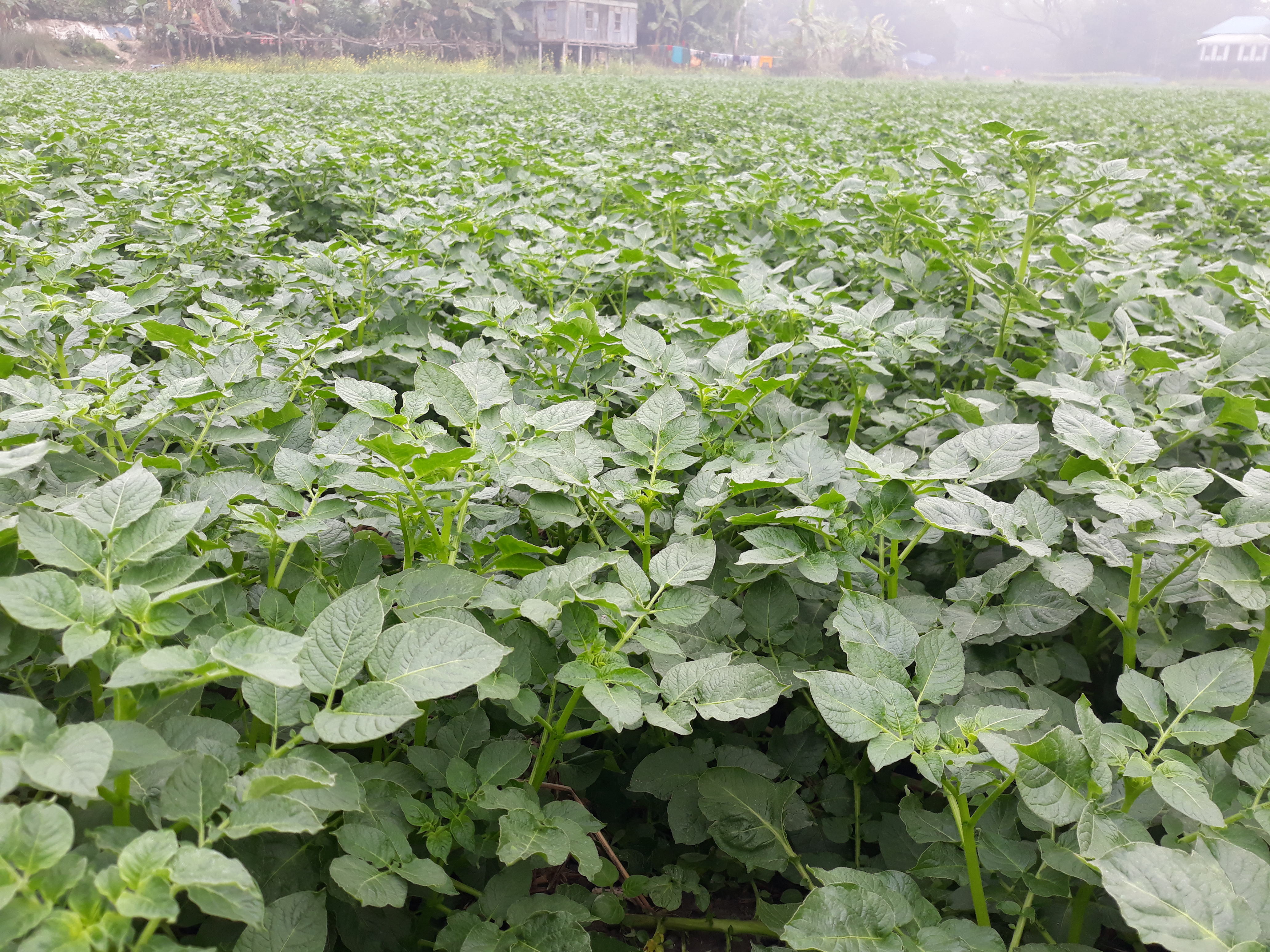
Potato farmers in Lalmonirhat, a northern border district of Rangpur Division, were facing a second loss in a row in mid-March 2026. Many small and marginal growers had lost money on potatoes the year before; they borrowed again, bought fertiliser and seed at high prices and planted a new crop. The district's fertile soil gave a bumper harvest, but when Jagonews24 reported from the district on 15 March 2026, farmers said the price at market did not cover what they had spent, and a spell of heavy rain one night had soaked potatoes already lifted and heaped in the fields before they could be sent to cold storage.
Between a price below cost and the sudden rain, the report said, thousands of potato farmers in Lalmonirhat were spending sleepless nights. Farmers who had hoped to clear last season's loans said their debts had instead grown.
A cost of about Tk 15 a kg and a market price of Tk 8 to 10
According to the agriculture department, potatoes were grown on 7,160 hectares in Lalmonirhat district in the 2025-26 season. Farmers put their cost of producing one kilogram at about Tk 15, citing hard labour and expensive inputs. At the time of the report, potatoes were selling in the district's wholesale markets for only Tk 8 to 9 a kg, and in some places for Tk 10.
Even at the height of the harvest, the report said, traders showed little interest in buying. With low prices on one side and a shortage of buyers on the other, farmers said they were also falling behind in preparing their land for the next crop, because the potato harvest could not be cleared from the fields on time.
The farmers' estimate was close to the official ones of the previous season. In October 2025 the Department of Agricultural Marketing put the cost of producing a kilogram of potatoes at Tk 14 to 17, according to The Business Standard, while The Daily Star reported that the government's estimate of the average production cost was Tk 14 a kg. In early March 2026, UNB reported production costs of Tk 14 to 22 a kg in the northern region, with farmers in Rajshahi, Bogura, Rangpur and Pabna putting their own costs at Tk 18 to 22.
Night rain on lifted potatoes
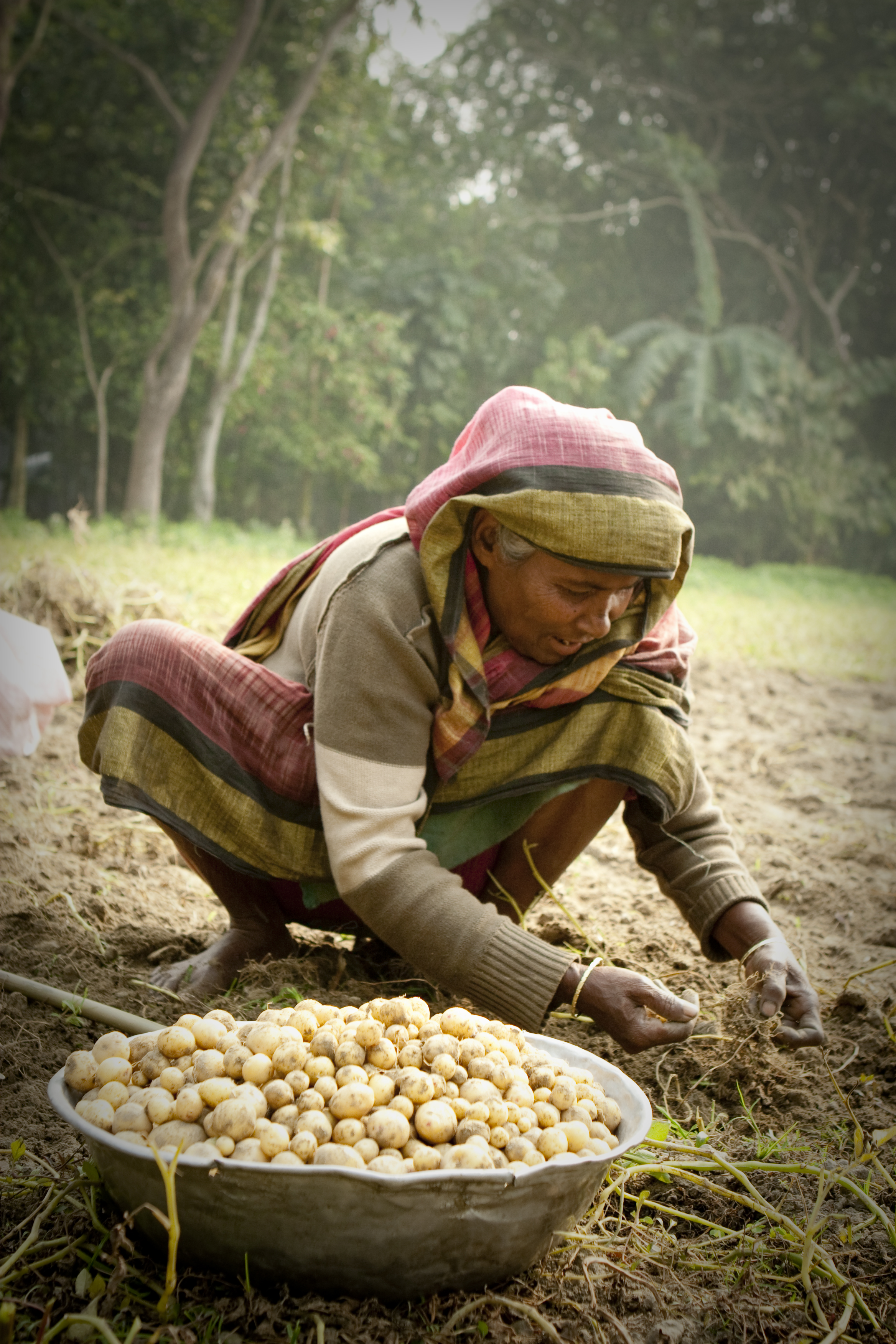
Into this, the report said, came heavy rain one night, a further blow for growers already unable to find a fair price. Potato fields in the district's low-lying areas went under water. Many farmers had dug their potatoes and gathered them in heaps in the fields; before the crop could be taken to cold storage it was soaked by the rain and caked with mud. Growers feared that a large part of it would rot.
Potatoes are lifted by hand in Bangladesh, with a spade or similar tool, and most varieties are harvested in February and March, according to Banglapedia, the national encyclopedia of the Asiatic Society of Bangladesh. The crop is best lifted after the leaves have turned yellow and then brown and the plants have died back, the sign that the tubers are fully formed. A harvest in mid-March is therefore the normal season for the crop.
Banglapedia also lists the diseases and pests that attack tubers after lifting. Late blight, caused by Phytophthora infestans and described as the most serious and widespread potato disease, can infect tubers in the field, during harvest or in storage. Blackleg, a bacterial disease, affects growing plants and tubers in storage, and the potato tuberworm does its worst damage in store when tubers are left unprotected; the encyclopedia records instances of 80 percent damage to potatoes stored in farmers' homes in some places. Small farmers who keep potatoes at home rather than in cold storage lose a substantial share to drying out, pests and disease, it says. Farmers whose crop has been soaked can seek advice on sorting and storing it from the upazila agriculture office.
Farmers describe a second year of debt
The report quoted several growers. Jalal Uddin, a potato farmer in Mohendranagar, said: "I was lifting potatoes with 15 or 16 labourers. I sent the potatoes from 15 decimals of land to cold storage. Before I could gather the rest, the sudden rain washed them away. Muddy potatoes are not taken at market, and the price is very low. Last time I borrowed to grow potatoes and made a loss; I thought I would pay off that loan this year. I couldn't. The debt has only grown."
Belal Uddin, another grower, said: "Potatoes have no price anyway; they are Tk 10 a kilo at market. Given what I have spent, forget profit, I am at a total loss. I borrowed to farm, and selling the crop now will not repay the loan. Farmers are falling into losses like this; the government should look our way a little."
Sobed Ali, a potato farmer in Amabari, said growing potatoes had left farmers as good as "murdered". "I stood in line to buy fertiliser and bought it at a high price. Today that crop has no price. I cannot work out how I will repay these debts," he said. The farmers' words gave the Jagonews24 report its headline: "Last year's debt is not paid, and a loss again this year."
Mohendranagar, the home of the first farmer quoted, is one of the nine unions of Lalmonirhat Sadar upazila, and its Mahendranagar Hat is among the upazila's best-known markets, according to Banglapedia. The encyclopedia lists potato among the upazila's main crops and among its main exports to other parts of the country, together with tobacco, sugarcane, betel nut, papaya, maize and vegetables.
Marketing department: production outstripped demand
Himangshu Chandra Barman, field and market inspector of the Department of Agricultural Marketing in Lalmonirhat, told Jagonews24 that prices had fallen mainly because production exceeded demand.
He said the district had received an average of 30 millimetres of rain. More than half of the potato land had already been harvested by then, he said, and because potato fields are well drained, the risk of major damage was somewhat lower.
To protect farmers from such losses, he suggested that they should not depend on potatoes alone but also grow wheat, mustard, sunflower and other crops. Demand for potatoes could also be widened by turning them into different food products, he said, and the department was training entrepreneurs in this.
The Department of Agricultural Marketing is the government agency under the Ministry of Agriculture that deals with the marketing of farm produce. The Department of Agricultural Extension, the agriculture department whose figures the report cited for the district's potato area, is the ministry's agricultural extension agency.
The potato already has many uses beyond the curry pot. Banglapedia notes that in Bangladesh it is used mainly as a vegetable cooked with fish, meat and eggs, but that potato chops, singaras, chips and French fries are common and that bakeries and fast food shops have in recent years made a wide range of potato-based foods. In Europe, the encyclopedia notes, millions of tonnes are processed every year into starch, alcohol, potato meal, flour, dextrose and other products.
How the 2024-25 season ended in losses
The farmers' reference to "last time" points to the 2024-25 season, when national output was unusually large. The Business Standard reported in October 2025, citing the Department of Agricultural Extension, that potatoes had been planted on 5.24 lakh hectares against a target of 4.67 lakh hectares, producing about 1.3 crore tonnes. The Daily Star, citing estimates of the Bangladesh Bureau of Statistics, put the season's output at a record 1.15 crore tonnes, against national demand of about 90 lakh tonnes and some 10 lakh tonnes needed for seed; 62,000 tonnes were exported in fiscal 2024-25.
According to the Bangladesh Cold Storage Association, as cited by The Business Standard, annual demand was 90 lakh tonnes and cold storage capacity 45 lakh tonnes. By mid-October 2025, around 20 lakh tonnes of potatoes were still in 340 cold stores, 11 lakh tonnes of table potatoes and 9 lakh tonnes of seed. Usually 70 percent of the stored potatoes have been sold by that time of year, the association said, but that year only 40 percent had gone. Potatoes were selling at cold storage gates for Tk 8 to 10 a kg, and lower-quality tubers for Tk 4 to 6.
On 27 August 2025 the government set a minimum price of Tk 22 a kg for potatoes at cold storage gates and announced that it would buy 50,000 tonnes for storage and sale in October and November 2025, the Dhaka Tribune reported. The decision followed the recommendations of a committee of the secretaries of the agriculture, commerce, food and finance ministries, formed because market prices were not covering production costs. In early October 2025, The Daily Star reported that cold storage gate prices of Tk 10 to 11 a kg were far below the fixed minimum and that traders said neither measure had been carried out. Retail prices had fallen to Tk 18 to 25 a kg, against Tk 50 to 60 a year earlier.
The Rangpur region at the start of the 2026 harvest
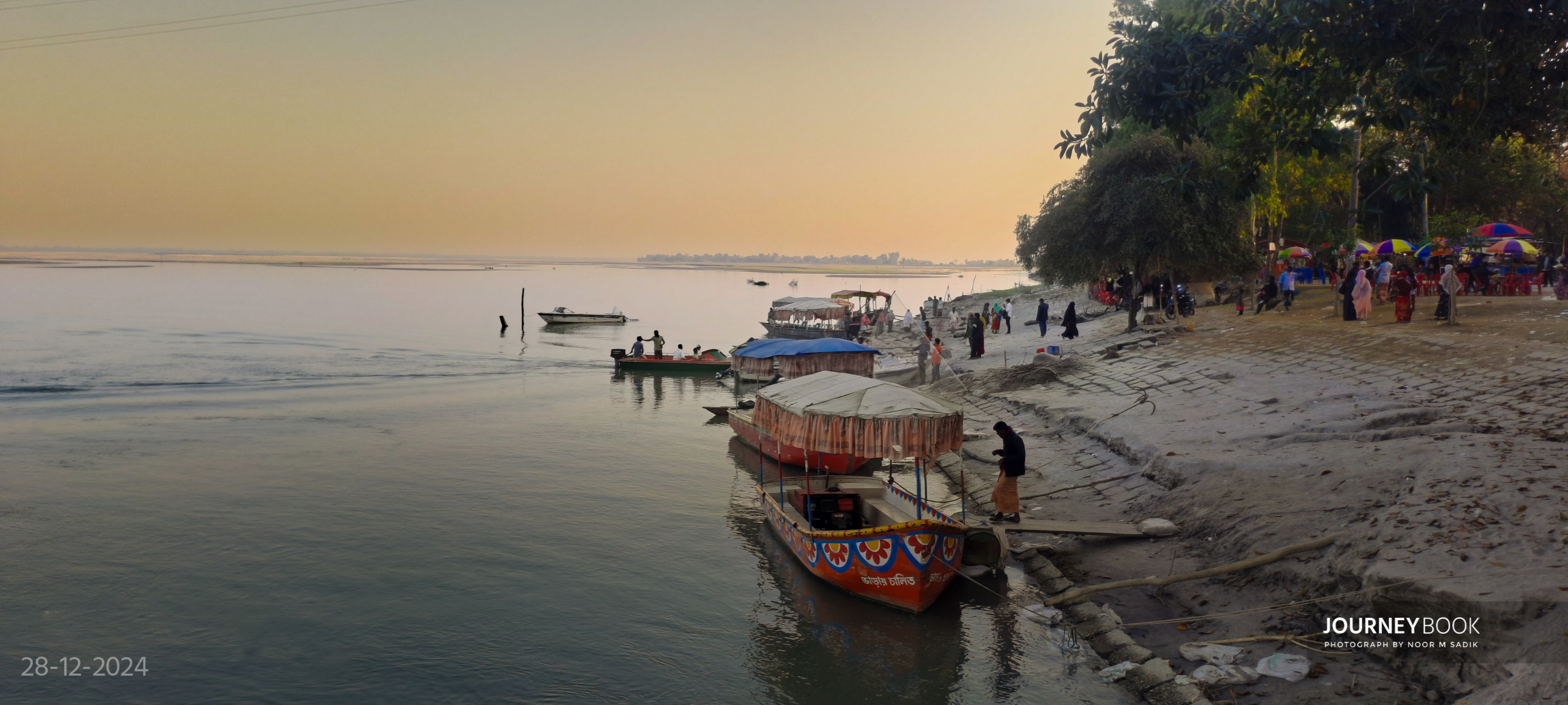
The new harvest arrived in a market that was still under pressure. On 5 March 2026, ten days before the Lalmonirhat report, the news agency UNB reported that a sharp fall in prices at the start of the harvest had left farmers across the northern region in uncertainty. Citing the Department of Agricultural Extension, it said Bangladesh had produced 1.15 crore tonnes of potatoes in fiscal 2024-25, of which 87 lakh tonnes came from Rajshahi and Rangpur divisions.
The DAE's additional director in Rangpur told UNB that potato cultivation in the 2025-26 season had exceeded the target by about 25,000 hectares, causing an oversupply. The Department of Agricultural Marketing's deputy director for Rangpur Division said cultivation had fallen slightly compared with the previous year, which might help prices later. A farmer in Kaunia upazila of Rangpur said unsold stock from the previous year was cutting demand for the new crop, and one in Gangachara said low prices meant he could not recover his costs.
UNB also spoke to a grower in Kaliganj upazila of Lalmonirhat who had planted the Cardinal variety on 18 bighas at a cost he put at Tk 22 a kg and said he could sell for only Tk 15 to 18. The agency listed the causes cited by farmers and traders: stock left over from the previous season, weak market management, a lack of cold storage, the dominance of syndicates, excess production and limited export options.
Lalmonirhat, a farming district on the Teesta
Lalmonirhat district covers 1,247.37 square kilometres in Rangpur Division. It borders the Indian state of West Bengal to the north, Rangpur district to the south, Kurigram district and West Bengal to the east, and Nilphamari and Rangpur districts to the west. Its main rivers are the Teesta and the Dharla. The district was formed in 1984 and has five upazilas: Lalmonirhat Sadar, Aditmari, Kaliganj, Hatibandha and Patgram, according to Banglapedia, which gives a population of 1,256,099 from the 2011 census.
Farming dominates the local economy. Agriculture is the main source of income for 72.78 percent of the district's people, according to the same entry. Potato is listed among the main crops of Lalmonirhat Sadar, Aditmari and Kaliganj upazilas, alongside paddy, tobacco, maize and vegetables, and Aditmari also counts potato among its main exports.
Low potato prices have hit the district before. On 31 March 2021, the Bengali edition of The Daily Star reported that Lalmonirhat had grown potatoes on 5,950 hectares that season and produced 27,81,030 sacks of 50 kg each, while its eight cold stores could hold 14,91,400 sacks. Farmers then put their cost at Tk 11 to 12 a kg and were forced to sell at Tk 7 to 8; more than 20,000 growers in Lalmonirhat and Kurigram were affected. Cold storage owners in Lalmonirhat told the paper they had no space left and were turning farmers away. The district's DAE deputy director said that favourable weather had given a bumper crop, that high seed prices had raised costs, and that farmers had planted more land after profiting the previous year.
The potato crop: season, varieties and storage
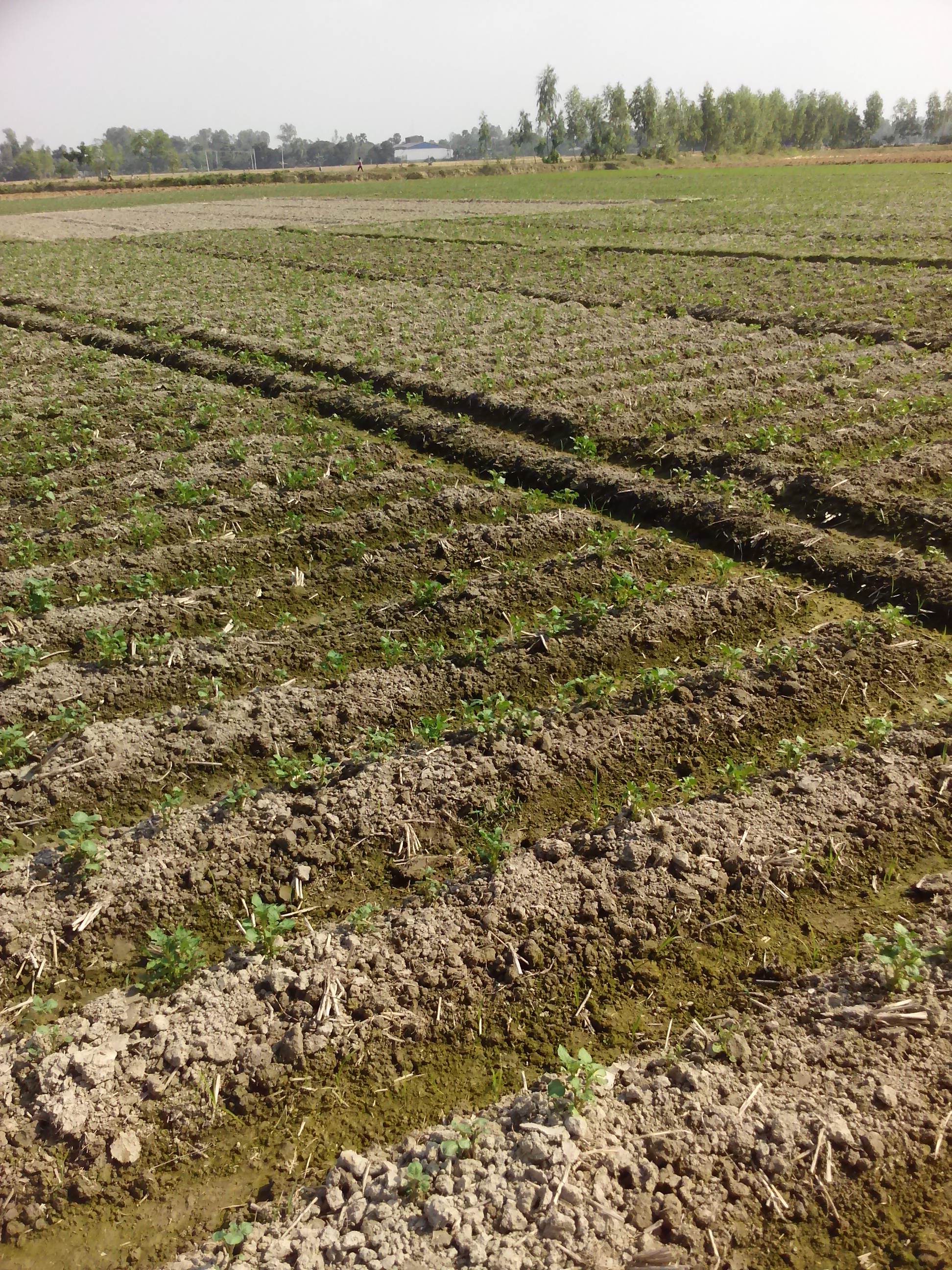
The potato, Solanum tuberosum of the nightshade family, is one of the staple foods of Bangladesh. It is grown as a winter crop in every district, and well-fertilised, sunny land with enough moisture in the soil suits it best. The right time to plant is the first fortnight of November, though in some north-western areas farmers plant as early as October to harvest early, according to Banglapedia. Almost all potatoes are planted by hand from pieces of tuber that carry two or three eyes, with 45 to 60 cm between rows, and the soil is ridged over the rows so that developing tubers stay covered and protected from light and pests.
Bangladesh grows both so-called local varieties and high-yielding ones. The local varieties, introduced long ago and kept for their taste and cooking quality, include Sheel Bilatee, mostly grown in Rangpur, with oblong reddish tubers of about 30 g each. Among the high-yielding varieties, Cardinal, introduced from the Netherlands, is probably the most popular foreign variety, with oblong reddish tubers and a yield potential of 20 to 25 tonnes a hectare; Diamant, another Dutch variety, yields 18 to 24 tonnes. The Tuber Crops Research Centre of the Bangladesh Agricultural Research Institute (BARI) tests new varieties, and the Bangladesh Agricultural Development Corporation (BADC) distributes certified seed to growers.
Nutritionally the tuber is rich in carbohydrate and is a good source of protein, vitamin C, B vitamins, potassium, phosphorus and iron, Banglapedia says. Most of the minerals and protein lie in a thin layer under the skin, and the skin itself provides fibre.
Storage is the weak point of the crop. Because potatoes are harvested over a few weeks in February and March and eaten all year, growers depend on cold stores to hold the crop until prices rise; those who cannot find space must either sell at once at harvest prices or keep the tubers at home, where losses to drying, pests and disease are high. In the figures The Business Standard reported in October 2025, the country's cold storage capacity stood at 45 lakh tonnes, while the 2024-25 harvest was about 1.3 crore tonnes.
Seed is part of the same chain. Banglapedia notes that most farmers use tubers kept back from their own crop as seed, which lowers yields in the following season, and that quality seed from BADC and BARI's Breeder Potato Seed Production Centre at Debiganj in Panchagarh does not meet the whole demand. The Daily Star's October 2025 figures set aside some 10 lakh tonnes of each year's output for seed.
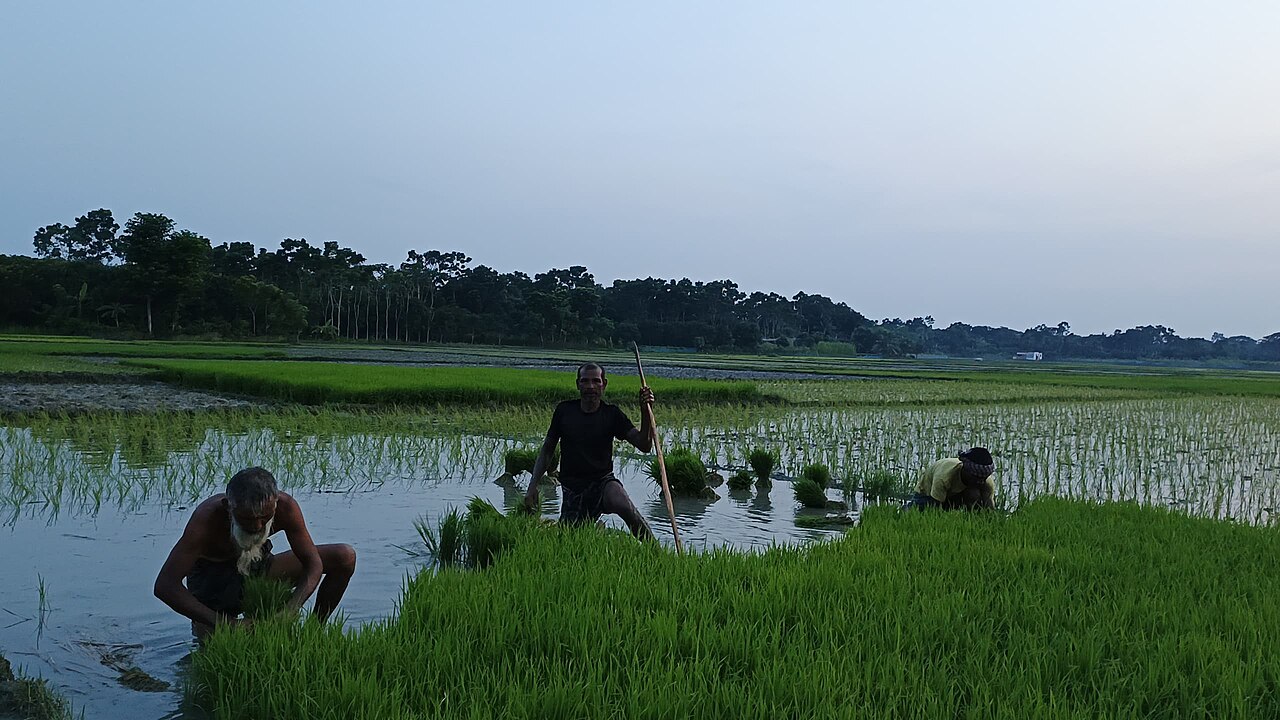
Photo: কুউ পুলক / Wikimedia Commons (CC BY-SA 4.0)
Sources: Jagonews24, Banglapedia (Asiatic Society of Bangladesh), The Business Standard, The Daily Star, Dhaka Tribune, UNB, The Daily Star Bangla
Comments
(0)