
Lungile Mkhize has turned the family garden in Edendale, Pietermaritzburg, into a small vegetable business called Lugcwabe Agric Solutions, growing spinach and lettuce on family land in South Africa's KwaZulu-Natal province. She started small, with the garden and the little capital she had, when unemployment forced her to rethink.
The garden measures 269 square metres. Her mother, Thembi, turned to gardening for comfort after Mkhize's father died in 2000, and every family member had a job in it so that the household had enough to eat. When her mother died in 2018, Mkhize took it over and began to see the plot as more than food for the family. She says she began taking the business seriously only in 2026.
Mkhize studied entrepreneurship and business management at Umgungundlovu TVET College, and says this helps her with budgeting, tracking income and expenses, managing cash flow and saving for investment. She sells informally for now, and says her lettuce can sell out as soon as it is ready. She sells spinach chopped, which is easier for busy customers. She has also noticed the many coffee shops in her area, and since many serve sandwiches, she sees a possible lettuce market there.
Weather and water are the main constraints. "Sometimes the heat becomes too much, and I do not have a greenhouse to protect my crops," she says. Water has been among her biggest challenges since the start, and vegetables that come out looking poor are a loss, since customers judge fresh produce by its appearance. About a month ago she received a JoJo water tank donated by the office of ward councillor Nkosinathi Masoeu of uMsunduzi Municipality.
She wants to learn more about pest and disease control, which she sees as a condition of supplying bigger markets, and hopes to afford irrigation so that she can stop relying on watering cans. Longer term she hopes to add layer hens and food processing, offer places to agriculture students and interns, and visit more children's centres to teach them about farming.
Reported by Vateka Halile for Food For Mzansi.
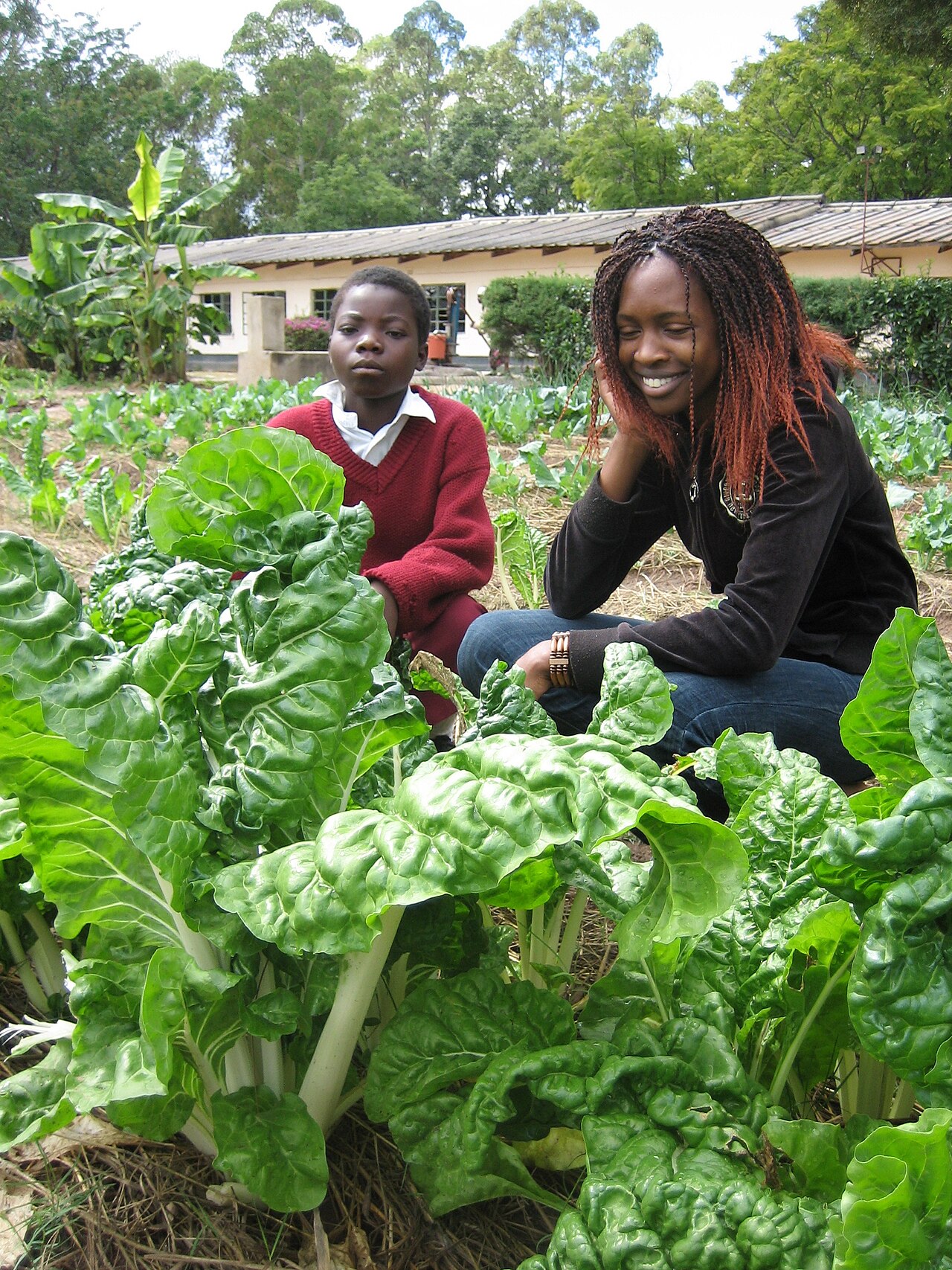
Photo: SuSanA Secretariat / Wikimedia Commons (CC BY 2.0), spinach in a school garden in Zimbabwe, not Mkhize's plot
Source: Food for Mzansi

Comments
(0)