
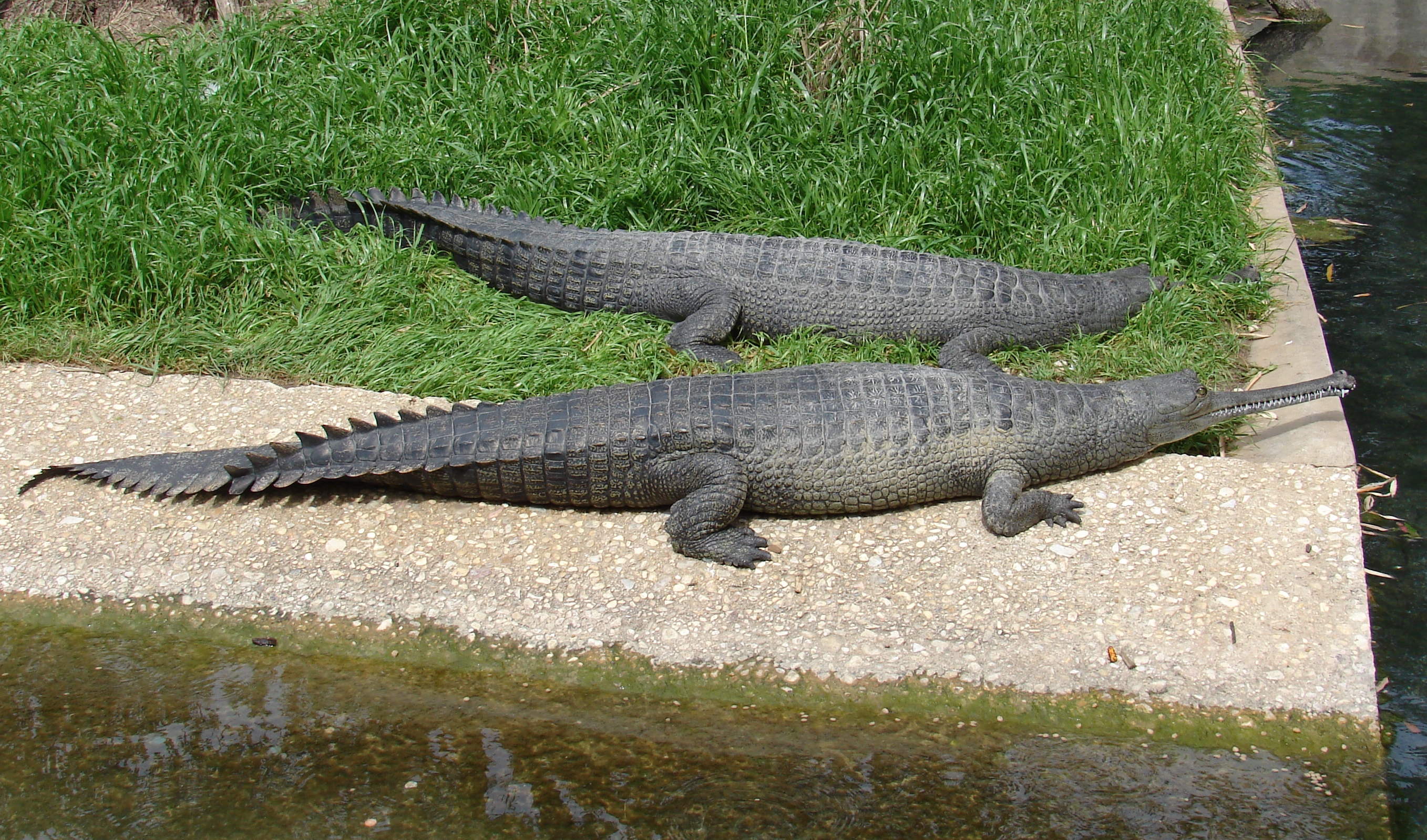
Forest officials in Kushtia rescued a critically endangered gharial and three turtles from a tank inside the YouTube Village park at Shimulia in Khoksa upazila at around 3pm on Tuesday, 17 February 2026. The gharial, a fish-eating crocodilian, measured about two feet six inches. The officials acted on information from a local journalist, who had heard about the animal from a visitor to the park.
Present at the rescue were Md Abu Bakar Siddique, acting deputy ranger of the Forest Department's Jagati office in Kushtia, Golam Kazi, the forest official for Khoksa upazila, journalists, and the park's officials and staff. Siddique said the gharial and the turtles would be released into nature.
How the gharial ended up in a park tank
According to local sources quoted by Jagonews24 and Prothom Alo, the gharial was caught in a fisherman's net in a beel, a floodplain wetland, at Shimulia in October 2025. The fishermen then sold it to Delowar Hossain, owner of the Shimulia YouTube Village park. Jagonews24 described the price as nominal; Prothom Alo put it at 1,600 taka. The park owner kept the gharial in a tank inside the park, in what both reports described as a run-down state.
A visitor to the park later saw the gharial in the tank and told journalists. Prothom Alo reported that the visitor told a journalist working for a private television channel, who passed the information on to forest officials in Khoksa and Kushtia. The forest department then went to the park on the afternoon of 17 February and took the gharial and the three turtles into its care.
Nayan, the journalist who alerted the forest department, told Jagonews24 that he had acted on information from a visitor and that the rescue had been delayed because of the election.
None of the reports identified the species of the three turtles, and the forest officials did not name them. The reports also did not say where the animals were taken after the rescue or when and where they were to be released.
What the officials and the park owner said
Confirming the rescue, Md Abu Bakar Siddique told Jagonews24: "With the help of a reliable source and journalists, a critically endangered gharial and three turtles have been rescued from the YouTube Village park. They will be released into nature." Speaking to The Daily Star Bangla, he said the animals had been rescued after word came through tourists and journalists at the site, and that they would be released in a safe place.
Siddique said that catching, killing or keeping gharials and turtles was illegal, and he cited the Wildlife (Conservation and Security) Act 2012. Prothom Alo and The Daily Star Bangla also quoted him as saying that action would be taken against the park authorities later, in line with the rules. On the date of the rescue, however, the 2012 Act was no longer the law in force: the Wildlife (Conservation and Security) Ordinance 2026 had replaced it with effect from 7 January 2026. Its main provisions on keeping wild animals are set out below.
The park owner, Delowar Hossain, told Jagonews24: "The gharial was caught in a fisherman's net in October. I bought it from that fisherman for a small sum and kept it in the park. But I did not know that keeping the animal like this was illegal." He told The Daily Star Bangla much the same.
According to the Kushtia forest office, as quoted by Jagonews24 and Prothom Alo, the gharial, a freshwater animal, had been close to critically endangered since the 1970s, and around four large gharials might still survive in Bangladesh's rivers. The Daily Star Bangla attributed the same estimate to Siddique. None of the reports named the survey on which that estimate was based.
Shimulia, the 'YouTube village' of Khoksa
Khoksa is the smallest upazila of Kushtia district. Banglapedia, the national encyclopedia, gives its area as 104.85 square kilometres and its population at the 2011 census as 129,555. Its main river is the Gorai. Khoksa thana became an upazila in 1983, and it has nine unions, one of which is Shimulia, home at the 2011 census to 6,435 men and 6,660 women. Paddy, wheat, jute, potato and sugarcane are the upazila's main crops. Kushtia district as a whole covers 1,608.80 square kilometres, had 1,946,838 people in 2011, and is drained by the Padma, the Gorai, the Mathabhanga and the Kumar.
Shimulia came to be known as the 'YouTube village' after videos filmed there spread online. In November 2020 Prothom Alo described how its villagers were filmed cooking for the whole neighbourhood, catching fish in canals and beels, and building giant elephants and horses of bamboo and straw for children. Everyone in front of and behind the camera was from the village, and the videos had given many of them an income. The channels, AroundMeBD and Village Grandpa's Cooking, were owned by a software engineer who studied at Khulna University of Engineering and Technology. He told Prothom Alo that the channels' earnings paid for the cooking and for about 50 people, including four videographers and the cooks. One AroundMeBD video had been watched more than 80 million times, and the elderly men who cooked for Village Grandpa's Cooking told the paper they were paid 400 taka a day.
In October 2022 the weekly Dhaka Courier reported that AroundMeBD had begun in 2016 and Village Grandpa's Cooking in July 2020, and that the name 'YouTube Village' had been suggested by the American food reviewer known as Sonny Side of the Best Ever Food Review Show, who visited Shimulia in early 2020. The team had also built a YouTube Village Park on 35 bigha of land, which began welcoming visitors in May 2022 with a family train, pedal boats, flower gardens and giant craft works, and signs in Bengali and English pointing the way across the village.
The gharial, a fish-eating crocodile
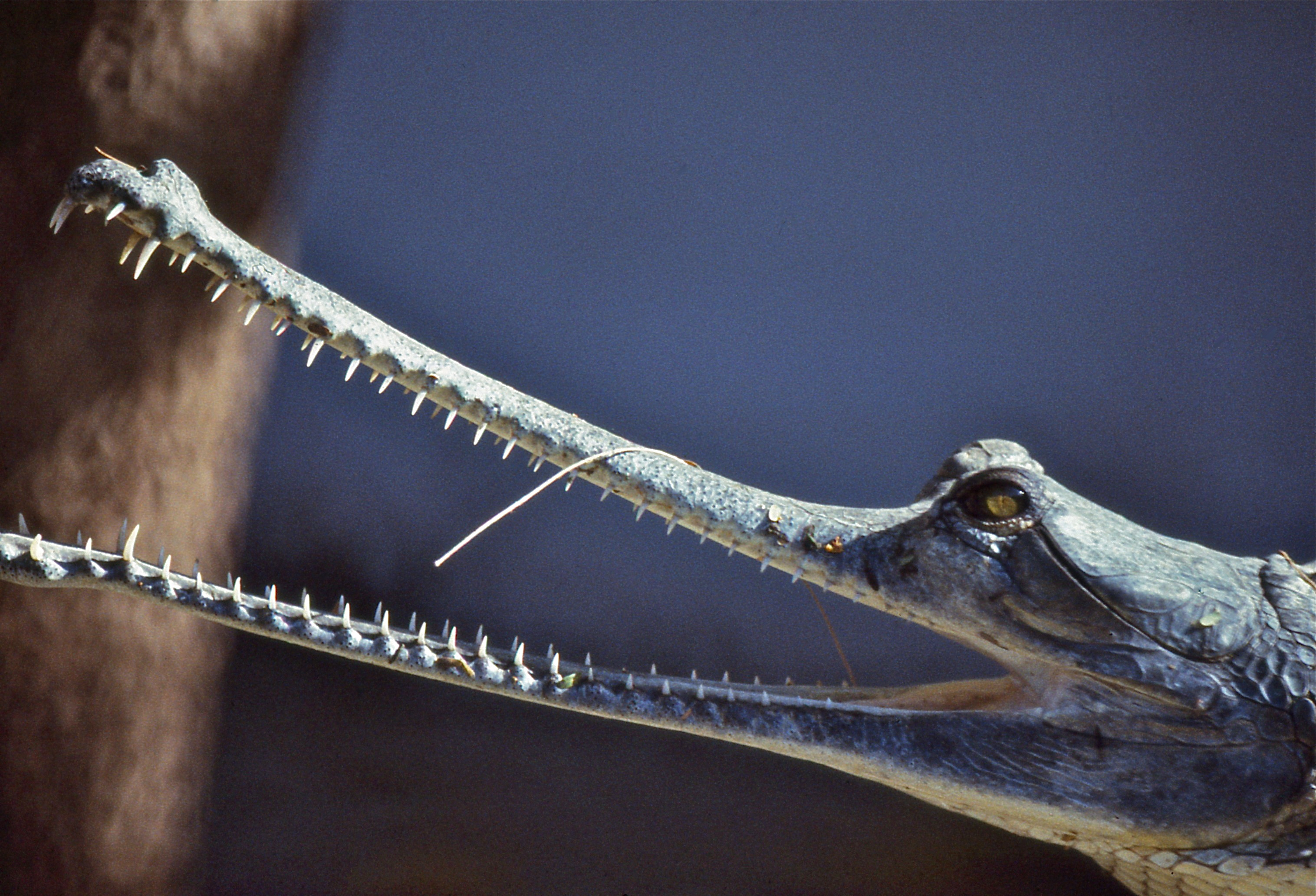
The gharial (Gavialis gangeticus) is a crocodilian of the family Gavialidae and among the longest of all living crocodilians. Mature females measure 2.6 to 4.5 metres and males 3 to 6 metres. Its long, narrow snout and some 110 sharp, interlocking teeth make it well suited to catching fish, which it swallows whole. Adult males grow a hollow, bulbous boss at the tip of the snout that resembles an earthen pot, a ghara, which gives the animal its name; it lets males make a hissing sound that can be heard some distance away. Its Bengali name mecho kumir means fish-eating crocodile.
It is the most thoroughly aquatic of the crocodilians and leaves the water only to bask and to nest on sandbanks; adults cannot walk on land in the semi-upright stance of other crocodiles. The Red List of Bangladesh, published by IUCN Bangladesh in 2015, notes that the gharial lives in deep, fast-flowing rivers but prefers stretches where the current slows. Females lay 10 to 96 eggs, about 40 on average, in sandy, eroded riverbanks, and the eggs hatch in 72 to 96 days at 32 to 34 degrees Celsius. The animal eats mainly fish but also turtles, birds and small mammals, while the young eat insects, tadpoles, small fish and frogs. Its generation time is put at 20 years.
Banglapedia describes the gharial as a shy aquatic reptile that was once found in the Padma, the Jamuna, the Brahmaputra and their tributaries but has become a very rare sight, and notes that it was poached for its armoured skin, which was made into bags, shoes and decorative pieces. Bangladesh has three crocodilians: the gharial, the estuarine or saltwater crocodile and the marsh crocodile, or mugger.
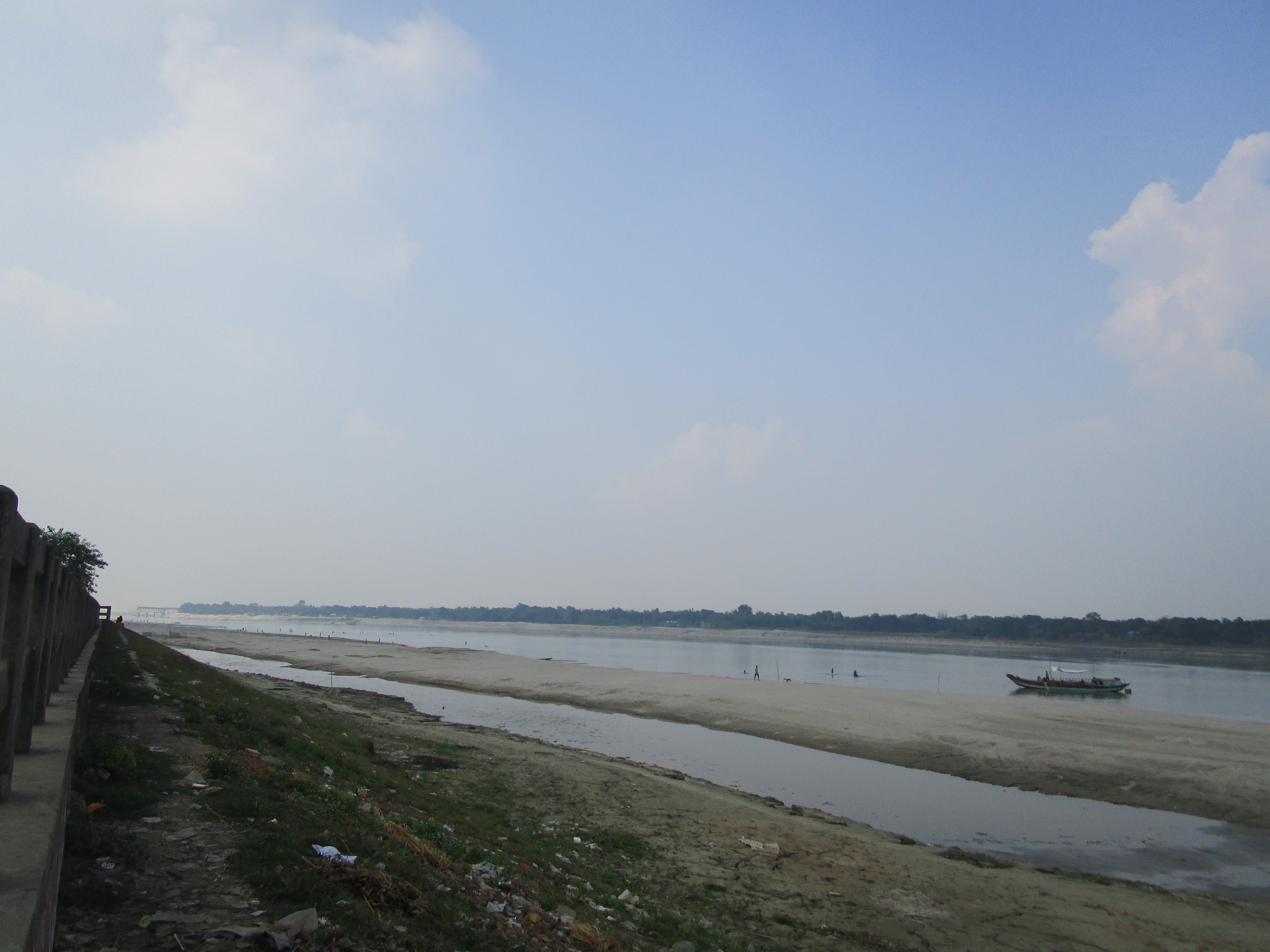
Across its range, which once stretched from the Indus in Pakistan through the Ganges and the Brahmaputra to the Irrawaddy in Myanmar, the gharial fell from an estimated 5,000 to 10,000 animals in 1946 to fewer than 250 mature individuals by 2006. By 1976 it survived in only about 2 per cent of its historical range. It has been listed as Critically Endangered on the IUCN Red List since 2007 and is on Appendix I of CITES. As of 2019, the world population was estimated at no more than 900 individuals, including about 600 mature adults in six major subpopulations. India and Nepal have released captive-bred gharials into their rivers since the early 1980s. Gill nets set in gharial habitat, dams, barrages, irrigation canals and embankments, siltation, sand mining, and the use of riverbanks for farming and grazing are listed as the main causes of the decline.
A species on the brink in Bangladesh
IUCN Bangladesh assessed the gharial as Critically Endangered in Bangladesh on 18 March 2015, the same category it had been given in the national assessment of 2000. The justification was that the population was shrinking day by day, that there was no breeding population in the country, and that its habitat had dwindled severely over the past few decades. The assessment placed the species in the Padma, the Jamuna and the Tista in the north of the country, with an extent of occurrence of 47,109 square kilometres and an area of occupancy of 5,983 square kilometres.
The counts cited in the assessment show how few animals were left. Some 52 gharials were estimated between 1957 and 1990, 32 between 1991 and 2000, and only one young animal was found between 2000 and 2002. In the Padma, nine were spotted in 2009-2010, seven in 2010-2011 and five in 2011-2012. The trend was recorded as decreasing.
The same report noted that every Critically Endangered reptile in Bangladesh except the gharial was found only in protected areas: the gharial lives in open rivers, outside the reserves. Among its recommendations were protecting the gharial's remaining habitats by enforcing the law and breeding the species in zoos, since at that time only males were kept at Dhaka Zoo and only females at the Rajshahi and Rangpur zoos. Of the three crocodilian species of Bangladesh, the report counted two as threatened and one, the marsh crocodile, as regionally extinct in the wild.
Gharials netted in the Padma basin before
The Khoksa gharial was not the first to be caught in a fishing net in this part of the country. In September 2011 The Daily Star reported that a juvenile gharial 4.4 feet long had been caught in a fishing net in the Padma at Ambaria Char in Rajbari Sadar upazila, where frightened fishermen hit it; it was released into a pond at the Bangabandhu Safari Park in Gazipur. In February 2012 the same paper reported the rescue of a two-foot gharial that had been caught in the Padma and was about to be sold by a fisherman at Bheramara in Kushtia.
In November 2022 the Dhaka Tribune reported that a gharial had been caught in a fishing net at the Hardinge Bridge point of the Padma at Bheramara, also in Kushtia. Forest officials went to the spot and released it into the river at around 8.30pm the same day. Zahidul Islam, the Bheramara upazila forest officer, told the paper that the animal had been released in line with the wildlife law.
Efforts to breed the species in captivity also go back years. According to a Jugantor report of April 2025, on 13 August 2017 a breeding attempt was started at the Rajshahi zoo, which then held two female gharials that had been rescued after being caught in fishermen's nets. One female was sent to Dhaka Zoo, where she was named Jamuna, and a male from Dhaka was brought to Rajshahi and named Gorai, to join the female there named Padma. In eight years neither pair produced young, which the report put down to unsuitable surroundings.
On 15 April 2025 the country's first gharial breeding centre was opened in a pond of the Social Forestry Division's Paba nursery in Rajshahi, set up jointly by IUCN and the Social Forestry Division, and a male and a female gharial brought from the Gazipur Safari Park were released into it. At the opening, the Chief Conservator of Forests, Amir Hosain Chowdhury, listed river pollution, falling river depth, overfishing, illegal hunting, trafficking, the destruction of eggs and shortage of food as the reasons gharials were failing to breed.
Freshwater turtles under pressure
Turtles, tortoises and terrapins belong to the reptile order Testudines and are known for their shells, made up of an upper carapace and a lower plastron joined by a bony bridge. The Red List of Bangladesh notes that turtles are generally aquatic and omnivorous and come onto land to lay eggs, that tortoises live on land, and that terrapins live both in and near the water along rivers, ponds and lakes. Turtles that eat carcasses and weak or diseased animals help keep waters clean.
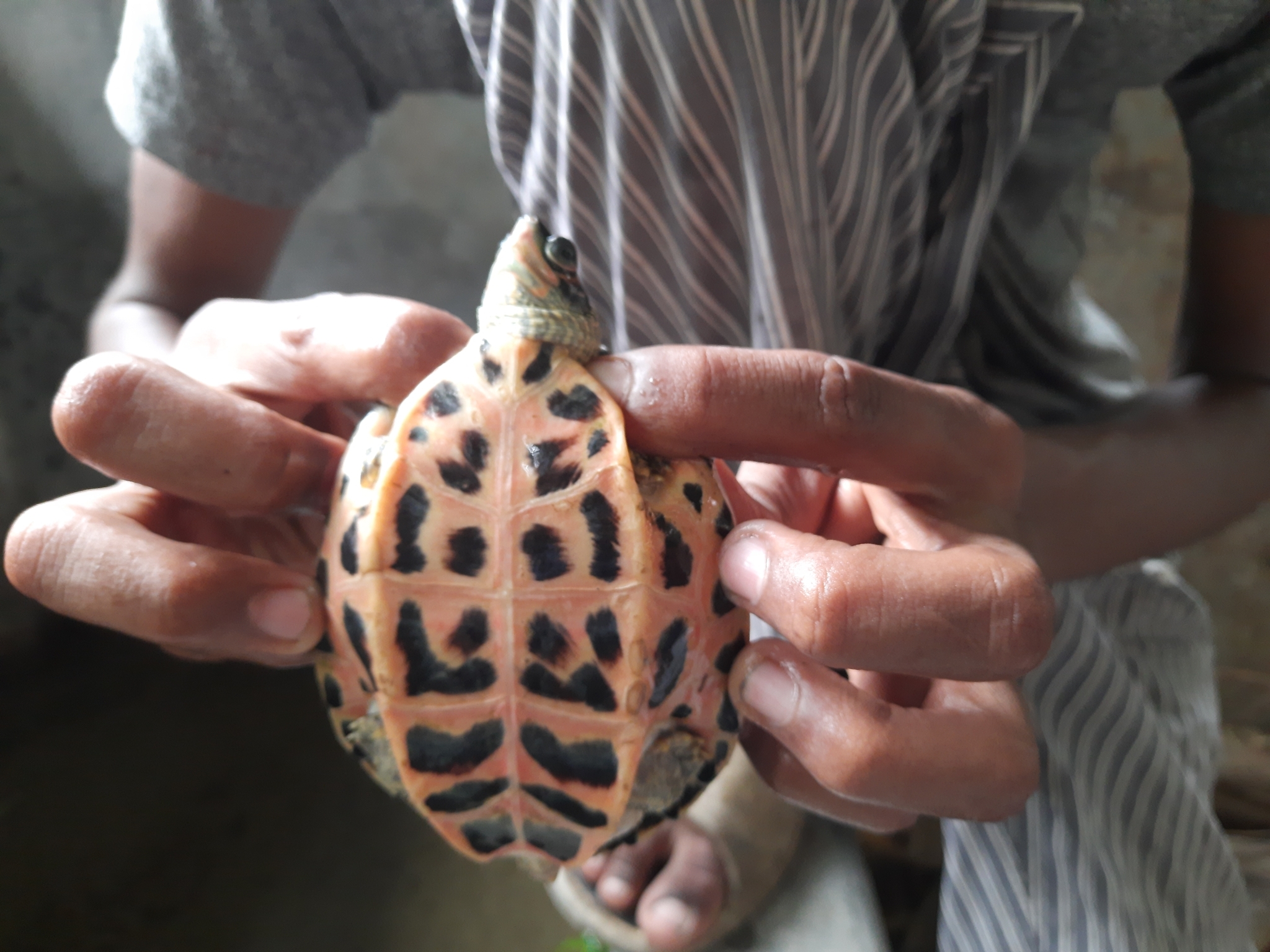
Of the 30 turtle and tortoise species assessed in Bangladesh in 2015, 22, or 73.3 per cent, were found to be threatened: 14 Critically Endangered, four Endangered and four Vulnerable. The Critically Endangered species include the Bengal roof turtle (Batagur kachuga), the narrow-headed softshell turtle (Chitra indica) and the Asian giant softshell turtle (Pelochelys cantorii); the black spotted pond turtle (Geoclemys hamiltonii) is Endangered, its numbers having fallen by more than half because of fishing nets, poaching, over-exploitation and habitat loss.
The report found that pollution from industry and households directly affects turtles, which depend on water in many ways, and that insecticides and other farm chemicals washed into wetlands are a second major threat. It also recorded that turtles were sold in local markets in many parts of the country at relatively high prices, 200 to 500 taka a kilogram at the time, and that demand was so high that turtles had become rare in the wild, with supplies coming from neighbouring districts and even from India. Rivers, canals linking rivers with floodplains, beels, haors, ponds and ditches are the main habitats of the country's freshwater turtles.
What the law in force said
The interim government's advisory council approved the Wildlife (Conservation and Security) Ordinance in early December 2025, and the Ordinance, No. 9 of 2026, took effect on 7 January 2026 in place of the Wildlife (Conservation and Security) Act 2012. Prothom Alo reported that it brought 1,599 species of animals and plants under protection, including 160 species of reptiles, and that it gave forest officials and law enforcers the power to arrest suspected offenders without a warrant.
Section 10 of the law bars anyone from rearing a wild animal, keeping it in captivity, or possessing, buying, selling or transporting it without a licence, possession certificate or permit. It forbids the buying and selling of wild animals through social media advertisements, markets or any other means, and treats all wild animals, their body parts and meat as the property of the government. Under Section 44, breaking Section 10 is punishable by up to one year in prison, a fine of up to 100,000 taka, or both; a repeat offence by up to two years, a fine of up to 200,000 taka, or both.
Prothom Alo reported in December 2025 that the penalty the 2012 Act set for killing a gharial, along with leopards, crocodiles, dolphins, sambar deer, whales and hoolock gibbons, was up to three years in prison, a fine of up to 300,000 taka, or both, rising to five years or 500,000 taka for a repeat offence, and that the Ordinance kept it. The paper also reported that the Ordinance made killing any of the 250 species in its Schedule 1(kha), as well as tigers and elephants, a cognisable and non-bailable offence.
The law also covers what happens after a rescue. Section 14 requires that wild animals that are rescued, seized or caught be released into a suitable natural environment, although an animal may be kept in captivity if it might spread disease or needs care. Section 34 allows the Forest Department to set up rescue centres to give wild animals treatment, food, shelter and security, and to issue guidelines for releasing them from those centres into nature.
Photo: User Greverod on sv.wikipedia / Wikimedia Commons (CC BY-SA 3.0)
Sources: Jagonews24, Prothom Alo, The Daily Star Bangla, The Daily Star, Dhaka Tribune, Jugantor, Dhaka Courier, IUCN Bangladesh (Red List of Bangladesh, Volume 4: Reptiles and Amphibians, 2015), Banglapedia, Wikipedia, Laws of Bangladesh (Legislative and Parliamentary Affairs Division)
Comments
(0)