
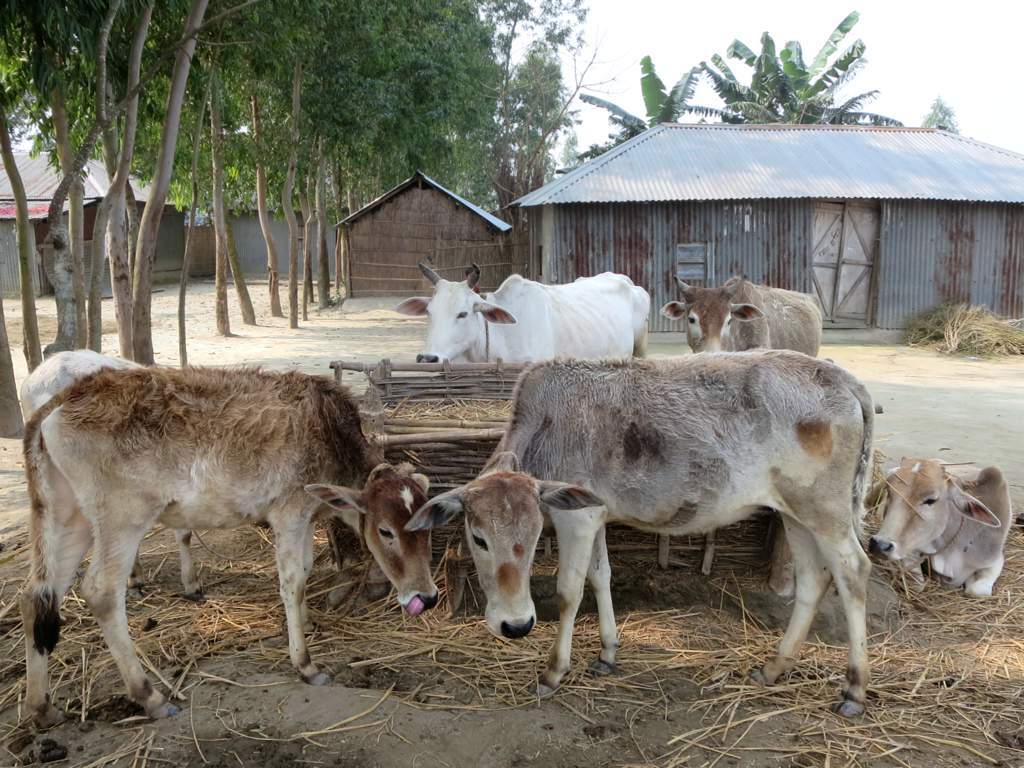
On the Brahmaputra chars of Chilmari upazila in Kurigram, thousands of families live off their cattle, goats and poultry. Yet there is no permanent veterinary surgeon or livestock doctor at union level, and farmers say sick cows and buffaloes often die on the boat while being taken across the river to the animal hospital in the upazila town.
According to the upazila statistics office, about 9,624 families live in the river-bound unions of Nayarhat, Ashtamir Char and Chilmari. They keep some 29,260 cattle and buffaloes, 28,970 goats and sheep and more than 114,000 ducks and chickens. The local livestock department says the real numbers on the chars are higher.
Almost every char household keeps five to ten cattle or buffaloes. In the monsoon the river is rough, and at night there are no trawlers or boats, so emergency treatment is close to impossible. Without a resident doctor, farmers also miss routine vaccination, deworming and basic disease prevention, and many turn to untrained village quacks.
Abdus Salam, a farmer from Karai Barishal, said his cow worth Tk 90,000 developed a bloated stomach; he could not find a boat to reach the upazila hospital, and a char quack who treated it could not save it. Another farmer from the village, Jel Haq Joddar, said losing one cow breaks the backbone of a household.
The upazila livestock office has seven staff against 11 sanctioned posts, with four key posts vacant. Upazila livestock officer Dr Birendra Nath Roy acknowledged the shortfall and said the problem could be solved for good if a permanent livestock doctor were posted to each char union and the vacant posts filled.
Chilmari union parishad chairman Aminul Islam called for sub-assistant livestock officers to be posted at union level and, until then, for a special boat-borne medical team to vaccinate and treat animals on the chars. For char farmers, after floods and erosion, animal disease is now the largest financial risk.
The report is by Samakal's Chilmari (Kurigram) correspondent.
Photo: David Stanley / Wikimedia Commons (CC BY 2.0)
Source: samakal

Comments
(0)