
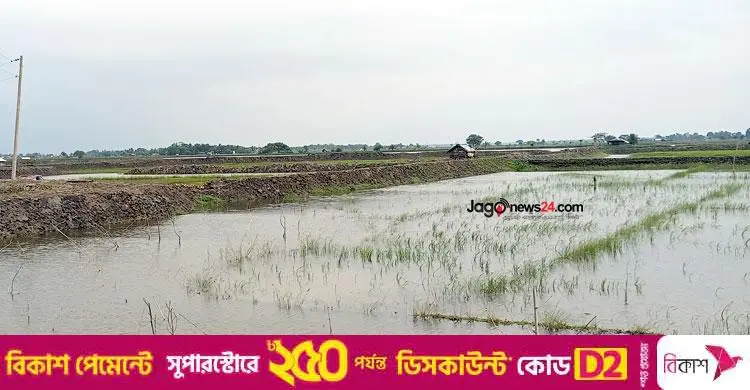
A "climate-resilient fisheries and aquaculture pilot programme" aimed at easing the difficulties of fish farming in coastal areas has drawn a strong response from farmers. The project is working to train fish farmers, modernise farming and improve living standards, and in particular to make fish farming and fisheries management more sustainable in the face of climate change. It is currently running in Dumuria and Dakop upazilas of Khulna district.
According to the project and the Khulna district fisheries office, the climate-resilient fisheries and aquaculture project, funded by the UN's FAO, is running in coastal Khulna, Satkhira and Bagerhat districts; in Khulna it covers Dumuria and Dakop. The Food and Agriculture Organization of the United Nations and the Department of Fisheries have jointly been implementing the "Community Based Climate Resilient Fisheries and Aquaculture Development in Bangladesh" project in climate-vulnerable coastal upazilas for the past five years. It began in October 2020 and will end in December 2025.
How the community groups work
The project works through community-based organisation (CBO) teams made up of community fish farmers, local farmers, fishers and others involved. To carry out the pilot, each CBO team is given fish-farming inputs worth Tk 4-5 lakh: fingerlings, feed, fertiliser, medicine, prebiotics, probiotics, fishing nets and pond lease money.
Talking to CBO teams in Dumuria and Dakop, it emerged that a CBO has 12 women and 13 men. Members of each CBO open a bank account in which they deposit monthly savings and money earned from the CBO's fish enclosure (gher). Money needed for fish farming or CBO work is withdrawn by resolution. Members meet every month to discuss all matters.
Farmers return to fish farming
Mukta Biswas, president of the Rudaghara Bagda Chashi CBO in Dumuria upazila, said: "We have profited by farming climate-resilient bagda shrimp together with carp and other saltwater fish. The women members of our CBO have learned a lot about fish farming, and their mistaken belief that fish farming loses money has gone. We are trying to expand our activities and our enclosure."
Bivash Chandra Biswas, secretary of the Bhandarpara union CBO in Dumuria, said many farmers in Dumuria had given up fish farming because of losses. "It was nothing but losses. But using the method of farming several fish in the same water, many farmers have now returned to fish farming." He added that fish farming involves many complex matters that cannot be taught to each person individually. "We all discuss them at the monthly meeting. Then, if needed, we tell the trainer, who comes and trains us."
Soma Mondal, secretary of the Baraikhali-Basundia CBO in Pankhali union, Dakop, said many people in her community had started fish farming again. "Dakop's water is very suitable for fish farming. At one time fish went from Dakop to various parts of Khulna." She added: "We are now farming bagda, carp, nona tengra, parshe and other fish in our enclosure. Many people now come to see it."
Sonia Khatun, climate and disaster mitigation secretary of the Lakshmikhola CBO in Dakop, said fish farmers suffered heavy losses during the coronavirus pandemic. Many gave up and went to towns looking for work and did not come back to farm fish in the villages. "But many women have taken up fish farming again. Many have restarted after getting advice. Through training and hands-on learning, many farmers have learned how to overcome the difficulties of fish farming."
Project officials
Masudur Rahman, FAO's national community management (fisheries and livelihood) specialist, said the project has formed 50 CBOs in five climate-vulnerable coastal upazilas in the south-west. Its work includes climate-resilient fish farming, conservation of fish resources, community-level fish feed production and post-harvest services. "We are trying to revive fish farmers," he said.
Project director Md Samsu Uddin said the project has been running for five years in nine upazilas in the coastal south-west and the haor-ringed north-east. Through it, fish farmers, fishers and fish traders have received training in climate-resilient fish farming and management. Under the CBO-based climate-resilient fisheries work, farmers are also being trained and supported in crab fattening, mixed farming of golda and bagda, safe dried-fish production, pen fish culture, improved brood fish production and climate-resilient fish farming in ponds.
He added that the project has produced many success stories among farmers, and that the programme will be taken to various parts of the country to revive fish farmers.
Khulna district fisheries officer Md Badruzzaman said the project is running in Dakop and Dumuria with FAO funding and will end in December this year. "But we are trying to build each CBO team into a progressive group," he said.
Source: Jagonews24. First published in Bengali on The Agro News.
Comments
(0)