
By Bilkis Nahar Mitu
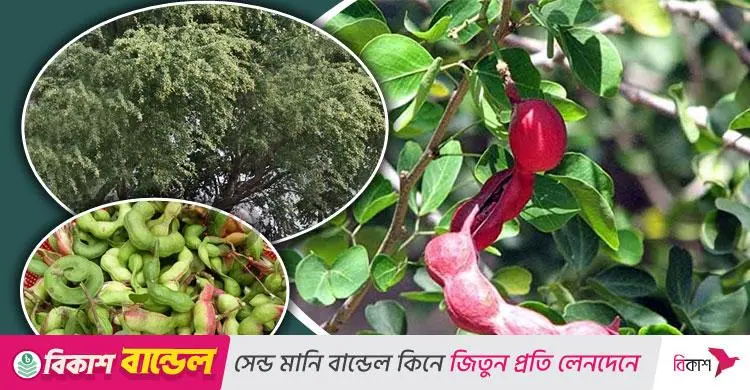
This varied world is full of varied trees, flowers and fruits, and one unusual fruit is the khoi fruit. In some places it is called khoiya babla or dakhini babul, and because it looks like a jilapi (a coiled sweet), in some regions it is known as the jilapi fruit.
The fruit ripens in the Bengali months of Baishakh or Jaishtha, and village children eat plenty of it. When the fruit ripens, flocks of birds settle on the tree. Its botanical name is Pithecellobium dulce: the Greek Pithecellobium means "monkey's fruit" and the Latin dulce means sweet. It is a plant of the Fabaceae family.
What the tree looks like
Native to Central and Southern Africa, the plant can grow 30-50 feet tall. There are several kinds of khoi fruit: inside they may be white and green, white and pink, or deep red. They are tasty and sweet, though also somewhat astringent. The trunk and branches are long and untidy, the tree has many thorns and the bark is grey. Its leaves resemble those of the kanchan tree, green and joined in pairs.
The khoi tree flowers in the month of Falgun, with small, pale yellowish flowers whose buds grow in clusters. The seeds are round and black. The bark is useful for diarrhoea, dysentery and tuberculosis; the seeds soothe ulcers, and the leaves are used to ease coughs and for gall bladder complaints. Many people mash the fruit into a bharta to eat with rice.
A disappearing tree
The tree springs up in every corner of rural Bangladesh and is not grown commercially, though the fruit is sometimes sold in towns. In the Philippines, however, it is cultivated for its fruit. Seedlings usually grow from the seeds, but a cut branch will also take root, and even if the tree is cut at the base, new shoots grow from the side.
In villages many people use it as a hedge around the home. The tree is found in Madaripur, Shariatpur, Jashore, Khulna, Barishal, Patuakhali and Bhola, but its numbers have fallen sharply. To keep it alive, steps must be taken to cultivate it; only then will this native tree be saved.
The writer is a student at Government BL College, Khulna.
Source: Jagonews24. First published in Bengali on The Agro News.
Comments
(0)