
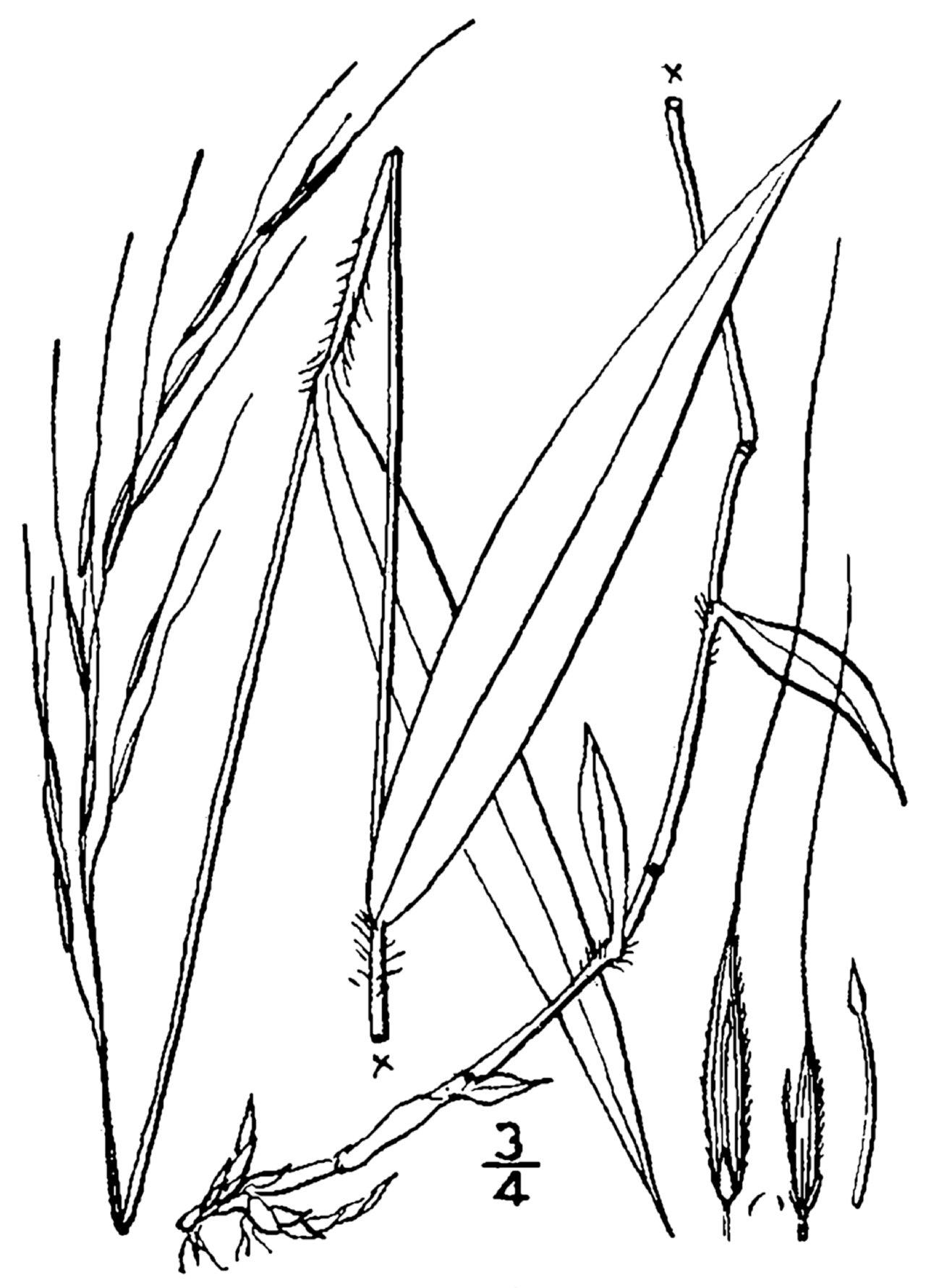
A fungus living inside a common Kentucky woodland grass produces a rare combination of chemicals that probably protects the plant from insects, researchers at the University of Kentucky's Martin-Gatton College of Agriculture, Food and Environment report in Applied and Environmental Microbiology.
The grass is bearded shorthusk, and the fungus, Epichloe brachyelytri, is an endophyte: it lives inside the plant without harming it, gaining a home and in return making chemicals that stop insects eating the grass. The team, led by Christopher Schardl and Padmaja Nagabhyru of the Department of Plant Pathology, found it makes three alkaloids.
Two of them, exo-1-acetamidopyrrolizidine and chanoclavine, are normally intermediate steps that other fungi turn into more complex compounds, but this fungus keeps them as final products. "It is the first fungus ever shown to do this with both chemicals at the same time," Schardl said.
The researchers sampled grass at six sites along a 171-kilometre path, including the Kentucky River Palisades, Mammoth Cave National Park, Red River Gorge and Carter Caves, and measured the alkaloids in leaves, seeds and young shoots. Making the chemicals costs the fungus a lot of energy, and in a few places where insects are probably less of a problem it has lost one or another of them.
The rare combination arose in other fungal species through different evolutionary routes, including gene swapping and hybridisation. Similar fungi live in pasture grasses eaten by cattle and horses, and some make chemicals toxic to livestock. Studying wild examples, Schardl said, helps show how such systems evolved and how they might be used to breed better, safer pasture grasses.
The story is based on a University of Kentucky release carried by AgroPages.
Illustration: Britton and Brown, 1913 / Wikimedia Commons (public domain)
Source: AgroPages


Comments
(0)