
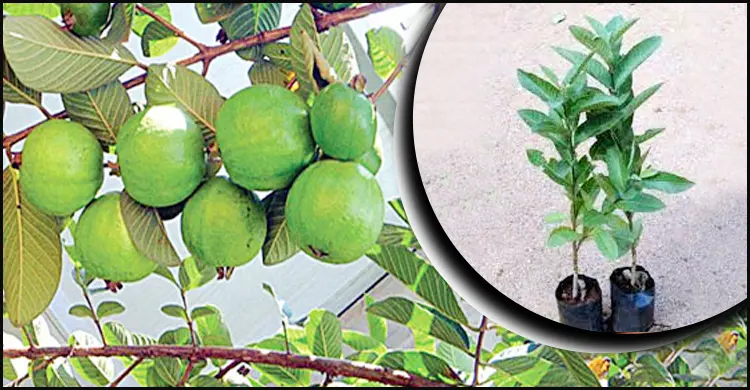
Kazi guava is named after National Emeritus Scientist Dr Kazi M Badruddoza. The country's markets are now flooded with it. It is easy to grow and gives a high yield, so farmers are readily taking it up.
Features of Kazi guava
- It is a high-yielding variety.
- The tree is dwarf, fairly upright and moderately bushy.
- It fruits twice a year.
- In the main season it flowers in March–April and the fruit is ready to harvest in August–September.
- The fruit is oval, slightly narrow towards the stalk, with an average weight of 445 grams.
- The ripe fruit is light in colour.
How to grow it
Soil: guava does well in light sandy soil and loam.
Planting time: May to September is the right time to plant Kazi guava saplings or grafts. Where good irrigation is available, they can be planted all year round.
Care: the land must be kept free of weeds for normal growth. After planting, the soil should be kept loose in the early stages, or the sapling will not grow quickly. For this, break the crust of the soil with a spade from time to time, especially after irrigation once the soil reaches the right moisture.
Harvesting: Kazi guava is ready to harvest from August to September. Grafted trees yield more than trees grown from seed. When the fruit is ready, its green colour turns yellowish-green or yellow. If possible, each fruit should be cut off individually with secateurs.
Information: Krishi Batayan and Agriculture Information Service.
Source: Jagonews24. First published in Bengali on The Agro News.

Comments
(0)