
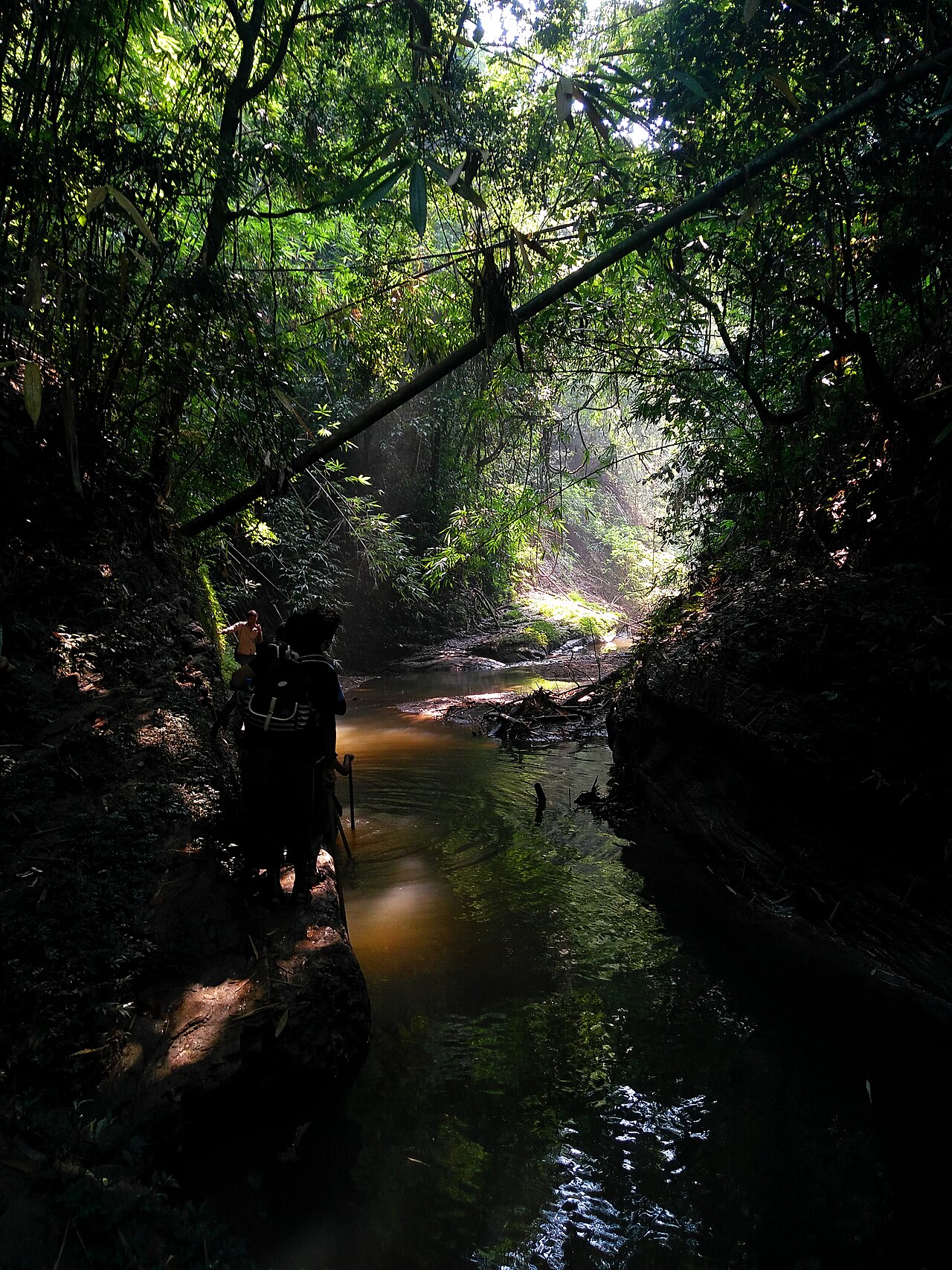
The Forest Department recovered about five acres of reserved forest land at Kamalganj in Moulvibazar district on Thursday, 16 July 2026, and cleared the malta, pineapple, lemon and betel nut gardens that had been set up on it. According to the department and local sources, a group of local influential people had occupied this large stretch of forest illegally for a long time and had been growing the four crops there. The drive took place at midday in the Kalinji Bosti Nasak area of the Adampur beat, part of the Rajkandi range, and was carried out jointly by the Forest Department, the upazila administration and Kamalganj police station, Jagonews24 reported that evening.
Once the gardens were removed, the cultivated land was brought back under the Forest Department's control. Two officials confirmed the outcome to the paper. Pritam Barua, assistant conservator of forests and the officer in charge of the Rajkandi range, said five acres had been recovered through the eviction drive in the Kalinji Bosti Nasak area of the Adampur beat in the reserved Rajkandi range. Riaz Mahmud, the assistant commissioner (land) of Kamalganj, also confirmed the drive and said five acres of forest land had been recovered.
The report did not name the people who were said to have occupied the land, and it carried no statement from them. It also did not say whether any case had been filed over the occupation.
What the joint team removed
Apart from the fruit gardens themselves, the team dealt with two structures and a water body. Two sheds made of bamboo and polythene, which according to the report had been built illegally inside the forest, were demolished.
The second step concerned water. Inside the reserved forest, a natural water body had been dammed to create a pond artificially, the report said. During the drive the bank of this illegal pond was cut, so that the water body's natural flow could be restored.
The drive was a joint operation. The Forest Department, which manages the reserved forest, was joined by the upazila administration, represented by the assistant commissioner (land), and by the police of Kamalganj station.
The Rajkandi range and the Adampur beat
Kamalganj is one of the seven upazilas of Moulvibazar district in Sylhet Division. Banglapedia, the national encyclopaedia of the Asiatic Society of Bangladesh, gives its area as 485.26 square kilometres. It is bounded by Rajnagar upazila on the north, the Indian state of Tripura on the south, Kulaura upazila and the Indian state of Assam on the east, and the Sreemangal and Moulvibazar Sadar upazilas on the west. Its main river is the Dhalai. Kamalganj Thana was formed in 1922 and became an upazila in 1983. Adampur is one of its nine unions.
The upazila has a mixed population. The 2011 census, as quoted by Banglapedia, counted 259,130 people, and the encyclopaedia names Manipuri, Khasia, Tripura (Tipra) and Halam among the indigenous communities living there. Agriculture is the main source of income for 39.77 percent of households. Banglapedia lists aman and aus paddy, wheat, sugarcane, tea, mustard, potato, betel leaf and vegetables as the upazila's main crops, and mango, jackfruit, pineapple, blackberry, litchi, grapefruit, watermelon and betel nut as its main fruits. Tea, sugarcane molasses, betel leaf and vegetables are its main exports.
The upazila is also known for its forests. Lawachara, set up in 1996 on 1,250 hectares and declared a national park, lies in Kamalganj, and Banglapedia lists Madhabpur Lake among the area's other attractions. The Rajkandi reserved forest lies in the same upazila. The Adampur beat, also known as Kauargola, is a forest beat of the Rajkandi reserved forest, about ten kilometres from the upazila town, with the Indian state of Tripura just beyond it. It is a secluded tract of uneven hills crossed by footpaths, with a Khasi village nearby and a Forest Department inspection bungalow inside.
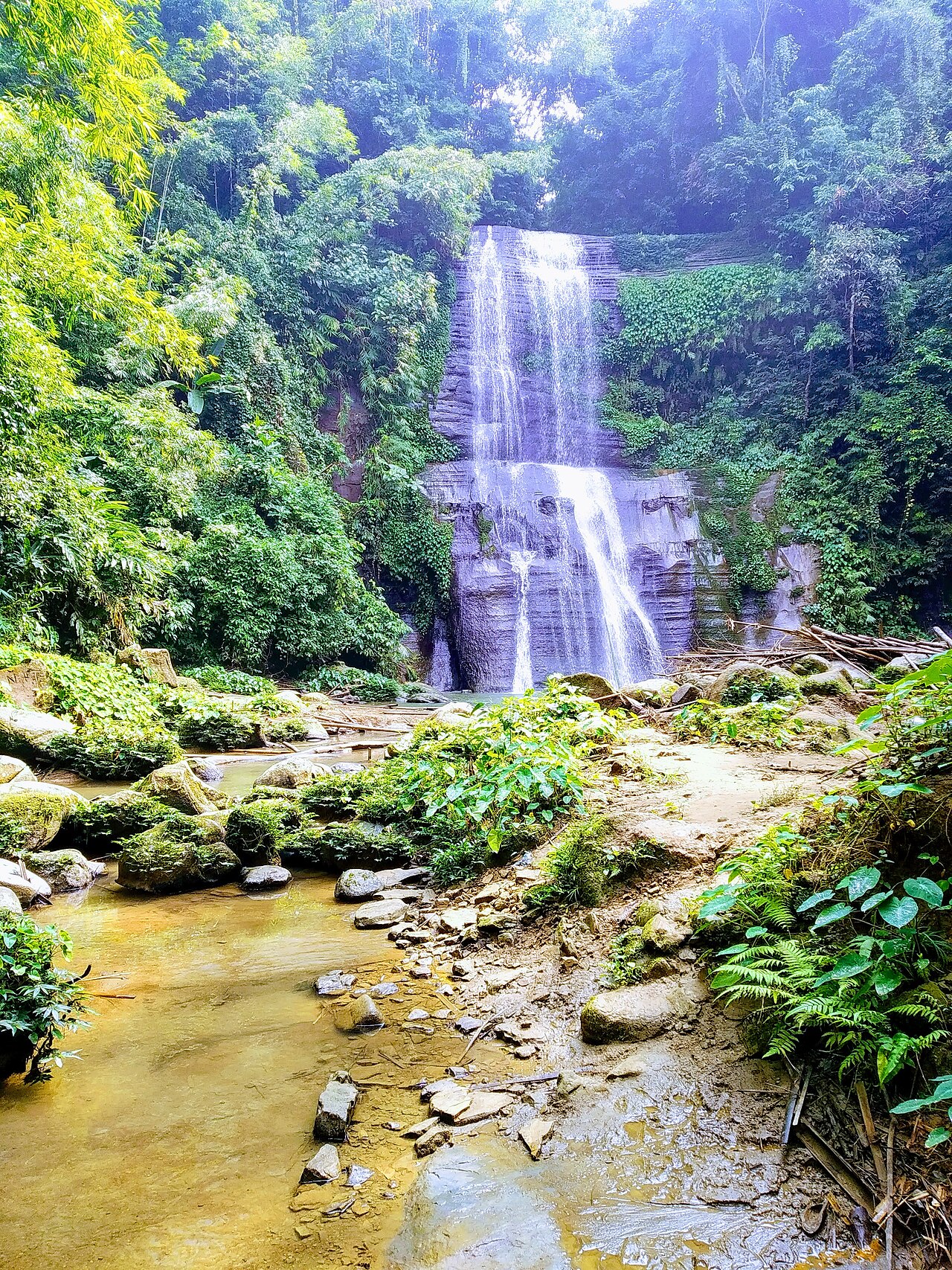
Descriptions of the Adampur forest list large groves of bamboo, chiefly muli (Melocanna baccifera), mitinga, dolu and rupai, along with native trees such as chapalish, garjan, jarul and agar. Hoolock gibbons are heard deep inside, and capped langurs, bears and barking deer are among the animals recorded there. The Rajkandi forest is also the setting of the Hum Hum waterfall, known locally as Chita Jhorna, which was brought to wide attention by a group of visitors and a local guide in about 2010 and is reached only on foot through the forest.
The hill forests of Sylhet
The forests of Kamalganj belong to the hill forest type, one of the main forest types of Bangladesh. Banglapedia describes hill forests as tropical evergreen and semi-evergreen vegetation found in the Chittagong Hill Tracts, Chittagong, Cox's Bazar, Sylhet, Maulvi Bazar and Habiganj, covering about 1.40 million hectares, of which about 0.67 million hectares are under the control of the Forest Department. They hold a large diversity of tree, bamboo and shrub species, and besides timber and fuelwood they supply bamboo and sungrass for local needs and for industry.
In its entry on forest and forestry, Banglapedia places tropical wet evergreen forest in the hilly parts of Maulvi Bazar in the north-east, with top-canopy trees 45 to 62 metres tall, and tropical semi-evergreen forest in the hilly regions of Sylhet through Chittagong. The semi-evergreen forests, it says, have recorded more than 800 species of flowering plants, collectively occupy about 640,000 hectares and supply about 40 percent of the country's commercial timber. It also notes that the introduction of rubber plantations, after earlier teak planting, is gradually changing the natural character of these forests.
The forests of the Sylhet region came into the present system by a separate route. Under British rule, Sylhet was part of Assam, and at the partition of 1947 the Sylhet Division of Assam became part of East Pakistan, Banglapedia records. Its forests were then grouped with Chittagong, Cox's Bazar and the Chittagong Hill Tracts in the Eastern Circle of the forest administration, and a school to train foresters was set up at Sylhet. The Forest Act of 1927, under which reserved forests are still declared and protected, became effective in the same year that the Bengal forest circle was divided into northern and southern circles.
The pressure on forest land is old. Banglapedia's entry on deforestation names the conversion of forest land to agriculture, industry, settlement and infrastructure among the main causes of forest loss, and notes that forest land has also been encroached upon illegally: up to 1989, about 76,596 hectares of forest land had been encroached in different forest areas. Among the environmental effects of deforestation it lists habitat loss, soil degradation, flooding and erosion.
Malta, pineapple, lemon and betel nut
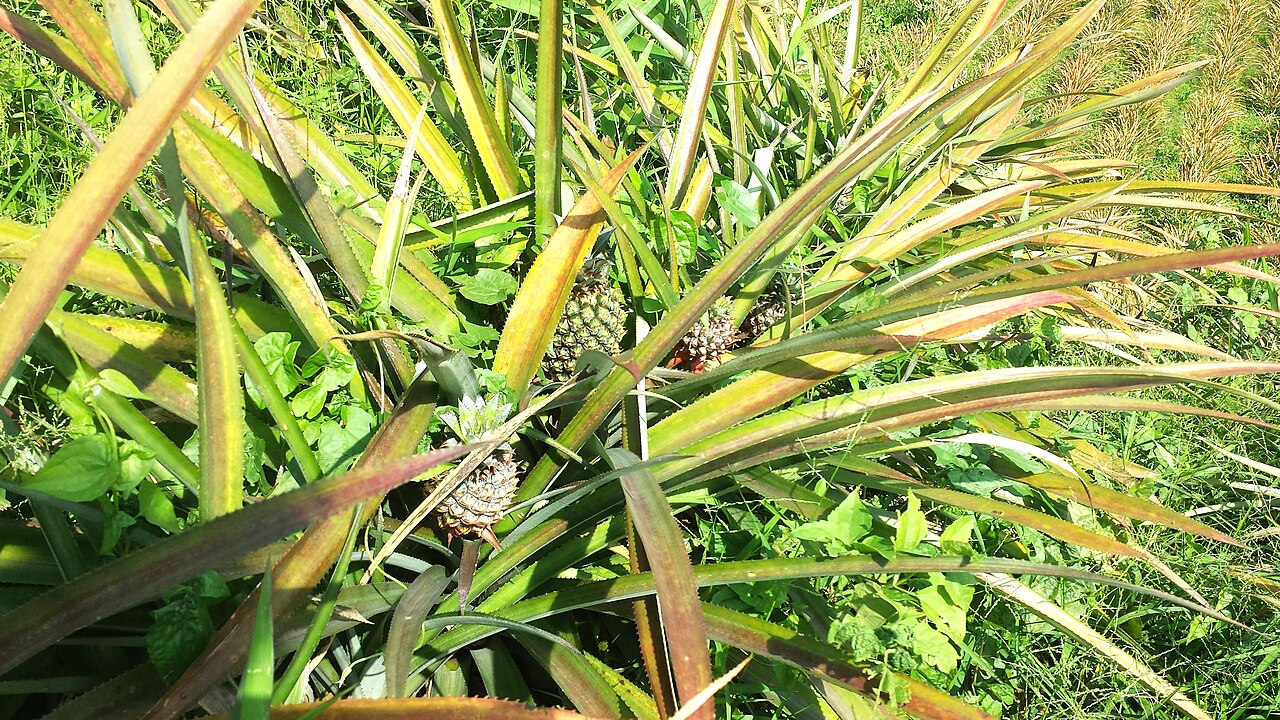
The four crops found on the recovered land are all grown widely in Bangladesh, and the Sylhet hills have a long history with two of them. Pineapple, Banglapedia says, came to Bangladesh through Assam and Manipur in India and was first cultivated in Sylhet at the beginning of the 20th century. It is now grown in almost every district, with Sylhet, Tangail, Dhaka and Rangamati holding the most land under the crop. The encyclopaedia gives the national area as about 45,685 hectares and production as about 234,865 tonnes, and names the cultivated varieties as Giant Kew (locally kalendar), Honey Queen (jaldubi) and Red Spanish (ghorashal). Pineapple flowers from March to May and fruits from June to September.
Malta, the green sweet orange sold in Bangladesh, is a newer crop. Prothom Alo reported on 17 September 2025, citing the horticulture wing of the Department of Agricultural Extension (DAE), that national malta production rose from 17,000 tonnes in the 2018-19 fiscal year to more than 84,000 tonnes in 2024-25, while the area under malta orchards grew from 2,433 hectares to about 8,000 hectares. Bandarban led production, followed by Khagrachhari and Rajshahi, and malta was by then grown in almost every district.
According to the same report, the green malta first came to Bangladesh from India in about the 1990s and, once it was shown to grow well, was recognised as the variety BARI Malta-1, which a DAE horticulturist described as popular with farmers and well suited to the country's weather. The crop spread across the country after demonstrations under the year-round fruit production project in 2018. In the hilly and coastal districts the local malta usually ripens in mid-September. The same report put the cost of malta imports in 2024-25 at 100 million dollars.

Lemon and betel nut are long-established crops of the region. Lemon (Citrus limon), Banglapedia notes, is grown all over Bangladesh, but production is concentrated in Sylhet, Chittagong and the Chittagong Hill Tracts, in homesteads as well as orchards, mainly from grafts and cuttings. The Bangladesh Agricultural Research Institute (BARI) has released the varieties BARI Lebu-1, a large, cardamom-flavoured lemon, and BARI Lebu-2 and BARI Lebu-3, both limes.
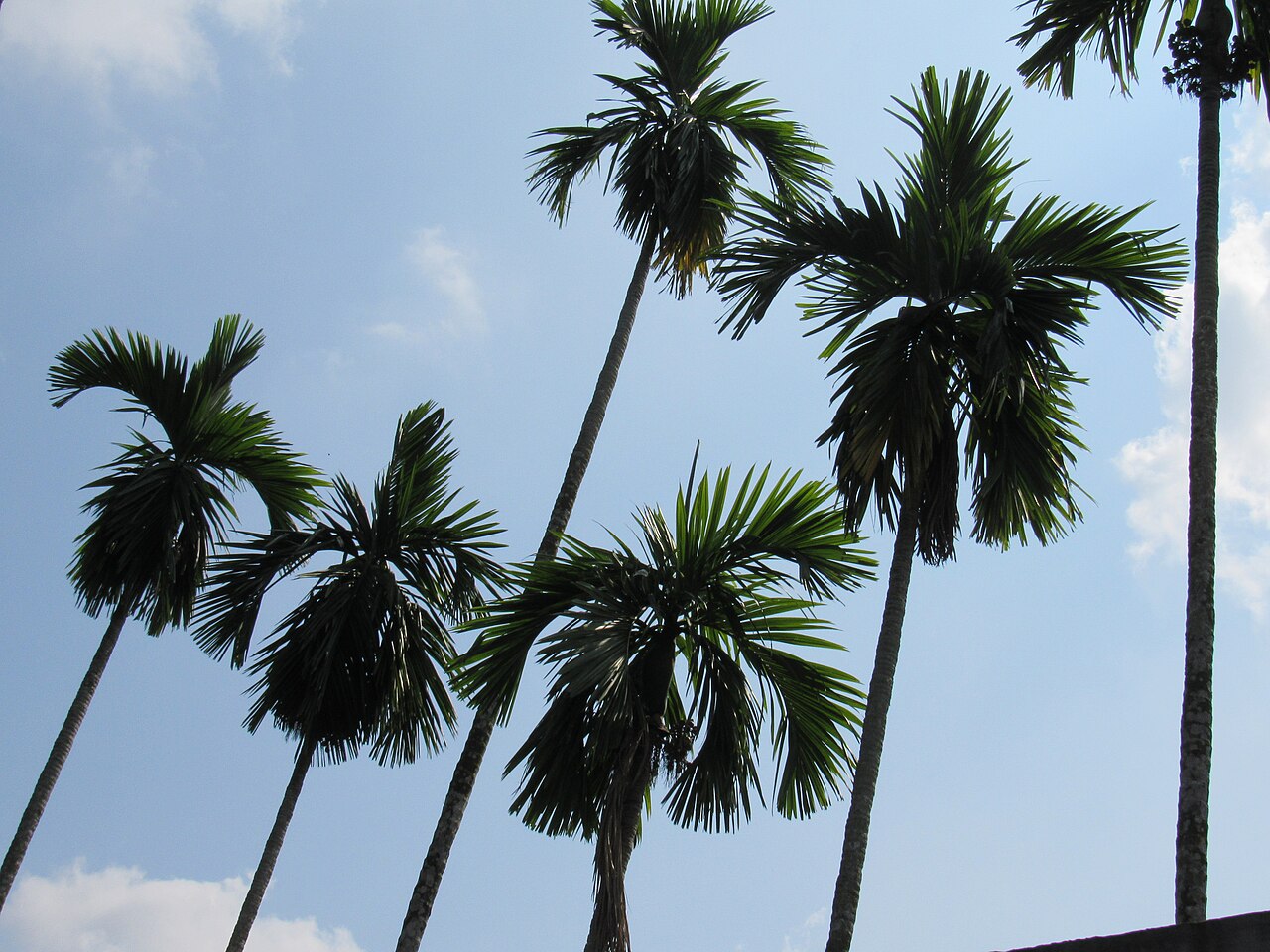
Betel nut, or supari, is the fruit of the areca palm, Areca catechu, a slender, erect tree up to 30 metres tall. Banglapedia estimates the area under the crop at about 36,500 hectares and annual production at about 26,500 tonnes; Barisal, Rangamati and Khulna produce most of it. The palm is very sensitive to drought and usually needs irrigation where annual rainfall is below 1,250 millimetres. The nut is chewed with betel leaf and lime.
What the Forest Act says about reserved forest land
Reserved forests in Bangladesh are governed by the Forest Act, 1927 (Act No. XVI of 1927), which the official Laws of Bangladesh site carries with its amendments. Under section 3, the government may constitute as a reserved forest any forest land, waste land or land suitable for afforestation that is government property or over which it has proprietary rights. Section 4 requires a notification in the official Gazette declaring the decision, describing the limits of the land and appointing a Forest Settlement Officer to inquire into any rights claimed over it.
The Act then protects the land while claims are heard. Under section 5, once that notification is issued, no right may be acquired over the land except by succession or by a written grant or contract made by or on behalf of the government, and no fresh clearing for cultivation or any other purpose may be made except under rules made by the government. Under section 6 the Settlement Officer must publish a proclamation in Bengali in every town and village nearby, fixing a period of three to four months for anyone to state the rights they claim. Once claims and appeals are settled, section 20 provides for a final Gazette notification fixing the forest's limits and declaring it reserved from a set date.
Section 23 then closes the door to new claims: no right of any description can be acquired in or over a reserved forest except by succession or under a written grant or contract made by or on behalf of the government, or by a person in whom such a right was vested when the section 20 notification was issued. Long occupation of reserved land, in other words, does not by itself create a right to it.
Section 26 lists the acts prohibited in a reserved forest. Its sub-section (1A), substituted by the Forest (Amendment) Act, 1990, covers among others any person who, in a reserved forest:
- makes a fresh clearing prohibited by section 5;
- fells, girdles, lops, taps or burns any tree, strips off its bark or leaves, or otherwise damages it;
- clears or breaks up any land for cultivation or any other purpose, or cultivates or attempts to cultivate any land in any other manner (words added by the Forest (Amendment) Act, 2000);
- in breach of the government's rules, hunts, shoots, fishes, poisons water or sets traps or snares.
Such an offence is punishable with imprisonment of not less than six months and up to five years, and a fine of not less than 5,000 taka and up to 50,000 taka, in addition to any compensation for damage to the forest that the convicting court orders. Lesser acts under sub-section (1), such as trespassing or pasturing cattle, carry up to six months in prison and a fine of up to 2,000 taka. Under section 2 of the Act, a 'tree' includes palms and bamboos, and forest produce includes trees, plants and their fruits, and surface soil and rock when found in or brought from a forest.
The Act also sets out how such offences are handled. Section 63A makes offences under section 26(1A) non-bailable. Section 64 lets any forest officer or police officer arrest without a warrant a person reasonably suspected of a forest offence punishable with a month or more in prison, and section 66 requires every forest and police officer to prevent the commission of forest offences. Section 68 lets an empowered forest officer accept compensation to settle some forest offences, but expressly excludes those under section 26(1A).
There is a lawful route for people to grow trees and crops on government forest land. Section 28A, added in 2000, lets the government set up a social forestry programme on its land through written agreements that assign rights to forest produce or to use the land to people who help manage it, and section 28B treats the exercise of rights under such an agreement as done with the forest officer's written permission. Section 26 itself does not prohibit any act done with the forest officer's written permission or under the government's rules.
Encroachment on forest land across the country
The Kamalganj land is a small part of a much larger problem. A Forest Department report given to the parliamentary standing committee on the Ministry of Environment, Forest and Climate Change listed those who had illegally occupied forest land, Prothom Alo reported on 8 February 2021. Across the country, 160,566 people were occupying 257,158 acres of forest land, out of a total forest land area of 4,646,700 acres.
Of these, the report said, 88,215 people were occupying 138,613.06 acres of reserved forest. Within reserved forests, 172 people had set up industrial units and factories on 820 acres, 3,329 people had taken 4,914 acres for markets, shops, educational institutions, cottages, farms and resorts, 58,407 people had built homes, and 26,307 people were holding land for farming, gardens and the like without permanent structures. The Forest Department said then that about 500 acres had been recovered.
Gardens of the kind cleared at Kamalganj fall into the last of those groups: land held for farming without permanent buildings.
An earlier drive in the same range
The Kamalganj drive was not the first in the Rajkandi range that month. The Daily Inqilab reported on 8 July 2026 that the Forest Department had cleared about 3.29 hectares of betel leaf (paan) gardens raised illegally on reserved forest land in the Chhoto Pikol area, next to the Kurma Khasia Punji, in the Kurma beat of the same range. That drive ran from the morning of Tuesday, 7 July, until 8 pm, and about 1,000 betel leaf saplings were uprooted.
Pritam Barua, the range officer, told the paper then that the eviction was part of an ongoing campaign against the occupation of reserved forest land and illegal betel leaf cultivation, and that a POR forest case was being processed under the Forest Act, with legal action against those involved to follow the investigation. The Kurma beat officer and forest staff took part in that drive, and the department said such drives would continue to protect reserved forest land and biodiversity and to prevent occupation and illegal cultivation. Nine days later, the Adampur beat drive recovered the five acres of fruit gardens at Kalinji Bosti Nasak.
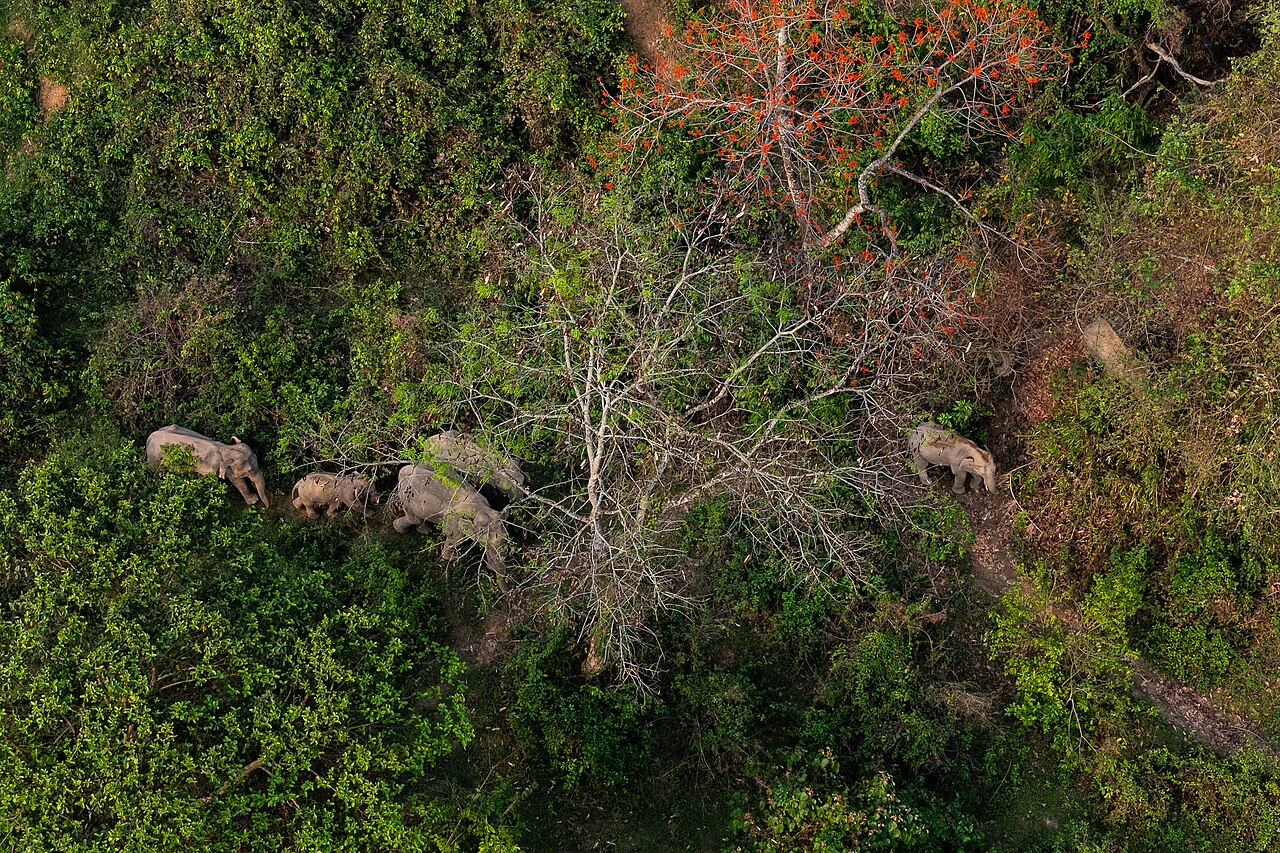
Photo: ANKAN / Wikimedia Commons (CC BY-SA 4.0)
Sources: Jagonews24, The Daily Inqilab, Prothom Alo, Banglapedia (Asiatic Society of Bangladesh), the Forest Act, 1927 (Laws of Bangladesh, Legislative and Parliamentary Affairs Division), Wikipedia

Comments
(0)