
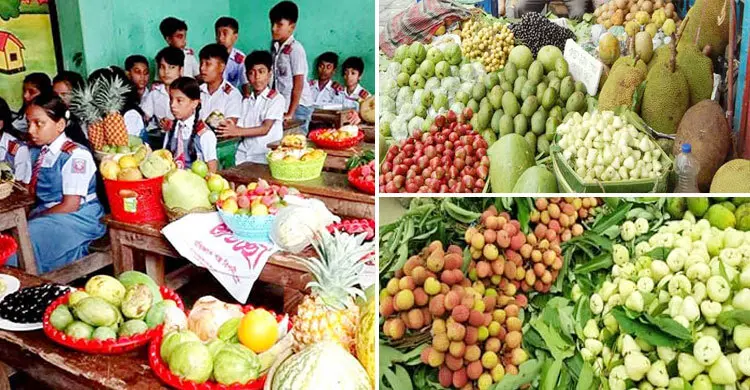
Bangladesh's markets are now full of fruit, and its fragrance is everywhere. Fruit from the villages has filled the city lanes and bazaars. No other month of the year brings so much fruit, which is why many people mistakenly call Jyoishtha itself the "honey month".
In Jyoishtha, mangoes, jackfruit, litchis, pineapples, watermelons, monkey jack, latkan (Burmese grape), black jamun, rose apple, rattan fruit, gab, jamrul, custard apple, kau, water apple (panital), wood apple, papaya, karamcha, elephant apple, star fruit, olive, longan, local dragon fruit, sharifa and many other fruits reach the market.
Visits, festivals and seasonal trade
In the countryside, the fruit brings invitations to relatives' homes, and people visit family carrying fruit from their own trees. Fruit festivals are also held in the cities. New traders appear at this time, fruit is sold from temporary tents, and online fruit sales pick up.
Temporary businesses spring up in areas famous for mangoes and litchis, and people from other professions can be seen trading in seasonal fruit, because ripe fruit cannot be kept at home for long. Many farmers grow local fruit alongside other crops and earn extra income from it.
Because the fruit season ends quickly, many people take up the fruit trade as part-time work and profit from it. People from various professions sell fruit on social media, and many vegetable sellers also sell fruit in this season.
Various organisations hold fruit festivals at their offices, buying all kinds of fruit from the market to celebrate with colleagues. Social and cultural organisations also hold fruit festivals, and they are organised on university campuses too.
Local fruit rules the market
Educational institutions also declare "summer holidays" in this season, so students rush home to their villages to enjoy the fruit. Schools and colleges in rural areas even organise fruit festivals themselves. This year, students at a private educational institution in Lakshmipur were introduced to 70 kinds of local fruit.
Although foreign fruit dominates the rest of the year, in Jyoishtha the whole market is ruled by local fruit and fewer foreign fruits are seen, because of the strong appeal of Bengalis' favourite fruits at this time. So we can join the poet in saying: "What joy to gather mangoes at my uncle's house on a stormy day / I colour my mouth with the sweet juice of ripe jamun."
Source: Jagonews24. First published in Bengali on The Agro News.
Comments
(0)