
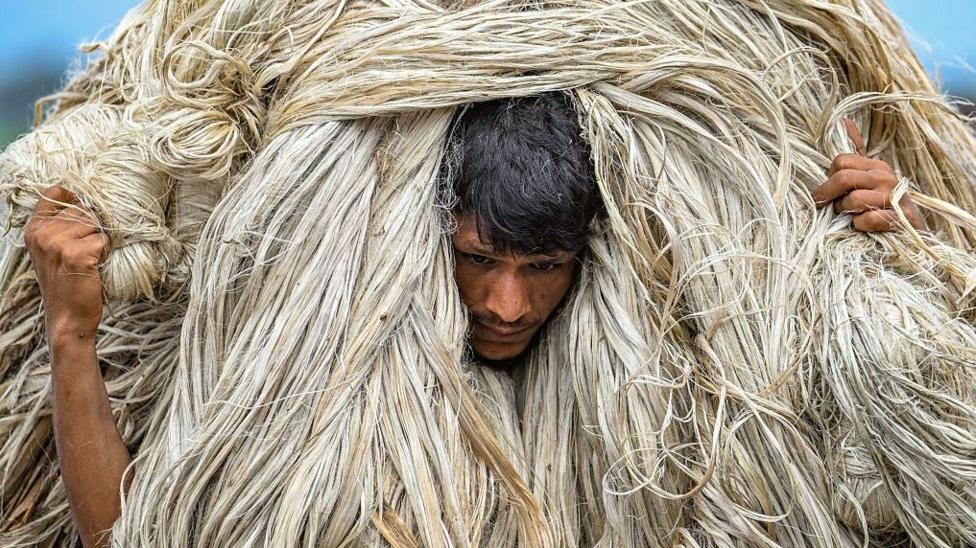
Gatu Sheikh, a jute grower on Char Rolakata in the northern district of Kurigram, says the crop has done well this year and that he and other growers expect a good return. Yet in parts of the district the supply of jute reaching the market has fallen sharply, and sales at the district's largest jute market have dropped with it.
Farmers and traders recently held a human chain at Jatrapur haat, Kurigram's biggest jute market. Their complaint is that jute is being moved across the river route to the neighbouring country, which is why arrivals at the market are so thin this year. There are also allegations that middlemen near the border are buying jute at prices above the market rate and taking it to India.
Growers say the price gap is what pulls the crop away. "Selling here at Jatrapur market you now get up to 4,000 taka. But in the Indian market it is five or six thousand. That is why the middlemen pay farmers more than the market rate and take that jute to India," one farmer said.
Officials do not accept the scale of the claims. ATM Khairul Haque, chief jute inspector at Kurigram, who covers three districts, said the reality is not as sweeping as described. "The fibre from the north is a little stiffer, so it has a good market. Farmers are getting a rate of 4,400 taka in the local market now. Farmers do not smuggle jute," he said. In Dhaka, Syed Md Nurul Basir, director general of the Department of Jute, said the complaint reached them months ago and that the ministry has written to the Border Guard.
There have been seizures. In the last week of last month the BGB seized 460 kilograms of jute being moved across the Aditmari border, and on 23 August another 400 kilograms were seized at Patgram.
Policy shapes the trade. Exporting raw jute from Bangladesh to India is prohibited, so traders cannot sell directly, yet Indian jute mills want the stiffer fibre grown in northern Bangladesh. Faridpur district produces the most jute in the country, about 30 percent of the national crop, but officials say Faridpur fibre is comparatively softer.
Khandker Alamgir Kabir, chairman of the Bangladesh Jute Association, said reports of smuggling across various border points are coming in because raw jute exports are closed. "If there were an opportunity to export surplus raw jute, a large amount of foreign currency would be earned every year, and the smuggling allegations would not arise," he said. Bangladesh is the world's second largest jute producer, with official output of about 9 million bales.
Source: BBC Bangla

Comments
(0)