

Researchers at the John Innes Centre in the UK, working with Kobe University in Japan, have shown at molecular level how a recently discovered class of plant immune receptors limits attacks by the blast fungus, and how the receptors might be bioengineered to give wheat, barley and rice broader, more durable immunity, AgroPages reports.
The blast fungus, Magnaporthe oryzae, is the most serious disease of cultivated rice and has spread to wheat and barley in parts of Asia and Africa. "We've discovered something that could lead to a potential intervention on what is the worst fungal disease of cereals," said Professor Mark Banfield, a John Innes group leader.
The study, in Science Advances, focused on tandem kinase proteins (TKPs), a newer class of immune receptors in cereals. Using biophysical analysis and crystallography, the team showed that an integrated Heavy Metal Associated (HMA) domain acts as a bait that lures the pathogen's effector proteins, triggering the plant's immune response.
Using that knowledge, they engineered TKP receptors with dual specificity, binding effectors linked to infection of both wheat and barley — something that rarely happens in nature. The proof-of-principle experiments used wheat protoplasts, single cells standing in for plant tissue; the next step is glasshouse plants.
"This new class of resistance proteins is amenable for engineering purposes," said first author Dr Daniel Yu. Banfield said stacking genes for TKPs and the long-studied NLR receptors against the same disease could one day make a "super-resistant crop", as the two classes activate immunity in different ways.
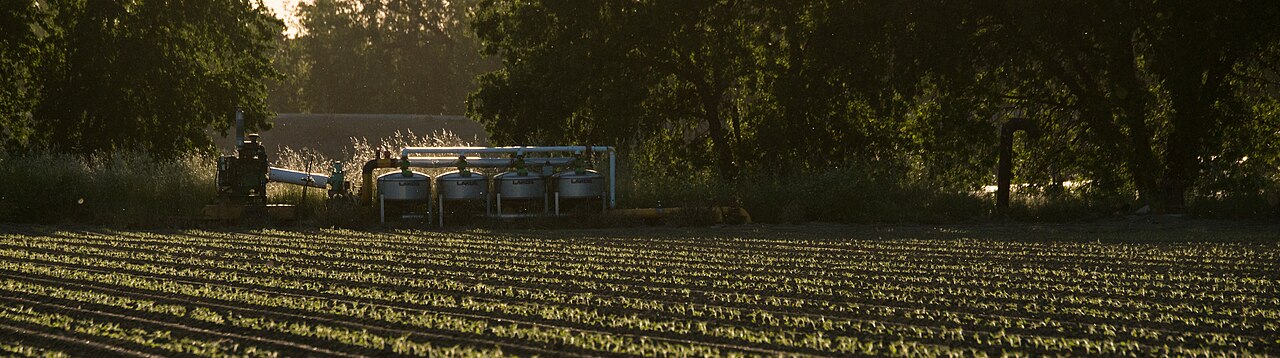
Photo: Ark. Agricultural Experiment Station / Wikimedia Commons (CC BY-SA 2.0)
Source: AgroPages
Comments
(0)