
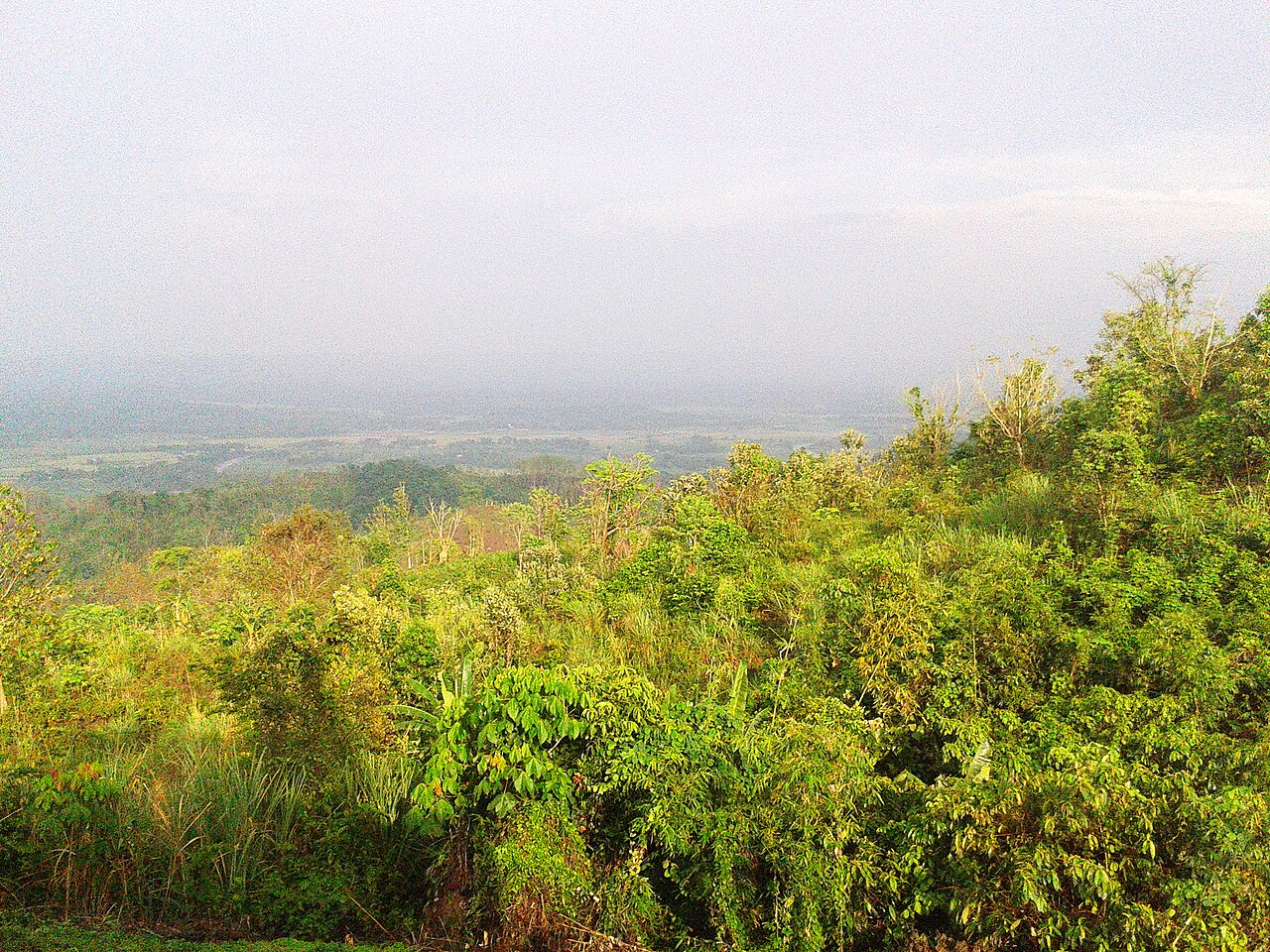
Jhum, the traditional shifting cultivation of the Khagrachari hills, is shrinking every year even though yields are good. As fruit orchards and teak plantations spread and jhum land contracts, many farmers are turning away from it. Hill families still grow paddy, ginger, turmeric, maize, marfa cucumber, sweet pumpkin, sesame and chilli on their jhum plots.
Farmers sow on the hill slopes in Baishakh and Jaishtha (April to June); the paddy ripens at the start of Ashwin, and the harvest festival runs through most of the month from its end. Dulal Tripura, 61, of Dhoillyatoli has grown ginger, turmeric, chinal, maize, marfa, pumpkin, amila, sesame and bird's-eye chilli with his paddy this year, while Sunil Tripura near the Terangtoikalai falls reports good yields of marfa, maize, sesame and banana alongside his paddy.
According to the Department of Agricultural Extension in Khagrachari, jhum covered 1,150 hectares in FY2025-26 and 1,140 hectares in FY2026-27. Chayan Tripura, karbari of Simanapara in Dighinala, said many people once farmed jhum in remote areas, but orchards, teak and homesteads have taken the land, which could bring food shortages.
Jhum farmers Dulal Tripura, Bikram Tripura and Agnilal Tripura of remote Hachukpara in Matiranga said soil fertility has fallen and farming the same plots every year means lower yields, so they now have to use fertiliser and pesticide, which jhum once never needed. Former union parishad member Ganesh Tripura said jhum farmers usually get no government farm credit, and loans would encourage them to farm more.
Former member Shantimoy Tripura said Alutila Hridoy Member Para has the most jhum in the district: about 300 of its roughly 1,000 families depend on it. Nasir Uddin Chowdhury, deputy director of the Department of Agricultural Extension in Khagrachari, said jhum has declined steadily for several years and the department is trying to support and encourage farmers. The report is by Dhaka Mail's Khagrachari correspondent Biton Chowdhury.
Photo: Raihan Rana / Wikimedia Commons (CC BY-SA 4.0)
Source: Dhaka Mail
Comments
(0)