
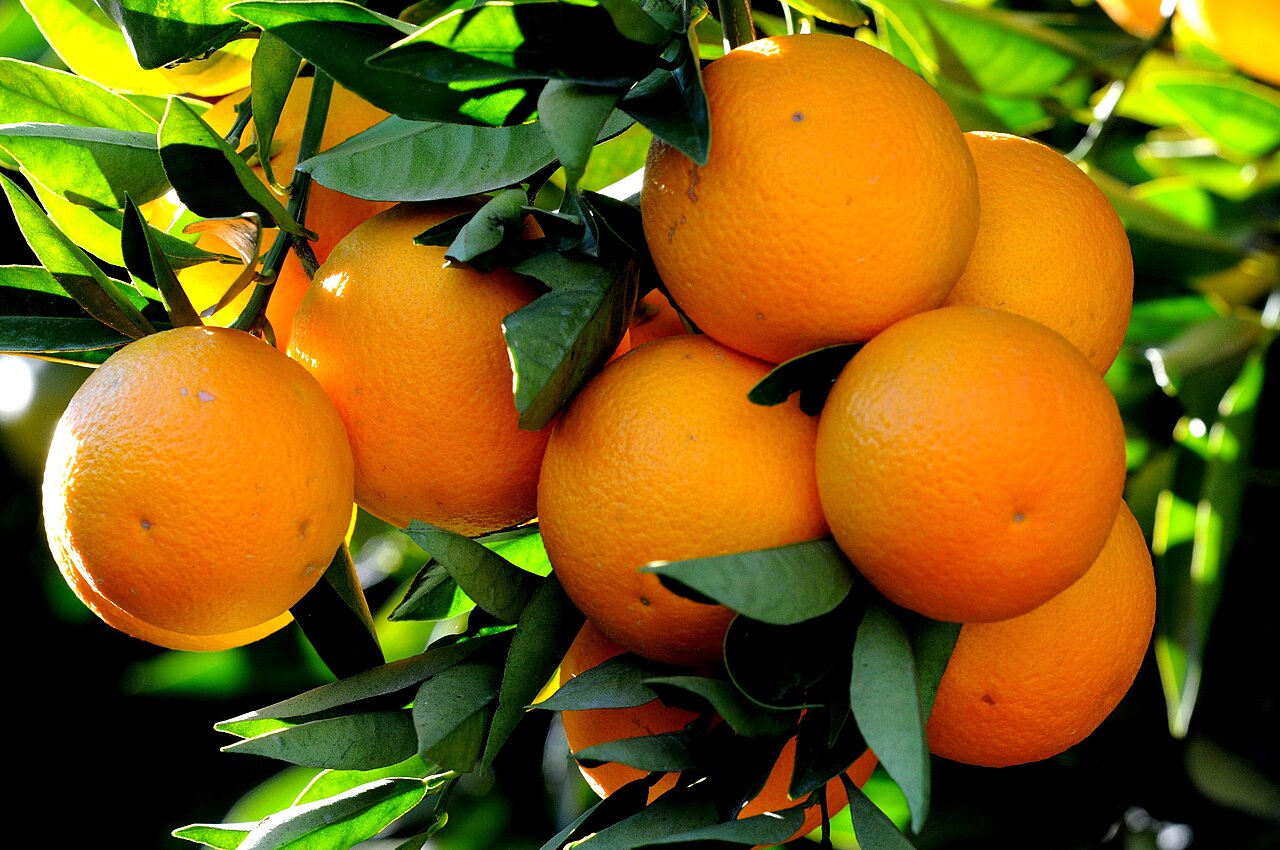
A farmer in Sonardair village of Jhenaidah Sadar upazila has alleged that about 150 of his fruit-bearing malta and guava trees were cut down in broad daylight on Tuesday afternoon, 8 July 2025. The grower, Bipul Hossain (38), who drives an easy-bike for a living, said the trees stood on 50 decimals of land he had leased for five years, and that the cutting left him with a loss of about Tk 4 lakh. He has lodged a written complaint with Jhenaidah Sadar police station. He blamed a serving army member from the same area; that man, in turn, said the land was his and that he had acted only after the farmer refused to vacate it. The in-charge of the local police camp visited the scene and said action would follow an investigation.
What the farmer alleges
According to Bipul Hossain, the trees were cut on Tuesday afternoon in his orchard in the fields of Sonardair, a village in Holidhani union of Jhenaidah Sadar. He said that two labourers, together with the army member Md Abu Hanif, Hanif's wife and relatives of hers, felled the malta trees while they were still laden with fruit. In his police complaint he put the loss at about Tk 4 lakh, and he later said that at current market prices the damage on the 50 decimals came to more than Tk 5 lakh. Bipul is the son of Md Samchhul Mondal of Sonardair; the man he accuses, Abu Hanif, is the son of the late Ali Hossain of the same area.
The first account of the cutting came from Bipul Hossain's nephew, Samrat Mia. 'I came to the field at noon to cut grass and heard the sound of trees being cut in my uncle's orchard,' he said. 'When I went towards it, I saw Hanif, his wife, his sister-in-law and several others cutting the malta trees. When I tried to stop them, they came at me brandishing a machete. Then I went home and told my uncle.'
The lease and the arbitration
By Bipul Hossain's account, he leased the 50 decimals for five years from his neighbour Mosharef and Mosharef's mother, Fatema. The rent was Tk 25,000 a year, or Tk 1,25,000 over the five years. Because trees already stood on the plot, he agreed to pay a further Tk 35,000 for them and Tk 20,000 for the wire fence, bringing the agreement to Tk 1,80,000 in all. Of that, he said, he had paid Tk 1,20,000 in advance to Mosharef and Fatema.
The trouble, the farmer said, began about three years into the lease. He said Mosharef's brother, the army member Abu Hanif, tried to take possession of the plot, and that when Bipul pointed to the written agreement, Hanif lodged complaints against him at the police station and at the army camp. Both the police and the army then called the two sides together. Bipul said he produced his agreement papers, and that the arbitration decided he could keep farming the land until the malta crop was sold, after which he would hand the plot back, two years before the lease was due to end. He said he had accepted that decision and had expected the fruit to be ready for market within a month.
Both sides speak
Malta grower Bipul Hossain said: 'I leased this land for five years, and the agreement is now in its third year, with two years still to run. But Hanif has repeatedly threatened me to give up the land. A month ago he came to seize it. He filed complaints against me at the police station and at the army camp. The army and police called both sides. I showed them my agreement papers. Then everyone decided that, since there were maltas on the trees, I would return the land two years early after selling the fruit.'
He added: 'I agreed to their decision. I also wanted to sell the maltas, since the trees were loaded, and then give up the land. But suddenly Hanif came with his wife and relatives and cut down my fruiting malta trees. Each tree was carrying more than 50 to 60 kg of fruit. At current market prices, the loss on the 50 decimals is more than Tk 5 lakh. I want proper justice.'
The army member, Md Abu Hanif, did not accept that he had done anything wrong. 'I knew nothing about the lease of this land,' he said. 'It is my land; my brother Mosharaf leased it to Bipul. When I found out, I called him and told him, you are a poor man and I don't want to harm you, so leave the land in your own way. He still did not give it up. That is why I cut the trees.'
Ashraful Islam, the union parishad member for the Sonardair ward of Holidhani union, set out how the ownership had passed. 'The land belonged to Ali Hossain of the neighbouring village,' he said. 'After he died, his son Abu Hanif became the owner as his heir. Hanif works in the army. While he was in service, his brother Mosharef, his sister's husband and his mother together leased the land to Bipul of our village for five years. When Hanif became the owner after his father's death, he told Bipul: my mother leased this land, I don't accept it, the land must be returned. Bipul then said, if you won't let me keep it, at least give me a chance to harvest the maltas.'
The UP member added that, after a dispute arose, Bipul had complained to the Jhenaidah army camp, which called both sides, and that the arbitration had allowed Bipul to farm the land until the maltas were sold. 'Accordingly, the maltas would have been ready for market within the next month, and he would have given up the land,' he said.
Jahangir Al Mamun, the in-charge of Katlamari police camp, visited the scene after hearing of the incident. 'The fruiting malta and guava trees have been cut down,' he said. 'I have filmed everything and spoken to the officer-in-charge. The law is equal for everyone. Action will be taken after investigation.'
Malta: sweet orange in Bangladesh
Malta is the Bengali name for the sweet orange, Citrus sinensis, a citrus fruit grown for its juicy, mildly sweet flesh. Once kept mostly to home gardens, it has become one of the country's more talked-about commercial fruits over the past two decades, as growers on the plains have taken it up alongside the hill districts where citrus has long done well. The push behind that spread is a locally bred variety, BARI Malta-1.
The sweet orange belongs to the genus Citrus, a group of fruit long grown in Bangladesh's hill and north-eastern districts, where lemon, lime and the small local orange thrive. Sweet orange, by contrast, needs careful selection of variety to do well in the warm plains, which is why a plains-suited type mattered so much to its spread. Malta is valued for eating fresh and for juice, and a ripe crop fetches a good price in the local markets during its short autumn season.
BARI Malta-1 was developed by the Bangladesh Agricultural Research Institute (BARI) at its Citrus Research Centre at Jaintapur in Sylhet, and was released for distribution to farmers after approval by the National Seed Board. Its green-skinned, sweet fruit ripens in the autumn, roughly from September onwards, and the variety has been promoted across several districts. Commercial malta orchards took hold in districts such as Brahmanbaria from the middle of the last decade.
Research on the variety has found it both productive and popular with growers. A study of BARI Malta-1 adoption in selected areas, published in the Bangladesh Journal of Agricultural Research, reported that a large majority of the malta growers surveyed had taken up the variety, citing its higher yield, sweetness and relative freedom from insect pests, and recorded yields of close to 20 tonnes a hectare from mature orchards in their fifth to tenth year.
The economics of a malta orchard
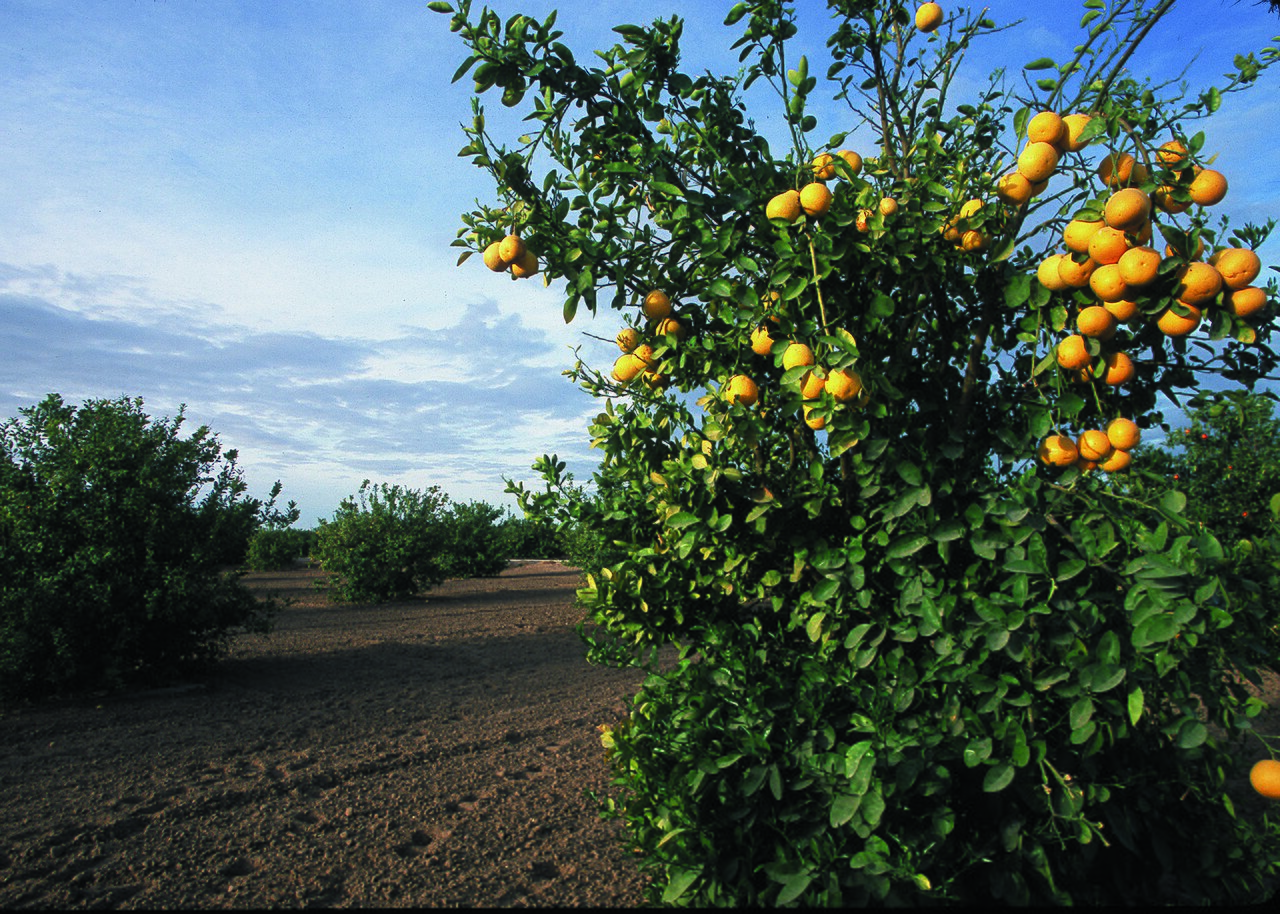
A malta orchard is a long-term investment rather than a seasonal crop, and that is central to understanding the alleged loss. The same study in the Bangladesh Journal of Agricultural Research estimated the cost of establishing a malta garden at roughly Tk 7 lakh a hectare, a sum spread over the years before the trees come into full bearing. Against that outlay, mature gardens in their fifth to tenth year were found to return on the order of Tk 15 lakh a hectare in gross terms, which is why growers are willing to wait three to four years for the first full crop.
For a smallholder working 50 decimals, roughly a fifth of a hectare, the trees are the main asset on the plot, far more valuable than the land's annual rent. Cutting down fruiting trees therefore destroys not just a single season's fruit but years of growth that cannot be replaced before the next bearing cycle. Because a malta tree carries its crop on the branches for weeks before the fruit is picked, the loss of fruiting trees shortly before harvest, as alleged here, falls at the most valuable point of the growing year, and that is the basis of the farmer's claim of a loss running into several lakh taka.
Guava, a mainstay of Bangladeshi orchards
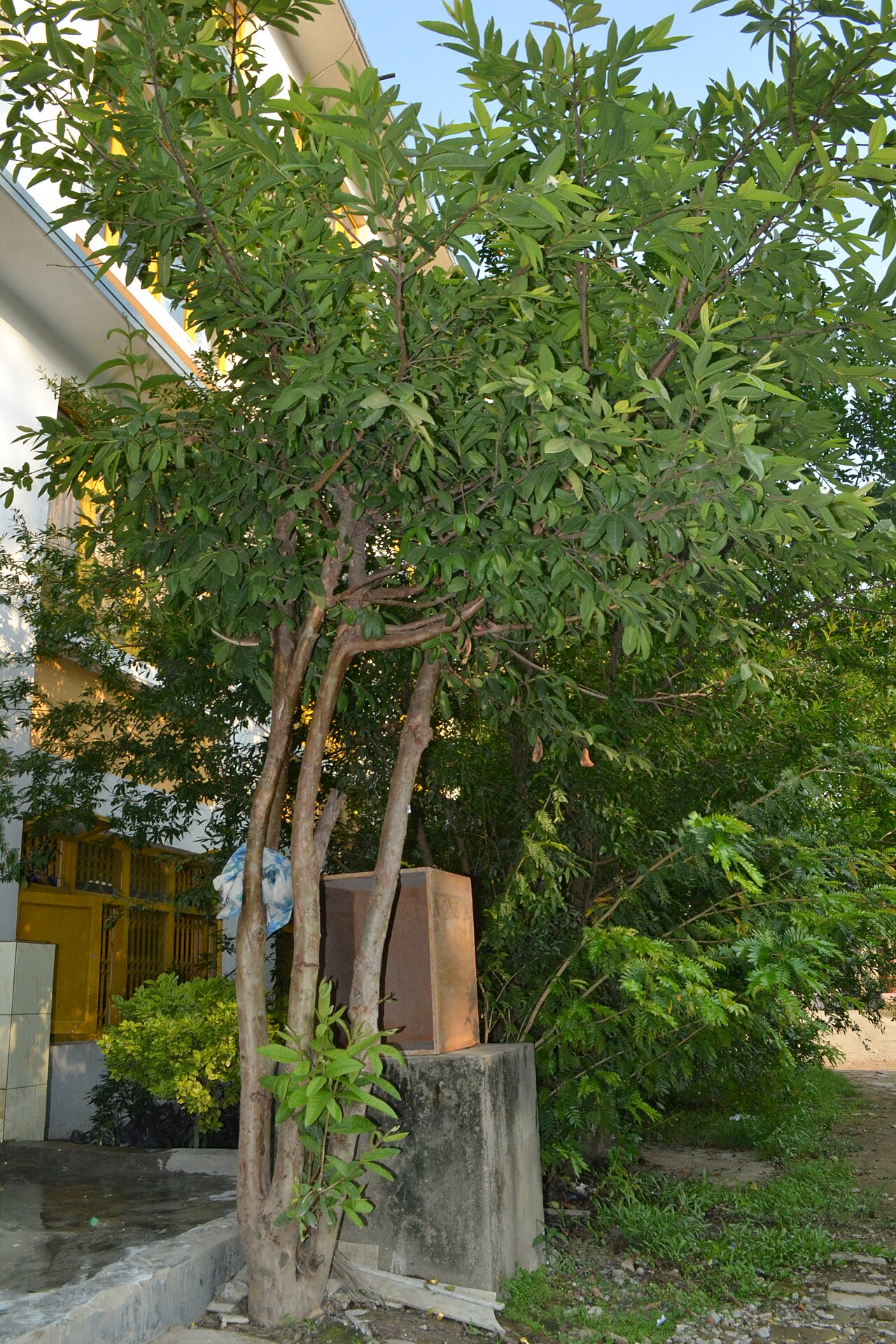
Guava, Psidium guajava, known in Bengali as peyara, is among the most widely grown fruits in Bangladesh and one of the cheapest sources of vitamin C in the national diet. The tree is small to medium, between about 2 and 10 metres tall, and begins to bear fully three to four years after planting, which is part of what makes an established orchard valuable. According to Banglapedia, a full-bearing guava tree may carry 400 to 800 fruits, and orchards can yield in the range of 20 to 30 tonnes a hectare.
The fruit is rich in vitamin C, with figures of around 260 mg per 100 g of edible portion reported for Bangladeshi guava, far more than in many other common fruits. It is eaten both green and ripe and is also made into jam, jelly, juice and pickle. Bangladesh grows many guava types, from the large Kazi Piyara, brought from Thailand in the 1980s, to the BAU Piyara varieties bred at Bangladesh Agricultural University, some of which bear in more than one season. In small mixed orchards of the kind described in this case, malta and guava trees are often planted side by side.
Guava is hardy and undemanding, which is part of why it is so common in Bangladeshi homesteads. According to Banglapedia, the tree grows best at 23 to 28 degrees Celsius, though mature trees tolerate much higher temperatures, and does well on well-drained clay or sandy loam across a wide range of soil acidity. Its main pests are the mealy bug and white fly, and its diseases include wilt, anthracnose, canker and die-back, with wilt usually managed by grafting onto resistant rootstock. Major flowering comes in summer, and under irrigation some trees can be brought to flower off-season, between January and March.
Banglapedia records that about 80 to 86 per cent of guava flowers set fruit, though only 50 to 60 per cent of the fruit reaches maturity, and that the crop can be picked four to five months after flowering. Tea can also be made from the leaves. Because it supplies vitamin C cheaply almost all year round, an established guava tree is for a rural household not merely a source of fruit but a mainstay of nutrition.
Jhenaidah, a farming district of the south-west
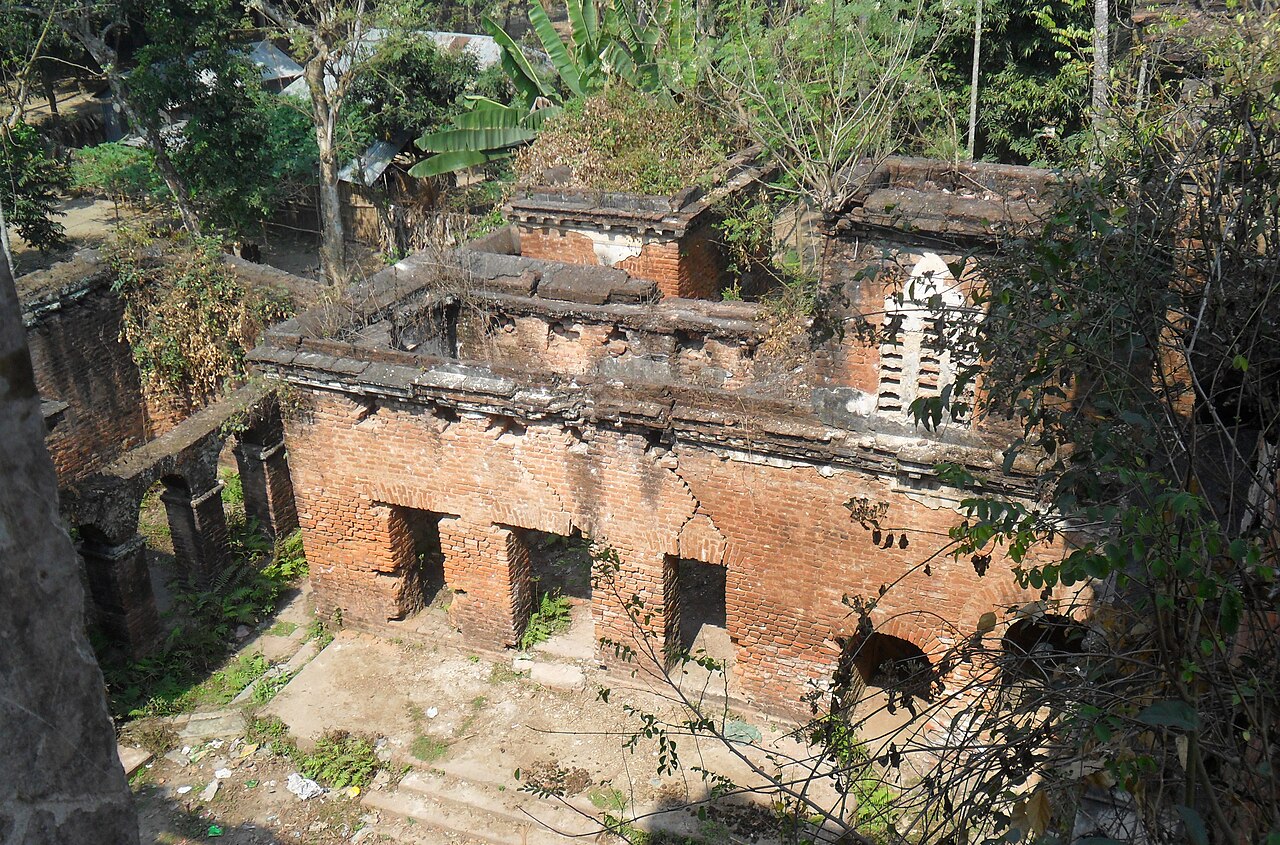
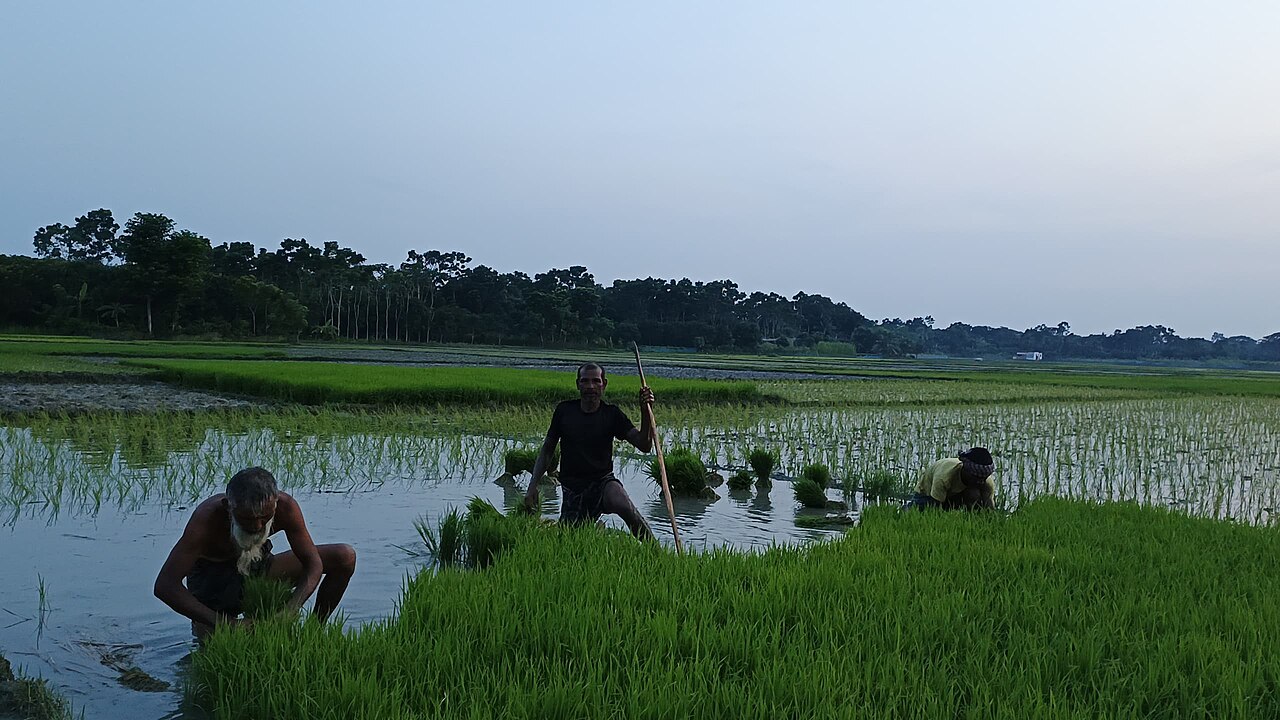
Jhenaidah is a district of Khulna Division in south-western Bangladesh, covering about 1,965 square kilometres and bordering the Indian state of West Bengal to the south and west. According to Banglapedia, agriculture is the main source of income for about 67 per cent of its people, which makes disputes over land and crops a matter of livelihood for many households. The district is watered by rivers such as the Gorai, Kumar, Nabaganga, Chitra and Bhairab, and its fertile plains carry paddy, vegetables, pulses and a growing area of orchard fruit.
At the 2011 census the district had a population of about 1.77 million, spread across six upazilas: Jhenaidah Sadar, Maheshpur, Shailkupa, Kaliganj, Harinakunda and Kotchandpur. Besides its rivers, the area is dotted with beels, or wetlands, such as Kannadaha, and baors, the oxbow lakes of Baluhar and Marjat that are characteristic of the region. Muslims form the large majority of the population, with a sizeable Hindu minority.
The district has a population density of about 900 people per square kilometre and a literacy rate recorded at roughly 48 per cent, and besides its rivers it is laced with canals such as the Putimari and Sonalidanga. In such a densely settled, farming-dependent countryside, even a small plot of fruiting trees is a meaningful share of a poor household's assets, which is why disputes over land and crops become questions of livelihood.
Jhenaidah Sadar, the upazila where the incident is alleged to have taken place, is the district's largest by population. Holidhani is one of its unions, and Sonardair, the village named in the complaint, lies within it. In recent years farmers across the district, many of them small or landless like Bipul Hossain, have leased plots to plant high-value fruit such as malta, hoping to earn more from a few decimals than field crops would bring.
Cutting standing trees under the law
Who is entitled to hold the land is a civil question that turns on the lease between the parties, and both sides give different accounts of it. The cutting of standing, fruit-bearing trees is treated separately under the criminal law. Under the Penal Code 1860, section 425 defines 'mischief' as causing the destruction of any property, or any change in it that destroys or diminishes its value or utility, by a person who intends or knows that he is likely to cause wrongful loss or damage to the public or to any person. Section 426 provides that mischief is punishable with imprisonment of up to three months, or fine, or both.
Where the mischief causes loss or damage of fifty taka or more, section 427 allows imprisonment of up to two years, or fine, or both. The code also deals with entry onto another's property: section 441 defines criminal trespass as entering property in another's possession with intent to commit an offence or to intimidate, insult or annoy the person in possession, and section 447 sets the punishment at up to three months' imprisonment or a fine of up to five hundred taka. It is for the police and the courts, not for the parties, to decide whether and which of these provisions apply. The farmer has lodged a written complaint, and the police camp in-charge said action would be taken after investigation.
Photo: Zeynel Cebeci / Wikimedia Commons (CC BY-SA 3.0). Ripe sweet oranges (malta) on the tree, photographed in Turkey.
Sources: Jagonews24; Banglapedia (Jhenaidah District, Guava); the Bangladesh Agricultural Research Institute (BARI) and the Bangladesh Journal of Agricultural Research on BARI Malta-1; the Penal Code 1860.
Comments
(0)