
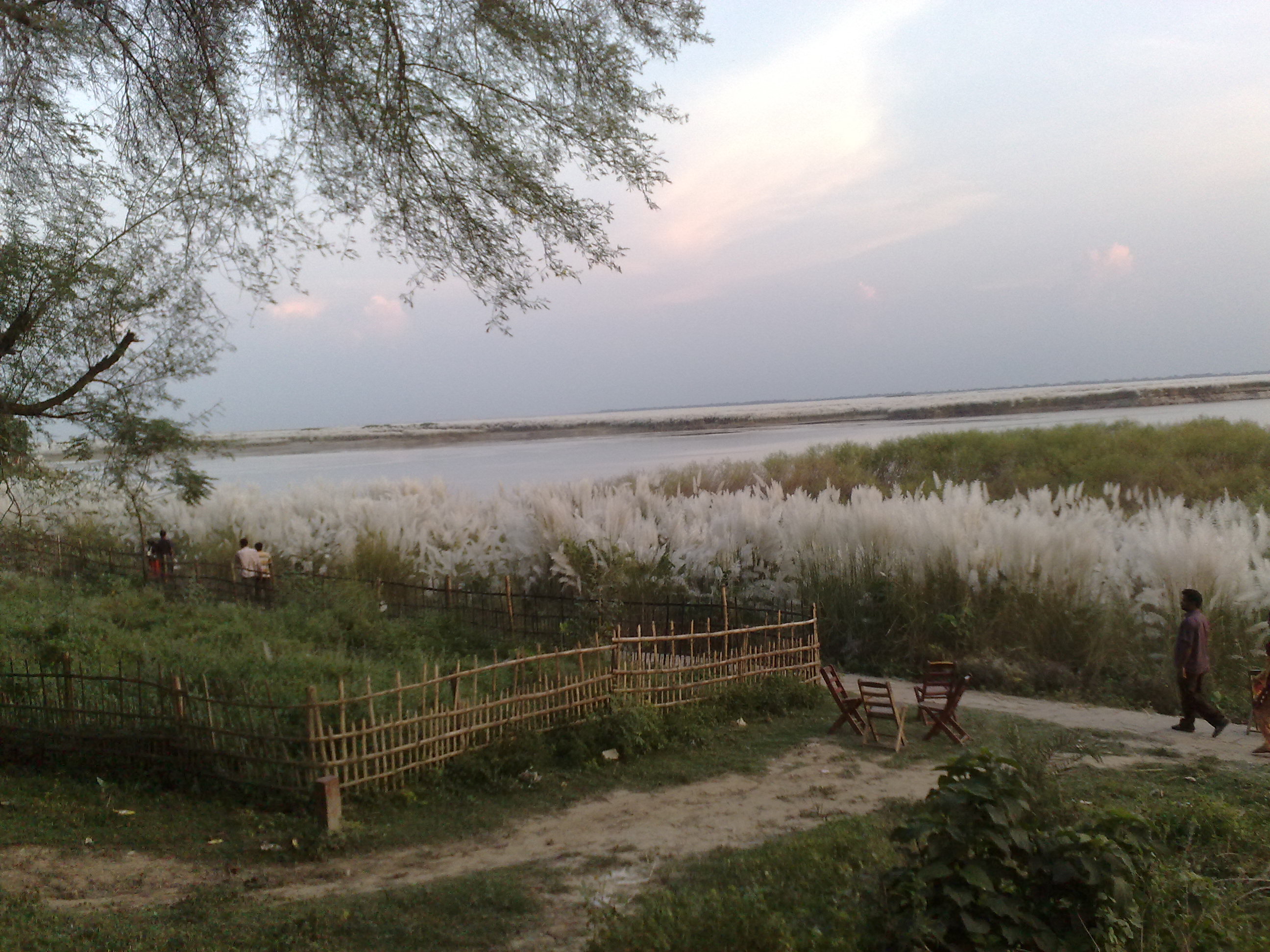
In October 2021, a field of white kash flowers at Kayed Palli, in the Aramnagar area on the outskirts of Jhalakathi town, was drawing visitors of every age. Jago News reported that the field lies beside the Kirtipasha link road, and that on afternoons children, young people and families were walking through the kash grove, watching the white plumes sway in the breeze and taking photographs. Several of them linked the outing to the long months spent indoors during the coronavirus pandemic.
Kash, the tall wild grass that botanists call Saccharum spontaneum, flowers in Bangladesh in Sarat, the autumn that follows the rains, and its silver-white plumes along roads, riverbanks and fallow fields are one of the most familiar images of the Bengali autumn. The report described the scene at Kayed Palli in those terms: autumn arriving with a message of whiteness, dazzling clusters of kash all around, and visitors charmed by the sight.
An afternoon in the kash field
Jago News found children playing and young people celebrating in the field. Young men and women, and people of many ages, came in the afternoon to stroll through the grove and to watch the white heads of the grass moving in the clean air. Besides enjoying the flowers, many were photographing themselves among them, keeping a record of the outing and of what the report called the boundless beauty of nature. One visitor singled out dusk, when the green of the surrounding fields and the white of the kash are seen together.
The visitors' words, as Jago News reported them, give the feeling of the place:
- Visitor Sharmin Akter said: "At dusk, when the fields are full of green and the white kash flowers sway in the breeze, my heart fills with joy."
- Travel lovers Sujan Parvez and Sajib said: "Our time seems to have come to a standstill in the coronavirus pandemic. But nature has not stopped. Nature has dressed up anew, so we have come rushing here too."
- Housewife Ankhi Akter said: "Amid the kash flowers, the afternoon breeze seems to be bringing news of winter's arrival. It also brings back childhood memories. I feel very happy to be close to such beauty."
- Local photographer Limon said: "Walking past the white kash flowers and the greenery is a different feeling. I came here to take pictures, and seeing the beauty of the kash flowers filled my heart."
Municipal councillor Abdul Kuddus Howlader told the paper that people had not been able to go out of their homes for a long time because of Covid. As the outbreak eased, he said, people were coming out again, and kash flowers enhance the beauty of nature.
Where Kayed Palli is
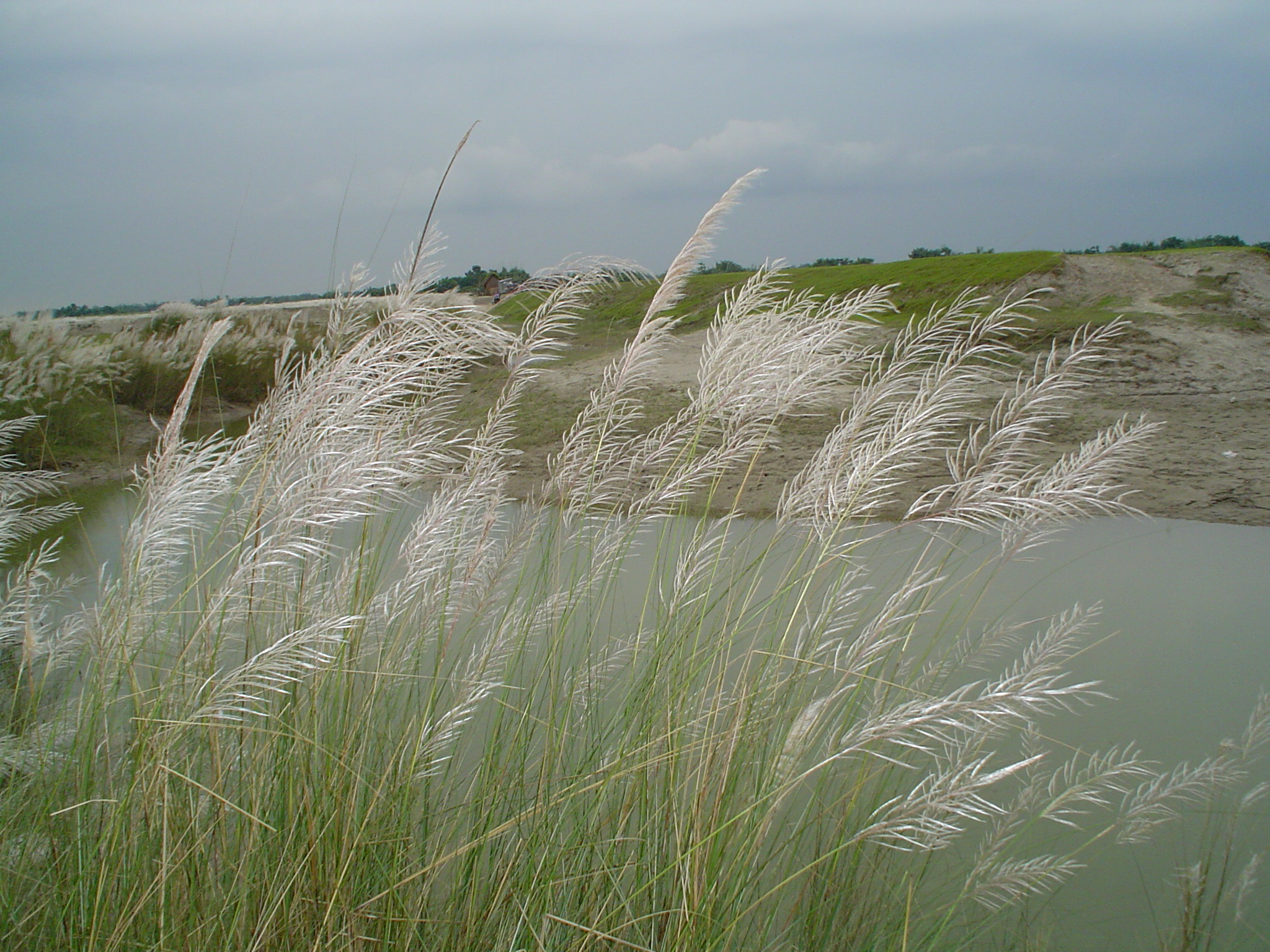
Kayed Palli lies in the Aramnagar area on the edge of Jhalakathi town, along the road that links the town with Kirtipasha. Jhalakathi is the headquarters of Jhalakathi district in Barishal division, in the south-central part of the country. According to Banglapedia, the national encyclopedia of Bangladesh, the district covers 706.76 square kilometres. It is bounded by Barishal district on the north and east, Pirojpur district on the west, and Barguna district and the Bishkhali river on the south. Its main rivers are the Bishkhali, the Gajalia, the Nalchity and the Kalijira. Jhalakathi became a subdivision in 1972 and a district in 1984, and it has four upazilas: Kathalia, Jhalakathi Sadar, Nalchity and Rajapur. The 2011 census of the Bangladesh Bureau of Statistics counted 682,669 people in the district, and Banglapedia lists agriculture as the main source of income for 45.89 per cent of households.
The town and its surroundings form Jhalakathi Sadar upazila, which covers 159.45 square kilometres and had a population of 216,348 in the 2011 census. The upazila has one municipality, ten unions, 158 mouzas and 190 villages. Jhalakathi municipality is old: Banglapedia records that it was formed in 1875, while Jhalakathi thana was formed in 1913 and became an upazila in 1984. At the 2001 count the municipality covered 16.07 square kilometres in nine wards. Paddy, pulses and vegetables are the main crops of the upazila, and mango, banana, papaya, betel nut, blackberry and coconut its main fruits. Its best known markets are the Baukati, Jhalakathi and Gabkhan haats.
Banglapedia gives a picture of how people in the upazila live and travel. Agriculture is the main source of income for 38.84 per cent of households, and paddy and salt are its main exports, with salt factories and rice mills among its manufactories. The upazila has 75 kilometres of pucca road, 152 kilometres of semi-pucca road and 715 kilometres of mud road, as well as 21 kilometres of waterway, and it holds 21 haats and bazars and seven fairs. Its history includes heavy losses in the floods of 1786 and 1988 and in the cyclones and tidal surges of 1822, 1909, 1960 and 1970.
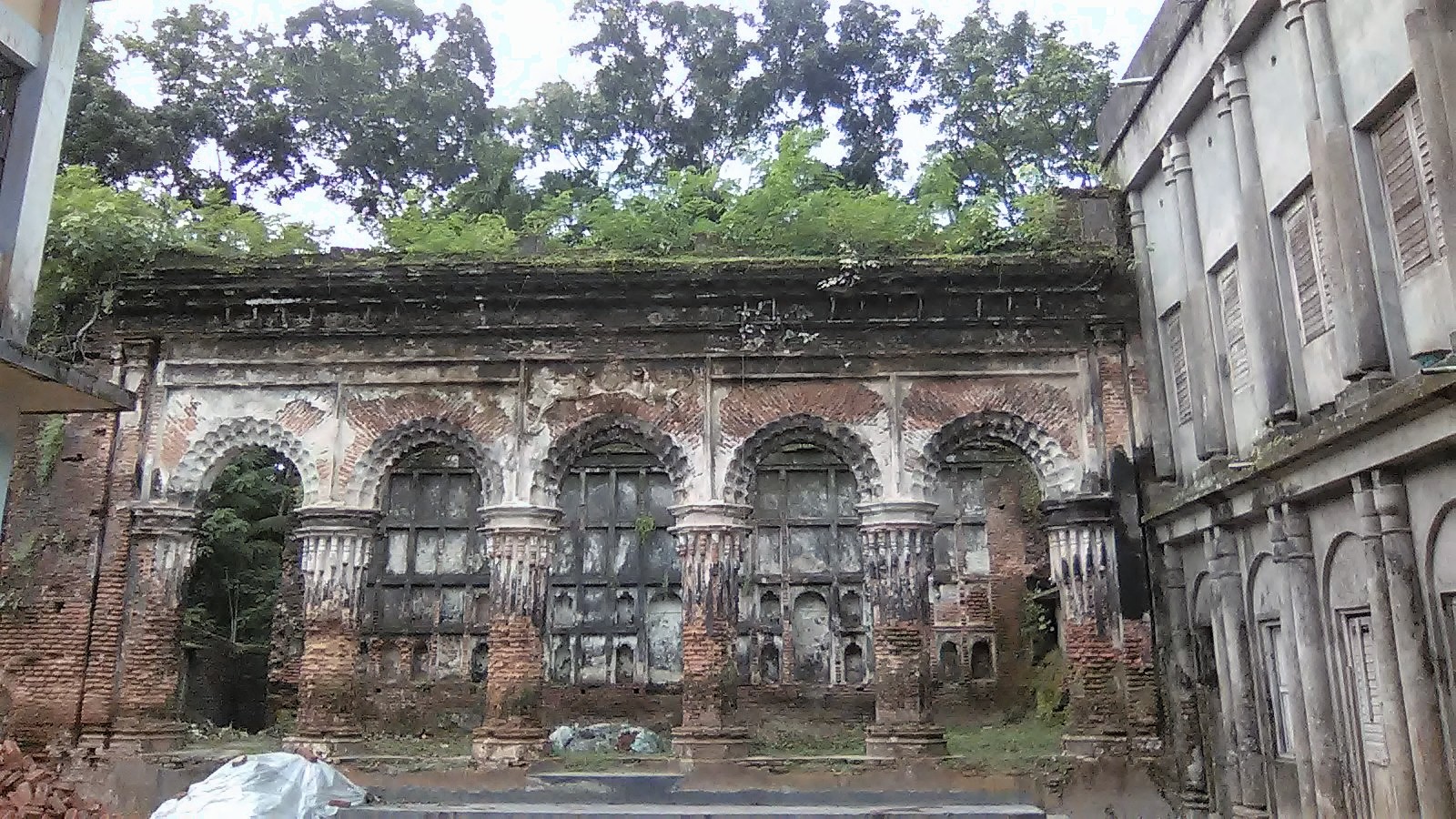
Kirtipasha, which gives the link road its name, is one of the upazila's ten unions. Banglapedia's census table puts its area at 4,816 acres, with 8,029 male and 8,786 female residents and a literacy rate of 67 per cent. It is an old seat of learning: Kirtipasha Prosanna Kumar Secondary School dates from 1903, and Banglapedia's biography of the poet and journalist Krishna Chandra Majumder records that he joined the Kirtipasha Bengali School as head pundit in 1854. The old zamindar house at Kirtipasha still stands, and is listed as a monument.
Rivers shape this landscape. Banglapedia's entry on the Bishkhali explains that the same stream is called the Kirtankhola near Barishal town, the Nalchity in Nalchity upazila and the Sugandha in Jhalakathi Sadar upazila; the Sugandha turns into the Bishkhali after it enters Jhalakathi town, makes a great meander and then flows south to the Bay of Bengal. The Gabkhan canal joins the river near that meander. The Bishkhali is 96 kilometres long and fully tidal, and deposition and char (island) formation are active at various parts of it. Such open riverbanks and newly formed land are exactly the kind of ground on which kash grows.
The season of kash
Bangladesh is called the land of six seasons. Banglapedia's entry on the seasons explains that the Bangla calendar year is traditionally divided into Grisma (summer), Barsa (the rains), Sarat (autumn), Hemanta (late autumn), Shhit (winter) and Basanta (spring), each of two months. Sarat lasts through Bhadra and Ashvin, roughly from mid-August to mid-October. It is traditionally the season when the dark clouds of the rains give way to white clouds floating in a blue sky. Early in the season the days can be hot and sultry, but towards its end the nights and mornings become cool and the falling humidity makes the weather comfortable. Fragrant flowers such as shiuli, bakul, mallika, kamini and madhabi bloom, the lotus grows in the wetlands, and, in Banglapedia's words, kash flowers on the riverfronts.
The Kayed Palli report appeared in October 2021, as Sarat was ending and Hemanta, which covers Kartik and Agrahayan (mid-October to mid-December), was beginning. Banglapedia describes Hemanta as a transitional phase between autumn and winter: by mid-November the evenings grow cool, the contrast between day and night temperatures brings heavy dew, and farmers are busy harvesting paddy and celebrating navanna with the new rice. That is the change the housewife Ankhi Akter was describing when she said the afternoon breeze among the kash seemed to bring news of winter.
In climatic terms, Banglapedia notes, Bangladesh has three distinct seasons: a hot pre-monsoon season from March to May, a rainy monsoon from June to October, and a cool dry winter from November to February, with the period from mid-October to mid-November sometimes called autumn. The monsoon brings 70 to 85 per cent of the year's rain and floods much of the floodplain; when the water draws back, the grasses of riverbanks and fallow land flower.
What kash is
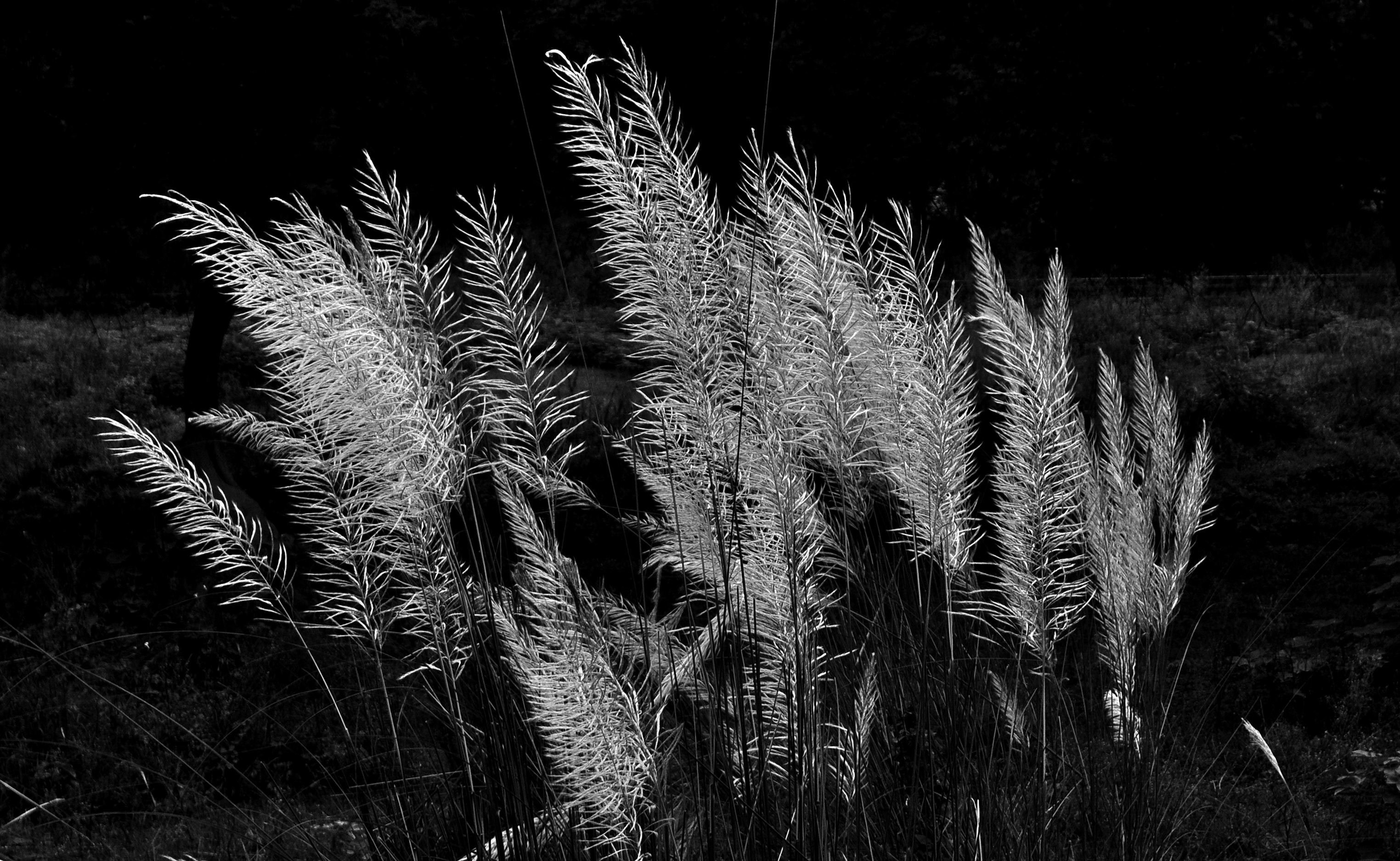
Kash is a grass, a member of the family Poaceae (Gramineae), not a flowering shrub. What people call its flower is the white, plume-like flowering head that the plant raises above its leaves. Its scientific name is Saccharum spontaneum, and in English it is known as wild sugarcane, kans grass or thatch grass.
Banglapedia's article on wild flowers places kash among the plants of Bangladesh's floodplains and crop fields. This habitat covers a large part of the country; a vast tract is flooded by the monsoon for one to three months every year, and when not flooded the land stays fairly wet from July to October. Common plants of this community, the article says, include kash (thatch grass, Saccharum spontaneum) alongside dholpata, kulekhara and shialkanta. The same article lists a separate species, pahadi kash (Saccharum arundinaceum), among the plants of the forests and hills.
The same article puts this in a national frame. About 5,000 flowering plants have been identified in Bangladesh, and most of them are wild; only about 210 species are cultivated for food, fodder, fibre, beverage, timber, medicine and flowers. The wild species, the article says, grow in five broad plant communities: the floodplains and crop fields, the roadside and homestead shrubberies, the forests and hills, the freshwater marshes and the coastal strand, with no clear boundaries between them. The Bangladesh National Herbarium, established in the early 1970s, has been collecting specimens of the country's plants since then.
Banglapedia's article on the flora of Bangladesh adds that tall grasses such as nal, khagra, Arundo donax and kash (Saccharum spontaneum) predominate in marshes, haors, baors and on riverbanks, mixed with hogla, shon (Imperata cylindrica) and various sedges. In the open places along the banks of rivers and swamps of the Chittagong Hill Tracts, it describes savannah formations of common tall grasses such as kans (Saccharum spontaneum), shon and bena (vetiver).
Scientists who study the plant describe it as unusually variable. A 2016 study in the journal PLoS ONE notes that Saccharum spontaneum has the widest ecological and geographical distribution of all Saccharum species, and that different clones vary widely in form, from short bushy plants with reduced leaves to tall, erect, broad-leaved forms with long internodes. Its chromosomes are equally variable: a 2018 paper in Frontiers in Plant Science reports that the species comprises nearly 40 genotypes, with chromosome numbers ranging from 40 to 128, and calls it the most primitive species of the genus.
A wild parent of sugarcane
Kash is a close relative of sugarcane, and it matters to farmers in a way that few people walking through a kash field would guess. The 2018 Frontiers in Plant Science paper describes sugarcane as the leading sugar crop, providing 80 per cent of the world's sugar, grown in more than 90 countries with an annual value of about 57 billion US dollars. By conventional taxonomy, the paper notes, the genus Saccharum includes six species, and Saccharum spontaneum and the noble cane are the two main ones used in modern breeding. Modern sugarcane varieties are hybrids between the noble cane, Saccharum officinarum, and the wild Saccharum spontaneum. A 2021 study in Scientific Reports explains the division of labour: the high sugar content comes from the cultivated noble cane, while disease resistance, stress tolerance and ratooning capacity, the ability to regrow from the stubble after harvest, come from the wild species. The 2018 Frontiers in Plant Science paper reports that 10 to 20 per cent of the chromosomes in current sugarcane varieties come from Saccharum spontaneum.
The 2016 PLoS ONE study describes the wild grass as one of the most valuable species for sugarcane breeding, because it crosses easily with the noble cane and with cultivated varieties, and the offspring perform well in stress resistance, adaptability and ratoon ability. Only a few wild clones, known as Glagah, Indian and Yacheng, have so far been used successfully, and they gave rise to well-known families of breeding parents such as the POJ, Co and Yacheng series, which the authors say still play a critical role in breeding. The same study reports that China has collected the wild grass since the 1970s and keeps about 700 clones at its national sugarcane germplasm nursery in Kaiyuan, Yunnan province.
Bangladesh keeps its own collection. Banglapedia's article on agriculture records that the Bangladesh Sugarcane Research Institute has recorded 459 plant genetic resources of Saccharum officinarum and 26 of S. spontaneum. The institute, at Ishurdi in Pabna, grew out of a sugarcane seedling testing station set up in Dhaka in 1931 and became an autonomous institute by an act of parliament in 1996. According to Banglapedia it has released 28 sugarcane varieties, which cover about 95 per cent of the sugarcane land in sugar-mill zones.
A grass of bare ground and riverbanks
Kash can also take hold on bare, newly formed ground. A study of plant life on the east flank of Mount Pinatubo in the Philippines, published in Communicative and Integrative Biology in 2013 and carried out 15 years after the volcano's eruption, found Saccharum spontaneum to be the dominant large grass on the new surfaces of the river valleys, the eroded flats and the perched terraces, and most abundant on the terraces. It grew alongside Phragmites karka and Imperata cylindrica, the same grasses that Banglapedia lists with kash on Bangladesh's riverbanks.
The grass also has everyday uses. Its English name, thatch grass, reflects one of them. A 2020 study in PLoS ONE of the grasses that livestock keepers use in the Thal desert of Punjab, Pakistan, recorded Saccharum spontaneum, known there as saroo, among the local fodder grasses, noted it as a soil binder and listed it among the grasses mixed with animal feed. The study found that grasses in that area were mostly available between August and October, the same part of the year in which kash flowers in Bangladesh.
These findings help explain why kash is so common on the riverbanks and open land of a riverine district such as Jhalakathi, where Banglapedia notes that chars are still forming along the Bishkhali.
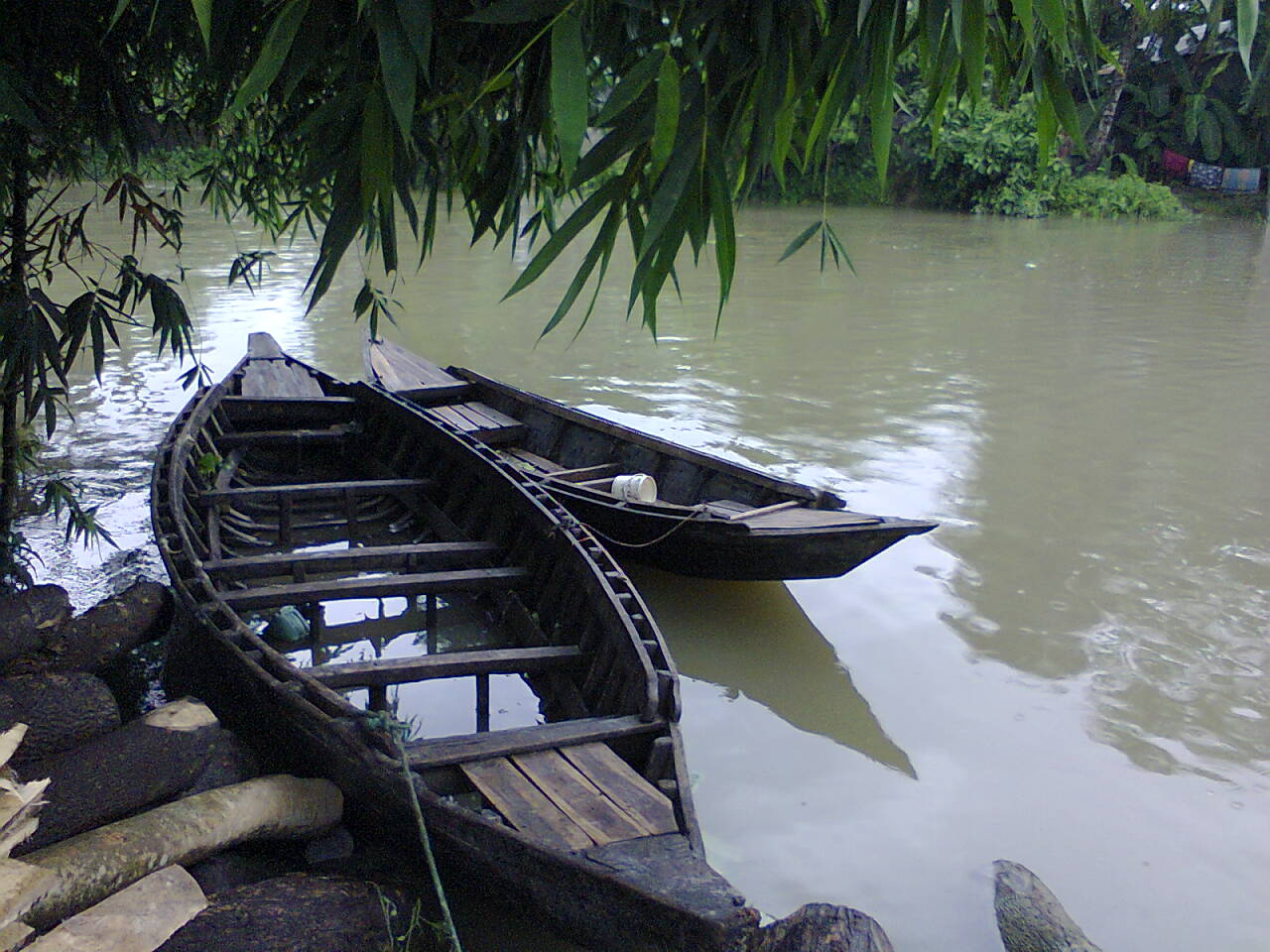
Outdoors again after the pandemic closures
Several visitors linked their trip to the end of a long period indoors. The pandemic had kept much of Bangladesh at home for many months, and by the time of the Kayed Palli report the country was reopening. On 12 September 2021 schools reopened after 543 days of closure, one of the world's longest coronavirus shutdowns, as Al Jazeera reported on 13 September 2021. The report said that almost 97 per cent of teachers and staff had been vaccinated, according to the government, and that on the day schools reopened Bangladesh recorded 51 deaths and 1,871 new infections, taking the total death toll to 26,931 and the number of infections to more than 1.5 million.
It was in that setting that the councillor, Abdul Kuddus Howlader, said people were coming out of their homes again as the outbreak eased, and that Sujan Parvez and Sajib described nature carrying on while their own time had seemed to stand still.
Photo: Auyon / Wikimedia Commons (CC BY-SA 3.0). The top picture shows kash flowering on the bank of the Padma river, as background; it was not taken at Kayed Palli.
Sources: Jagonews24 ("প্রকৃতির সৌন্দর্য বাড়াচ্ছে কায়েদ পল্লির কাশফুল", October 2021), Banglapedia (Jhalokati District; Jhalokati Sadar Upazila; Bishkhali River; Season; Wild Flower; Flora; Agriculture; Bangladesh Sugarcane Research Institute; Majumder, Krishna Chandra), PLoS ONE (2016, phylogenetic analysis of Saccharum spontaneum; 2020, fodder grasses of the Thal desert), Frontiers in Plant Science (2018), Scientific Reports (2021), Communicative and Integrative Biology (2013, primary succession on Mount Pinatubo), Al Jazeera (13 September 2021)
Comments
(0)