
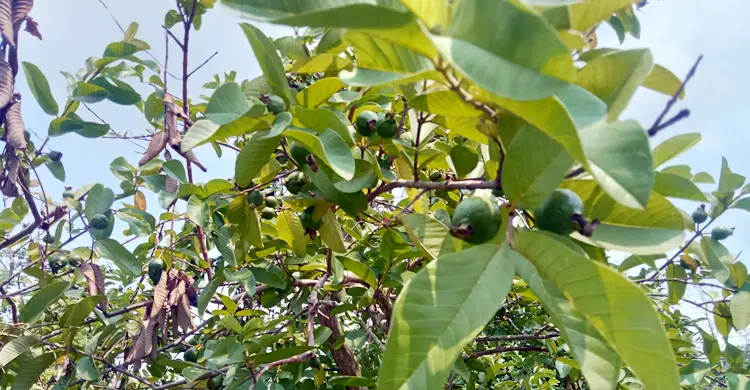
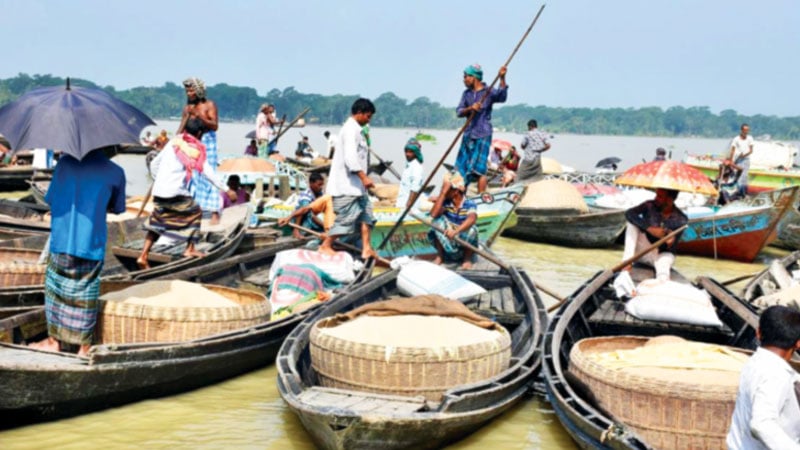
As across the country, intense sun and heatwaves in Jhalakathi have damaged crop and fruit blossom. Along with other farm produce, guava, known as the apple of Bengal, has suffered. Though the yield is lower than in other years, farmers are pinning their hopes on a fair price. The guavas are still small and green, and will need another 15 days to ripen and reach market. At that point, the 200-year-old guava kingdom and its floating guava market will ring with the calls of wholesalers and the crowds of tourists.
Three hubs of commercial guava
Guava is grown more or less everywhere, but commercial cultivation is centred on Banaripara in Barishal, Jhalakathi Sadar and Swarupkathi in Pirojpur. Guava is grown on 937 hectares in 16 villages of Banaripara, 350 hectares in 13 villages of Jhalakathi district and 645 hectares in 26 villages of Swarupkathi. For thousands of people in these areas guava is their only livelihood. In the full monsoon of Asharh and Shrabon, the rivers and canals of these areas are crowded with guava.
In Jhalakathi, guava has been grown commercially for generations across large parts of Kirtipasha, Bhimruli, Shatadashkathi, Khajuria, Dumuria, Kapurakathi, Jagadishpur, Mirkathi, Shakha Gachhir, Himanandakathi, Adakathi, Rampur and Shimuleshwar villages. This year the trees flowered late, and with no rain much of the blossom fell. Even two-thirds of the way through Asharh the guavas are still small and green, needing another 15 days before they can be sold, so farmers fear heavy losses.
Farmers said that although guava was grown here and there more than 200 years ago, commercial cultivation began in 1940 and has been growing steadily. In 2023, commercial guava was grown on at least 1,932 hectares, yielding about 20,000 tonnes. With the lower yield this year, farmers doubt whether even 10,000 tonnes will be produced.
Farmers count the cost
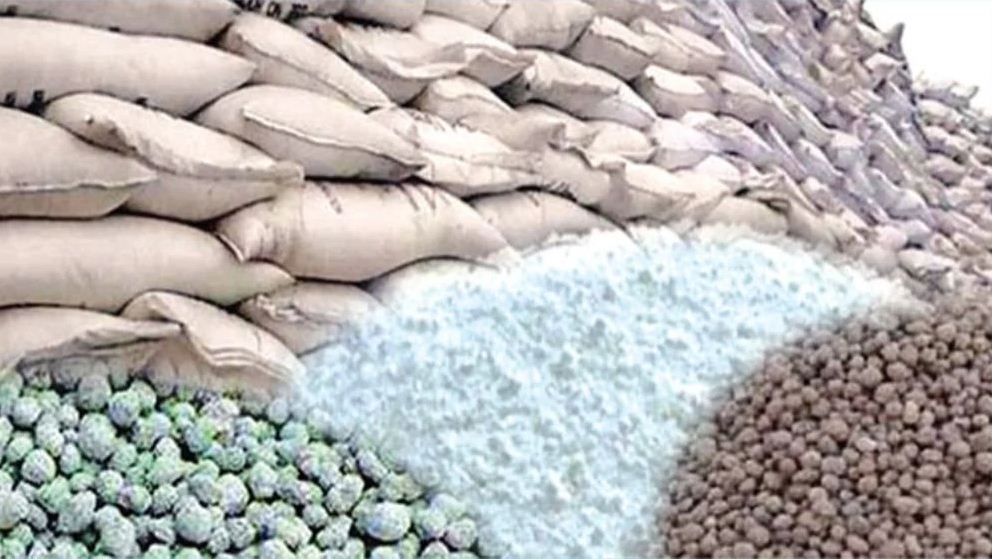
Farmer Pankaj Baral said: "In Magh and Falgun we had to clear around the base of the guava trees and apply fertiliser, then cover the base with mud. That cost more than Tk 300 per tree on average. Because there was no rain this year, much of the blossom fell. Since the Padma Bridge opened, more tourists and wholesalers have been coming, so even with a lower yield we won't lose if we get a fair price. Otherwise, never mind profit, I'm worried whether I will even recover my costs."
Voicing his anger, Pankaj said: "The government gives farmers a lot. I am a marginal, poor farmer and spend the whole day in the fields. Because I couldn't go to anyone, I got neither fertiliser nor seed."
Farmer Debabrata Haldar Bitu said: "Guava is our only seasonal income. When the yield is good, we are comfortable. Crores of taka change hands every year at the floating market on the water. Temporary shops spring up to serve wholesalers, tourists and visitors, and their owners profit. But with the guava yield down, everything, including the arrival of wholesalers, will be badly affected."
Farmer Bipul Chakraborty said: "Three men in our family work in the guava orchard, doing all the care and other work. What we earn in this season runs the household for the whole year. If we don't get a fair price for this year's crop, it will be hard even to run the household through the three months of the season. Only the Creator knows how we will manage the rest of the year."
Tourism businessman Sujan Haldar Shanu said: "Thousands of tourists from home and abroad come for the guava season. They used to come only by water; now that the roads are better, the journey is short and tourist numbers are rising. Because visitors entering the orchards were damaging them, we arranged attractive guava-orchard tours. With the yield as it is this year, I don't think many tourists or visitors will come. They take some guavas with them when they leave. With the lower yield, people here will face losses on every side."
Guava farmer and former union parishad chairman Bhaben Haldar said: "Normal rainfall is what helps a harvest most. This year the guava trees were cared for properly, but with no rain most of the blossom fell. With the small fruit now on the trees, even covering costs has become very difficult."
Md Monirul Islam, deputy director of the Department of Agricultural Extension (DAE) in Jhalakathi, said: "Guava is grown commercially on 350 hectares in 13 villages of Jhalakathi Sadar upazila. In the guava season it gives thousands of people in the area economic comfort and a livelihood. Some blossom has fallen for lack of rain, but if what remains fetches a fair price, there is a chance of making up the loss. Incentive fertiliser and seed from the government are being distributed evenly among farmers."
Source: Jagonews24. First published in Bengali on The Agro News.
Comments
(0)