
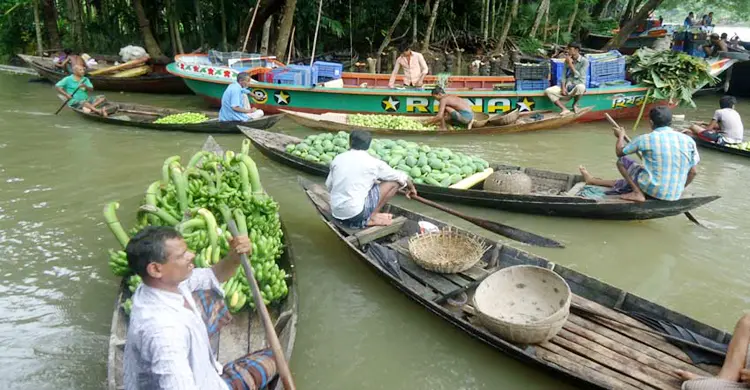
The opening of the Padma Bridge has opened a commercial road route between Jhalakathi and the capital, Dhaka. The district's farm sector in particular is set for a revolution, as Jhalakathi's vegetable growers had long dreamed. With that door now open, farmers are getting fair prices for their produce, and they are smiling.
What the district produces
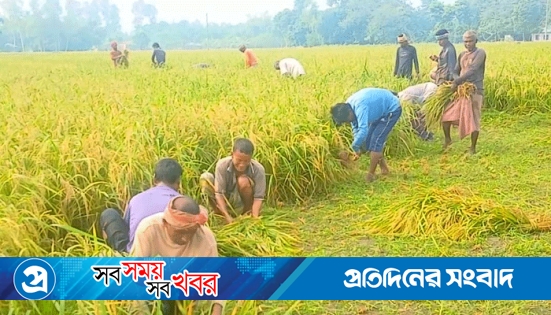
According to the Jhalakathi Department of Agricultural Extension (DAE), boro rice production in the district in 2021–22 was 51,829.458 tonnes. Winter vegetables produced 160,660.5 tonnes on 8,346 hectares. Figures for 2019–20 show about 9,000 tonnes of amra (hog plum), a notable cash fruit of the south, grown on about 800 hectares, and about 10,000 tonnes of guava on about 900 hectares.
In addition, 10,350 tonnes of coconut are produced on 1,150 hectares. The district also produces 222.75 tonnes of mustard, 478.5 tonnes of wheat, 5,004 tonnes of maize and 12,812 tonnes of pulses. With no scope to sell these vegetables, rice and rabi crops in local markets, farmers had been forced to sell to wholesalers at low prices.
Now, with the Padma Bridge open, that problem has been solved and farmers are profiting more. Farmers said that since the bridge opened they have been able to supply their produce to Dhaka quickly, from where it will go directly to regions where it is in demand.
Farmers' views
Farmers Md Jalal Hossain of Gabha village in Gabharamchandrapur union, a vegetable-rich area of Jhalakathi, Nur Alam of Teraana village and Sujan Howlader of the Hossainpur area said their livelihoods depend on farming all year round. Alongside vegetables, a lot of rice is grown. Notable produce includes green banana, green chilli, pumpkin, coconut, amra and guava. As vegetables earn more than rice, many are gradually turning to vegetables.
Because of the bridge they are getting higher prices from wholesalers, as demand for their produce will rise. Before, produce from the union went no further than neighbouring areas and Barishal. Now it can be supplied to Dhaka within three hours for a bigger profit.
Wholesalers can now buy quickly from farmers and deliver to Dhaka fast, so farmers will no longer have to worry about their produce rotting, and they hope for good prices.
Farmers Haripada and Sanjib Haldar of Nabagram union, known as the vegetable depot of Sadar upazila, Swapan Das, Shahjahan Mollah and Sanjay Chakraborty of Kirtipasha union, and Jamal Khalifa and Shah Alam Khalifa of Binoykathi union were asked how the Padma Bridge would affect their lives and livelihoods. They said their area grows rice, jute and wheat as well as vegetables, especially spiny gourd, okra, potato, leafy greens, bottle gourd, taro, bitter gourd, cabbage, cauliflower, aubergine, tomato and lemon. Production of these exceeds demand.
There is no cold storage for these highly perishable vegetables, so until now they had to be sold to wholesalers at low prices straight from the field, and could not be sold beyond neighbouring areas. Now, with the Padma Bridge, wholesalers can reach Dhaka with vegetables within three hours; before, the ferry alone took three hours. They added that their amra and guava used to reach Dhaka by launch a day later. Now, crossing the Padma Bridge, they reach Dhaka in just three hours and spread to districts across the country the same day.
Farmers Sumaiya Rubi, Mahatab Uddin and Azad Hossain of Patikhalghata union in Kathalia, a remote upazila of Jhalakathi, said that before, only long-distance passenger buses ran from their upazila. Now wholesalers will come directly from Dhaka by truck to Amua, Barguna and Kathalia in a day, and return to Dhaka the same day with local produce, especially paddy, rice, maize, mustard and other rabi crops. Until now only a little of this sold in local markets and most went unsold.
Officials and traders
Md Bashir, sub-assistant agriculture officer at the Kathalia upazila agricultural extension office, said that with the Padma Bridge open, they are taking steps to sell farm produce in Dhaka through the Smallholder Agricultural Competitiveness Project (SACP). Produce will be collected from farmers in the field and sold in Dhaka through farmers' associations. This was not possible before because there was no bridge, the field-level officer said.
Wholesalers Amal Haldar, Palash Mondal and Bimal Haldar of the vegetable areas of Baukathi, Jagadishpur, Dumuria and Bhimruli in Jhalakathi said that with the bridge open they have begun contacting Karwan Bazar in Dhaka, Narayanganj and other wholesale markets. They have been told they will be paid on the spot when they bring vegetables by truck, but must reach Dhaka by 5am, which is now actually possible. Lemon, guava and amra can also be sold directly in Dhaka from May to October.
The wholesalers said that before, sending these fruits by trawler to Barishal and then by launch to Dhaka was costly. Now carrying more vegetables in one truck is cutting costs, so they can pay farmers more.
Md Monirul Islam, deputy director of the DAE in Jhalakathi, said in reaction to the opening of the bridge that it will bring an agricultural revolution to Jhalakathi and speed up the development of farmers and farming. Farmers' produce can now be sent quickly to markets across the country.
Produce will no longer spoil and time will not be lost waiting for ferries. Farmers will be assured of cash and fair prices and will not have to sell to wholesalers on credit. Markets for vegetables, amra and guava in particular have picked up, he said.
Deputy Commissioner Md Johor Ali believes that with the Padma Bridge open, Chhoilar Char, a tourist area on the bank of the Bishkhali river in Kathalia upazila, could become one of the main attractions of the south. He said the opening of the bridge has also opened the door to the long-held dreams of makers of sheetal pati, Jhalakathi's brand product, and guava growers.
Tourists from around the world can now land at Dhaka airport, come straight to Jhalakathi to enjoy the natural beauty of Chhoilar Char, and buy more sheetal pati handmade by Jhalakathi's weavers directly at fair prices.
The bridge will also bring an agricultural revolution to the district, he said, as its farm produce, especially vegetables, can now be supplied to Dhaka quickly according to demand.
Source: Jagonews24. First published in Bengali on The Agro News.
Comments
(0)