
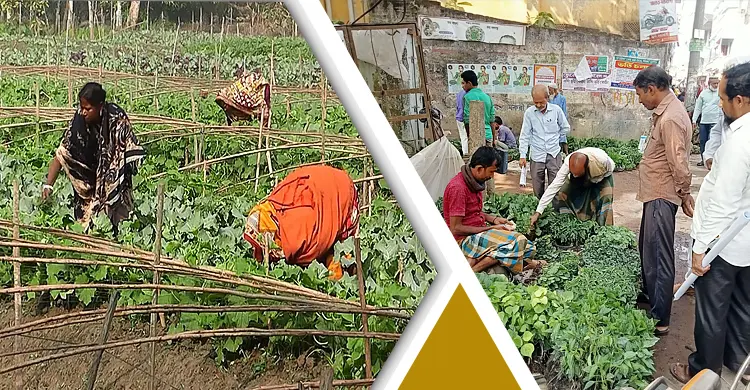
Farmers in Jhalakathi are busy with winter vegetables. Planting and tending seedlings of various winter vegetables has kept farming families occupied. Rising at the crack of dawn, they are in the fields caring for seedlings, clearing weeds and watering. The vegetables are grown not just for home use but commercially, and farmers are turning to early vegetables to get good prices.
Farmers here send vegetables to Jhalakathi and neighbouring districts. Women are taking part in farm work alongside men. Winter vegetable seedlings are still available in markets across the district's four upazilas, with prices varying by variety. Besides professional farmers, hobbyists are being drawn to rooftop and homestead gardening.
Fields turning green
In Nabagram and Kirtipasha unions of Jhalakathi Sadar upazila, the fields are turning green. Across wide stretches are rows of bean, cauliflower, cabbage, bottle gourd, aubergine, radish, bitter gourd, pointed gourd, spinach and red amaranth seedlings, and farmers are busy tending them.
At dawn they set out with spades, weeders, buckets and spray machines, and stay in the field until afternoon, watering the base of the seedlings before going home. Some stand and dig with spades, many run weeders around the plants, some straighten the plants by hand, and others replace wilted seedlings with fresh ones. The workload keeps growing.
Vegetables all year round
The Jhalakathi office of the Department of Agricultural Extension (DAE) said winter vegetables are grown commercially every year in 36 villages of Sadar upazila, with women contributing alongside men. In 15 villages of four unions of Sadar upazila, vegetables are grown all 12 months. Women and men farm the fields together there; the men help and handle marketing. About 5,000 families in these areas now make their living from vegetables, and the agriculture department is giving technical support to encourage it.
The department said that in Sadar upazila vegetables are grown on 3,100 hectares in the Rabi season and 1,200 hectares in summer, producing 43,400 tonnes in the Rabi season and 13,200 tonnes in summer. After meeting local demand, the produce is supplied to different parts of the country.
Sabita Rani Halder of Bhimruli village in Kirtipasha union said women in the villages once did not work this much. Back then, guava, coconut, betel nut and a little paddy were grown, and almost every household was in need. Now women work in the fields alongside men, so vegetables are grown all year and the farmers' poverty has gone.
Sabuj Hawlader of the same area said farmers work in equal measure. Women look after the fields and also do the housework and care for the children, while men harvest and market the crop and prepare new vegetable plots for the women farmers.
Mahinur Begum of Suktagarh village in Rajapur said she got about 40 tonnes of greens and vegetables from 1 acre last year and earned about Tk 3.5 lakh selling them wholesale.
Local farmers said the villages' vegetables meet the district's needs and are sent to Dhaka and Barishal. Thanks to the Padma Bridge, wholesalers now go from village to village collecting vegetables from the fields for the big markets. Often, even when the quantity is small, it is the women who take vegetables to the haat to sell.
Narayan Mistri, a farmer in Shimulia village of Sadar upazila, said: "Growing vegetables doesn't need much land. It takes relatively little capital and much less labour, but you can't neglect the care. To control disease, though, vegetables need more pesticide. They are ready for sale in a short time and can be sold at market almost every day, and they meet the family's needs too. As long as there are vegetables in the field, every farmer has some money in hand, which isn't possible with other crops. Prices are also quite good this season."
Overall these farmers consider vegetables profitable. They said vegetables are valued across the country, and pesticide-free vegetables can be grown using modern methods. Pests will always attack vegetables, they said, but they can be controlled with modern methods without pesticides. Because pesticide use on their vegetables is fairly low and the quality is high, demand is strong.
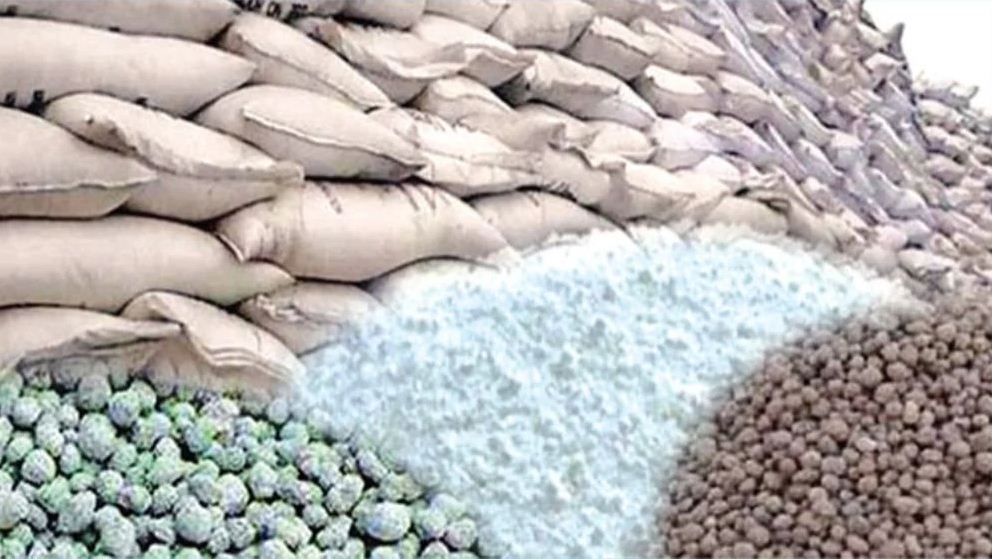
Monirul Islam, deputy director of the DAE in Jhalakathi, said: "All kinds of crops, including winter greens and vegetables, are yielding well this time. Quality winter vegetable seed and fertiliser have been given to marginal farmers. I hope cultivation and production will exceed the target."
"The agriculture department has been helping in many ways, including incentives and advice for farmers in the villages. Women's participation in farming is making the rural economy here stronger," he said.
Source: Jagonews24. First published in Bengali on The Agro News.
Comments
(0)