

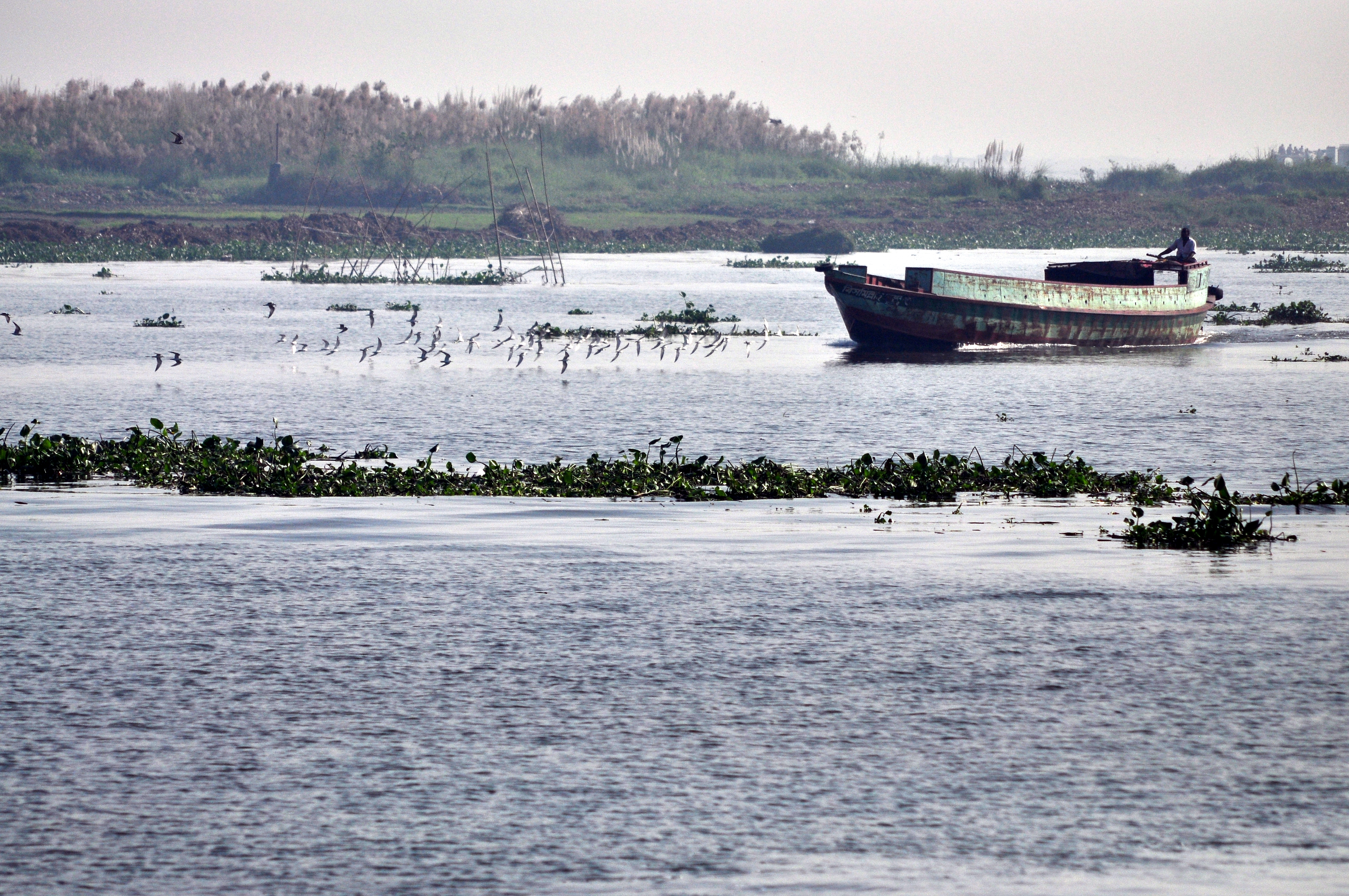
In mid-December 2025, as in every winter, the estuary of the Bishkhali river in Jhalakathi had again become a safe refuge for thousands of migratory birds, Jagonews24 reported on 14 December 2025. The birds' comings and goings had increased along the riverside areas of Gabkhan Dhansiri and Ponabalia unions in Jhalakathi Sadar upazila. Their chirping filled the air, and their flocks, flying in shapes that the report likened to a "heart" and a "rocket", were delighting local residents and visitors.
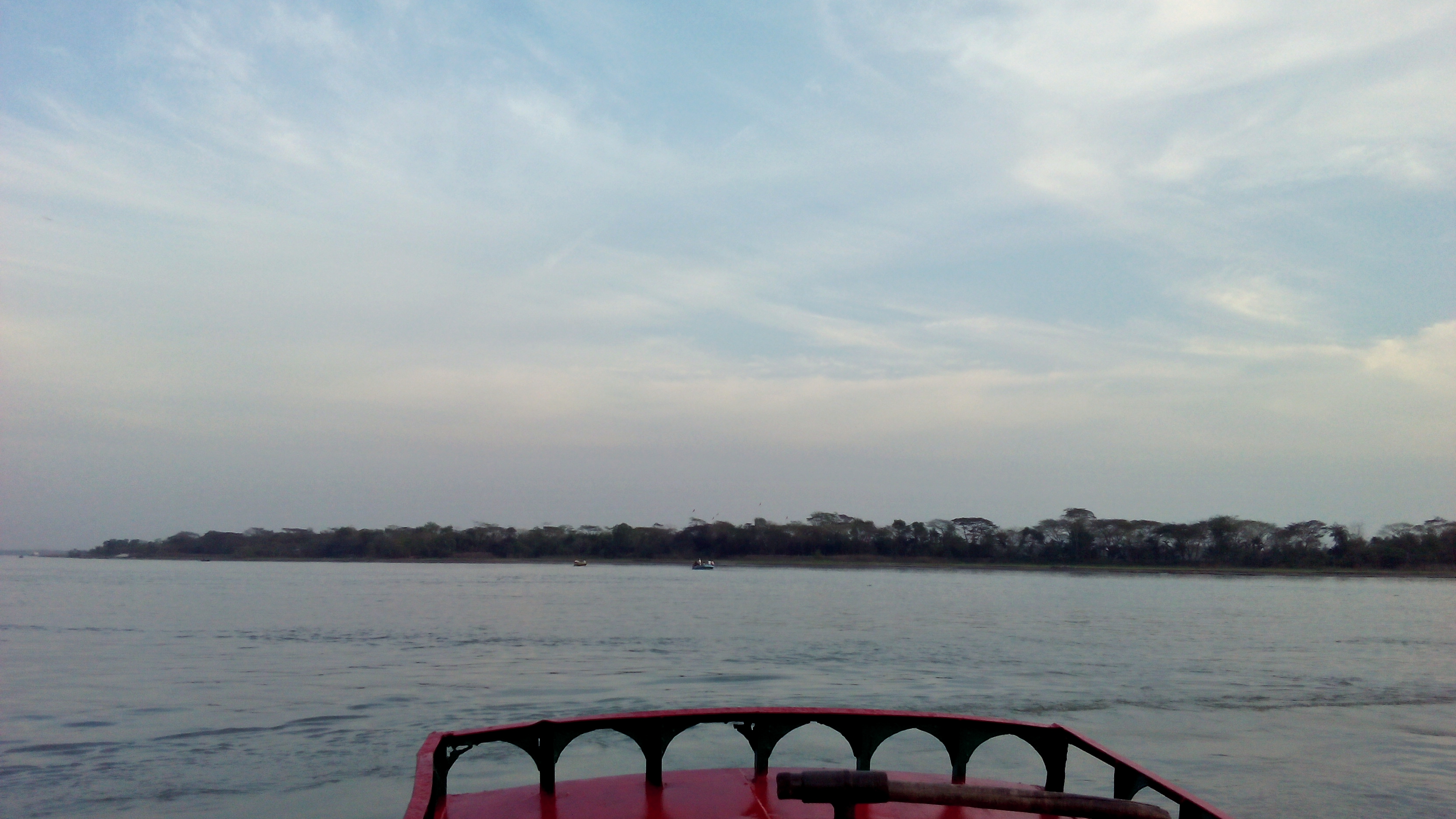
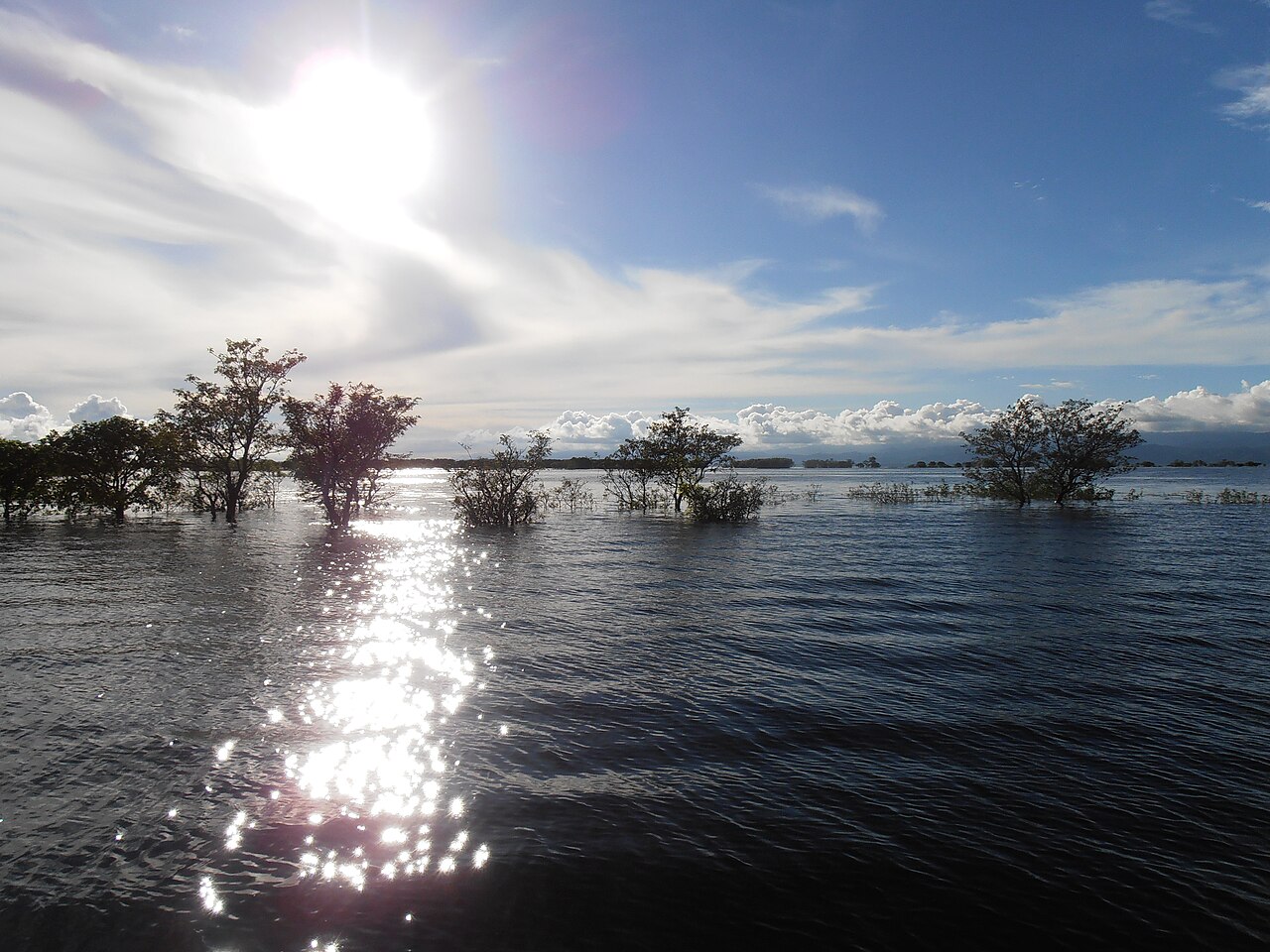
The Sugandha, Bishkhali, Gabkhan, Basanda and Dhansiri rivers run through Sadar upazila. West of the place where these rivers meet lies Gabkhan Dhansiri union, with Ponabalia union in the south-eastern corner and Jhalakathi municipality in the north-eastern corner. Every winter birds come from far away to these riverbanks, and people who love to travel gather at different spots along the banks to watch them. The report said the birds' calls add greatly to the beauty of the place. It gave no species list and no count: "thousands" is its own description of the flocks.
The Bishkhali river and its estuary
Banglapedia, the national encyclopaedia of Bangladesh, describes the Bishkhali as a continuation of the Kirtankhola and Nalchity rivers. The Arial Khan takes the name Bhasani Char where it enters Bhasani Char in Barisal Sadar upazila. About five kilometres north of Barisal town it becomes the Kirtankhola, in Nalchity upazila of Jhalakathi district it is called the Nalchity, and in Jhalakathi Sadar upazila the Sugandha. The Sugandha turns into the Bishkhali after entering Jhalakathi town. There the river makes a great meander and then flows south towards the Bay of Bengal. Near that meander the Bishkhali receives the water of the Madhumati and the Katcha through the Kaukhali and the Gabkhan Khal, a canal. In the lower reach of Bamna upazila it is linked with the Burishwar river system through the Bakdugh, the Ayla and other channels, and it falls into the Bay of Bengal through the Baleswar-Haringhata mouth, 13 kilometres below Patharghata.
The river is 96 kilometres long. For its first 30 kilometres it is about one kilometre wide on average, and about two kilometres wide for the rest, with an average depth of about 16 metres. It is fully influenced by the tides, and water is collected at Betna, Bamna, Barguna and Patharghata to examine its salinity. The river erodes its banks, and towns and ports such as Betagi, Anua and Bamna are threatened by that erosion; the Bangladesh Water Development Board has built an embankment against floods and salinity. At the same time silt settles and chars, or river islands, form in various parts of the river, and some of them are settled and farmed. Two offshoots of the Bishkhali, the Badankhalikone and the Khakdone, are dying for lack of flow, Banglapedia says. Jhalakathi, Betagi, Kathalia, Bamna, Barguna, Patharghata and Phuljhuri are among the important places on its north bank.
Banglapedia's classification of the country's wetlands gives the kind of habitat such a river offers. Among saltwater wetlands it lists estuarine ones: intertidal mud, sand or salt flats with limited vegetation, such as newly accreted land, and intertidal marshes. Among freshwater wetlands it lists riverine ones: permanent rivers and streams, including some char land. Its account of the migratory waders that reach Bangladesh says most of them are restricted to the coastal areas, estuaries, charlands, beels, baors, haors, mountain streams, ponds and lakes.
Jhalakathi Sadar, an upazila of rivers
Jhalakathi district, in Barisal Division, covers 706.76 square kilometres, according to Banglapedia. It is bounded by Barisal district on the north and east, Pirojpur district on the west, and Barguna district and the Bishkhali river on the south. The 2011 census of the Bangladesh Bureau of Statistics counted 682,669 people in the district, and its average literacy rate was 66.7 percent. Jhalakathi sub-division was formed in 1972 and became a district in 1984. It has four upazilas: Kathalia, Jhalakathi Sadar, Nalchity and Rajapur. Banglapedia names the Bishkhali, Gajalia, Nalchity and Kalijira as the district's main rivers, and lists agriculture as the main source of income at 45.89 percent, followed by commerce at 16.45 percent and service at 14.89 percent.
Jhalakathi Sadar upazila, where the birds gather, covers 159.45 square kilometres and had 216,348 people at the 2011 census. Jhalakathi thana was formed in 1913 and became an upazila in 1984, while the municipality dates from 1875. The upazila has ten unions, among them Gabkhan Dhansiri, Ponabalia and Basanda. Banglapedia lists paddy, pulses and vegetables as its main crops; mango, banana, papaya, betel nut, blackberry and coconut as its main fruits; and Baukati Hat, Jhalakathi Hat and Gabkhan Hat as its best-known markets. Agriculture is the main source of income for 38.84 percent, commerce for 18.40 percent and service for 16.88 percent, and paddy and salt are named as the upazila's main exports.
Life beside these rivers has long carried risk. Banglapedia records that the floods of 1786 and 1988 and the cyclones and tidal bores of 1822, 1909, 1960 and 1970 caused great loss of life in the upazila, along with heavy damage to settlements, livestock and crops.
Why the hogla reed beds shelter the birds
Litu Gomosta, Robin and Afsar of the Sachilapur area told Jagonews24 that migratory birds arrive here every winter. Hogla reed beds cover wide stretches of the river's char, and that is where the birds take shelter. They usually fly in flocks in the morning and in the late afternoon and spend the rest of the time looking for food and resting. When the sound of a boat or anyone disturbs them in any way, they take to the air again. Their flocks take a different artistic shape each time, the three said, sometimes flying like a heart, a locket, a rocket or an aeroplane.
Hogla is the local name of Typha elephantiana, a plant of the family Typhaceae, Banglapedia explains. It is frequently seen along the banks of rivers and canals in the Sundarbans. The plants look like grasses and may grow two to five metres tall. Their leaf blades are flattened and made of soft, spongy tissue, and they have fibrous roots and produce huge quantities of pollen. Besides the Sundarbans, hogla grows in plenty in the beels, haors and other low-lying areas of Sylhet. It is widely used to make mats, and baskets, ropes and other handicrafts are made from the dried plant.
The same encyclopaedia warns about the loss of such plants. In its article on wetlands it says that the continuous large-scale harvesting of aquatic plants and fruits such as makna (Euryale ferox), singara (Trapa bispinosa), lotus, lily and hogla in the haor areas has seriously reduced the quantity and quality of the habitat that fish and migratory birds need there. The reed beds on the Bishkhali's char that the residents describe are a habitat of exactly this kind.
The migratory birds that reach Bangladesh in winter
Banglapedia records 628 bird species in Bangladesh, in 16 orders and 67 families. Of these, 388 are resident and 240 are migratory. More than 1,200 bird species occur across the Indian subcontinent as a whole.
Banglapedia defines migratory birds as birds that visit Bangladesh periodically, especially in winter, and recognises four groups by their status in an area: permanent residents, summer residents or visitors, winter residents or visitors, and transient visitants or passage migrants, which pass through twice a year on their way to and from their breeding grounds. Some species land in Bangladesh and stay only a day or two on the way to destinations further south or south-east; others stop over for longer during their autumn or spring passage. Birds also migrate at particular times of day. Weak fliers that depend on vegetation cover, such as cuckoos, thrushes and wrens, travel by night; fast fliers that live in the open or catch food on the wing, such as hawks, swallows and shrikes, travel by day; and some large birds, among them geese and many waders, travel both by day and by night.
Most of the birds that migrate to Bangladesh come from the mountainous northern parts of the subcontinent, the Himalayas and beyond, Banglapedia says. Some come from different parts of Europe, and some from as far as Siberia, so that together they form part of the massive southward migration of birds from Eurasia to South, Southeast and East Asia. There are more than 600 species of breeding birds in Eurasia that migrate either to South and Southeast Asia or to Africa, and Bangladesh receives more than one-third of them. Only a handful of the migrants come from Siberia; most come from the Himalayas and northern Asia.
Many of the winter visitors to rivers and chars are waders. All members of the family Scolopacidae are migratory, according to Banglapedia. Common among them in Bangladesh are two species of curlew (gulinda), two of godwit (jurali), 13 to 14 sandpipers (chapakhi), five to six snipes (kadakhocha), the woodcock, three to four stints and dunlins, and the ruff. Snipes and the woodcock usually occur singly, but the others are usually found in flocks of several individuals to several thousand, and the larger flocks keep to the larger water bodies. Banglapedia also notes that curlews, godwits, snipes and woodcocks are among the birds treated as game birds in different parts of the world, that is, birds regularly hunted with guns.
A stop on the Central Asian Flyway
The birds that winter on the Bishkhali belong to a migration that crosses a continent. Under the Convention on the Conservation of Migratory Species (CMS), the range states of the Central Asian Flyway finalised an action plan for migratory waterbirds and their habitats at a meeting in New Delhi on 10 to 12 June 2005. The plan describes the flyway as a large continental area of Eurasia between the Arctic and Indian Oceans. It comprises several important waterbird migration routes, most of which extend from the northernmost breeding grounds in Russia (Siberia) to wintering grounds in West and South Asia, the Maldives and the British Indian Ocean Territory. The flyway region covers 30 countries of North, Central and South Asia and the Trans-Caucasus, and the plan lists Bangladesh among its South Asian countries, with Bhutan, India, the Maldives, Nepal, Pakistan and Sri Lanka.
According to the plan, the flyway covers at least 279 migratory waterbird populations of 182 species, including 29 globally threatened and near-threatened species that breed, migrate and spend the winter within the region. Of the 182 species, 17 are listed in Appendix I and 103 in Appendix II of the CMS. The plan defines a flyway as the total area used by a group of bird populations throughout their annual cycle, including breeding areas, migration stop-over sites and wintering sites. It adds that other migratory waterbirds pass through the region on flyways that link northern Central Asia with South East Asia and Australasia, the East Asian-Australasian Flyway, and with Africa and Europe.
The plan also sets out what threatens these birds. Rapid human population growth and development across the region, it says, have greatly increased pressure on intertidal and freshwater wetlands, grasslands and other habitats, leading to their degradation and loss, their pollution and the harvest of waterbirds, and causing declines and local extinctions of waterbird populations. The large coastal wetlands and islands of the South Asian countries provide good habitat for many species, but many wetlands lie in densely populated areas, where they provide goods and services to people yet are being lost and degraded by unsustainable use. Among its measures, the plan asks range states to eliminate or reduce illegal taking, poaching and unsustainable hunting practices, such as poisoned baits, mist netting, trapping and explosives, to control gun ownership to deter illegal taking, to eliminate illegal trade, and to promote the education and training of hunters.
How local people protect the birds
Litu Gomosta, Robin and Afsar said hunters used to come with guns to shoot the birds. When residents told them to stop, it often led to arguments, and under that pressure the hunters went back without shooting. After a few years of such vigilance, the three said, no one comes to hunt birds here any more.
Shamsul Haque Monu, a bird lover and businessman, said that as soon as winter arrives, many colourful birds, some familiar and some unknown, can be seen at wetlands, at safe spots along riverbanks, and on the banks of haors, beels and ponds. Yet these birds are being hunted illegally, he said. He described migratory birds as friends, heritage, pride and inspiration, and said people should behave in a friendly way to help them adjust to an unfamiliar environment, because protecting birds is a duty.
Monu added that the ranges of migratory birds are steadily shrinking. With forests and woodland being cleared, the birds are losing their safe shelter, and guest birds are dying after eating insects poisoned by the chemical fertilisers and excessive pesticides used on cropland, he said.
Why fewer birds arrive: the expert and the research
Mosammat Zebunnesa, an associate professor in the zoology department of Barishal Government Syed Hatem Ali College, told Jagonews24 that the number of birds coming to Bangladesh in winter is falling at an alarming rate. She named a shortage of habitat, food shortages caused by the use of poison baits, threats to the birds' lives, hunting and trafficking among the causes. The law must be enforced strictly, she said, but unless people themselves are aware, enforcement will not achieve much, and the public must cooperate with the administration.
Banglapedia gives the national picture for resident birds. Of the 388 resident species, 41 are threatened in Bangladesh: 19 critically endangered, 18 endangered and 4 vulnerable, while the status of 158 could not be evaluated for lack of data. Birds associated with forests or swampy habitats have declined, and the pink-headed duck, the comb duck (nukta), the common peafowl and the green peafowl, which were fairly widespread 70 or 80 years ago, have virtually disappeared from the country. The IUCN published its Red Book on the birds of Bangladesh in 2000.
A long-term study published in 2023 in the peer-reviewed journal Avian Conservation and Ecology measured the trend for waterbirds at one of the country's most important wetlands. Researchers from IUCN Bangladesh, Jahangirnagar University, the Bangladesh Bird Club and others counted waterbirds at Tanguar Haor, a 9,500-hectare Ramsar site in north-east Bangladesh, every winter from 2008 to 2021, with the Bangladesh Bird Club and the Bangladesh Forest Department collaborating. They recorded 69 waterbird species, 41 of them migratory and 28 resident. The highest count was 166,788 waterbirds, in 2013, and the lowest 28,925, in 2010. Of the migratory species, 23 (59 percent) showed a declining trend, among them the critically endangered Baer's pochard and the vulnerable common pochard, while 16 (41 percent) showed an increasing trend.
The study set out the pressures on the haor. Citing earlier work, it said human activity had converted about 40 percent of the original haor basin into low-lying farmland and settlements in just three decades, and that between 1980 and 2010 about 71 percent of the deep-water area had become shallow water and then rice fields. Increased domestic duck rearing, cattle grazing, motorised and hand-paddled boats and fuelwood collection were prominent threats to migratory waterfowl, and illegal hunting with nets and poisoned bait was a growing problem in the wetlands of north-east Bangladesh in winter. The authors recommended involving local communities by creating bird sanctuaries within the haor complex.
Banglapedia's wetland article puts these losses in national terms. It estimates the country's wetlands at seven to eight million hectares, about half of the land surface, and says that some 750 of Bangladesh's roughly 1,500 vertebrate species are birds, and that some 400 vertebrate species and about 300 plant species depend on wetlands for all or part of their lives. In the Ganges-Brahmaputra floodplain, about 2.1 million hectares of wetland have been lost to flood control, drainage and irrigation projects, and in the south-west the spread of shrimp farming has brought rapid siltation of channels and continuous flooding of land with saline water.
How waterbirds are counted
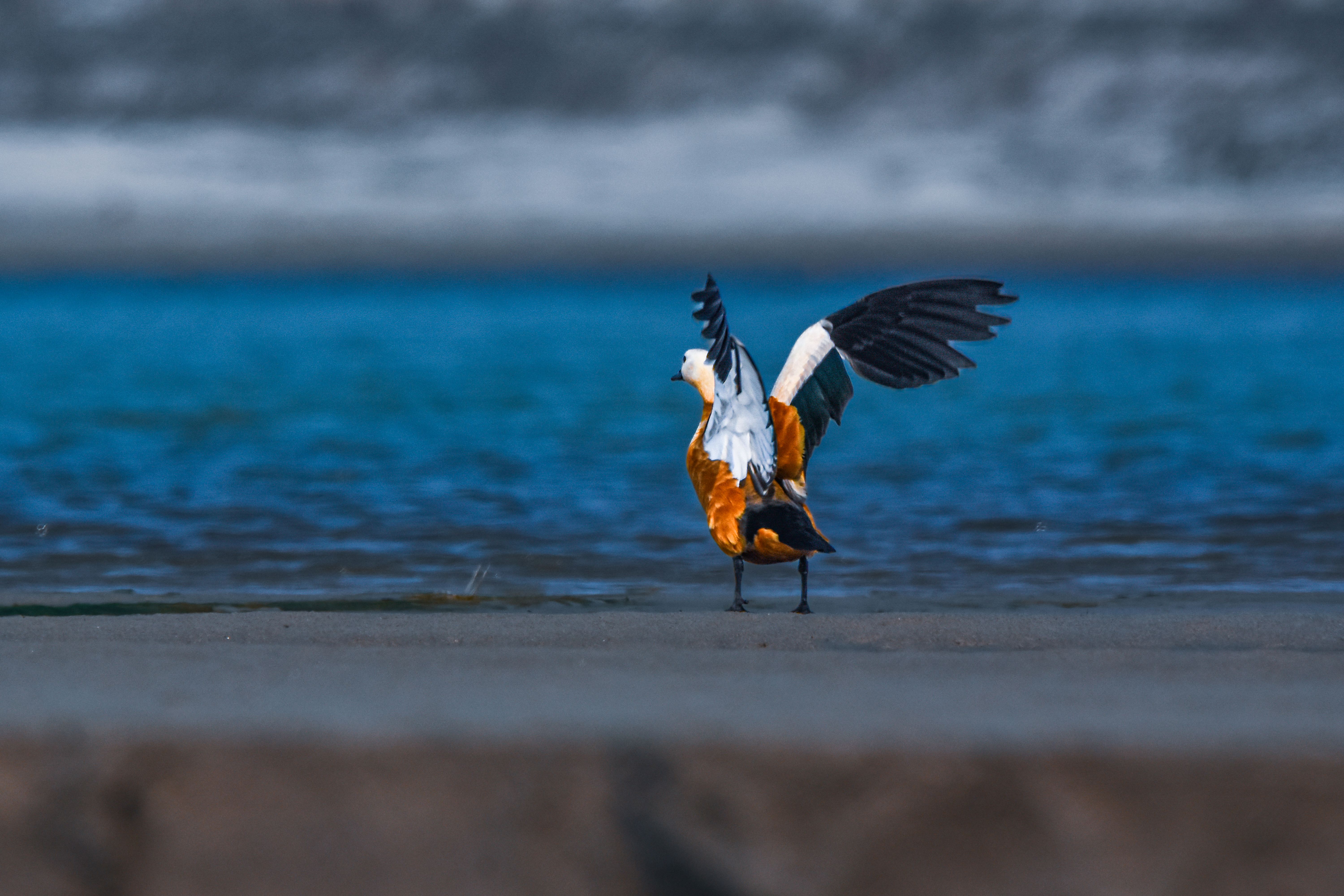
Counts like those at Tanguar Haor follow a set method. The 2023 study describes annual censuses held in January and February, the dry season, when birds are less likely to move between sites, from six in the morning to five in the afternoon, by teams of three to five people, each with at least ten years of waterbird survey experience. The counts, together with the site name, date and time, weather and habitat, were recorded on the standardised data sheets developed for the Asian Waterbird Census. Large aggregations of more than 1,000 birds were estimated by the block count method, each flock was counted several times to improve accuracy and to find rare or smaller species, and the teams often counted from wooden boats when land was more than 500 metres from the flocks. Priority was given to not disturbing the birds.
The study counted as waterbirds the groups recognised by the Ramsar Convention: grebes, cormorants, pelicans, herons, egrets, storks, ibises, spoonbills, flamingos, ducks, geese and swans, cranes, rails, jacanas, shorebirds, gulls and terns. The CMS action plan for the flyway notes that information on the status and trends of waterbird populations in the region is limited and outdated, and calls for more data collection and analysis at flyway and national level.
The law and the administration
In December 2025 the law in force was the Wildlife (Conservation and Security) Act 2012, Act No. 30 of 2012, dated 10 July 2012. Section 6 says no person may hunt any wild animal without a licence or, as the case may be, a permit under the Act, and that the government may, by notification in the official gazette, ban the hunting of any or all wild animals in a particular forest or area, or in the whole country, for a set period.
Section 38 deals with birds. A person who kills any bird or migratory bird listed in Schedules 1 and 2 of the Act commits an offence punishable by up to one year in prison, a fine of up to Tk 100,000, or both; for a repeat offence the penalty rises to up to two years, a fine of up to Tk 200,000, or both. Collecting, possessing, buying, selling or transporting the trophy, meat or body parts of such a bird carries up to six months in prison, a fine of up to Tk 30,000, or both, and for a repeat offence up to one year, a fine of up to Tk 50,000, or both. Under section 49 the government may, by gazette notification, restrict the import, sale, use or carrying of air guns to protect wildlife, while keeping registered shooting clubs and communities living near forests outside the ban.
The Act defines a sanctuary as an area where catching, killing, shooting or trapping wild animals is prohibited and which is managed mainly to protect natural resources for the safe breeding of wildlife. Under section 13 the government may, by gazette notification, declare any government forest, government land, wetland or other specific area a sanctuary, and may designate it a wildlife, bird, elephant or wetland-dependent animal sanctuary or a marine protected area. When a wetland is declared a sanctuary, the occupational, customary or livelihood rights of the communities living there, such as fishers and boatmen, must be protected. The Jagonews24 report did not say that the Bishkhali estuary had been declared a sanctuary under the Act.
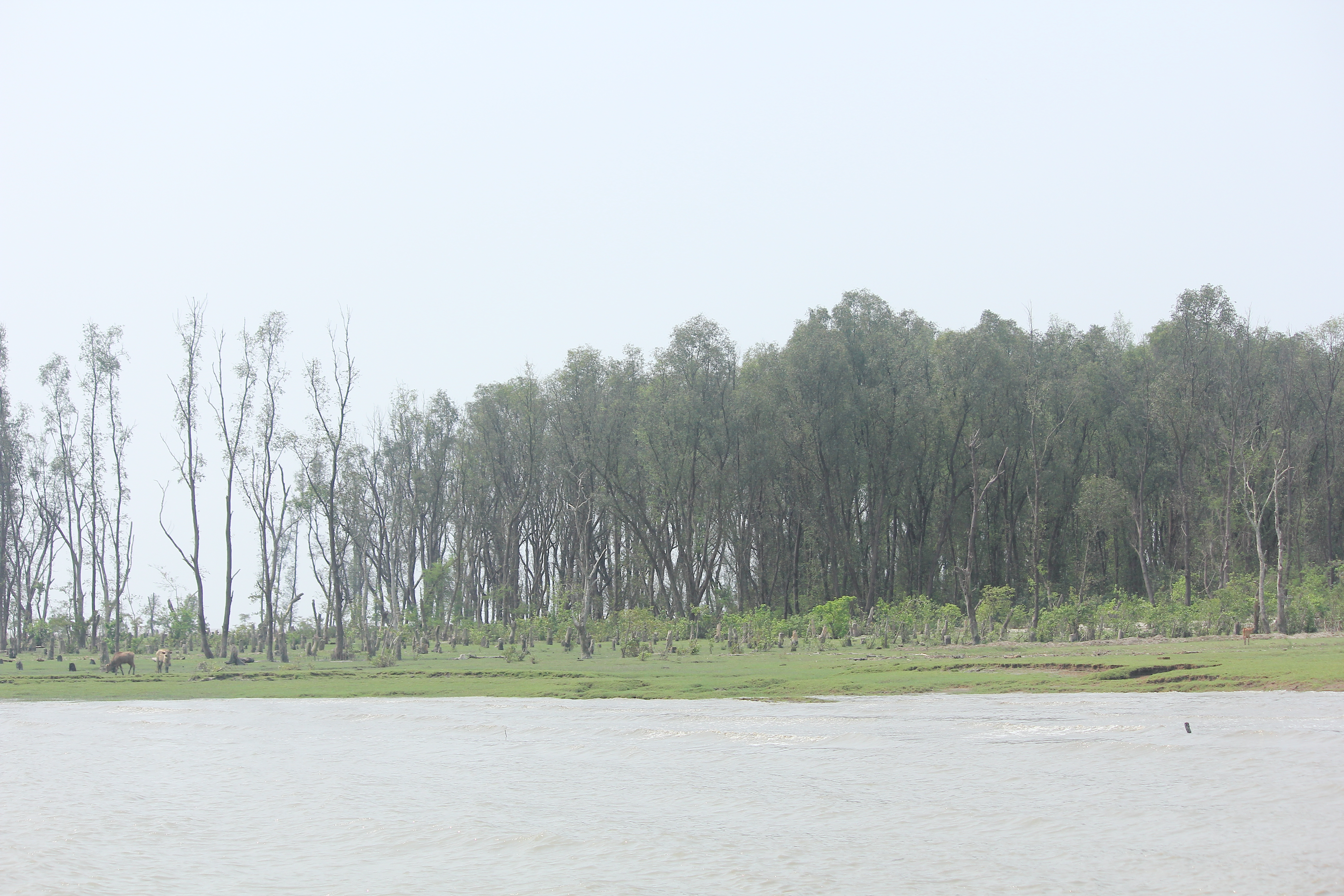
Jhalakathi Sadar upazila nirbahi officer Segufta Mehnaz told Jagonews24 that guest birds are a national asset and that protecting them is everyone's duty, because they help keep the environment in balance. If anyone disturbed the birds' sanctuary, or any hunter went there to try to shoot birds, strict action would be taken once the administration was informed, she said.
Photo: Lonely Explorer / Wikimedia Commons (CC BY-SA 4.0)
Sources: Jagonews24 (14 December 2025), Banglapedia (Bishkhali River, Jhalokati District, Jhalokati Sadar Upazila, Bird, Wetland, Hogla), Wildlife (Conservation and Security) Act 2012 (Bangladesh Code, Legislative and Parliamentary Affairs Division), CMS Central Asian Flyway Action Plan (2005), Alam et al., Avian Conservation and Ecology (2023)
Comments
(0)