
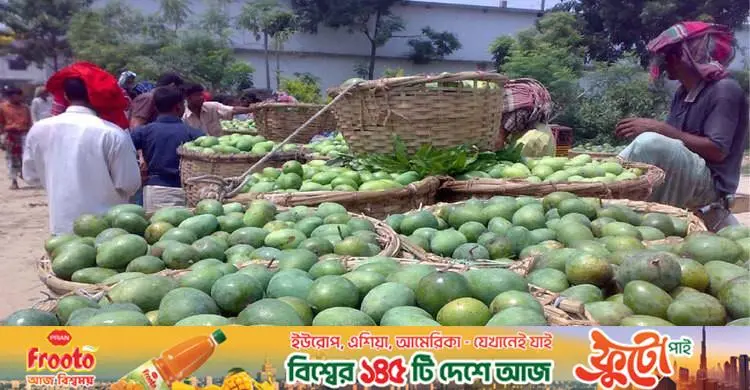
Japan imports several million dollars' worth of mangoes from around the world every year. There is demand for various foreign varieties in the country, and its own production falls short of demand.
According to Data Bridge Market Research, Japan's mango market was worth US$420.75 million in 2024 and is expected to grow by 7.18 per cent by 2032.
Japan mainly imports mangoes from Pakistan, Vietnam, Taiwan, Thailand and Mexico.
Why Japan banned Indian mangoes
Japan has recently banned mango imports from India again, nearly two decades after the last ban. It took the decision earlier this year after finding flaws in Indian pest control management. India's famous Alphonso, Kesar, Langra and Banganapalli mangoes have taken a big hit in the summer export season as a result. Japan had earlier banned Indian mangoes over the risk of fruit flies, lifting that ban in 2006 after India introduced strict disinfestation measures.
Japan follows a "zero tolerance" policy on harmful pests such as fruit flies, which are seen as a major threat to its agriculture.
Every year before the export season, Japanese quarantine officials visit India to inspect vapour heat treatment (VHT) centres, where mangoes are disinfested before export. Vapour heat treatment is a chemical-free method that uses hot air at a set temperature and humidity to kill insects and fruit fly larvae in the fruit. The process is mandatory under the two countries' export agreement.
In March this year a Japanese team inspected a VHT centre in the Rahmanpur area of Uttar Pradesh. Various reports say flaws were found in the fumigation and disinfestation process there.
India produces about 2.8 crore (28 million) tonnes of mangoes a year, the most in the world. Most are eaten at home, but farmers and traders earn more from high-value export markets such as Japan. Exporters fear the ban could create a negative impression of India's agricultural quality control in international markets and worry other importing countries.
An opening for Bangladesh
This has created a big opportunity for Bangladesh to export mangoes to Japan. If proper standards can be maintained, Japan could become a large market for Bangladeshi mangoes.
According to Bangladeshi media, Japan has already expressed interest in importing mangoes from Bangladesh. But as one of the world's top premium mango markets, it has set several conditions for imports, and the two countries are now discussing how to meet them.
Entering the Japanese market is not easy. Japan applies strict standards not only on taste but also on production methods, storage, food safety and pesticide residue levels. Exporters say meeting Japan's quarantine and food safety conditions is the biggest challenge.
The Department of Agricultural Extension (DAE) said the two countries have been exchanging information for a long time on approval for fresh mango imports from Bangladesh. After reviewing the information Bangladesh submitted, Japan has asked for more information on 16 potentially harmful pests not included in the 2023 Pest Risk Analysis.
Those involved, however, believe Japan's conditions are not very hard to meet. One of the main ones is vapour heat treatment.
Bangladesh first began exporting mangoes in 2016. According to the DAE, Bangladesh exported 2,188 tonnes of mangoes last year, up from 1,321 tonnes in 2024. That is still far below the 3,100 tonnes exported in 2023.
Source: Jagonews24. First published in Bengali on The Agro News.

Comments
(0)