
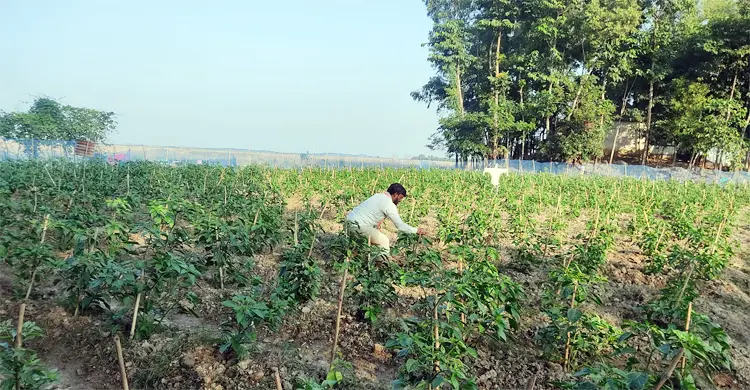
Only five or six years ago, some people grew naga chillies as a hobby. The plants stood in the courtyard to meet family needs, with no hope of profit and no commercial thinking. Within five years the picture has changed. Naga chillies have moved from courtyards to crop fields, and some 700 families in Jaintiapur upazila of Sylhet have become well off by growing them commercially.
Naga chillies grown in the upazila meet local demand and are also exported. Farmers sell crores of taka worth of the chillies every year, and with profits of more than double on a small outlay, more are turning to the crop. Cultivation has spread widely in Haripur, Uparshampur, Dolaipara and Chhoykuribond (Boro Haor) of the upazila, and the chilli is also grown in Gowainghat, Companiganj, Kanaighat and part of Sadar upazila in Sylhet.
According to the Department of Agricultural Extension (DAE), 685 farmers grow naga chillies, though many others outside the count are also involved. All of them have become self-reliant through the crop.
Farmers say officers stay away
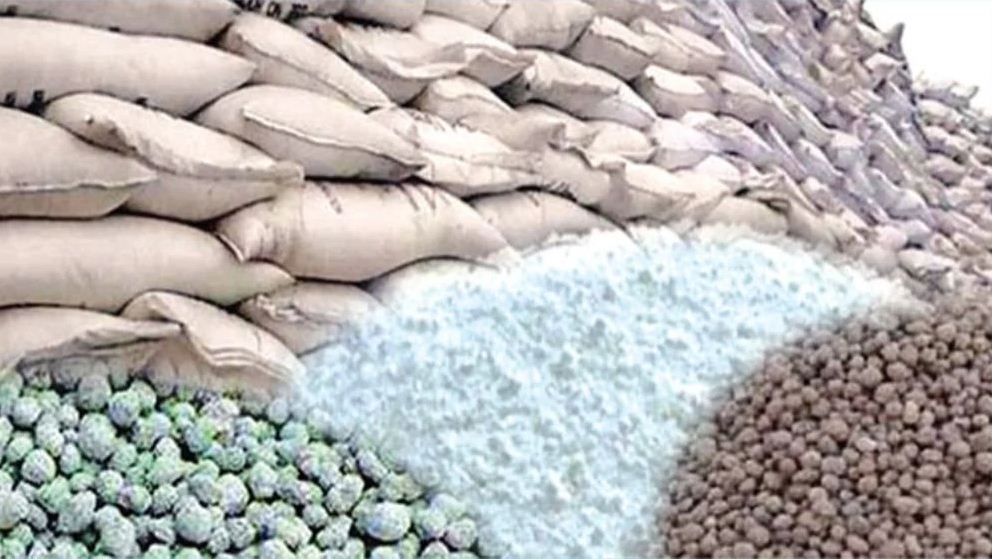
Although crores of taka worth of naga chillies are produced every year, the crop carries little weight with the agriculture office, farmers say. Apart from distributing fertiliser, no initiative has been taken to develop this promising sector, and no agriculture officer has visited the naga chilli fields. Farmers grow it relying only on their own wit and skill.
Farmers said: "If we got help and advice from the agriculture office, naga chilli farming would become even more profitable. Many more farmers would be encouraged to grow it, and government revenue would rise too."
Belal Ahmad, son of Imam Uddin of Uparshampur in Haripur, has grown naga chillies on one and a half bighas this year. Land lease, fertiliser, pesticides and other costs came to Tk 1 lakh. If the yield is good, he says he can sell Tk 5-6 lakh worth of chillies from that land.
Belal Ahmad told Jagonews: "Last year I grew naga on three bighas at a cost of Tk 2.5 lakh and made a profit of Tk 7 to 8 lakh. This year many more farmers have started growing naga chillies, so I could not get land and had to grow less. But if the yield is good, I will still make a profit."
He said: "At the start of the season, when demand is high, a sack equal to 50 kg of naga chillies sells for Tk 25,000. Prices then fall gradually. Most of the chillies are sold to traders from Dhaka. Local people buy by the kg, at Tk 400-500 a kg."
Demand in Dhaka and beyond
Tarikullah of Dolaipara village, Haripur bazar committee member Siraj Uddin Kala, Putul Mia, Monir Uddin, Somchhur Uddin and Siraj Uddin have been growing naga in Jaintiapur's Chhoykuribond haor (Boro Haor) for the past five or six years. Because it pays, they grow it every year.
Farmer Tarikullah told Jagonews: "Sylhet's naga chillies are in great demand. Because Sylhet's naga is of better quality and larger than that of other areas, traders come directly from Dhaka to Sylhet and, with the help of local traders, buy the chillies straight from the fields."
He said: "Because of good yields and profits of more than double, Jaintiapur farmers are turning to naga chillies. But agriculture officers are not active to match. Even after contacting them we could not bring them to the fields. Apart from calling us to the union and giving some fertiliser, they keep no track of us. If they came to the fields, explained the land and taught us techniques, naga chilli farming might be even more profitable."
Local naga chilli trader Shafiq Mia said: "I have been in the naga chilli business for a long time. I collect chillies by contacting farmers in Haripur, Jaintiapur, Gowainghat, Kanaighat and other areas, and supply them to Jatrabari, Gazipur, Karwan Bazar and Narayanganj in Dhaka and to various parts of Chattogram."
He said: "At first I buy at Tk 700-800 a kg. A kg holds about 200 pieces. Later they can be bought a little cheaper." He supplies 40-45 cartons of naga chillies, each weighing 30 kg, from the Haripur area to different parts of the country every day.
Area and output
The DAE said that in FY2020-21 naga chillies were grown on 50 hectares in Sylhet, with production recorded as 225 (the unit is given as hectares). In FY2021-22, 250 tonnes were produced from 53 hectares. In FY2022-23 the area rose to 141.5 hectares, but because of natural disasters production fell to 156 tonnes that year. This year production has risen further than last year and yields have been good.
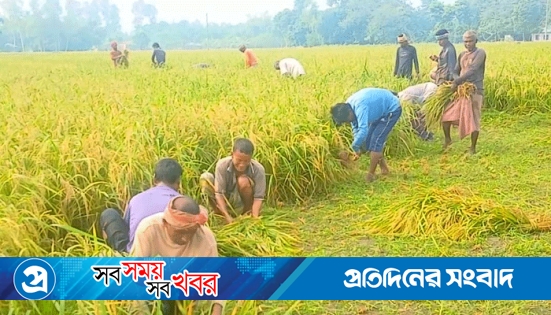
Mohammad Khayer Uddin Molla, DAE deputy director in Sylhet, said: "Paddy is the main cash crop in Sylhet, but alongside paddy the production of beans, jara lemons and faras is rising. Recently naga chillies have also been produced on a large scale. More than 600 farmers grow naga chillies in different areas of Sylhet, and with good yields they are making large profits."
He said: "Because we are short of staff, it is not possible to go to the field and advise farmers. But awareness meetings on naga cultivation techniques are held for farmers at union and upazila level, and fertiliser and pesticides are distributed."
The officer added: "Demand for naga chillies is highest among Sylhet people, at home and abroad. If naga chillies could be exported to the countries where Sylhetis live, production would rise further."
Source: Jagonews24. First published in Bengali on The Agro News.
Comments
(0)