
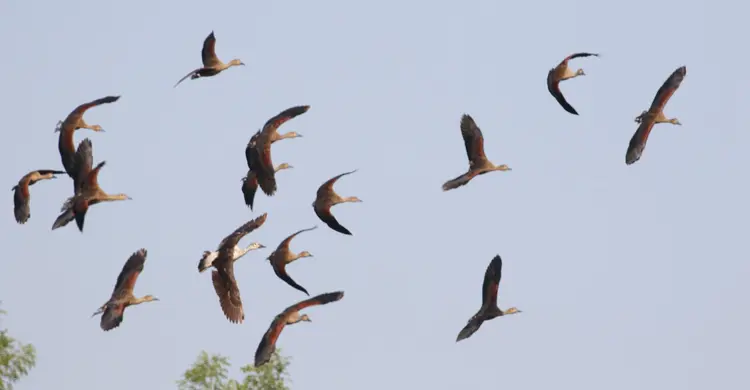
Migratory birds flock to Jahangirnagar University at the start of every winter, and this year they have again settled on four lakes on the campus. This time, though, the rare African comb duck has been seen on the lake next to the transport section, the first sighting on campus in 11 years.
The African comb duck was first seen on the campus in 2000 and was spotted from time to time after that, but bird experts say it had not been seen since 2009.
A flock was seen on the lake by the transport section on 8 November. Experts believe the birds came from as far away as Siberia.
About the bird
The African comb duck is also called the nakta hash and bucha hash. It is a large duck of a critically endangered species. Its upper body is bluish black and the back of its rump grey. Its head and neck are white with black spots, its secondary wing feathers bronze, and a black band runs across half its breast. The female is duller and smaller. They are strong fliers and skilled divers.
They are found in India, Nepal, Siberia, China and several countries in Africa. In winter they are seen on large waterbodies in the country's haor region.
Seven species this year
A preliminary bird census on the campus on 8 and 9 November found about 5,000 birds of seven species. Last year there were five species. This year, along with the African comb duck, the garganey, or jiria hash, has also come.
Bird experts are pleased to see the African comb duck on campus after so long.
Dr Md Kamrul Hasan, professor in the university's zoology department and a bird expert, said this rare bird was believed to have come from Siberia. It is also found in the country's large wetlands. If safe habitats for birds are ensured and human disturbance reduced, bird numbers will keep rising, he said.
Source: Jagonews24. First published in Bengali on The Agro News.
Comments
(0)