
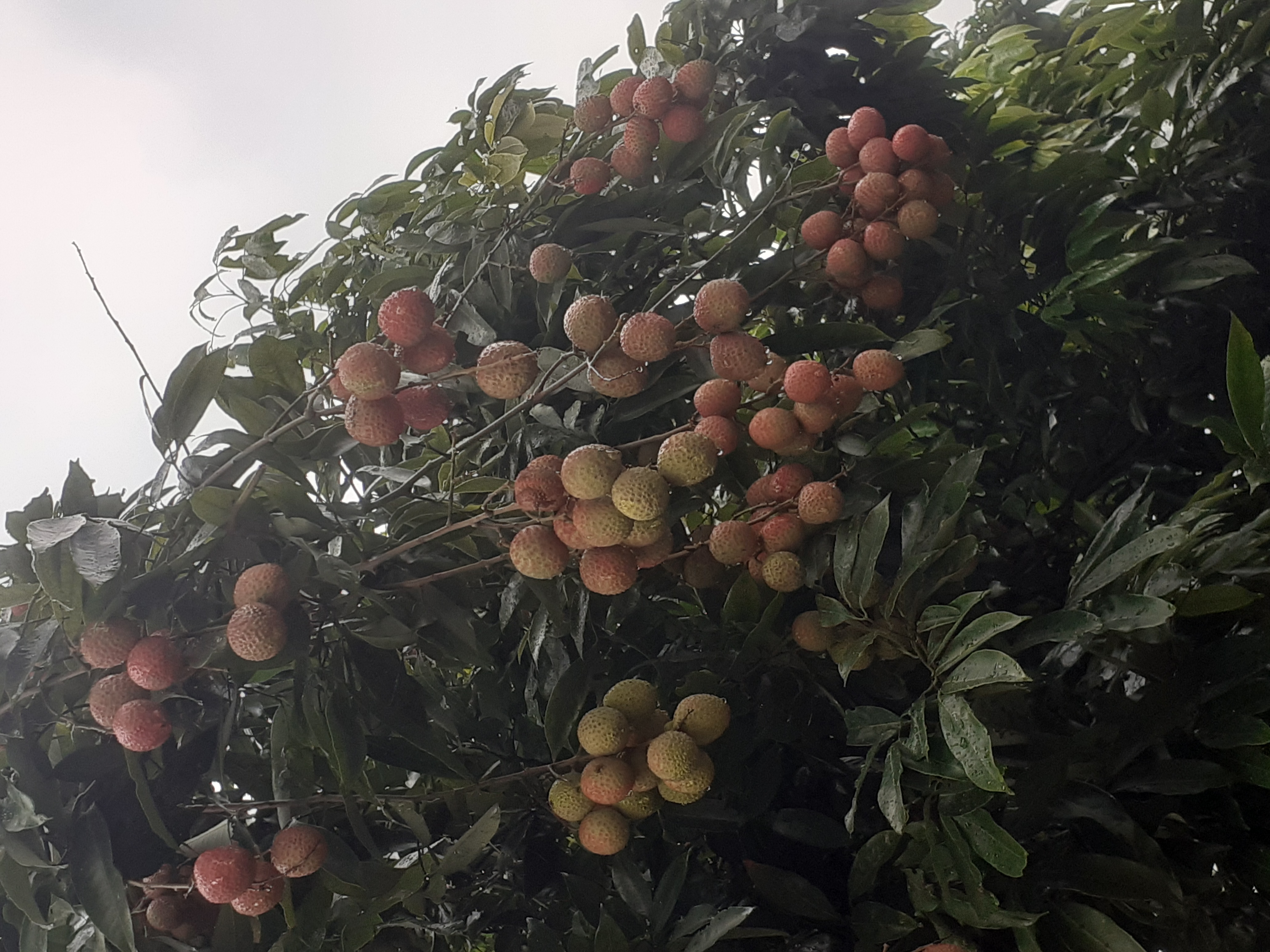
Litchi growers in Ishwardi upazila of Pabna district had a crop in the 2026 season that, by the account of farmers and orchard owners, the area had never seen before. According to a report by Sheikh Mohsin published by Jagonews24 on 25 May 2026, trees that had never borne more than 3,000 litchis carried over 10,000 that year, and branches were breaking under the weight of the fruit. Growers, orchard owners and traders hoped that litchis worth Tk 700 crore would change hands in the upazila. Because the yield was so high, prices were somewhat lower.
The report described an Ishwardi coloured red by litchis. Along both sides of the paved roads and dirt tracks of every village, mile after mile, there was little to see but litchi trees laden with fruit. Ishwardi upazila agriculture officer Abdul Momin told Jagonews24 that the previous year's crop had been small and that this year's yield would be three times as large.
Busy orchards across the upazila
Ishwardi is known as the 'litchi capital', and its juicy fruit is prized across Bangladesh. Citing a survey by the upazila agriculture office, Jagonews24 reported that the upazila had commercial litchi orchards on 3,100 hectares, with more than 3.5 lakh (350,000) trees. Many more trees grow around homesteads throughout the upazila. Because litchi farming pays, the number of orchards was growing every year.
A visit to the orchards found them full of activity. Most are in the Joynagar, Maniknagar, Mirkamari, Awtapara, Boroichara, Jagannathpur, Mahadebpur and Basherbada areas. The varieties grown most are the local Mozaffar, Bombai, China-3 and Kadmi. When the report was published, harvesting of Bombai litchis had begun alongside the local variety. One of the Jagonews24 photographs showed branches propped up with bamboo poles to bear the weight of the fruit.
What growers and traders said
Abdul Jalil Kitab Mondol of Mirkamari village in Salimpur union is a litchi farmer who has won a national award. He told Jagonews24: "Litchi growers' dreams are coming true this year. For several years they did not get the yield they hoped for, and last year in particular the crop failed. This year, because of the huge yield, there is a festive mood across the upazila. Production has beaten any time in the past. If growers can harvest and market the litchis properly, they will make a profit."
Kamruzzaman Swapan, a grower in Joynagar village, said: "Litchi is the main cash crop of our area. Litchis are grown on 80 percent of the land in Sahapur and Salimpur unions of the upazila. The yield is very good too. If the litchis can be marketed properly, growers will profit greatly."
Mostafa Zaman Noyon, a grower in Maniknagar village, told Jagonews24: "Most of the country's demand for litchis is met by Ishwardi. Production was very low last year. This year the yield is huge." Johurul Islam, a grower from the East School Para area of the same village, also said the crop was very large, and that growers would profit if the weather held to the end of the season.
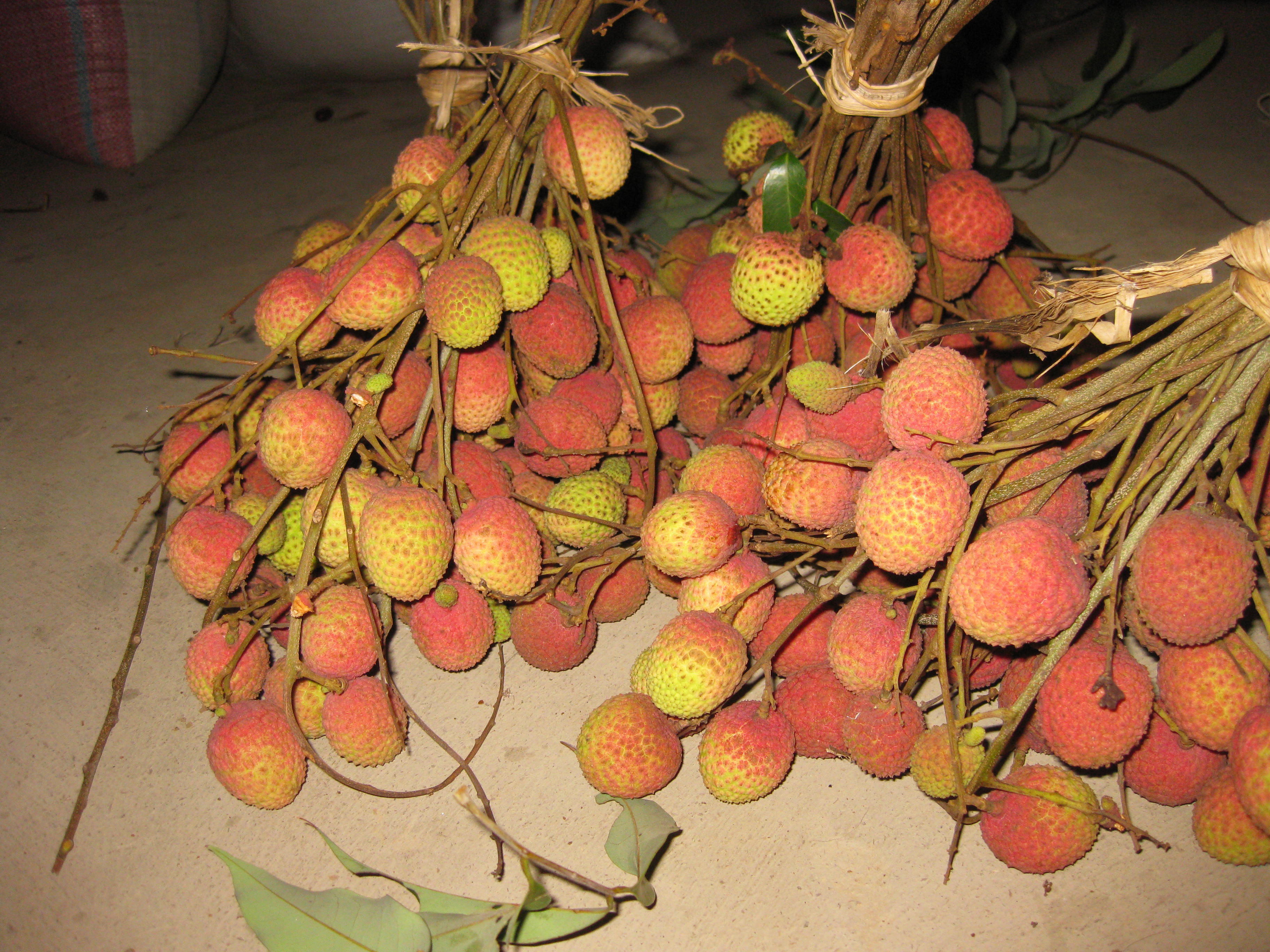
In Jagannathpur village, the reporter met Hashem Ali, a litchi trader from Jashore. He said: "I have been trading litchis in Ishwardi for about 15 years. I come here every litchi season. I have never seen a crop like this year's. Because the yield is higher, prices are a bit lower."
Official figures and the state of the market
Abdul Momin told Jagonews24 that litchis were grown on 3,100 hectares in the upazila and that the crop was a bumper one. The previous year's harvest had been small, and this year's would be three times as large. Because of the huge yield, more than Tk 700 crore worth of litchis was expected to be traded.
Earlier in the season, a Jagonews24 report of 2 March 2026 cited the upazila agriculture office as saying there were 11,270 litchi orchards in the upazila, and that the previous year's crop had been worth about Tk 600 crore. With trees covered in blossom, growers then hoped the crop's market value would set a new record.
District-level figures published in May differed between reports. On 13 May, Delta Times quoted an additional deputy director of the Department of Agricultural Extension (DAE) in Pabna as saying that litchis covered 4,700 hectares in the district, that the production target was 35,000 tonnes, and that favourable weather could push trade past the target to Tk 800 crore. On 20 May, Shomoyer Alo cited DAE data showing 4,624 hectares under litchi in the district, with a production target of 40,000 tonnes worth about Tk 800 crore. In that report the DAE's additional deputy director (crops) said that after meeting local demand litchis were being sent to districts across the country, and that growers could make up for the previous year's losses.
A report in Ajker Patrika, published in the early hours of 25 May, showed another side of the market. At the Joynagar litchi market in Salimpur union on Sunday 24 May, plenty of fruit arrived but buyers were few. Mozaffar litchis sold for Tk 2,000 to 2,200 per thousand and Bombai litchis for Tk 3,000. Wholesale traders from Dhaka, Savar, Chattogram, Sylhet, Cumilla, Narsingdi, Tangail and other districts were renting houses near the market or staying in hotels in the upazila town to buy from growers. But with Eid-ul-Azha approaching, demand had dropped for several days and trade slowed at both Joynagar and Awtapara markets. Some growers were bringing fruit to market to meet the costs of Eid.
From blossom to harvest: the 2026 season
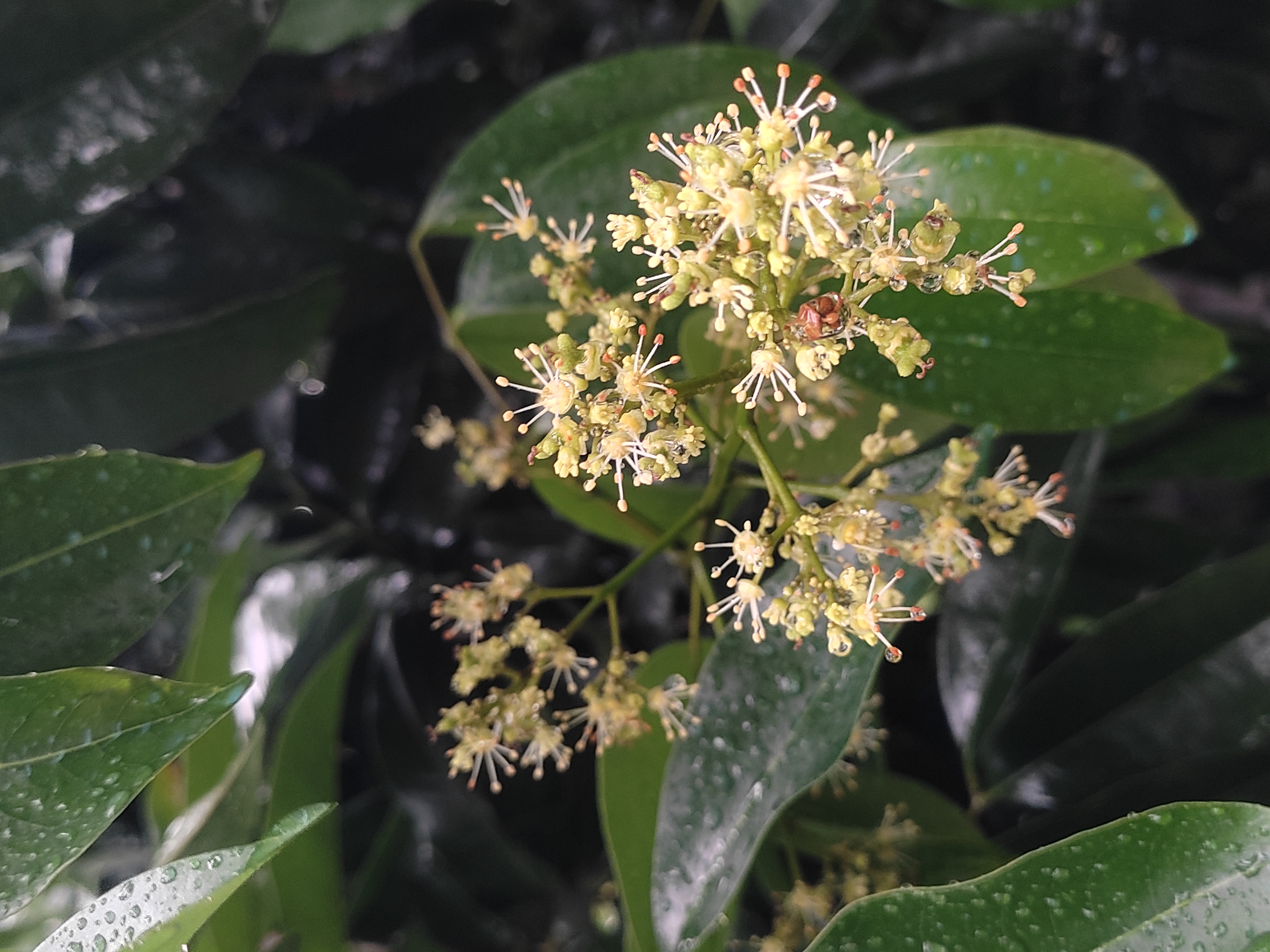
The 2 March Jagonews24 report found blossom on 80 to 85 percent of trees in the Joynagar, Mirkamari, Maniknagar, Sahapur, Jagannathpur, Bharoimari and Awtapara areas. Growers said litchi trees usually flower from the last week of the Bengali month of Magh to the middle of Falgun (roughly early February to early March). The main varieties are the Mozaffar or local litchi and the Bombai and China-3, with smaller plantings of Kadmi, Kathali, Bedana, China-1 and China-2. Growers were busy watering trees and spraying to protect the blossom. A grower in Mirkamari said many people had suffered heavy losses after the poor previous crop, and that some had even talked of cutting down their orchards.
Worry set in towards the end of April. According to a Manobkantha report of 26 April, 15 days of intense heat had started young fruits dropping, especially on the local Mozaffarpuri variety, and Bombai trees were beginning to lose fruit too. A grower in Baktarpur village spoke of temperatures of 36 to 38 degrees Celsius. Johurul Islam of Maniknagar said that losing 10 to 20 percent of the young fruit was normal, but anything more would hurt growers. Abdul Jalil Kitab Mondol said the fruit was dropping but not at an abnormal rate, and that orchards were being irrigated to stop it. Upazila agriculture officer Abdul Momin said farmers were being advised to spray and irrigate their orchards regularly. The report did not name any product or dose; growers are expected to take that advice from the upazila agriculture office.
In early May, unripe litchis began reaching the markets. On 11 May, Samakal reported that sour, immature fruit was on sale at the Joynagar Shimultala litchi market, the Ishwardi municipal market, Awtapara and other places. Litchis in the area normally ripen at the start of the Bengali month of Jaishtha (mid-May), but that year local, Bombai, China-3 and Bedana litchis reached the market in late Baishakh. Farmers said they were picking early to avoid heavy losses as heat made fruit fall from the trees. In retail markets a bundle of 100 litchis then sold for Tk 290 to 360. Abdul Momin told Samakal that growers should wait at least another eight to ten days so that the fruit would have its proper taste and nutritional value.
On 13 May, Delta Times reported that Pabna's local litchis would reach the market within a week, with China-3 and Bombai varieties following at the end of May. On 20 May, Shomoyer Alo reported that early local litchis were arriving at the Awtapara and Joynagar-Shimultala markets, with traders coming from all over the country. Growers quoted in that report said the local Aati and Mozaffar litchis come first, followed by Bombai and then China-3 and China-4, and that the season, starting in the first week of May, lasts two to three months.
Ups and downs of earlier seasons
Ishwardi's litchi harvest rises and falls from year to year, and the weather is a large part of the reason. On 9 April 2023, The Daily Star Bangla reported that rain in mid-February that year had knocked off most of the blossom. The upazila agriculture officer at the time said that when the litchi crop is good one year it is much smaller the next; in 2022 Ishwardi had produced the country's largest litchi crop, with blossom on 80 percent of trees. The officer added that rain harms pollination because bees do not fly in the rain.
On 29 May 2023 the same paper reported that, although the crop was smaller, growers were pleased with prices. A wholesaler from Dhaka said he had paid Tk 2,500 to 3,000 per thousand litchis at the orchard that year, against Tk 1,800 to 2,000 the year before. The Salimpur wholesale market, which used to send 12 to 15 truckloads a day across the country, was sending eight to ten. The upazila agriculture officer then expected about 33,500 tonnes from 3,100 hectares and trade worth Tk 500 to 550 crore, with 60 to 65 percent of trees bearing fruit.
On 1 April 2024, The Daily Star Bangla reported that litchis covered 4,721 hectares in Pabna district that year, 3,150 of them in Ishwardi alone, against a district production target of 48,801 tonnes. A report on 16 April found that two spells of rain and hail in mid-Chaitra had rotted 40 to 50 percent of the blossom, and that intense heat was then causing young fruit to drop. The deputy director of the DAE in Pabna disputed growers' fears, saying: 'Even if half of the blossom that has come turns into fruit, the branches should break under the weight of litchis.'
The 2025 season was harder still. On 12 March 2025, The Daily Star Bangla reported that in Ishwardi 70 to 80 percent of the trees in each orchard had put out new leaves instead of blossom during Falgun. A national award-winning grower said that of his more than 600 trees, 400 to 500 usually flowered, but that year only 100 to 150 had. The upazila agriculture officer said the exact cause was unknown, though climate change was suspected. With so little blossom, the price of trees rose: a trader in Sahapur said he had paid about Tk 5 lakh for 200 trees, having paid about Tk 1.5 lakh for 100 trees the year before. This was the 'crop failure' of the previous year that growers referred to in 2026.
The way litchis are traded in Ishwardi helps explain why each stage of the season matters. Traders told The Daily Star Bangla in 2025 that a single tree may be sold three or four times in a season: first on the strength of its blossom, again when the young fruit sets, and once more after the fruit ripens. Each change of hands adds to the final price, so the weather at flowering and fruit set decides the fortunes of seasonal traders as much as those of growers.
Ishwardi, an upazila on the Padma
According to Banglapedia, Ishwardi upazila in Pabna district covers 250.89 square kilometres. It is bounded by Lalpur and Baraigram upazilas to the north, the Ganges (Padma) river and Kushtia Sadar and Mirpur upazilas to the south, Pabna Sadar and Atgharia upazilas to the east, and the Ganges and Bheramara upazila to the west. Ishwardi thana was formed in 1949 and became an upazila in 1983. The 2011 census counted 313,932 people. Besides a municipality, the upazila has seven unions: Dashuria, Pakshi, Muladuli, Lakshmikunda, Sara, Sahapur and Salimpur.
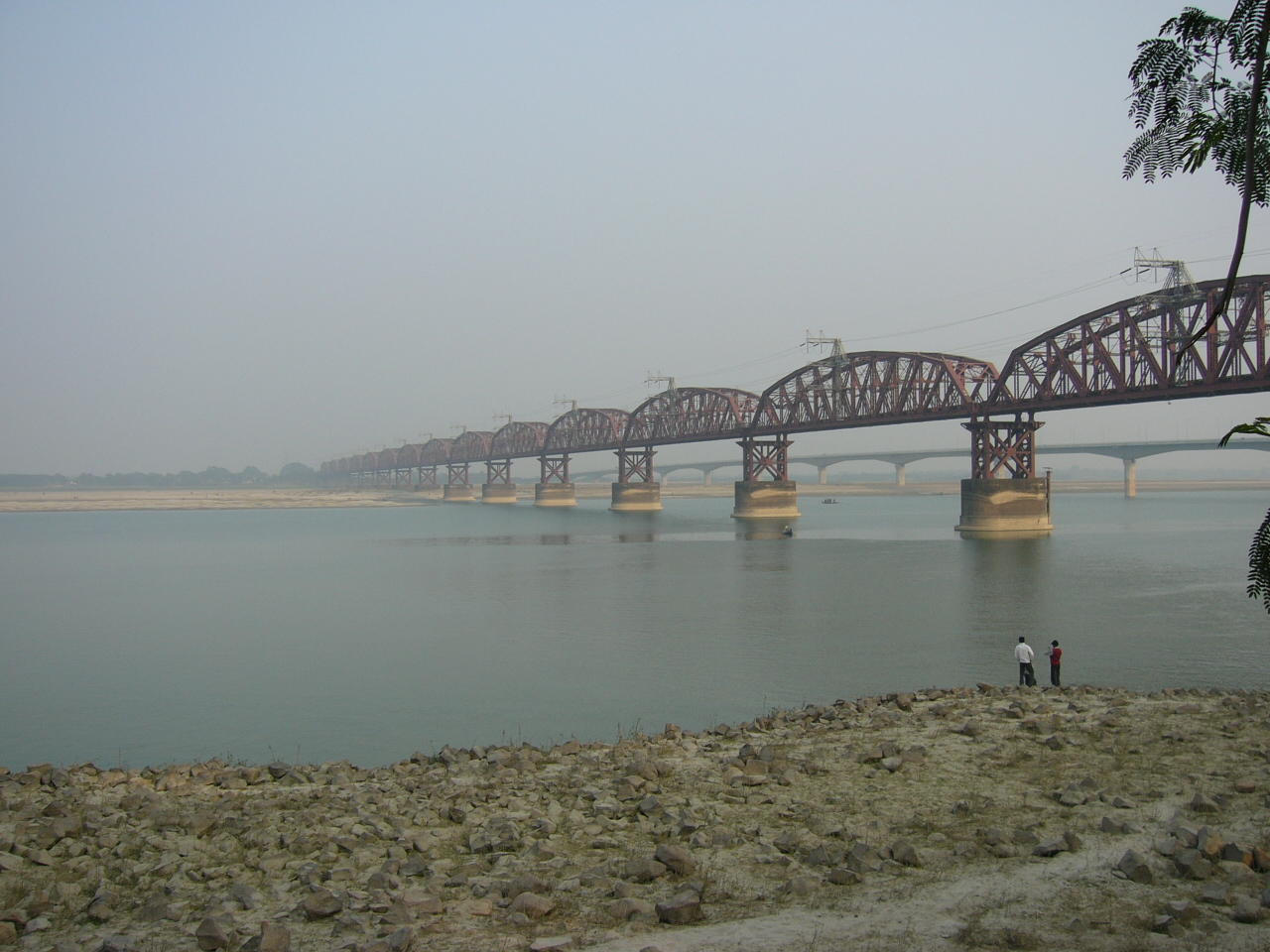
The Hardinge Bridge, built across the Padma in 1912, stands in the upazila; Banglapedia describes the 5,940-foot railway bridge as the largest of its time in what is now Bangladesh. Ishwardi is also home to the Lalon Shah bridge, the Ishwardi railway junction, a regional agricultural research centre, the country's only sugarcane research centre and a pulses research centre. Its main crops are rice, wheat, sugarcane, betel leaf, potato and onion. Banglapedia lists 30 markets in the upazila, among them the Awtapara market, which is now one of the main litchi markets.
A Daily Star Bangla report of May 2023 said commercial litchi farming began in Ishwardi in the 1980s. A few enthusiasts first planted trees around their homes; because litchis paid better than other crops, orchards gradually spread along roadsides and across the fields. Litchis are grown in Salimpur, Dashuria, Sahapur, Pakshi and Lakshmikunda unions, and almost every household in Salimpur and Sahapur has litchi trees or an orchard. In April 2024 the same paper wrote that if Dinajpur is Bangladesh's 'old capital' of litchis, Pabna was earning the title of the 'new capital'. For comparison, that report put Dinajpur's litchi area in 2024 at about 5,690 hectares.
About the litchi
Banglapedia describes the litchi (Litchi chinensis) as a fruit of the soapberry family, Sapindaceae. Its original home is China, and it reached Burma and India by the end of the 17th century. Litchis can be grown in almost every district of Bangladesh, and among the country's tree fruits the litchi ranks second in production after the mango. According to Wikipedia, litchi cultivation in southern China goes back many centuries; some 200 cultivars exist worldwide, and the most common way of propagating the tree is air layering.
The litchi tree is a medium to large, much-branched, round-topped evergreen that reaches 12 to 15 metres. Its leaves are compound, with four to seven leaflets, and its small, off-white flowers are borne in compound clusters. The fruit grows in bunches and holds a single seed. The juicy white flesh, or aril, makes up 50 to 75 percent of the fruit's weight and contains mainly sugars, with some protein, fat, vitamins B and C, calcium and iron. Wikipedia notes that fruits take 80 to 112 days to mature depending on climate, location and cultivar, and that the skin turns from green to red or pinkish-red as it ripens.
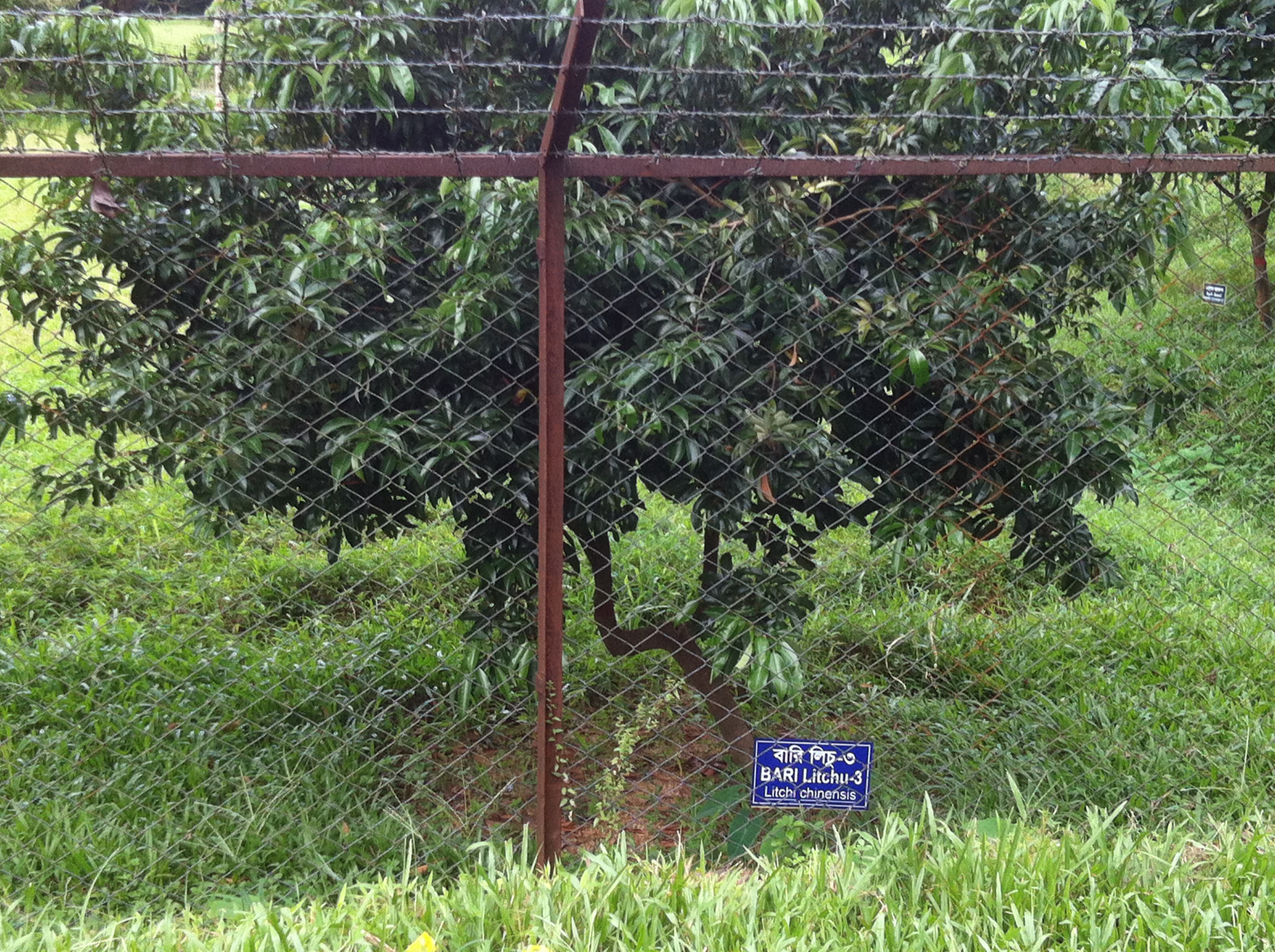
Banglapedia says the tree needs a warm, humid climate to grow, but that dry, hot air harms the fruit. Deep, loamy alluvial soil suits it best; the tree cannot tolerate waterlogging but likes moist soil. That is why Ishwardi's growers worried so much about fruit drop in the April heat. Bangladeshi litchis fall broadly into two types, local (deshi) and Bombai. In Ishwardi the Mozaffar or local litchi comes to market first; growers told The Daily Star Bangla in 2023 that Bombai and China-3 ripen a little later but are in greater demand and fetch higher prices. The Bangladesh Agricultural Research Institute (BARI) has also released litchi varieties, such as BARI Litchu-3.
Nets against bats were killing birds
The 2026 season also brought a worrying report. On 20 May, Shomoyer Alo quoted orchard owners and growers as saying that many people were using fine monofilament nets, known locally as current nets, to protect their litchis from bats, and that hundreds of birds were being caught and killed in the nets every day. Bird lovers voiced concern and called on the administration to step in.
According to the report, the agriculture department was advising growers to use other methods instead of nets that kill birds. The Pabna deputy commissioner said legal action would be taken if birds were killed by such nets used to protect litchis, and that the forest department, the upazila administration and the agriculture department were monitoring the matter.
Unripe litchis and children's health: what research says
Commenting on the early sale of unripe litchis, the upazila health and family planning officer told Samakal on 11 May 2026: "Harmful pesticides are often used on immature litchis, which is risky for the human body. Especially for children, eating unripe litchis on an empty stomach can cause hypoglycaemia, vomiting, stomach pain and other serious problems." The report said doctors had repeatedly warned residents, and especially children, against eating unripe litchis.
International research has looked at this question. A study by India's National Centre for Disease Control and the US Centers for Disease Control and Prevention, published in The Lancet Global Health in 2017, investigated outbreaks of acute neurological illness among children in Muzaffarpur in Bihar, India's largest litchi-growing region. Between 26 May and 17 July 2014, 390 patients were admitted to two hospitals, and 122 of them died. The study linked the illness to eating litchis and to missing an evening meal in the 24 hours before onset, and found evidence of poisoning by hypoglycin A and methylenecyclopropylglycine (MCPG), toxins that occur naturally in the fruit. The researchers recommended limiting litchi consumption, making sure children eat an evening meal, and rapidly correcting low blood glucose in suspected cases.
Bangladesh has its own research. A study by researchers from icddr,b and the Institute of Epidemiology, Disease Control and Research (IEDCR), published in the American Journal of Tropical Medicine and Hygiene in 2017, examined a 2012 outbreak of acute encephalitis syndrome among children in a litchi-growing community in northern Bangladesh, in which 13 of 14 affected children died. The illness was linked to visits to litchi orchards where agrochemicals were routinely used, including some pesticides banned in Bangladesh; in that study, eating litchis was not associated with the illness. Parents with questions about their children's diet or any such symptoms should consult a doctor.
Photo: Sibbir Hossain / Wikimedia Commons (CC BY-SA 4.0)
Sources: Jagonews24, Manobkantha, Samakal, Delta Times, Shomoyer Alo, Ajker Patrika, The Daily Star Bangla, Banglapedia, Wikipedia, The Lancet Global Health, American Journal of Tropical Medicine and Hygiene
Comments
(0)