
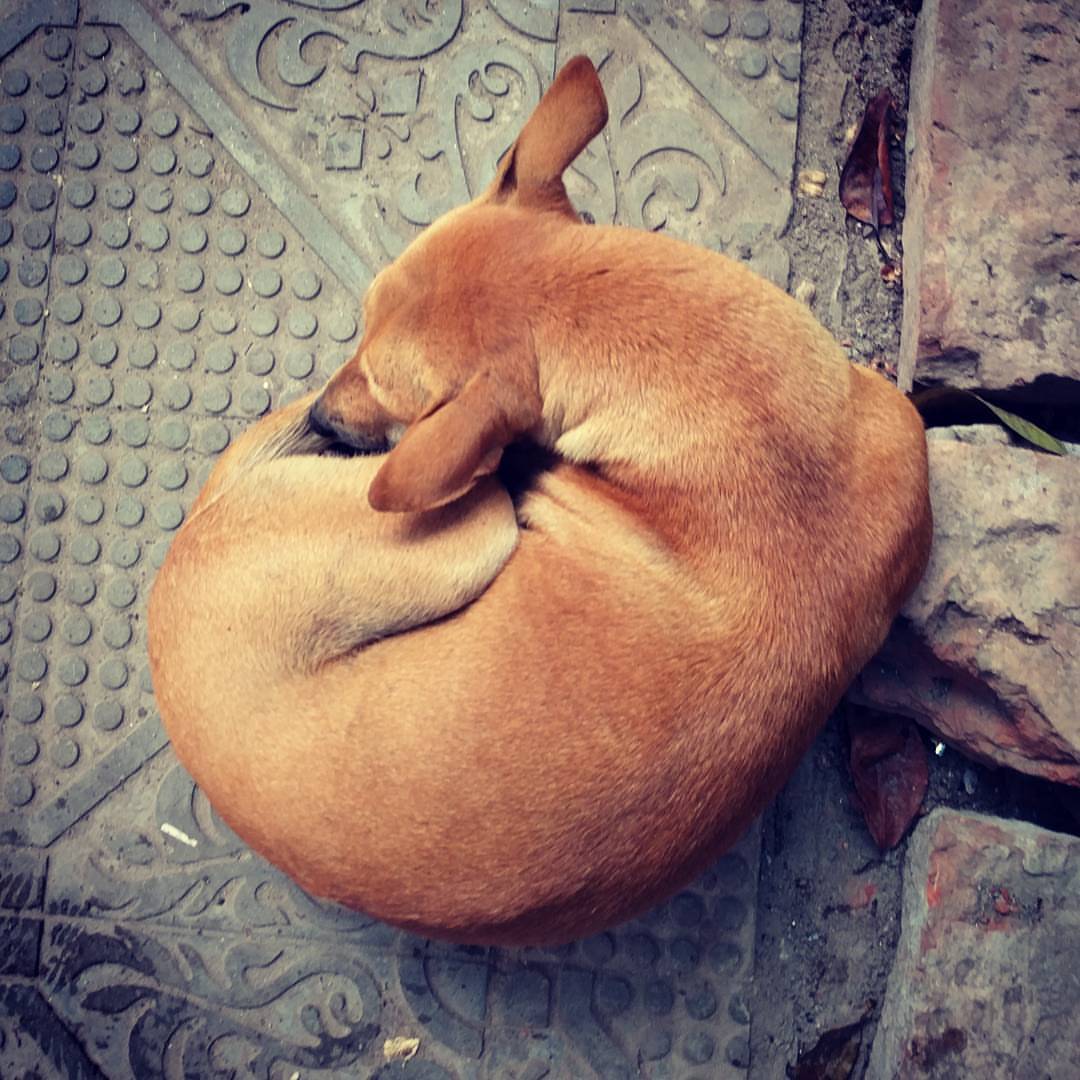
A Supreme Court lawyer sent a legal notice on Tuesday, 2 December 2025, seeking action under criminal law against those responsible for the deaths of eight puppies that were put in a sack and drowned in a pond on the Ishwardi upazila parishad premises in Pabna, without their mother's knowledge. The notice, sent by Barrister Sajib Mahmud Alam, named the Ishwardi upazila nirbahi officer (UNO) and the upazila livestock officer as respondents, Jagonews24 reported that evening.
The lawyer said that no action had yet been taken against the culprits for drowning the eight puppies in a sack in the pond, and that this was why he had sent the legal notice. The puppies had been found dead on the morning of Monday, 1 December. Pictures of the incident spread quickly on social media and drew widespread anger, with many people demanding that those involved be brought to justice.
What the legal notice asks for
According to Jagonews24, the notice was addressed to the authorities concerned and asked them to take action under criminal law against those responsible for the killing. Its two respondents were the two officials most directly involved: the UNO, whose administration is based at the parishad complex where the puppies died, and the upazila livestock officer, whose office had treated the mother dog and informed the police. The reports of 2 December do not say what deadline, if any, the notice set for a reply.
The choice of the livestock officer as a respondent reflects how animal cruelty cases reach a court in Bangladesh. Under the Animal Welfare Act 2019, a court may not take up an offence under the Act except on a written complaint from the "authority", which the law defines as the Director General of the Department of Livestock Services or a veterinary surgeon of that department empowered by him. On 1 December the upazila livestock officer, Aklima Khatun, had told Jagonews24 that she did not know whether she could file a case herself, but that she certainly would if it could be done.
When the notice was sent, the lawyer's view was that nothing had yet been done to bring anyone to account. By then the upazila administration had taken one step against the family named in the reports: it had ordered them out of their government quarters, as described below.
What happened on the upazila parishad premises
According to a report by Jagonews24's Ishwardi correspondent published on the evening of 1 December, a mother dog had recently given birth to eight puppies at one of the residential buildings on the upazila parishad complex. Prothom Alo, citing local people and upazila administration sources, reported on 2 December that the dog had given birth about a week earlier, in the yard of the government residence of the official named in the reports.
A caretaker at the UNO's residence told Jagonews24 that after dusk on Sunday, 30 November, the mother dog could not find her puppies and began searching everywhere for them, crying loudly. Through the night she was seen going around the officers' club and from door to door in the residential area, and she would not eat the food people offered her.
On Monday morning, 1 December, the puppies were recovered in a sack from the bank of the upazila parishad pond. The caretaker said the sack was floating in the pond and that, when it was brought out and opened, all the puppies inside were dead. Prothom Alo reported that the sack was seen floating at about 11:30 in the morning and that eight dead puppies were found inside.
Jagonews24 reported that the puppies had been put in a sack and thrown into the pond by the wife of an official of the Khudra Krishak (small farmers') Foundation who lived in the upazila parishad residential building. Its reports named the official as Hasanur Rahman Nayan and his wife as Nishi Begum; one paragraph of the 2 December report gives her name as Nishi Khatun. This is the account given in the reports; when the notice was sent, no court had examined it.
Jagonews24 said it tried to reach the woman for her comment but could not. Her husband, when contacted, acknowledged that the incident had taken place and said he was in extreme mental distress over it and could say nothing more. Speaking to Prothom Alo on 2 December, the official, whose first name that paper gave as Hasanul, expressed regret. He said his wife had asked for the puppies to be moved away out of concern for the safety of their children, that he had not thought they would die, and that he was ashamed and sorry.
Prothom Alo reported that the mother dog was still crying on 2 December. From the morning she wandered in front of the UNO's room on the second floor of the upazila parishad building, and staff who tried to move her could not do so. At about noon some people coaxed her downstairs, but she was seen staying around the parishad grounds into the afternoon. The upazila livestock officer told Jagonews24 on 1 December that the mother dog had already fallen ill and had been treated by her office's staff.
Steps taken by the upazila administration
On 1 December the Ishwardi UNO told Jagonews24 that he was deeply hurt by an incident that had taken place on the parishad premises. He said he had discussed it with officers that morning, that an investigation was under way and that action would certainly be taken against whoever was found responsible.
The next morning the upazila administration ordered the official to leave his government quarters. The UNO told Prothom Alo that killing the puppies in this way was an extremely inhumane and cruel act, and that, as a punishment, the accused official had been ordered to vacate the quarters within one day. Jagonews24 reported that the administration served the vacate notice on the official and his wife, and that they left the upazila parishad residential building on Tuesday, 2 December, after receiving it.
A former UNO of Ishwardi also protested. In a post on 1 December, quoted by Prothom Alo, he wrote that there had been several dogs at his former workplace, one of which, named Laltu, he had raised from birth, and that he had asked the government for justice over the killing of the puppies.
Police, the livestock office and animal welfare groups
The upazila livestock officer told Prothom Alo that under the law, killing the puppies was a punishable offence. She said her office had informed the police and that the legal process was under way. The officer-in-charge of Ishwardi police station told the same paper that the police were looking into the matter, had spoken with the upazila administration and the livestock department, and that the legal side of the matter was being processed.
In the 2 December report, Aklima Khatun also told Jagonews24 that after the incident became known, representatives of an organisation called "Animal Welfare" had set out from Dhaka for Ishwardi. She said they had initially told her office that they were coming to take legal action, that they would meet the UNO after arriving, and that they would then announce their decision.
The president of a local nature and wildlife conservation group told Prothom Alo that the country has laws to protect animals but that they are not enforced. He said that to build awareness among people, those involved in the incident needed to be brought to justice.
What the Animal Welfare Act 2019 says
The law that governs cruelty to animals in Bangladesh is the Animal Welfare Act 2019 (Act No. 12 of 2019), dated 10 July 2019. It replaced the Cruelty to Animals Act 1920, which it repealed. Its preamble says the law was made to prevent cruelty to animals, encourage kind treatment and ensure animal welfare through responsible care, and to raise social awareness for that purpose.
The Act defines an "animal" to include all mammals other than humans, birds, reptiles and aquatic animals other than fish, as well as any other animal the government declares by gazette notification. It defines an "ownerless animal" as one with no owner or claimant, or whose owner or caretaker cannot be found after reasonable search. Section 4 makes it the duty of every owner or caretaker of an animal to treat it with welfare and humanity and to refrain from cruelty without reasonable cause.
Section 6 lists acts that count as unnecessary cruelty to an animal, among them any act or omission that causes an animal illness, overworking an animal or beating it unnecessarily, denying it the food and water it needs, and releasing an animal into a locality while it is sick or in order to cause its death. The government may add further acts by gazette notification. Committing such cruelty, or helping someone commit it, is an offence under the Act.
Section 6 also lists situations that are not treated as unnecessary cruelty, including:
- where the cruelty is done in good faith, for the benefit of that animal or another, or to remove a threat to the life of a person or another animal;
- where an animal confirmed to have rabies, or another incurable infectious disease that can spread to people or other animals, is put to death painlessly and humanely, for public welfare, by the government or an authority it has approved, following the standards of the World Organisation for Animal Health (OIE);
- slaughter for food and sacrifice for religious purposes carried out according to a person's own religious practice;
- acts in government-recognised education or research institutions for teaching or research, measures under the rules that govern zoos, and measures taken under the Wildlife (Conservation and Security) Act 2012.
Section 7 deals with ownerless animals. It says no ownerless animal may be killed or removed except for a reason given in the Act, and that a person who kills an ownerless animal commits an offence under the Act.
Section 16 sets the penalties. A person who commits, or helps to commit, an offence under section 6(3), section 7(2) and several other provisions faces simple imprisonment of up to six months, a fine of up to Tk 10,000, or both. Mutilation under section 10(1) and poisoning under section 11(1) carry heavier penalties: simple imprisonment of up to two years, a fine of up to Tk 50,000, or both. Whether any of these provisions applies to a particular incident is for the authority and the courts to decide.
Who can take an animal cruelty case to court
The Act gives the decisive role to the livestock service. Section 18 says that no court shall take up an offence under the Act for trial except on the written complaint of the authority, and section 2(4) defines the authority as the Director General of the Department of Livestock Services or a veterinary surgeon of the department empowered by him. The Act defines a veterinary surgeon as a veterinarian registered with the Bangladesh Veterinary Council and working under the Department of Livestock Services, together with a registered veterinarian whom the authority approves for the purposes of the Act.
Section 19 makes all offences under the Act non-cognisable and bailable. Section 20 says that, provided they are included in the schedule of the Mobile Court Act 2009, offences under the Act can be tried by a mobile court.
The authority also has powers to protect animals. Under section 14, if it appears to the authority, or it is told by anyone, that an animal is in a critical condition, it can take the steps needed to relieve that crisis, direct the animal's owner or caretaker to do so, or seek the help of the police station, the fire service and the local authority to rescue the animal. Section 15 lets the authority seize an animal that is the victim of an offence under the Act, whether or not it is in a critical condition, and place it in the care of an interested person or send it to a government veterinary hospital or the local authority for treatment and care. The cost of its treatment, food and water until it recovers is set by the area's veterinary surgeon and borne by the owner or caretaker; if no caretaker can be found, the authority or the local authority bears it.
The Act also lists upazila parishads among the "local authorities" it refers to, alongside city corporations, municipalities, district parishads, union parishads and cantonment boards. In the Ishwardi case, the incident took place on the premises of the upazila parishad itself, and both officials named in the notice work at the upazila level.
From culling to vaccination: how Bangladesh manages street dogs
The killing of dogs has a long history in Bangladesh's public policy. A study by Tenzin and colleagues in the journal PLOS Neglected Tropical Diseases in 2015 reported that until late 2011, mass dog culling was carried out in major towns in an unsuccessful attempt to control rabies. Between 2003 and 2008, it said, 139,391 stray dogs were culled in five major towns (Dhaka, Khulna, Rajshahi, Sylhet and Tongi), 80 per cent of them in Dhaka City, yet rabies remained endemic.
The same study said that after an advocacy campaign by the Obhoyaronno-Bangladesh Animal Welfare Foundation, mass culling of dogs was stopped in Dhaka City from January 2012, and a humane programme of Catch-Neuter-Vaccinate-Release (CNVR) began there as part of the national rabies control programme. Between 2012 and 2013, 6,665 dogs were neutered and vaccinated against rabies in 29 of the city's 92 wards. The study estimated Dhaka City's free-roaming dog population at 18,585, about 52 dogs per square kilometre.
Rabies is the main reason dog management is a public health matter. The 2015 study cited estimates that rabies kills 2,000 to 2,500 people a year in Bangladesh, ranking the country third in the world after India and China. A 2024 study in The Lancet Regional Health: Southeast Asia, by researchers including staff of the Directorate General of Health Services, said about 96 per cent of human rabies deaths in Bangladesh are attributable to dogs.
That study said the government launched the National Rabies Elimination Programme in 2011 with a One Health approach that combines public awareness, modern treatment of dog bites, mass dog vaccination and dog population management. Mass dog vaccination began in 2011 in Cox's Bazar municipality and was scaled up to at least one round in all 64 districts, with the Department of Livestock Services providing vaccinators for the teams. The largest number of dogs was vaccinated in 2019, when 625,208 dogs received the vaccine, and on average 21,295 dogs were vaccinated per district each year out of an estimated 26,065.
The study described the goal Bangladesh shares with WHO, the World Organisation for Animal Health, FAO and the Global Alliance for Rabies Control: ending human deaths from dog-mediated rabies by 2030, known as "Zero by 30".

Ishwardi, the upazila where it happened
Ishwardi is an upazila of Pabna district. Banglapedia, the national encyclopedia of Bangladesh, gives its area as 250.89 square kilometres. It is bounded by Lalpur and Baraigram upazilas to the north, Kushtia Sadar and Mirpur upazilas and the Ganges (Padma) to the south, Pabna Sadar and Atgharia upazilas to the east, and Bheramara upazila and the Ganges to the west. Its population in the 2011 census was 313,932.
Ishwardi Thana was formed in 1949 and became an upazila in 1983. The upazila is known for the Hardinge Bridge, a railway bridge of 5,940 feet over the Padma built in 1912, and for the Lalon Shah bridge. It also hosts several agricultural research stations, among them a regional agricultural research centre, a pulses research centre and the country's only sugarcane research centre.
Agriculture is the largest single source of income in Ishwardi: Banglapedia's figures give it as the main source for 33.63 per cent, ahead of commerce at 20.90 per cent and service at 13.86 per cent. The main crops are paddy, wheat, sugarcane, betel leaf, potato, onion and vegetables, and betel leaf, onion, papaya and sugarcane molasses are among the products sent out of the upazila.
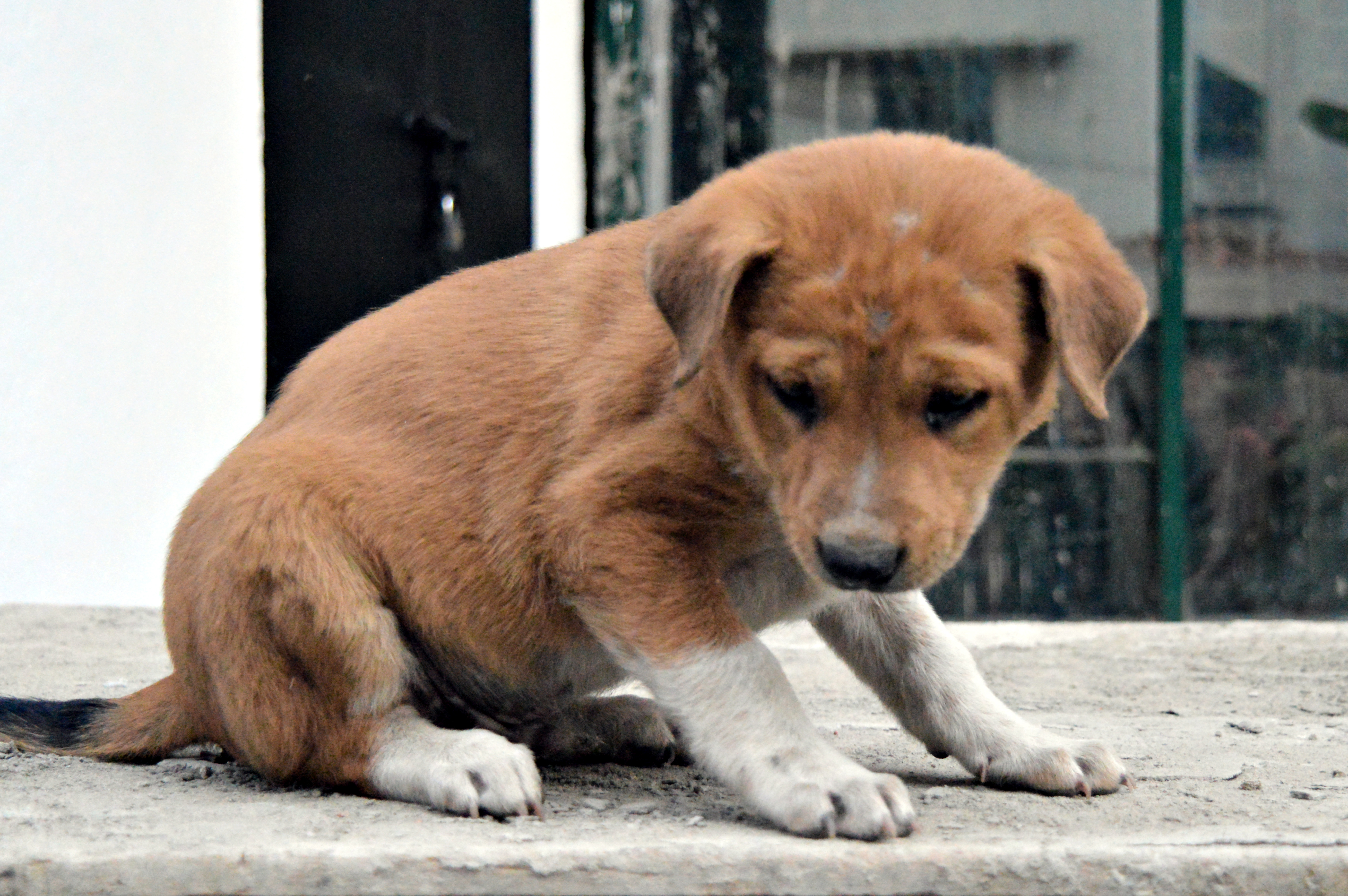
Photo: nasir khan from Dhaka, Bangladesh / Wikimedia Commons (CC BY-SA 2.0)
Sources: Jagonews24 (2 December 2025, and its Ishwardi report of 1 December 2025), Prothom Alo (2 December 2025), Animal Welfare Act 2019 (Laws of Bangladesh, Legislative and Parliamentary Affairs Division), Banglapedia, PLOS Neglected Tropical Diseases (Tenzin et al., 2015), The Lancet Regional Health: Southeast Asia (Ghosh et al., 2024)



Comments
(0)