
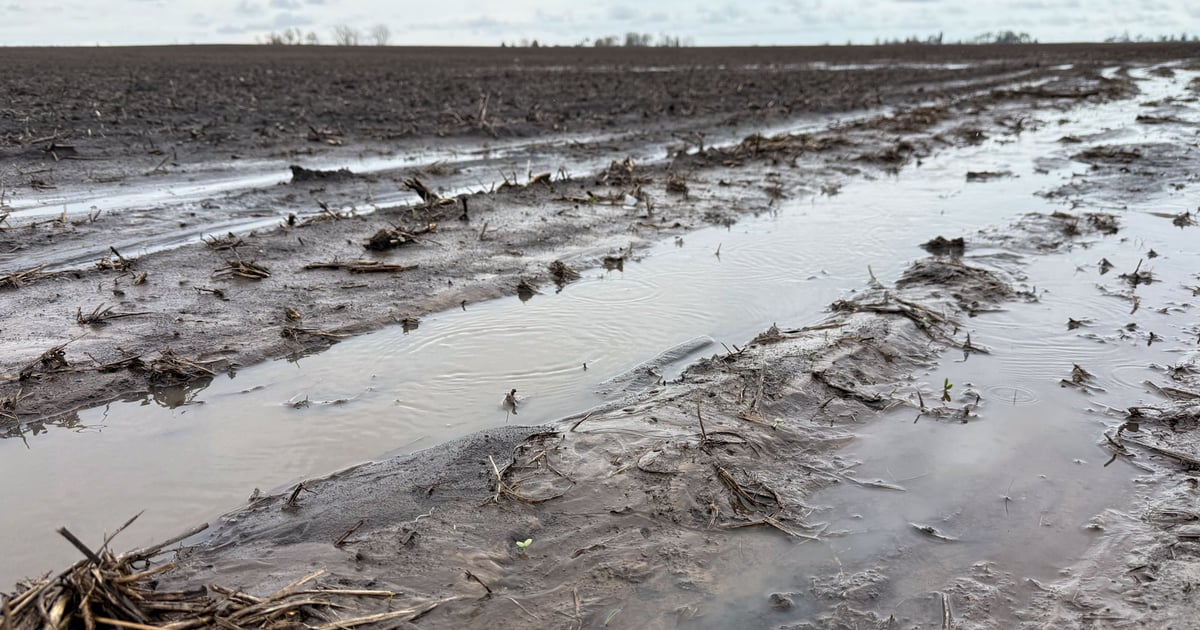
Indiana's 2026 growing season swung between extremes, with drowned lowlands and burnt hilltops sometimes in the same field, but a regional climatologist says farmers should adapt rather than panic, Farm Progress reports.
Rain in June was followed by more rain and local flooding in July and August, then a two-week hot, dry stretch in late August. "It seems like we're going from one extreme to the next extreme," said Beth Hall, director of the Midwestern Regional Climate Center. She noted that annual rainfall has risen by about 2 inches over the past 100 years and now tends to come on fewer days: "When it rains it pours."
Hall attributes the variability to climate change but says she is "not seeing Armageddon". "Climate change is occurring," she said. "The impact, though, for people in Indiana and our surrounding states, I don't think we need to panic. But we need to be aware that extremes could become more extreme." Illinois had record-breaking tornadoes this year and Indiana caught the edge of them; a shifting jet stream could move where severe weather strikes, though year-to-year variation remains large.
Her advice is to set aside part of the budget to try new crops or hybrids and hedge bets. Dan Quinn, Purdue Extension corn specialist, suggested trying short-stature corn, which "stands a lot better", and choosing hybrids that tolerate bigger swings.
Quinn also pointed to splitting nitrogen across the season, investing in drainage tile and testing earlier planting. "In most of the state, those areas which were planted timely - or in some cases, planted earlier - just did better all year," he said, urging growers to study what worked in 2026 and adjust for 2027. The story was written by Allison Lynch.
Source: Farm Progress
Comments
(0)