
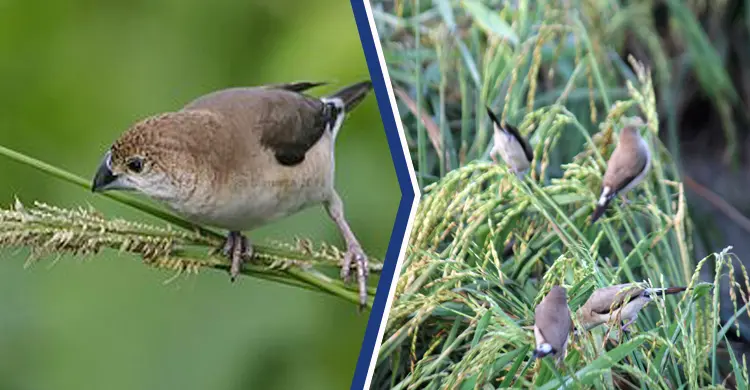
The bird is called the deshi chandithont. Its English name is the Indian silverbill and its scientific name is Lonchura malabarica. It is also known as the chhoto munia.
It is a sparrow-sized bird, so many people mistake it for a sparrow. It prefers safe places to live and flies off when people gather. It was once seen in large numbers in rural Bangladesh.
But as kash grass, small shrubs and thickets dwindle, the Indian silverbill, or munia, is disappearing from many areas day by day.
What it looks like
It has a grey bill and a black tail. Its body is 10 cm long and it weighs about 12 grams. In adults the rump is white, and the back of the body, the wings and the back are pale earthy brown.
The long, pointed tail is black and the underside whitish. The bill is triangular and greyish, and the legs, feet and claws are a greyish pink. Males and females look the same.
It lives among kash grass, sandy thatch grass, cultivated land along riverbanks and thorny scrub. It is found in the Indian subcontinent and the Middle East, and by nature it belongs to the munia family.
Habits and breeding
The bird usually lives in flocks, hopping about on the ground, in grassland and along field paths in search of food. It eats seeds and small insects, and sometimes spends the night in the abandoned nests of weaver birds. Its breeding season is from July to December.
It builds a ball-shaped nest of grass, leaves, feathers, fur and cotton two to three metres up in a thorny bush and lays its eggs there. The eggs are white, four to eight in number. Both male and female incubate the eggs and raise the chicks.
Photographer Shaminur Rahman took the pictures in a paddy field in the Par-Naogaon area of Naogaon Sadar upazila. But the birds are not seen very often.
Source: Jagonews24. First published in Bengali on The Agro News.


Comments
(0)