
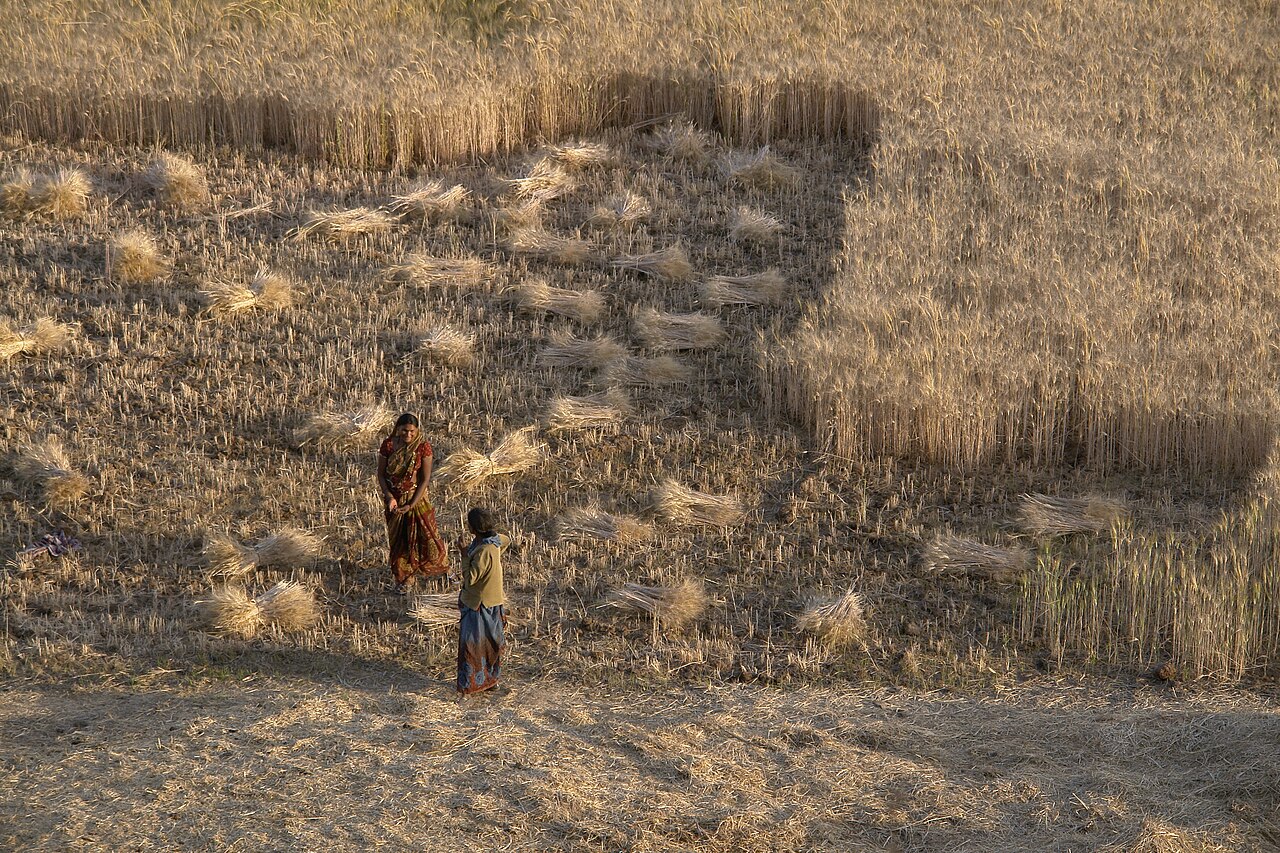
India's Cabinet Committee on Economic Affairs, chaired by Prime Minister Narendra Modi, has approved higher minimum support prices (MSPs) for all six mandated rabi crops for the 2027-28 marketing season, with a small rise for wheat and much larger ones for oilseeds and pulses.
The wheat MSP goes from Rs 2,585 to Rs 2,610 a quintal, an increase of Rs 25, or 0.96 per cent. Wheat is India's main rabi cereal and the main grain procured for the central pool.
Safflower gets the biggest rise, Rs 675, to Rs 7,215 a quintal. Rapeseed and mustard rise by Rs 413 to Rs 6,613 and lentil (masur) by Rs 390 to Rs 7,390, while gram goes up by Rs 83 to Rs 5,958 and barley by Rs 136 to Rs 2,286.
The government said the higher prices for pulses and oilseeds are meant to encourage farmers to diversify away from cereals, and that all MSPs are set at least 1.5 times the all-India weighted average cost of production, in line with the 2018-19 budget. By its estimates, the wheat MSP gives a margin of 106 per cent over cost, against 96 per cent for rapeseed and mustard, 92 per cent for lentil, 59 per cent for gram, 58 per cent for barley and 50 per cent for safflower. The report is by Ajeet Singh.
Photo: Yann / Wikimedia Commons (CC BY-SA 4.0)
Source: Rural Voice
Comments
(0)