
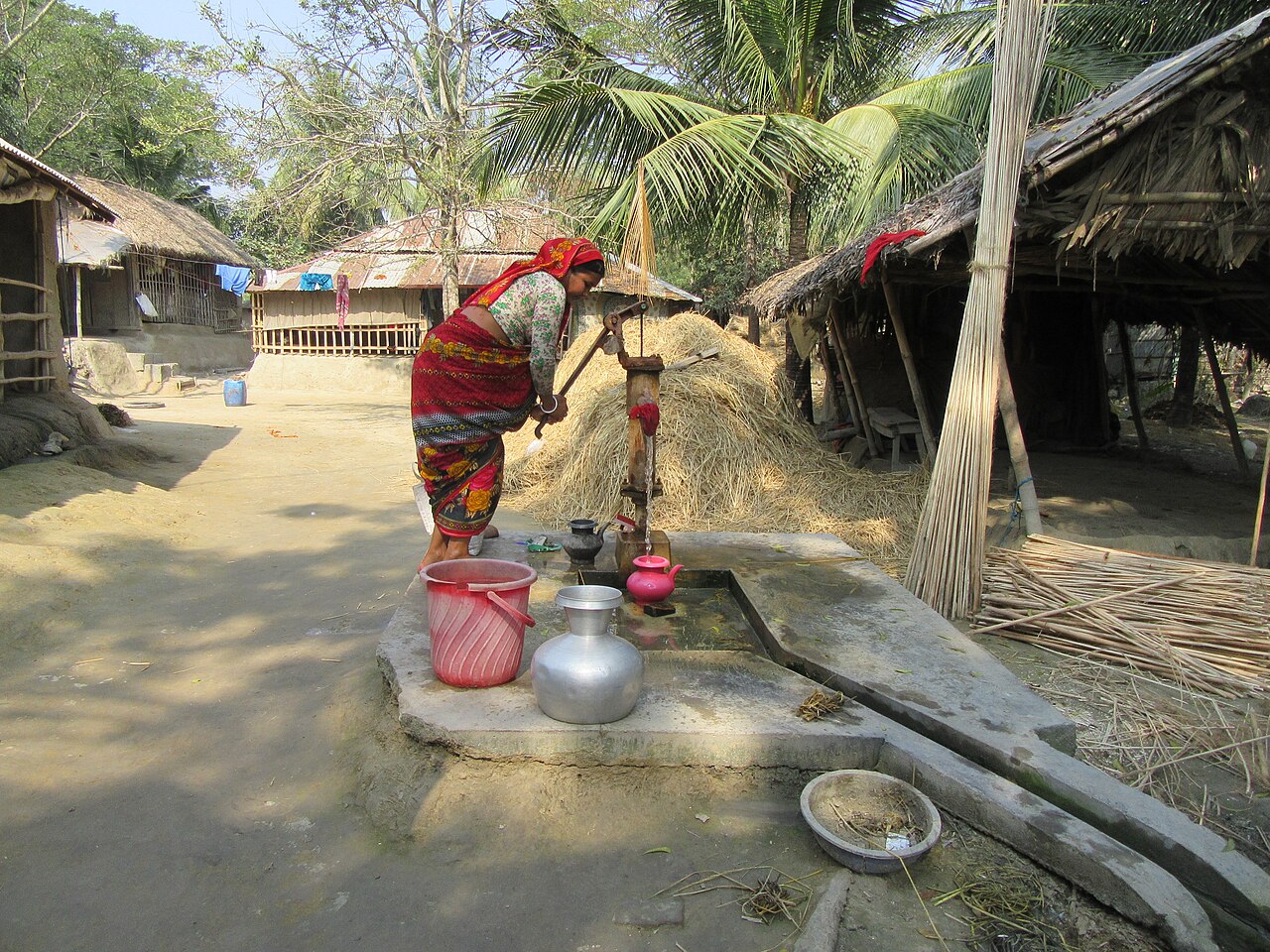
In many farming regions groundwater is being pumped out faster than rain and rivers can refill it, and scientists from Wageningen University & Research (WUR), the International Rice Research Institute (IRRI) and Cornell University say research must now help find realistic ways out. They set out a new framework for decisions at different scales in a commentary in Nature Water.
Groundwater supplies agriculture, ecosystems and drinking water. Over-pumping threatens the flow of rivers, the ecosystems that depend on them and long-term water security, the researchers write. They argue that groundwater science should go beyond documenting depletion and focus on pathways that balance food production, environmental health and sustainable use.
"When we repeatedly extract more groundwater than nature can replace, we are effectively drawing down a finite reserve," said Dr Inge de Graaf, associate professor of Earth Systems and Global Change at WUR. She said that trajectory can lead to what many call "water bankruptcy", and avoiding it needs coordinated action across agriculture, water management and environmental protection.
The commentary names three areas for joint work: defining dynamic limits for groundwater use, assessing impacts and trade-offs across the whole system, and designing adaptation strategies that are feasible at local, regional and larger scales.
"Groundwater is hidden from our view, but it should not be hidden from decision-making," said Dr Anton Urfels, senior scientist for water management at IRRI. He called for a systems approach that considers food, nature and climate together.
The researchers see room for closer work between groundwater scientists, agricultural researchers and water managers, combining global models with regional case studies and the involvement of local stakeholders to make groundwater management more practical.
Photo: REACH / Wikimedia Commons (CC BY 2.0)
Source: Wageningen University & Research


Comments
(0)